Composite Graft for Aortic Root Replacement
Composite graft aortic root replacement treats valve and aorta disease in one surgery.
If your cardiologist has mentioned a composite graft aortic root replacement, you are likely facing two problems at once: a diseased aortic valve and a widened section of the aorta, the body's largest artery. A composite graft solves both with a single operation. This guide explains what the procedure involves, when it is recommended, how recovery unfolds, and what questions to ask before you commit. Our goal is to turn a frightening phrase into a plan you can actually discuss with your surgical team.
What Is a Composite Graft for the Aortic Root?
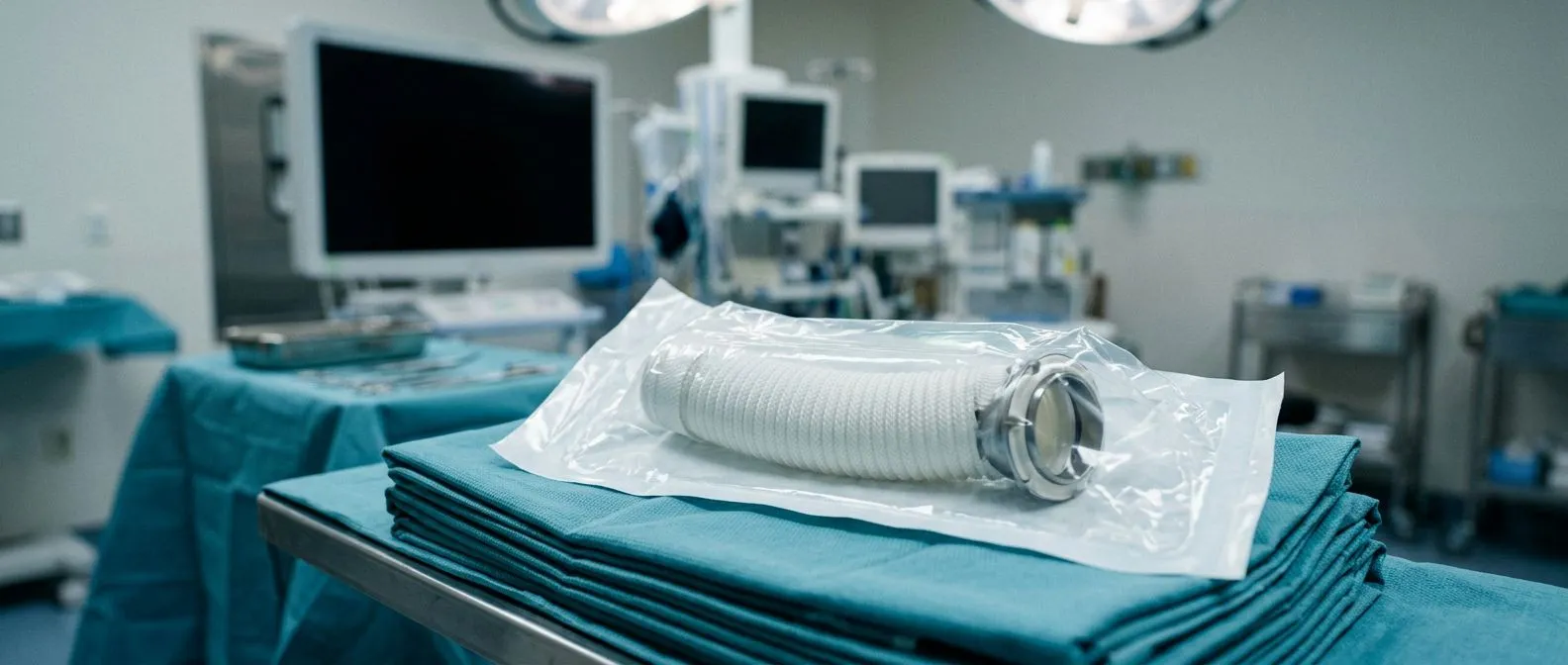
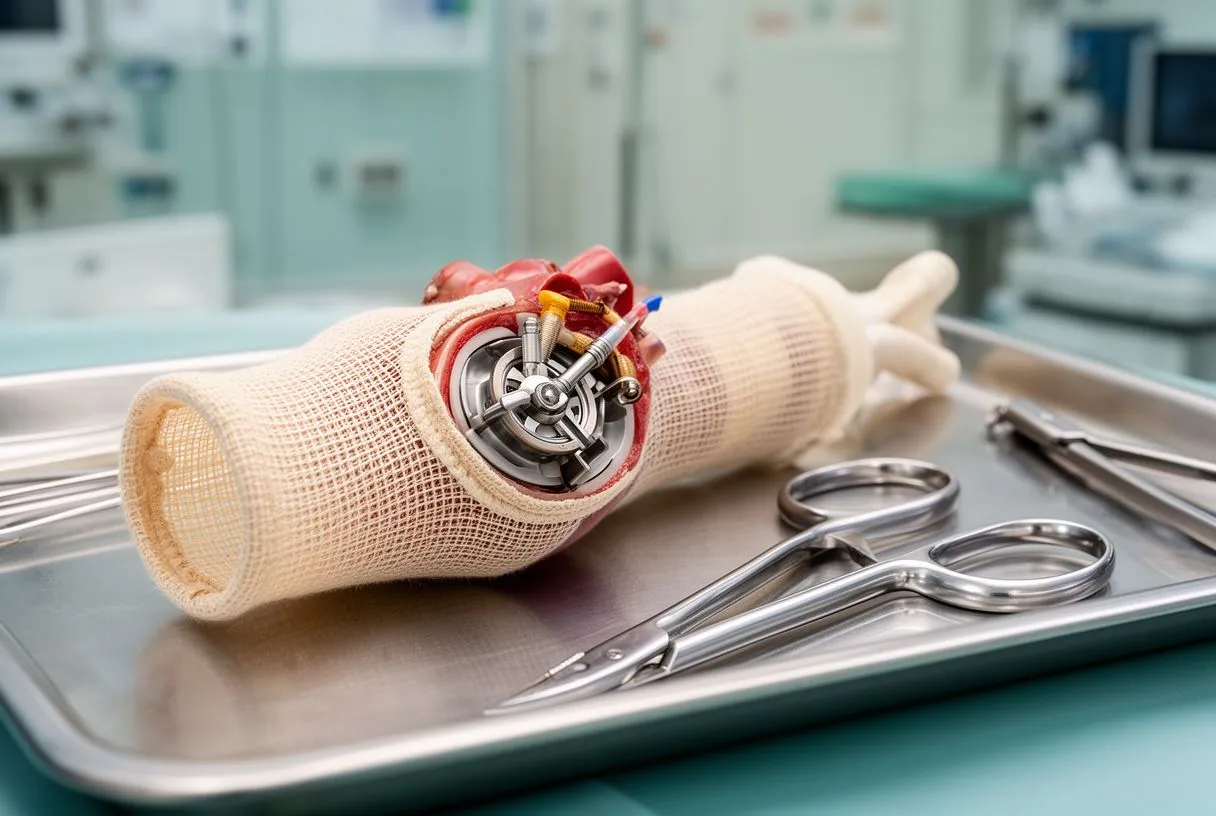
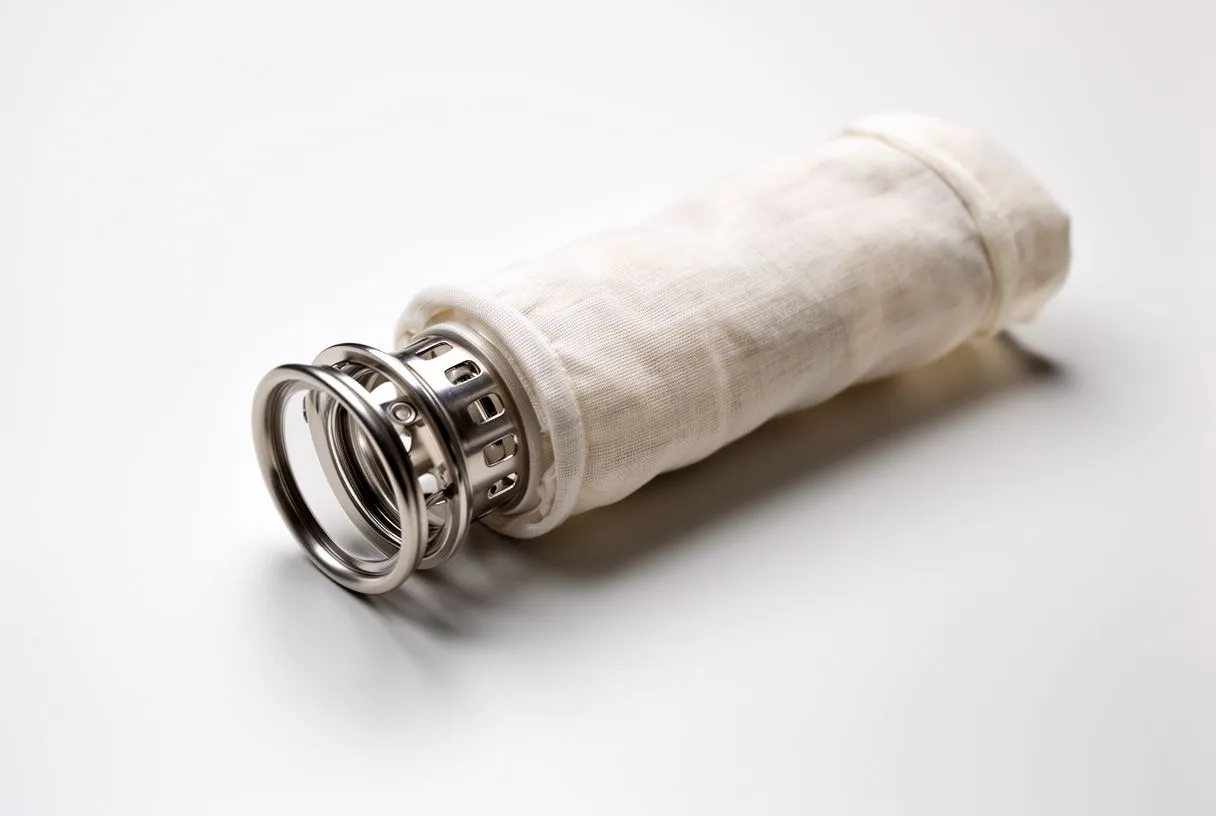
The basic idea. The aortic root is the first segment of the aorta, the section that sits directly behind the pulmonary artery and holds the aortic valve. When both the valve and the surrounding root are diseased, replacing them separately is inefficient. A composite graft is a factory-built unit: a synthetic tube, usually woven polyester, with a prosthetic valve sewn inside one end. The surgeon removes your diseased root and valve and implants this ready-made assembly in their place.
Why the term confuses patients. You may have seen "composite graft" used in dermatology or plastic surgery, where it describes small skin-and-cartilage transplants for fingertips or the nose. In cardiac surgery the word means something entirely different: a valve-conduit used for aortic root replacement. Same name, different anatomy. If you are researching online, always check that the article is talking about the heart and not the hand.
What the graft is made of. The tube portion is typically woven polyester, a durable fabric that your tissue grows into over time. The valve inside may be mechanical (metal) or biological (tissue). Coronary arteries, which feed the heart muscle, are reattached to small openings made in the graft so blood keeps flowing to the heart itself. Knowing your heart: the aortic valve sits at the center of this whole operation.
When Do You Need Composite Graft Aortic Root Surgery?
Size thresholds that drive the decision. Most teams recommend surgery when the aortic root or ascending aorta reaches 5.5 centimeters in diameter in an average adult, or earlier for patients with connective tissue disorders or a family history of dissection. A Thoracic Aortic Aneurysm grows silently; many people feel nothing until the wall is dangerously stretched. Imaging with echocardiography and CT scans tracks the diameter over time, and the growth rate matters as much as the absolute size.
Combined valve and root disease. When the aortic valve leaks severely — a condition called aortic insufficiency — the root often dilates alongside it, because the leak itself stretches the artery. Replacing only the valve leaves a diseased root behind. Infection of the valve, known as endocarditis, can also destroy both structures at once and push the team toward a composite graft aortic root replacement rather than an isolated surgical aortic valve replacement.
How your team decides. Guidelines from major cardiac societies weigh diameter, symptoms, valve function, age, and genetics together. Every case at our practice is reviewed by the multidisciplinary team against international practice guidelines before a recommendation is made; the patient receives a clear proposal with the alternatives, and the final decision is always theirs. We encourage second opinions and treat seeking one as a normal part of deciding about heart surgery.
What Happens During the Bentall Procedure?
The operation step by step. The classic approach is called the Bentall procedure, first described in 1968 and refined ever since. You are placed on a heart-lung machine, which takes over circulation while the heart is stopped. The surgeon removes the diseased aortic root and valve, places the composite graft, and reattaches the coronary arteries to the graft — a step called coronary "button" reimplantation. The operation typically takes four to six hours.
Modern modifications. Since the original description, surgeons have improved how the coronary arteries are reattached and how bleeding is controlled. Variants include modified techniques that wrap remaining tissue around the graft to help with hemostasis, the medical word for stopping bleeding. Careful technique at the coronary attachments is one of the main predictors of a clean outcome, and late problems such as Graft Occlusion — blockage of the reattached coronaries — are rare when the connections are generous and well positioned.
What we do before operating. Before any recommendation, we take the time in consultation to explain what the CT scan and echocardiogram actually show, in plain words, and to answer every question. The first contact is a free video consultation: we get to know the patient, talk through the condition, and identify exactly which studies are still needed so no unnecessary ones are ordered; a face-to-face visit at the consulting rooms follows when the patient decides to go ahead.
Composite Graft Aortic Root Replacement vs Valve-Sparing Surgery
Two philosophies, one goal. Composite graft aortic root replacement removes your own valve along with the root. Valve-sparing root replacement, by contrast, keeps your natural valve and rebuilds only the artery around it. The sparing approach avoids lifelong blood thinners, but it demands a healthy, non-diseased valve and a surgeon with specific experience in this demanding technique.
Who is a candidate for sparing. Young patients with Marfan syndrome whose valves remain structurally sound are often ideal candidates for valve-sparing root replacement. If the valve leaflets are stretched, calcified, or damaged by infection, a composite graft is usually the more durable and more predictable choice. There is no universally "better" operation — only the one that fits your anatomy.
Here is how the trade-offs compare at a glance:
- Composite graft: predictable results, works even with a damaged valve, usually requires lifelong anticoagulation if a mechanical valve is used.
- Valve-sparing repair: keeps your own tissue, often avoids blood thinners, but depends on valve quality and specialized surgical expertise.
- Decision driver: valve condition, root size, age, lifestyle, and the surgeon's experience with each technique.
In our team's experience, the honest answer to "which is better" is decided case by case. We perform conventional, minimally invasive, robotic and transcatheter procedures, and we recommend the less invasive route only where the evidence supports it for that specific patient.
Mechanical or Biological Valve in Your Composite Graft?
The core trade-off. A mechanical valve lasts decades but requires warfarin, a blood thinner, for life, plus regular INR blood tests. A biological (tissue) valve avoids blood thinners in most patients but wears out faster, particularly in younger people, and may eventually need reoperation. Your age, activity, tolerance for medications, and plans for pregnancy all influence the choice.
Durability evidence. Long-term series of aortic valve replacement with cryopreserved homografts — donor human valves — have shown acceptable midterm function, though homografts are generally reserved for infection cases rather than routine root replacement. For most patients, the decision is between a mechanical valve inside a polyester graft or a tissue valve inside the same graft; the graft material itself is essentially the same. Large reviews in the New England Journal of Medicine have shaped how teams weigh anticoagulation burden against reoperation risk when choosing valve types.
Questions to bring to your consultation. Ask how old you would likely be at the time a tissue valve might fail, what warfarin management looks like locally, and whether your lifestyle (contact sports, travel, pregnancy plans) changes the calculus. Dr Molina trained in cardiac, minimally invasive, robotic and structural surgery at the University of Montreal, and in structural cardiology and TAVR at CHU Bordeaux; the team also trained at Jena, Bad Berka and Buffalo. That background means we can present every valve option with a realistic picture of what each requires of you.
Composite Graft Aortic Root Repair for Aneurysm and Dissection
Elective versus emergency surgery. An aortic root aneurysm found on a routine scan allows time for planning. Aortic dissection is a true cardiovascular emergency: the artery's inner layer tears, blood surges between the wall layers, and surgery cannot wait. When dissection involves the root, a composite graft aortic root procedure is often the definitive repair, because the valve and root are both compromised.
What the emergency operation adds. In acute dissection the surgical team may need to extend the repair along the artery — an hemiarch replacement covers part of the arch, while a full aortic arch replacement addresses the curved segment that supplies the brain's vessels. The surgeon tailors the extent to where the tear travels. Body protection during these operations relies on cooling and perfusion strategies to safeguard the brain and kidneys; in the sickest patients, temporary circulatory support with an intra-aortic balloon pump may stabilize the heart before or after the repair.
Why extensiveness matters. Extending surgery increases operative time and risk, so teams replace only what is diseased. Some patients need staged procedures: the root first, then the distal aorta later. Your team should map the entire aorta on imaging and explain which segments are watched and which are repaired.
Our experience with urgent cases. Our team treats the full spectrum of aortic disease, from planned aneurysm repair to emergency dissection. Dr Molina performed the first robotic mitral valve repair in the Ángeles Health System and the first robotic heart surgery in Guadalajara, and our group routinely reviews complex aortic cases together before recommending a strategy.
What Composite Graft Aortic Root Recovery Really Looks Like?
The hospital phase. Most patients spend one to two nights in intensive care, then three to five more days on a regular ward. Breathing tubes come out within hours of surgery; chest drains come out after a day or two. Walking starts within 24 to 48 hours, and it matters more than most patients expect — early mobility lowers lung and clot complications.
The first three months. Plan for six to twelve weeks before returning to a desk job, and three to six months before resuming heavy lifting or demanding exercise. If you received a mechanical valve, anticoagulation monitoring becomes part of your routine from day one. The breastbone takes about eight weeks to knit, so sternal precautions — no pushing, pulling, or lifting more than a few kilograms — apply during that window. If renal replacement therapy was needed around the time of surgery, usually in sicker or emergency patients, kidney function is followed closely afterwards, and most temporary cases recover.
What we watch during recovery. We see patients progress faster when wound care, anticoagulation checks, and cardiac rehabilitation are arranged before discharge rather than improvised afterwards. In our consultations we walk every patient through the week-by-week milestones and the warning signs — fever, worsening breathlessness, chest-wall swelling — that should trigger an immediate call rather than waiting for the next appointment.
Composite Graft Aortic Root Complications and Long-Term Outcomes?
Early risks to understand honestly. Bleeding requiring reoperation, infection of the graft, stroke, heart rhythm problems, and kidney injury are the recognized early complications of any major cardiac operation. Their likelihood depends heavily on urgency (emergency dissection repair carries more risk than planned surgery), age, and other conditions such as diabetes or lung disease. A Penetrating Aortic Ulcer — a localized erosion through the artery's inner layers — can occasionally complicate the picture and influence how much of the aorta needs treating.
Late considerations. The polyester graft itself essentially lasts a lifetime; the issues that arise years later usually involve the valve inside it or the coronary reattachments. Saphenous vein graft and other venous graft options belong more to coronary bypass surgery, but the same principle applies to any implanted conduit: patency — unobstructed blood flow — is what determines long-term success, and it is verified on follow-up imaging. Distal anastomotic problems are uncommon in experienced hands.
Follow-up that protects you. Expect yearly imaging of the entire aorta, because patients with one dilated segment can develop dilation elsewhere. If the rest of your aorta shows change, a planned extension — for example an aortic arch replacement at a later stage — is far safer than an emergency.
Is Composite Graft Aortic Root Surgery Safe with Marfan Syndrome?
Why genetics change the rules. Marfan syndrome weakens the artery wall's structural proteins, so roots dilate earlier and faster than in the general population. Guidelines therefore recommend surgery at smaller diameters — commonly around 5.0 centimeters, or less with a family history of dissection — for confirmed connective tissue disorders. Beta-blocker or losartan therapy slows dilation but does not remove the need for eventual surgery in many patients.
Lifelong surveillance, not one operation. A composite graft aortic root replacement in a Marfan patient fixes the root but not the underlying condition. The remaining aorta, other arteries, and the eyes and skeleton all need ongoing multidisciplinary care. Family screening matters too: Marfan is inherited, so first-degree relatives should be evaluated with imaging and genetic testing.
Planning surgery with a genetic diagnosis. Young Marfan patients deserve a discussion of valve-sparing options before the valve itself deteriorates, since timing the operation while the valve is still healthy widens the surgical choices. Dr Molina trained in cardiothoracic surgery at the Universidad de Guadalajara before subspecialty training abroad, and our multidisciplinary reviews routinely include patients with inherited aortic disease so the timing of surgery — not just the technique — is planned deliberately.
Second Opinions and Choosing Your Cardiac Team
What drives the price of the operation. For international patients considering Mexico, composite graft aortic root surgery costs are shaped by implant choice (mechanical versus tissue valve), the hospital's ICU capabilities, whether the case is elective or urgent, and how much of the aorta is treated. You should receive a written, itemized estimate covering the graft and valve, surgical fees, hospital stay, ICU time, imaging, and follow-up visits — ask for it in writing before anything is scheduled.
How to evaluate a surgical team. Volume and transparency matter more than marketing. Useful questions include:
- Experience: how many aortic root replacements does this team perform per year, and who does the coronary reimplantation?
- Hospital support: is there 24/7 cardiac ICU cover, blood bank capacity, and a plan for complications?
- Written plan: will the team document the recommended technique, the alternatives, and the surveillance schedule?
Second opinions are normal here. At our practice we actively encourage a second opinion and treat it as a normal part of deciding about heart surgery — a confident team welcomes scrutiny. Our patients start with a free video consultation from anywhere: we get to know you, review what your studies show, and tell you which additional tests are genuinely needed before you travel to our consulting rooms in Guadalajara, Querétaro or Hermosillo. In the end, every decision about your aorta belongs to you, made with clear information and realistic timelines — and the right team will make sure you never feel rushed into it.