
Conjunctival Haemorrhage on Blood Thinners
Conjunctival haemorrhage blood thinners: why anticoagulants cause red eye, how to treat it at home, and when to call your heart specialist in Guadalajara.
Waking up to find one eye bright red is frightening, especially if you take anticoagulants after a stent, a valve procedure or a diagnosis of ischaemic heart disease. The good news: in most cases a conjunctival haemorrhage blood thinners episode looks far worse than it is, and it settles on its own without changing your medication. This guide explains why a bleed can happen on the eye's surface, which medicines make it more likely, how to care for it at home, and exactly when it deserves a call to your cardiologist or cardiac team.
What Is a Conjunctival Haemorrhage?
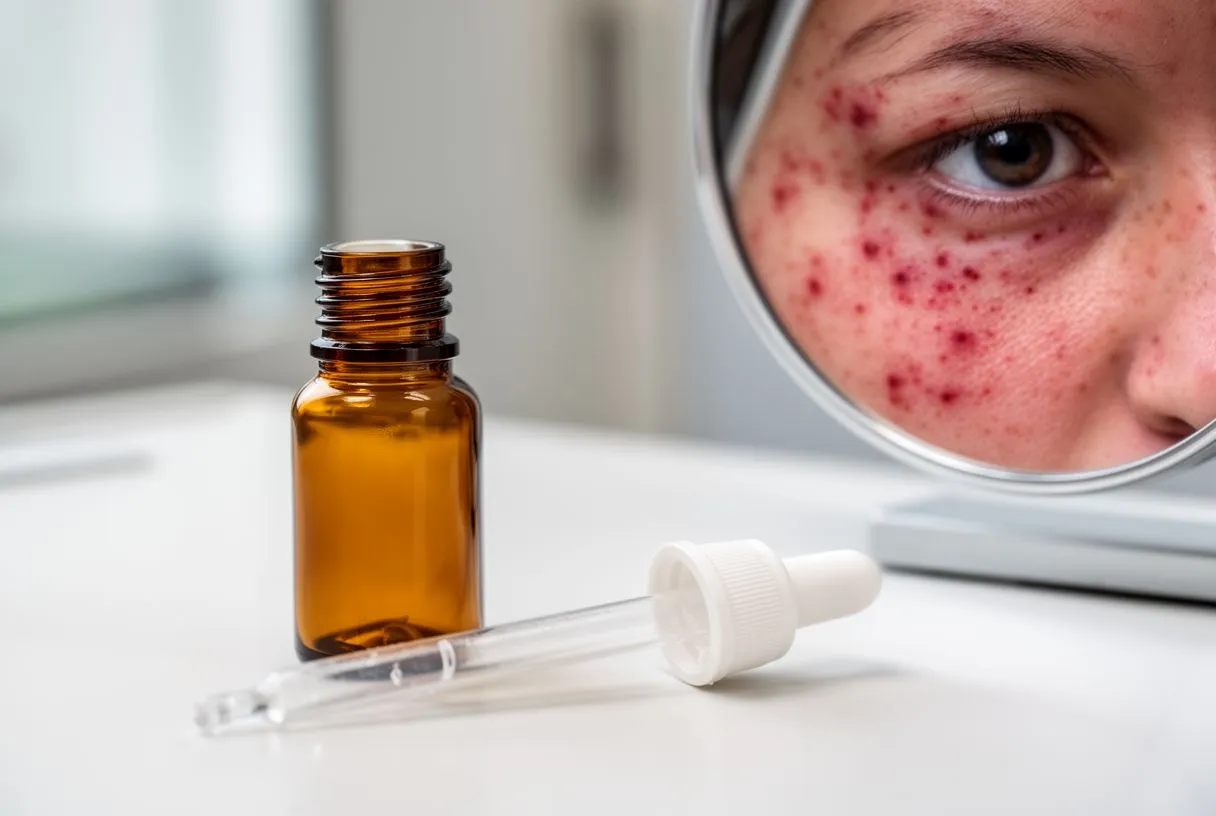
A conjunctival haemorrhage — often called a subconjunctival haemorrhage — is a small bleed under the conjunctiva, the thin, transparent membrane that covers the white of the eye and the inside of the eyelids. Tiny blood vessels run just beneath this membrane. When one of them breaks, blood pools between the conjunctiva and the sclera, creating a flat red patch that can cover part of the eye or the whole white of it.
Why it looks alarming: the eye has no way to let the blood drain away, so the red patch sits there in full view, sometimes for days. Unlike a bruise on the skin, which spreads into a purple-yellow mark, the bleed stays sharply defined because the conjunctiva pins it in place. It cannot cross into the coloured iris or the pupil, so your vision is not affected.
Common everyday triggers: coughing, sneezing, straining, heavy lifting, vigorous eye rubbing, and minor bumps can all rupture a small vessel. In older adults the vessel walls are naturally more fragile, and a raised blood pressure reading at the wrong moment can be the final push. Many people notice the bleed only when they look in a mirror, because it causes no pain.
Why Do Blood Thinners Cause Eye Bleeding?
Anticoagulants and antiplatelet medicines reduce the blood's ability to clot. That is their job: preventing the clots that cause strokes, heart attacks and blocked stents. The trade-off is that when a small vessel anywhere in the body breaks, the body takes longer to seal it. A tiny conjunctival vessel that would have stopped bleeding in seconds may ooze for minutes instead, producing a larger and more dramatic red patch.
Eye bleeding blood thinners connection: the medicines themselves do not make vessels break. They simply amplify the result of a break that was going to happen anyway — from a cough, a rub of the eye, or nothing you can identify at all. This is why a blood thinner eye haemorrhage usually appears without warning and without injury.
Subconjunctival bleeding is one of the most frequent minor bleeds seen in patients on warfarin and the newer anticoagulants. Medical references such as WebMD describe it as a benign condition that resolves without treatment in most people, even when anticoagulation is involved. The key is knowing which cases are benign and which are not, which is what the rest of this guide covers.
Which Blood Thinners Cause a Red Spot on the Eye?
Nearly every medicine that affects clotting can be behind a red spot on the eye from blood thinner use. The common ones fall into two groups.
- Anticoagulants: warfarin, apixaban, rivaroxaban, dabigatran and edoxaban. These slow the clotting cascade itself and carry the greatest effect on bleeding of any kind.
- Antiplatelets: aspirin, clopidogrel, ticagrelor and prasugrel. These stop platelets — the cell fragments that form the first plug in a clot — from sticking together. They are standard after a coronary stent or percutaneous coronary intervention.
Warfarin eye bleeding deserves a special note: because warfarin's effect shifts with diet, other medicines and liver function, patients on it attend regular blood tests. A full blood count and an INR check (the measure of how slowly your blood clots) can reveal whether your level has drifted above the target range, which would make a bleed like this more likely. A first-time blood thinner eye bleeding episode is also a prompt to check blood pressure in both arms, since a meaningful blood pressure difference between arms can point to vascular disease worth investigating.
What the bleed does not mean: in most cases it is not a sign that your medicine dose is wrong, nor that a dangerous bleed is brewing elsewhere. Studies of patients on anticoagulants have found that isolated subconjunctival bleeding rarely signals a serious underlying problem. Large cardiovascular research programmes, including Mendelian randomisation analyses of bleeding and clotting risk published in sources such as NCBI Bookshelf, continue to map how bleeding risk varies between individuals — but for the patient, the practical message is: one red eye is usually a nuisance, not an emergency.
Does a Burst Blood Vessel in the Eye Heal?
Yes — a burst vessel in the conjunctiva heals on its own, reliably, and without leaving damage. The vessel seals itself within minutes to hours. The blood already sitting under the membrane then behaves like any bruise: the body gradually absorbs it.
Typical timeline: the red patch is at its darkest for the first two or three days. It then fades from the edges inward, often turning orange, pink or yellow before disappearing. Most conjunctival haemorrhage treatment needed is simply time: the whole process usually takes one to two weeks, and larger bleeds can take up to three.
Can it happen again? It can. Once a vessel has ruptured, that particular spot may bleed again if rubbed or strained. And a person who has had one subconjunctival bleed is somewhat more likely to have another, especially while continuing anticoagulation. Recurrent bleeds are worth a proper eye examination, but a single episode is not a reason to stop blood thinners — and stopping them on your own, for example after a coronary stent, can be far more dangerous than the bleed itself.
How Do You Treat a Subconjunctival Haemorrhage?
There is no medicine or drop that speeds up the absorption of the blood. The treatment for blood thinners eye bleeding is supportive care while your body does the work.
- Do not rub the eye: rubbing can re-open the sealed vessel or start a new bleed. Ask family members to be gentle too.
- Cool compresses early: a clean, cool cloth over the closed eye for ten minutes a few times a day in the first 48 hours can ease any surface irritation and discourage further bleeding.
- Artificial tears: preservative-free lubricating drops can soothe a scratchy or gritty feeling, which some patients notice as the blood breaks down.
- Continue your medicines: unless your doctor tells you otherwise, keep taking your anticoagulant or antiplatelet exactly as prescribed. Do not skip or halve doses because of a red eye.
Blood thinners eye bleeding treatment — what not to do: avoid "redness relief" drops, avoid aspirin taken for pain (it is already in your system or works against your clotting plan), and avoid straining at the toilet or in the gym while the bleed is fresh. If you are constipated, treat that, because straining is a classic trigger. In the first days of a bleed, patients on anticoagulants often ask whether they should temporarily stop the medicine — that decision belongs with your prescribing doctor, never with home advice.
Red Flags for a Subconjunctival Haemorrhage
Most red eyes on blood thinners are harmless. But a few features change the picture and mean you should be seen promptly.
Anticoagulant eye side effects — when to seek care: contact a doctor the same day if the eye is painful, if your vision is blurred or reduced, if the eye is also sensitive to light, or if you notice a visible collection of blood inside the eye itself rather than on the white. Also seek care if the bleed followed significant head or eye injury, if it is bleeding spontaneously over and over, or if it appears in both eyes at once without any clear cause.
Why bloodshot in one eye matters: a bloodshot eye on one side, where the redness is diffuse rather than a single flat patch, can be conjunctivitis (infection or inflammation), iritis, or acute glaucoma — conditions that need treatment and that do not simply fade in two weeks. The distinguishing feature is usually discomfort, light sensitivity or visual change. If the redness is a flat patch on the white, painless, and vision is normal, it is almost certainly a benign haemorrhage.
Red lines in the eyes: people sometimes describe fine red lines or a lacy red network on the white of the eye. These are typically dilated surface vessels — from dry eye, allergies, contact lens wear or irritation — rather than a bleed. They do not behave like a haemorrhage: they blanch with drops and return, rather than fading away over two weeks. Persistent new red lines still deserve an eye check, but they are not usually connected to anticoagulants.
Blood in the Eye but No Pain — What Could It Be?
"I have blood in my eyeball but no pain" is one of the most common questions patients bring to us. The most likely answer is exactly what this article describes: a subconjunctival haemorrhage, which by definition sits on the surface and does not hurt. Painless redness confined to the white of the eye, with normal vision, fits that diagnosis.
Other possibilities to rule out: a true hyphema (blood inside the front chamber of the eye, usually after injury) causes some visual disturbance and needs urgent care. A bleed on the retina — the light-sensitive layer at the back — can be painless but causes floaters, a shadow or a curtain across the vision. Neither of these looks like a flat red patch on the sclera, which is why a simple eye examination settles the question quickly.
When the bleed keeps coming back: recurrent conjunctival bleeding, especially with unexplained bruising elsewhere, warrants blood tests. A full blood count can check platelets and haemoglobin, and for patients on warfarin, an INR measurement confirms whether anticoagulation has drifted out of range. In cardiology patients, it is also fair to ask whether a new medicine interaction has increased the anticoagulant effect. When a patient on anticoagulation has a recurrent or unexplained bleed, every medicine and interaction should be reviewed before any dose change is discussed.
Anticoagulant Eye Bleeding Management on Heart Medicines
If you have a mechanical heart valve, a recent coronary stent, or a diagnosis of atrial fibrillation, your anticoagulation is protecting you from something much more serious than a red eye — a stroke or a blocked coronary artery. That is why the default answer to a surface eye bleed is: continue the medicine, treat the eye, and investigate only if the bleed is severe, recurrent or accompanied by other bleeding.
Do not stop blood thinners on your own: the risk of stopping depends on why you take them. After a coronary stent, stopping antiplatelet therapy early can cause in-stent clotting, which can trigger a heart attack. With a mechanical valve or rheumatic heart disease, anticoagulation is lifelong and non-negotiable. Even a dramatic-looking eye bleed rarely justifies interruption — and a doctor will weigh the trade-off, not a checklist.
How decisions are actually made: in our team, every patient's medication plan is reviewed by the multidisciplinary group against international guidelines before any change is proposed, and the patient receives the reasoning in plain words along with the alternatives. If you have a mechanical valve, atrial fibrillation or a coronary stent and you are worried about bleeding, a video consultation with a heart surgeon is a good first step: we get to know the patient, talk through the condition, and say which studies are still needed so no unnecessary ones are ordered.
When to Tell Your Heart Specialist
Not every red eye needs a cardiologist's attention, but some do — and the difference matters.
Tell your cardiologist or cardiac team if: the bleed is large or recurrent, you notice bleeding from gums or into the skin elsewhere, your urine or stools change colour, you have started a new medicine or supplement, or you simply cannot remember why your blood thinner was prescribed in the first place. Also mention it if you have coronary artery disease or a coronary stent and you have been asked to stop aspirin by another doctor for a procedure — that handover needs coordination.
Underlying causes worth ruling out: uncontrolled hypertension, undiagnosed chronic kidney disease (which changes how some anticoagulants are dosed), and anaemia can all tilt the bleeding balance. In patients with broader vascular disease, an eye bleed can occasionally be the first visible sign of a wider problem, which is why a simple blood pressure check in both arms and a basic panel of blood tests are worthwhile first steps.
Every clinical situation is personal, and no article can substitute for a review of your own history. If you are in Guadalajara, Querétaro or Hermosillo, or anywhere reachable by video, our team led by Dr Alejandro Molina can review your situation, explain what your studies show, and help you decide the next step. We treat second opinions as a normal part of deciding about heart care, and we encourage them.
Living Well with Blood Thinners and Eye Health
Most patients on anticoagulants never experience more than the occasional spectacular-looking red eye. A few habits reduce the odds and make the episodes easier to handle.
Blood thinner eye safety checklist: keep blood pressure well controlled, wear protective glasses for DIY and sport, avoid rubbing the eyes, treat dry eye and allergies properly, keep a current list of every medicine and supplement, and attend every scheduled INR or blood test. Tell your eye doctor and your dentist that you take anticoagulants before any procedure — most can be done without stopping them.
Blood thinners and eye problems — the bigger picture: some anticoagulants are associated with rare but serious eye complications, and a minority of patients on anticoagulation for atrial fibrillation can develop retinal bleeding. If your vision changes — floaters, flashes, a shadow, or sudden blurring — that is an eye emergency, distinct from the benign surface bleed this article covers. Regular eye examinations are a sensible part of looking after yourself on long-term anticoagulation.
Every case reviewed by our multidisciplinary team — covering valve disease, coronary disease, the aorta and structural heart conditions — is assessed against international guidelines before a recommendation is made, and the final decision always rests with the patient. A conjunctival haemorrhage on blood thinners is, for most people, a two-week inconvenience. Treat it calmly, protect the eye, keep taking what your heart team prescribed, and bring anything recurrent, painful or vision-related to a professional without delay. Book a consultation to talk through your own situation rather than guessing at the answer.