Heart Valve Cusp Problems: Bicuspid and Quadricuspid Valves
Heart valve cusp problems like bicuspid and quadricuspid valves affect blood flow and long-term heart health.
What Are Heart Valve Cusp Problems?
Heart valve cusp problems are structural faults in the thin leaflets, called cusps, that open and close inside each of your four heart valves. When the cusps are shaped wrong, fused together, or stiffened by disease, the valve no longer seals or opens cleanly, and blood flow through the heart suffers as a result. This article explains the two most common congenital valve defects of this kind — the bicuspid aortic valve and the quadricuspid aortic valve — along with the symptoms they cause, the tests that find them, and the treatments that fix them.
Every cusp is a delicate flap of tissue, about the thickness of a credit card, engineered to flex open and shut roughly two billion times in a lifetime. That is a remarkable margin of safety, but it also means small changes in cusp shape or surface load matter over decades. A valve that works perfectly at age twenty may leak or narrow at fifty, which is why these problems are often discovered late in life.
Why this matters to you: if you or a family member has been told you have an abnormal heart valve, an unusual murmur, or a question about a heart valve cusp, the decisions ahead are usually not urgent — but they are important. Understanding the anatomy and the options puts you in control of the conversation with your cardiac team.
How Many Cusps Does a Normal Heart Valve Have?
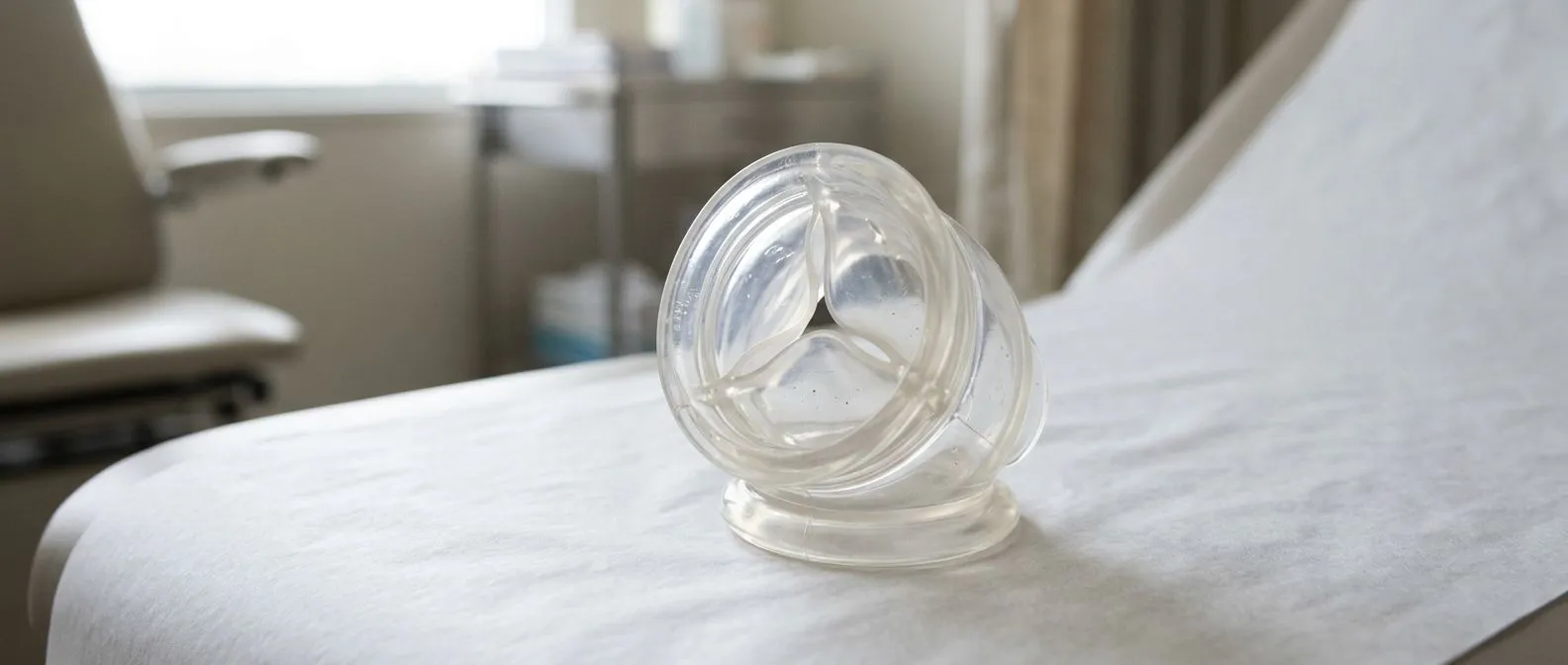
The heart has four valves, and each has a different normal design. The aortic valve and the pulmonary valve each have three cusps. The tricuspid valve has three cusps as well, as its name suggests, while the mitral valve has two, called anterior and posterior leaflets. So the answer to "how many cusps are in the tricuspid valve?" is three — anterior, posterior, and septal.
These cusps sit on a ring of fibrous tissue called the valve annulus, the saddle-shaped frame that supports the valve. When the heart relaxes, the cusps fall shut and prevent blood from flowing backward. When the heart contracts, they swing open to let blood pass forward.
Normal cusp number and shape matter because they distribute mechanical stress evenly. A valve with three well-proportioned cusps closes like a Mercedes-Benz star, each flap taking an equal share of the pressure. Change that number or proportion, and the stress concentrates on fewer tissue surfaces, which is the starting point for most problems described in the rest of this article.
Is the Aortic Cusp the Same as the Aortic Valve?
No — and this is a distinction worth knowing before any consultation. The aortic valve is the whole structure: the annulus, the three cusps, the commissures where the cusps meet, and the sinuses of Valsalva, the little bulges behind the cusps. An aortic cusp is one of the three individual leaflets — conventionally named left coronary, right coronary, and non-coronary.
Doctors use this vocabulary precisely because disease can be localized. An echocardiogram report may describe a fused right-left cusp, a prolapsing left coronary cusp, or uneven cusp size, and each finding points to a different repair strategy. Knowing your heart: the aortic valve is the gate between the left ventricle and the entire body, so every detail of its construction matters.
Why it matters in reports: when you read your own echo report, you will see phrases like "trileaflet aortic valve" or "bicuspid with right-left cusp fusion." These describe the cusp anatomy, not the valve as a whole. Bring those exact phrases to your consultation — they tell your surgeon more than a general word like "leaky valve" ever could.

What Are Bicuspid Aortic Valve Problems?
Bicuspid aortic valve problems are the most common congenital valve defect in the world, affecting roughly one to two percent of people. Instead of three cusps, the aortic valve forms with two — usually because two cusps fused during development in the womb, leaving a raphe, a ridge of fused tissue, where the third cusp should have been. Right-left fusion is the most frequent pattern.
Because two cusps carry the load that three normally share, the tissue experiences higher stress per unit area. Over the years this leads to earlier wear: the valve may become narrowed (aortic stenosis) or leaky (aortic regurgitation) decades earlier than a normal trileaflet valve would. Research on bicuspid patients has also shown unique patterns of elastin degradation in the ascending aortic wall, which is why a bicuspid valve is linked to a higher risk of aortic aneurysm — a widening of the main artery that carries blood to the body (Atlantis Press).
Who gets diagnosed, and when: many bicuspid valves are found by chance on a routine echocardiogram, or when a doctor hears a characteristic heart murmur valve cusp sound — a clicking or whooshing noise between heartbeats. Others surface only when symptoms appear in middle age. Guidelines recommend that anyone with a bicuspid valve have periodic imaging of both the valve and the ascending aorta, because the two problems travel together.
What Is a Quadricuspid Aortic Valve?
A quadricuspid aortic valve is far rarer than a bicuspid one — it occurs in a small fraction of a percent of the population. Here the valve develops with four cusps instead of three. The extra cusp is usually smaller than the others, and that unevenness is the problem: the valve may close imperfectly, allowing blood to leak backward.
Most people with a quadricuspid valve feel fine for years. The leak, called aortic regurgitation, tends to grow slowly, and the heart adapts by enlarging the left ventricle. That is why these valves are often discovered in adulthood, sometimes during an echocardiogram done for another reason, or after a murmur is noticed.
What treatment looks like: quadricuspid valve treatment options depend on how much the valve leaks and how the ventricle is coping. Some valves can be repaired surgically — surgeons may resuspend the cusps or tricuspidize the valve, converting it to a three-cusp configuration. When repair is not durable, replacement is chosen. The key is surveillance: an echo every year or two catches the leak long before it damages the heart.
What Causes Valve Cusp Thickening and Calcification?
Valve cusp thickening causes fall into two broad families: congenital shape problems and acquired disease. A bicuspid or quadricuspid valve thickens faster because its cusps carry more stress. A normal trileaflet valve can also stiffen with age, particularly in people with high blood pressure, high cholesterol, smoking history, or chronic kidney disease.
Heart valve cusp calcification is the deposition of calcium inside the valve tissue, turning flexible leaflets into rigid, rock-like cusps. As the cusps stiffen, they cannot open fully, and the heart must push harder to drive blood through the narrowed opening. This is aortic stenosis — the most common reason for valve replacement in older adults.
How fast it progresses: calcification is usually gradual, not sudden. Doctors track it with echocardiograms, measuring the valve area and the pressure gradient across the valve, and intervene when the measurements cross guideline thresholds — not based on symptoms alone. The American Heart Association notes that aortic stenosis from calcification is largely a disease of aging, accelerated in bicuspid valves (MedlinePlus). You can slow the process by controlling blood pressure, cholesterol, and avoiding tobacco, but you cannot reverse it once calcium has settled in.
What Aortic Valve Disease Symptoms Should You Watch For?
Aortic valve disease symptoms usually arrive in a predictable order. In the early stages there are none — the valve is abnormal on the echo, but the heart compensates. As narrowing or leaking advances, the first complaints are typically exercise intolerance: stairs that used to be easy now leave you breathless.
The classic triad to know:
- Breathlessness: shortness of breath with exertion, especially when lying flat at night or waking gasping.
- Chest discomfort: pressure or tightness with activity, caused by the heart muscle working against a blocked valve.
- Fainting or near-fainting: dizziness during exercise, a sign the heart cannot raise its output enough to keep blood flowing to the brain.
Other warning signs include palpitations, fatigue that sleep does not fix, and swelling of the ankles. In aortic regurgitation, some people notice a strong, pounding heartbeat in the neck or an unusually wide pulse pressure. None of these symptoms alone proves valve disease, but any of them combined with a known murmur or abnormal valve deserves a cardiology visit.
When to See a Cardiologist for Valve Issues?
When to see a cardiologist for valve issues comes down to a simple rule: if you have a known abnormal valve, see a cardiologist regularly whether or not you feel anything; if you have any of the symptoms above, see one soon. The cardiac silhouette of a valve problem is quiet for years — the danger is that patients wait until symptoms are severe, when the heart muscle has already been strained.
Red flags that need urgent attention: fainting, chest pain at rest, or sudden breathlessness at night are not "watch and wait" symptoms. They warrant prompt evaluation, sometimes the same week. A new murmur after an infection, particularly with fever, also needs immediate assessment because infected cusps can destroy a valve rapidly.
In our practice, the first contact is a free video consultation: we get to know the patient, talk through what the studies show in plain words, and identify which tests are genuinely still needed so no unnecessary ones are ordered. If you already have an echocardiogram, bring it — most of the decision-making about cusp problems rests on that single study.
What Are Bicuspid Valve Replacement Surgery and Treatment Options?
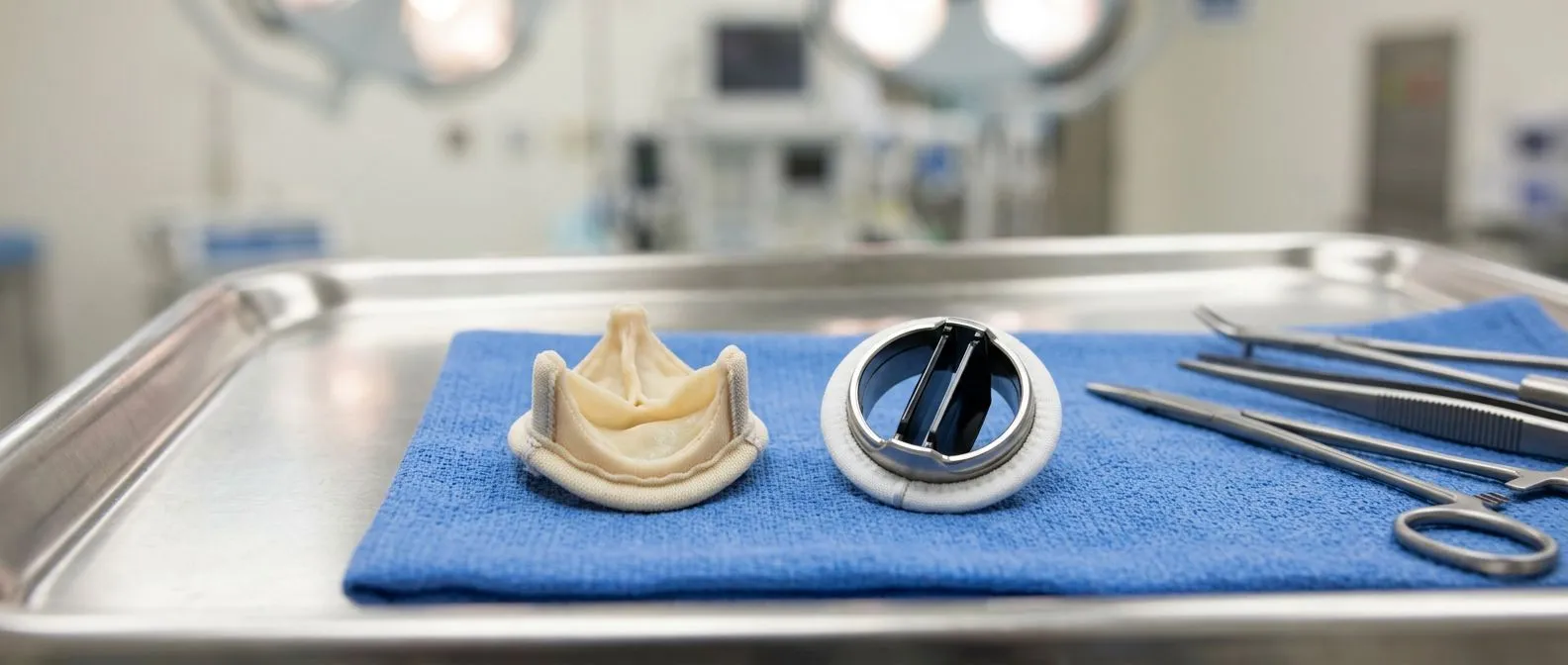
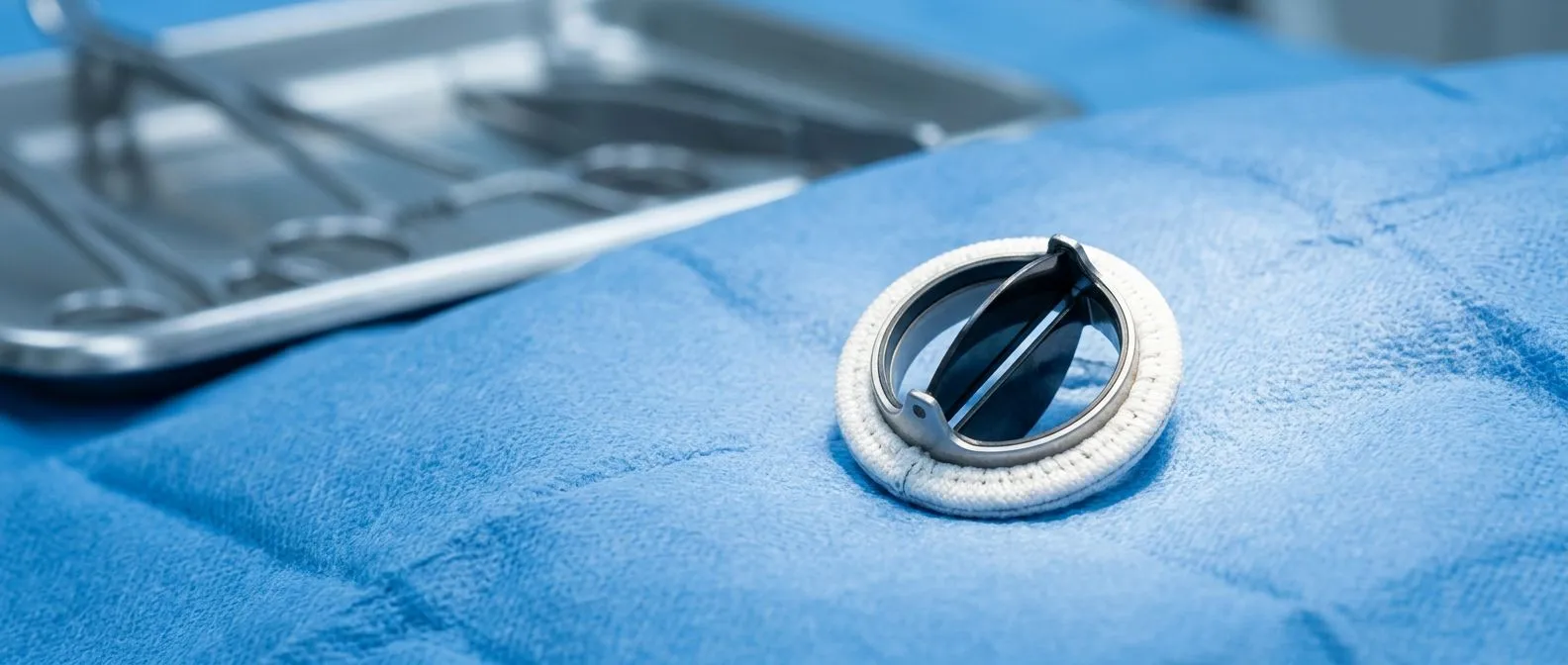
Bicuspid valve replacement surgery has two main routes: conventional open surgery through the breastbone, and minimally invasive approaches. For a young or middle-aged patient with a bicuspid valve needing replacement, the usual choice is a mechanical or biological valve through surgical implantation, because bicuspid anatomy is often less suitable for a transcatheter valve. For older patients, TAVR — transcatheter aortic valve replacement, sometimes called Transcatheter Aortic Valve Implantation — delivers a new valve through a catheter in the groin, without opening the chest.
Choosing the right valve type: the options each carry trade-offs, and the right answer depends on age, lifestyle, and anatomy:
- Mechanical valves last for decades but require lifelong blood-thinning medication.
- Biological valves (such as a Porcine Valve) avoid blood thinners but wear out sooner, and can be revisited later with a valve-in-valve transcatheter procedure.
- Transcatheter valves — including self-expanding designs such as the Lotus Valve, and sutureless, stented, stentless, or supra-annular and intra-annular configurations — suit patients at higher surgical risk or with specific anatomy.
Every case is reviewed by our multidisciplinary team against international practice guidelines before a recommendation is made, and the patient receives a clear proposal with the alternatives — the final decision is always theirs. Dr Molina trained in cardiac, minimally invasive, robotic and structural surgery at the University of Montreal and in structural cardiology and TAVR at CHU Bordeaux, and we recommend the less invasive route only where the evidence supports it for that specific patient.
Living With a Young Adult Heart Valve Defect: What Comes Next?
A young adult heart valve defect diagnosis sounds alarming, but the practical reality is often one of monitoring rather than immediate surgery. A bicuspid valve found at age twenty-five with normal function typically needs an echocardiogram every few years, blood pressure control, and dental hygiene to prevent infection of the valve. Most people with a bicuspid valve live full, active lives before any intervention is needed.
What surveillance actually tracks: valve function, the size of the ascending aorta, and the heart's pumping strength. The aortic diameter matters most — a guideline threshold of 5.5 cm generally triggers discussion of surgery, earlier if the valve is being replaced anyway or the aorta is growing quickly. If your echo shows a diameter approaching that number, you should know it and discuss it explicitly.
Other valves worth knowing about: similar cusp problems can affect other valves. Mitral Valve Prolapse involves the two leaflets of the mitral valve bowing backward; Tricuspid Valve Repair is the standard approach for the right-sided valve, which is often the hardest to repair because of its complex annulus and lower pressure environment (Termedia). Valve Degeneration — the gradual wearing out of a repaired or replaced valve — is also a real long-term consideration, which is why follow-up never truly ends.

Getting a second opinion is a normal part of deciding about heart surgery, and we encourage it — a serious diagnosis deserves a confident, well-informed decision. If you have been told you have an abnormal heart valve, a murmur, or an aortic question, the most useful next step is a focused conversation with a qualified cardiac team that can look at your own images and explain exactly what they see. We are happy to review your case and answer every question before any decision is made — book a consultation rather than trying to self-diagnose from a scan report.