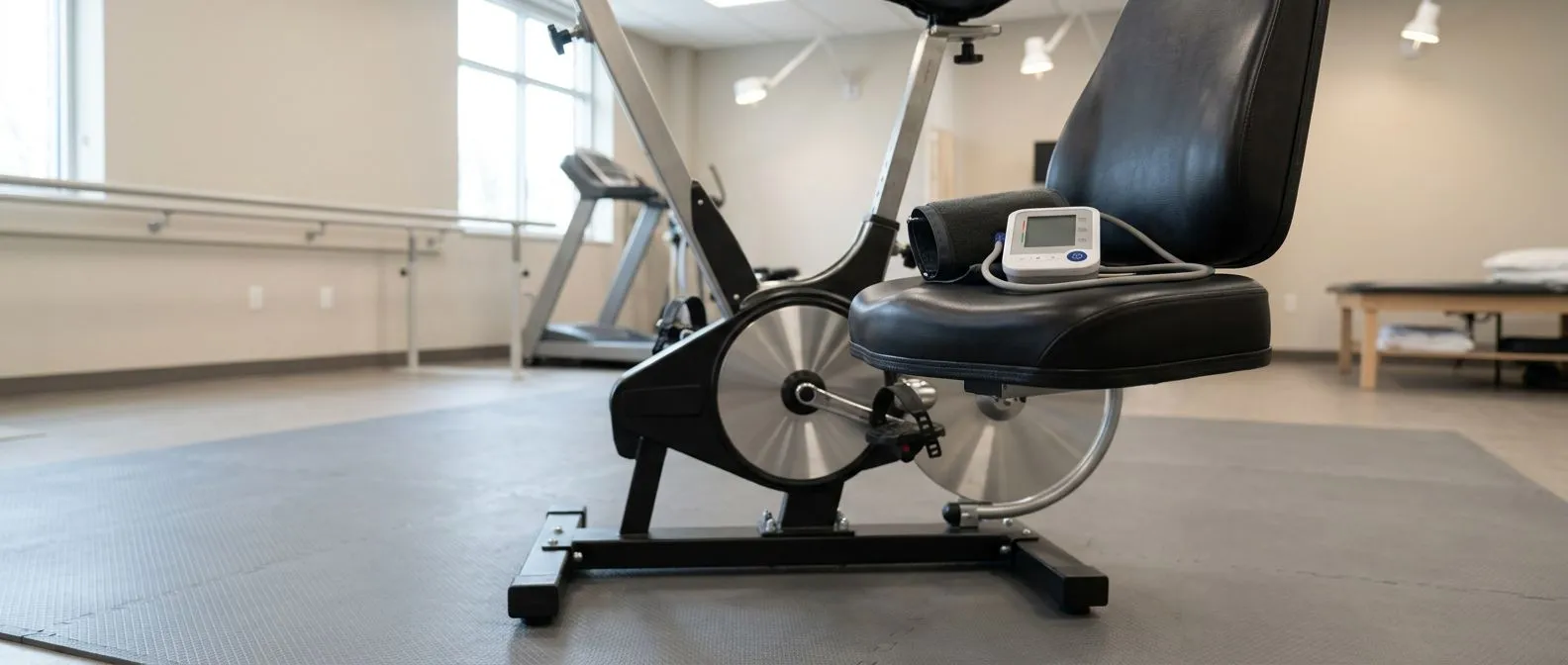
Phase III Cardiac Rehabilitation: Lifelong Fitness
Phase III cardiac rehabilitation helps heart patients maintain lifelong fitness through supervised exercise and lifestyle programs.
Recovering from a heart attack, bypass surgery, or a valve procedure does not end when you leave the hospital. For many patients, the most important part of the journey begins afterward, with phase iii cardiac rehabilitation: the long-term stage of recovery where exercise becomes a lifelong habit rather than a temporary treatment. This guide walks through what Phase III involves, how it differs from earlier phases, and how patients and families can use it to build lasting strength and confidence.
What Is Phase III Cardiac Rehabilitation?
Phase III cardiac rehabilitation is the extended, often community- or gym-based stage of recovery that follows medically supervised early rehabilitation. By this point, patients have usually completed their initial hospital recovery and a structured outpatient program, and they now exercise with less direct supervision while still following a prescribed plan.
Where it fits in the bigger picture. Cardiac rehabilitation: what it is and who it is for is a question every heart patient should ask early, because the program is not only for post-surgical patients. People with coronary artery disease, heart failure, or stable angina can all benefit. The overarching goal is the same: restore fitness, reduce risk, and prevent the disease from progressing.
Why the long-term stage matters. Research summarized in European Society of Cardiology guidance on comprehensive cardiovascular rehabilitation shows that structured exercise and secondary prevention measurably improve outcomes after a cardiac event. The benefits come from consistency over months and years, not from a few weeks of attendance, which is exactly why Phase III exists as a distinct stage. A written long-term exercise plan at the end of active rehabilitation helps, because the maintenance stage is where the real gains are protected.
What Are the Steps Involved in Cardiac Rehab?
Cardiac rehabilitation follows a series of steps, traditionally described in four phases. Each one builds on the last, moving from acute hospital care toward independent, lifelong activity. Understanding the sequence helps patients know what to expect and reduces anxiety about the road ahead.
- Phase I Rehabilitation: the inpatient stage, beginning in the hospital within a day or two of your event or surgery, with gentle bedside mobilization and education about what happened to your heart.
- Phase II Rehabilitation: the early outpatient stage, typically lasting several weeks, with monitored exercise sessions, medication review, and lifestyle coaching.
- Phase III Rehabilitation: the longer maintenance-oriented stage, where exercise becomes semi-independent and the emphasis shifts to endurance, strength, and habit-building.
- Lifelong Follow-up: the self-directed stage, sometimes called Phase IV, where you continue exercising on your own with periodic professional check-ins.
How the steps connect. No phase is skipped without a reason, and each transition is based on how your heart responds to increasing activity. A patient recovering from bypass surgery may move through the first three phases over six to twelve months, while someone with stable heart disease may enter an outpatient program directly. The key principle is gradual, monitored progression, never a sudden return to strenuous activity.
What Does an Outpatient Cardiac Rehabilitation Program Consist Of?
An outpatient cardiac rehabilitation program is far more than a set of exercise classes. It combines supervised physical training with education, risk-factor management, and psychological support, usually delivered two to three times per week over several weeks to several months.
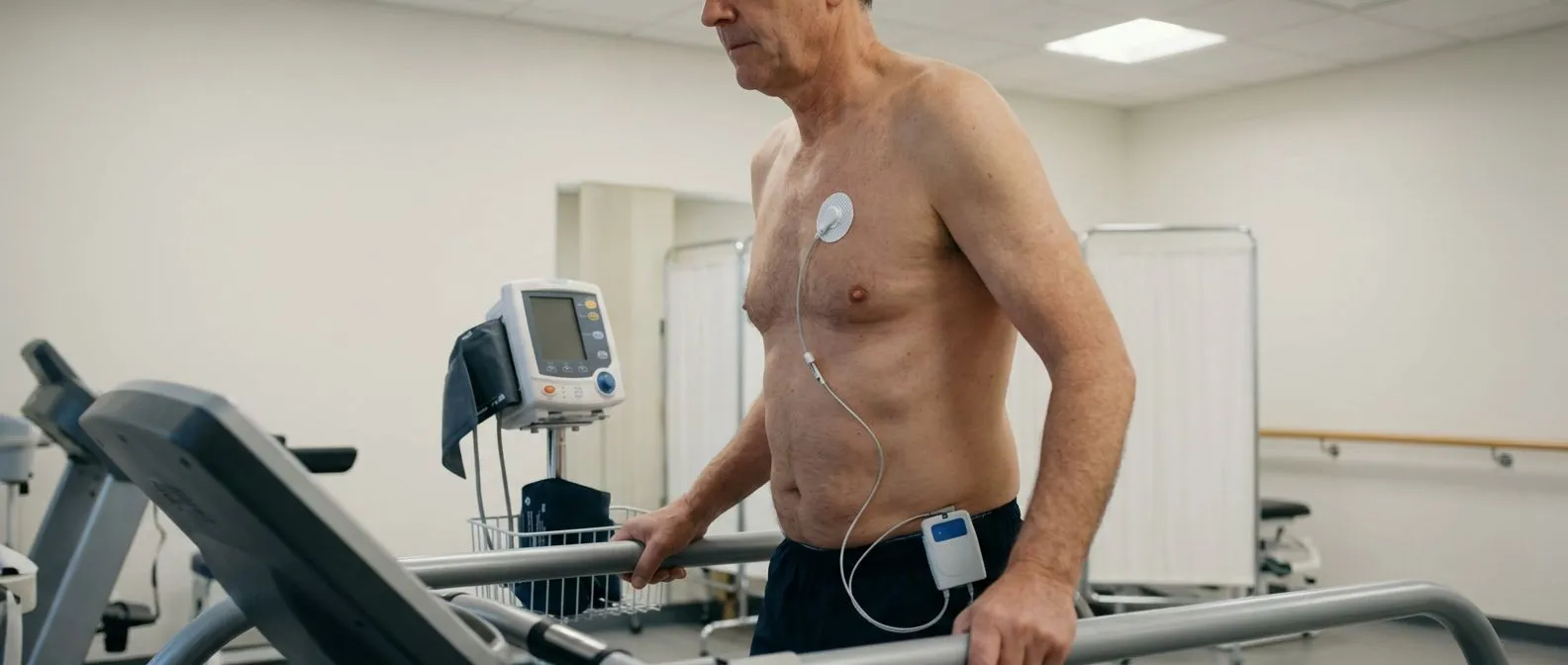
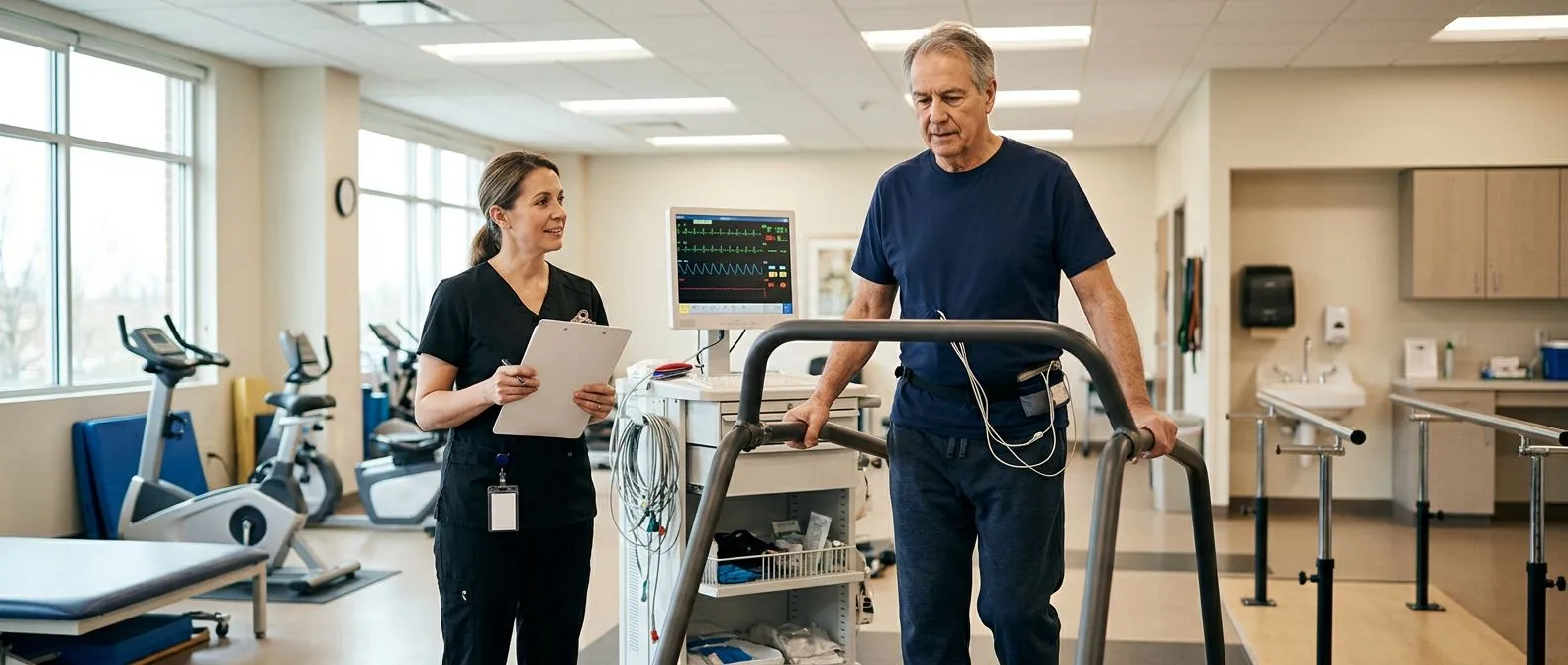
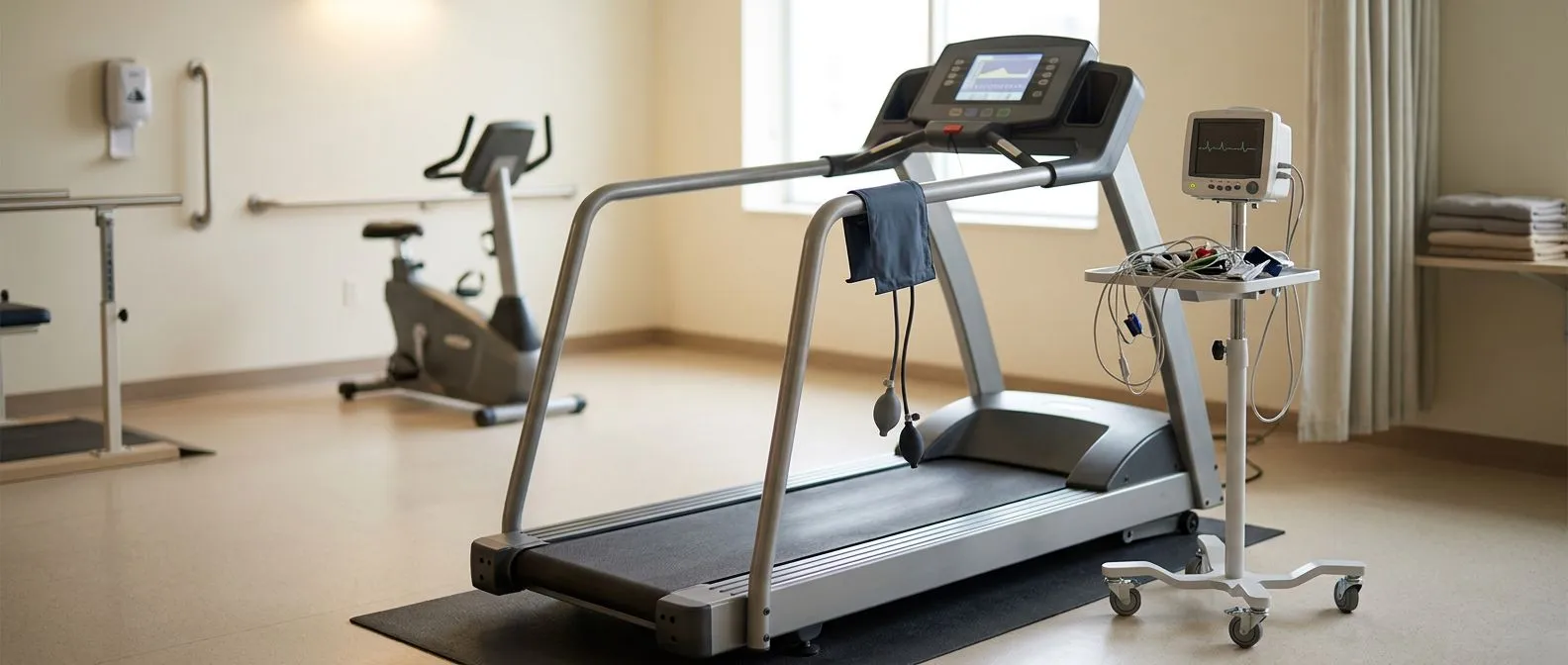
What a typical session includes. Sessions usually begin with a warm-up, progress through aerobic work on a treadmill, stationary bicycle, or rowing machine, and finish with light resistance training and a cool-down. Blood pressure, heart rate, and perceived effort are checked before, during, and after exercise. Over time, the intensity is increased according to your individual tolerance.
The education component. Just as important as the physical training is learning to understand your own condition: what your medications do, how to recognize warning symptoms, how to eat for heart health, and how stress affects your cardiovascular system. In our consultations we take the time to explain what the studies and test results actually show, in plain words, because patients who understand their condition adhere far better to the exercise plan.
Transition to the maintenance phase. When the supervised program ends, the outpatient team prepares a written home or community plan so the progress made in the gym is not lost. This handover is one of the most underrated moments in the entire recovery.
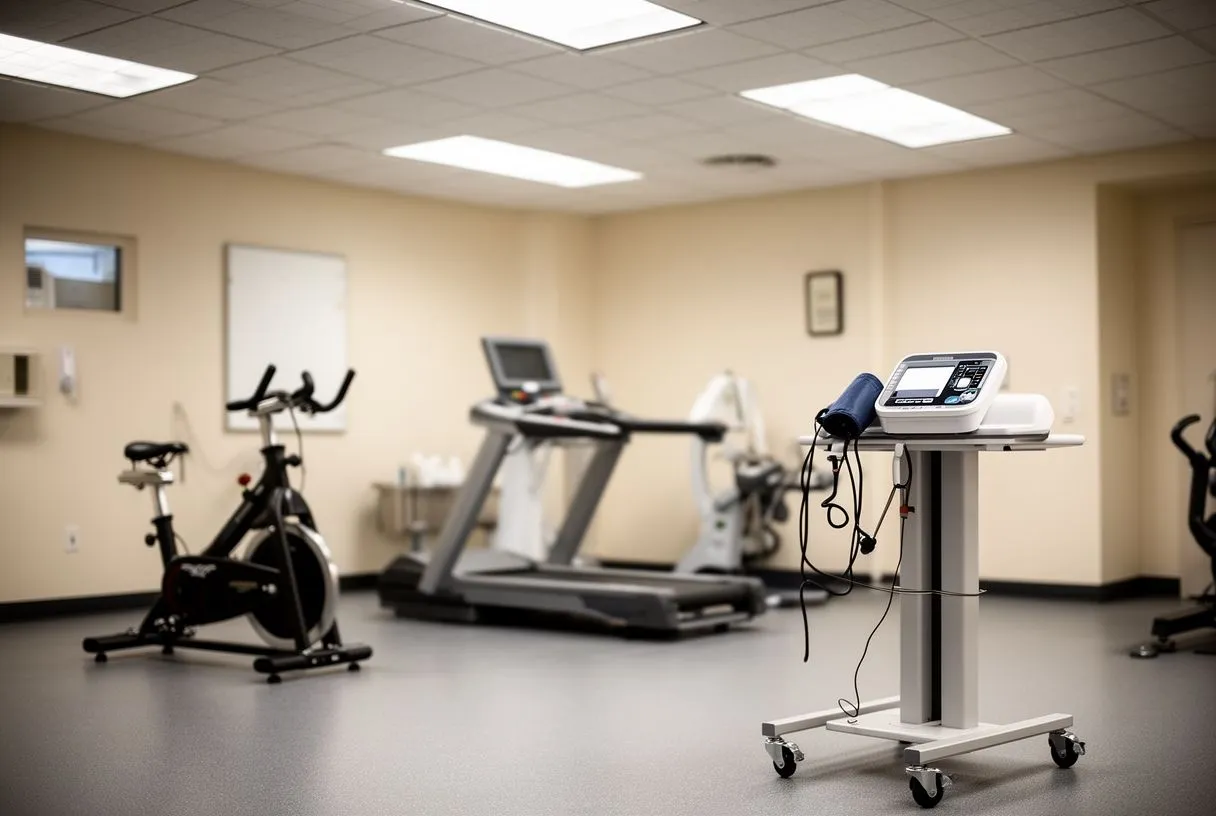
Cardiac Rehab After Bypass Surgery: What Does Recovery Exercise Look Like?
Cardiac rehab after bypass surgery follows a predictable timeline, though every patient progresses at their own pace. Coronary artery bypass grafting, the operation that reroutes blood around blocked coronary arteries, leaves the sternum (breastbone) healing for roughly six to eight weeks, and early exercise must respect that.
The first weeks. In the hospital phase, patients walk short distances and practice breathing exercises to protect the lungs. After discharge, walking remains the main activity, gradually increasing in duration before intensity is added. Strenuous lifting and pushing are avoided while the breastbone heals.
From weeks to months. Once cleared, patients typically begin a structured outpatient program with progressive aerobic exercise and, later, light resistance work to rebuild the strength lost during hospitalization. Coronary artery disease rehabilitation at this stage also targets the underlying disease: cholesterol control, blood pressure, blood sugar, and smoking cessation all matter as much as the treadmill minutes.
What long-term exercise achieves. By the maintenance stage, most bypass patients can return to normal daily activity and moderate recreational exercise. The aim is not athletic performance but a durable, heart-healthy routine that protects the bypass grafts and any remaining coronary arteries. Our team reviews every bypass patient against international practice guidelines before recommending the surgical approach, and we always present the alternatives so the final decision rests with the patient.
Heart Attack Recovery Program: Can Exercise Prevent a Second Heart Attack?
A heart attack recovery program built around exercise is one of the best-evidenced ways to lower the risk of another event. After a myocardial infarction, the heart muscle and the coronary arteries that supply it remain vulnerable, and structured rehabilitation addresses the factors that drive future blockages.
How exercise protects the heart. Regular aerobic training improves the function of the blood vessel lining, lowers resting heart rate and blood pressure, improves cholesterol levels, and enhances insulin sensitivity. Together, these changes reduce the conditions under which new plaques form or rupture — the mechanism behind prevent second heart attack exercise strategies.
- Exercise training: the central pillar, improving cardiovascular fitness and vessel health.
- Medication adherence: statins, antiplatelet drugs, and blood pressure medicines work alongside exercise, not instead of it.
- Risk-factor control: smoking cessation and blood sugar control deliver some of the largest risk reductions of all.
The honest caveat. Exercise reduces risk substantially, but no program eliminates it. That is why ongoing medication, follow-up appointments, and symptom awareness remain part of every credible heart attack recovery program. Evidence indexed in the Directory of Open Access Journals supports the consistent finding that exercise-based rehabilitation improves both fitness and long-term outcomes after cardiac events.
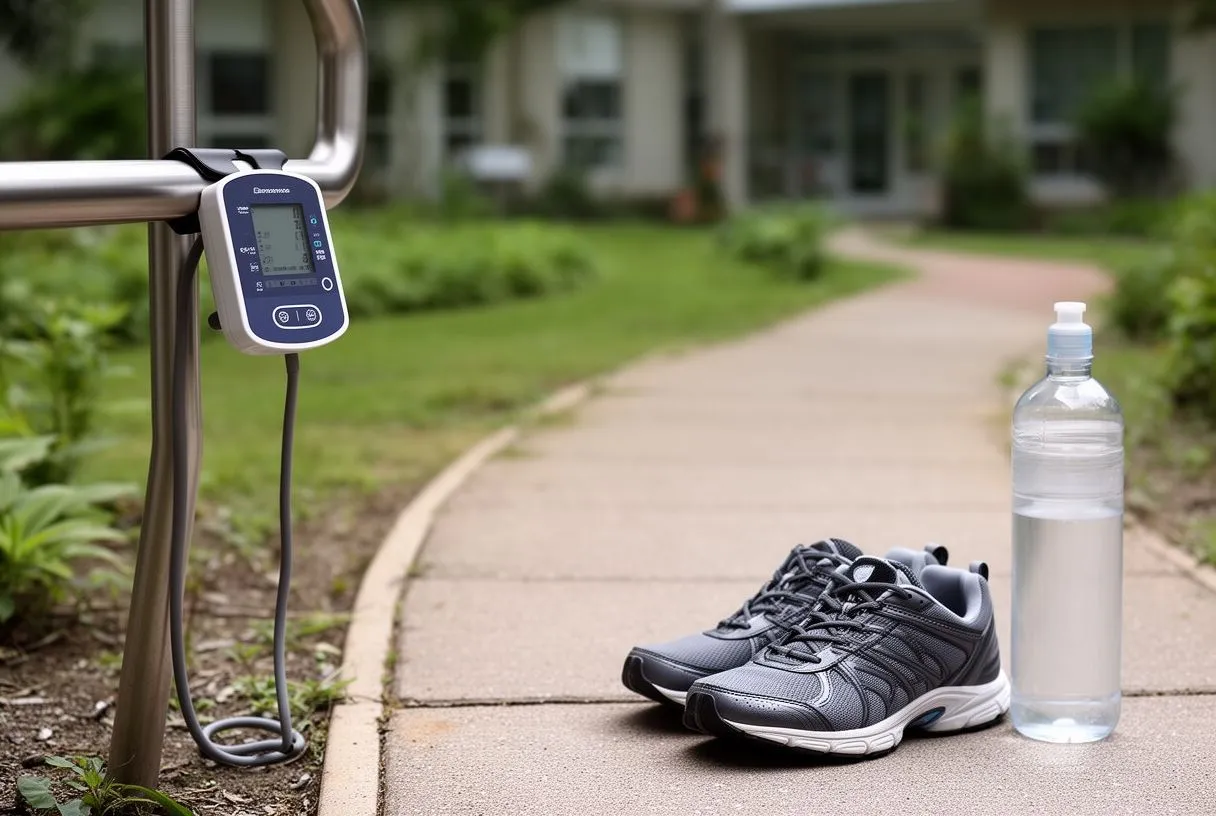
Cardiac Rehabilitation Goals in Phase 3: What Is the Maintenance Phase?
The cardiac rehab maintenance phase — sometimes called the cardiac rehab maintenance stage — is where short-term recovery becomes long-term health. The cardiac rehabilitation goals phase 3 programs pursue are different from earlier stages: the priority is no longer basic safety and healing, but sustaining and building on the fitness gained.
Fitness and endurance targets. In Phase III, patients aim to maintain or improve aerobic capacity, typically through 30 to 60 minutes of moderate aerobic exercise on most days of the week. Resistance training becomes a standard component, since muscle strength supports independence, balance, and metabolism, especially in older adults.
Independence and self-management. A defining goal of this stage is that the patient no longer needs continuous supervision. Learning to monitor your own effort — using the talk test, where you can still speak but not sing during exercise — is a skill that makes a long term heart exercise program sustainable.
Psychological recovery. Confidence is a genuine clinical goal. Many patients after a cardiac event develop fear of exertion, which quietly limits their activity for years. Phase III directly addresses this by demonstrating, in a structured setting, what the heart can safely do. Post cardiac rehab fitness is as much about trust in your own body as it is about treadmills.
How Is Supervised Exercise for Heart Patients Set and Monitored?
Supervised exercise for heart patients is prescribed with the same precision as medication. The starting point is an assessment of your current capacity, often using a symptom-limited exercise test or a six-minute walk test, alongside your medical history and current medications.
Individual intensity targets. Exercise is typically prescribed at a moderate intensity — roughly 40 to 70 percent of your measured capacity — and adjusted upward as you improve. Heart rate ranges, ratings of perceived exertion, or both guide each session. Patients with arrhythmias, heart failure, or recent complex procedures receive tighter individual limits.
What the monitoring looks for. During supervised sessions, staff watch for abnormal blood pressure responses, irregular heart rhythms, chest discomfort, disproportionate breathlessness, or dizziness. These are signals to pause, investigate, and adjust the plan. Clearance for higher-intensity exercise should be based on the full picture of the studies, not on a single number.
Safety in the unsupervised phase. As supervision decreases, the patient takes over monitoring. This is why education about warning symptoms — chest pressure, unusual breathlessness, palpitations, or lightheadedness — is non-negotiable before independent training begins.
Heart Failure Rehabilitation: How Do You Deal With Water Retention?
Heart failure rehabilitation program designs must account for a symptom many patients struggle with: fluid retention. When the heart's pumping function is reduced, fluid can accumulate in the legs, abdomen, and lungs, causing swelling, weight gain, and breathlessness — a question patients often raise as "how do you get rid of water retention in heart failure?"
Why it happens. A weakened heart can struggle to keep blood moving forward efficiently, so pressure backs up in the circulation and fluid leaks into tissues. This is why daily weight monitoring is a standard instruction: a sudden gain of two or three kilograms (roughly four to six pounds) over a few days often signals fluid buildup before swelling is obvious.
What helps. Fluid management rests on several pillars, and exercise is one of them, not the whole answer:
- Daily weights and medication: diuretics ("water pills") are the primary treatment and are adjusted by your doctor, never self-dosed.
- Salt reduction: limiting sodium helps prevent the body from holding onto fluid in the first place.
- Gentle regular movement: calf-muscle activity during walking improves fluid return from the legs and is a core part of cardiovascular maintenance therapy.
When to call the team. Rapid weight gain, increasing ankle swelling, new breathlessness lying flat, or waking at night short of breath are reasons to contact your cardiology team promptly, not to wait for the next appointment. Fluid status and medication effectiveness are worth reviewing at every follow-up, because catching retention early prevents many hospital admissions for it.

Which Cardiac Rehab Lifestyle Changes Build a Heart Healthy Exercise Routine?
The exercise program is only as durable as the habits around it. Cardiac rehab lifestyle changes that prove most lasting are the ones that fit into ordinary life — a heart healthy exercise routine is built from realistic choices repeated weekly, not heroic efforts that collapse after a month.
Making activity habitual. The most reliable approach is scheduling: fixed walking times, a standing gym appointment, or cycling to nearby errands. Guidelines on physical activity consistently favor regular moderate activity accumulated across the week over occasional intense sessions. Finding an activity you actually enjoy is the single strongest predictor of whether you are still doing it a year later.
Nutrition, sleep, and stress. A Mediterranean-style eating pattern — vegetables, legumes, fish, olive oil, and limited processed food — complements the exercise program. Adequate sleep and simple stress-management practices also influence blood pressure and inflammation, which matter for coronary artery disease over the long term.
Family involvement. Patients whose households join the new routine — shared walks, shared meals — sustain it far more easily than those who change alone. In our consultations we encourage patients to bring family members, because the people around the patient often determine whether the plan survives contact with real life.
Do You Need Ongoing Heart Monitoring With Exercise? Long-Term Follow-Up
Ongoing heart monitoring exercise plans are lighter than early rehabilitation, but they are not zero. Once you are stable and independent, follow-up typically shifts to periodic reviews — often every six to twelve months or as your cardiologist advises — focusing on symptoms, fitness, risk factors, and medication effectiveness.
What check-ups cover. A long-term review usually includes blood pressure, cholesterol and blood sugar labs, an assessment of exercise tolerance, and sometimes an echocardiogram (an ultrasound of the heart) or other imaging depending on your condition. Lifelong Follow-up is the term used for this continuing relationship with your cardiology team, and it exists because heart disease is managed, not cured.
Red flags that need attention sooner. Contact your team rather than waiting for a scheduled visit if you notice new or worsening chest discomfort, breathlessness that limits ordinary activity, palpitations, fainting, or unexplained weight gain.
Choosing the right team for your situation. Whether you are starting rehabilitation after surgery or reassessing a long-standing condition, the decision deserves a multidisciplinary review. Our multidisciplinary team, led by Dr Alejandro Molina, reviews every case against international guidelines and encourages second opinions as a normal part of deciding on care — and the first contact is a free video consultation where we talk through your condition and identify exactly which studies are still needed, so none are ordered unnecessarily. If you or a family member are facing heart surgery or recovery, discussing your specific situation with a qualified cardiac team is always the right next step — book a consultation rather than trying to self-diagnose.