Post-COVID Myocarditis: Symptoms and Recovery
Post-COVID myocarditis recovery starts with spotting symptoms early.
Recovery from post-COVID myocarditis is one of the questions we hear most often from patients who had COVID-19 and now feel something is not quite right with their heart. Myocarditis means inflammation of the heart muscle, the myocardium — the tissue that contracts to pump blood to the rest of the body. When a virus triggers this inflammation, the heart can become irritated, weakened or simply out of rhythm for a period of time. The good news is that most people recover, but the path back depends on recognizing the symptoms early, getting the right tests, and following a careful, structured plan. This guide walks you through what post-COVID myocarditis is, how it is detected, what treatment looks like, and what recovery really involves.
What Is Post-COVID Myocarditis?
How the virus affects the heart muscle. Myocarditis is inflammation of the myocardium, the muscular wall of the heart. COVID-19 can reach the heart muscle either directly, through the virus itself, or indirectly, through the body's immune response. When the immune system fights the infection, it can sometimes overreact and attack heart tissue as a bystander, causing swelling and irritation. This is different from a blocked artery causing a heart attack — in myocarditis the problem is inflammation, not cholesterol plaque. The heart muscle cells are usually not permanently destroyed; they are irritated, and in most cases they calm down over weeks to months.
Who is most likely to develop it. Post-COVID myocarditis is seen more often in younger adults and adolescents than in older people, and in males more than females. That said, it can happen at any age. It is also worth knowing that severe cases of COVID-19 itself — with high fevers, low oxygen and critical illness — place extra strain on the heart, and doctors separate that general stress from true myocarditis. The two can coexist, which is one reason proper testing matters.
Why it matters to catch it. Inflammation of the heart muscle temporarily reduces the heart's ability to pump efficiently. In most people this is mild and heals completely. In a smaller number, the inflammation is more significant, and pushing the heart too hard before it heals can worsen things. That is why the diagnosis matters even when symptoms seem mild — it changes what you should and should not do during recovery. The National Heart, Lung, and Blood Institute provides clear patient information on myocarditis and its causes if you want to read further.
Post-COVID Myocarditis Symptoms to Watch For
Myocarditis chest pain recovery starts with recognizing the pain. The most common symptom is chest pain or discomfort. It can feel sharp, aching or pressure-like, and it is often felt in the center or left side of the chest. Unlike a cramp that comes and goes with movement, this pain tends to be there when you are resting too, and it can worsen when you lie down or breathe deeply. Some people describe it as a raw soreness in the chest rather than the classic crushing pain associated with a heart attack.
Post-COVID myocarditis symptoms beyond the chest. The inflammation can affect the heart's electrical system, which is why many people notice heart palpitations after COVID — a racing, fluttering or pounding heartbeat that appears without exercise. Other symptoms include unusual shortness of breath, especially with light activity that used to be easy, fatigue that is far out of proportion to what you did, and sometimes swelling of the ankles or legs. In more severe cases, people feel lightheaded or faint. Fever and body aches may also be present if the illness is still active.
When symptoms point to something urgent. Some symptoms should never be waited out. Go to an emergency department right away if you experience:
- Chest pain that is severe, crushing, or spreading to the arm, jaw or back
- Sudden shortness of breath at rest or when lying flat
- Fainting or near-fainting, especially with a racing heartbeat
- Rapid swelling of the legs or abdomen with breathlessness
These can signal that the heart is struggling to pump, and they need immediate attention. In our practice, we always tell patients that a suspicious symptom is a reason to be seen, not a reason to wait and see if it improves on its own.
How Myocarditis After COVID Is Diagnosed
First tests your doctor will order. Myocarditis after COVID treatment begins with a diagnosis, and that diagnosis starts with simple tests. An electrocardiogram (ECG) records the heart's electrical signals and can show irritation or rhythm changes. Blood tests measure troponin, a protein released when heart muscle cells are stressed or damaged — elevated troponin after COVID, without a blocked artery, raises suspicion of myocarditis. A basic echocardiogram (an ultrasound of the heart) shows whether the pumping function is reduced and whether there is fluid around the heart.
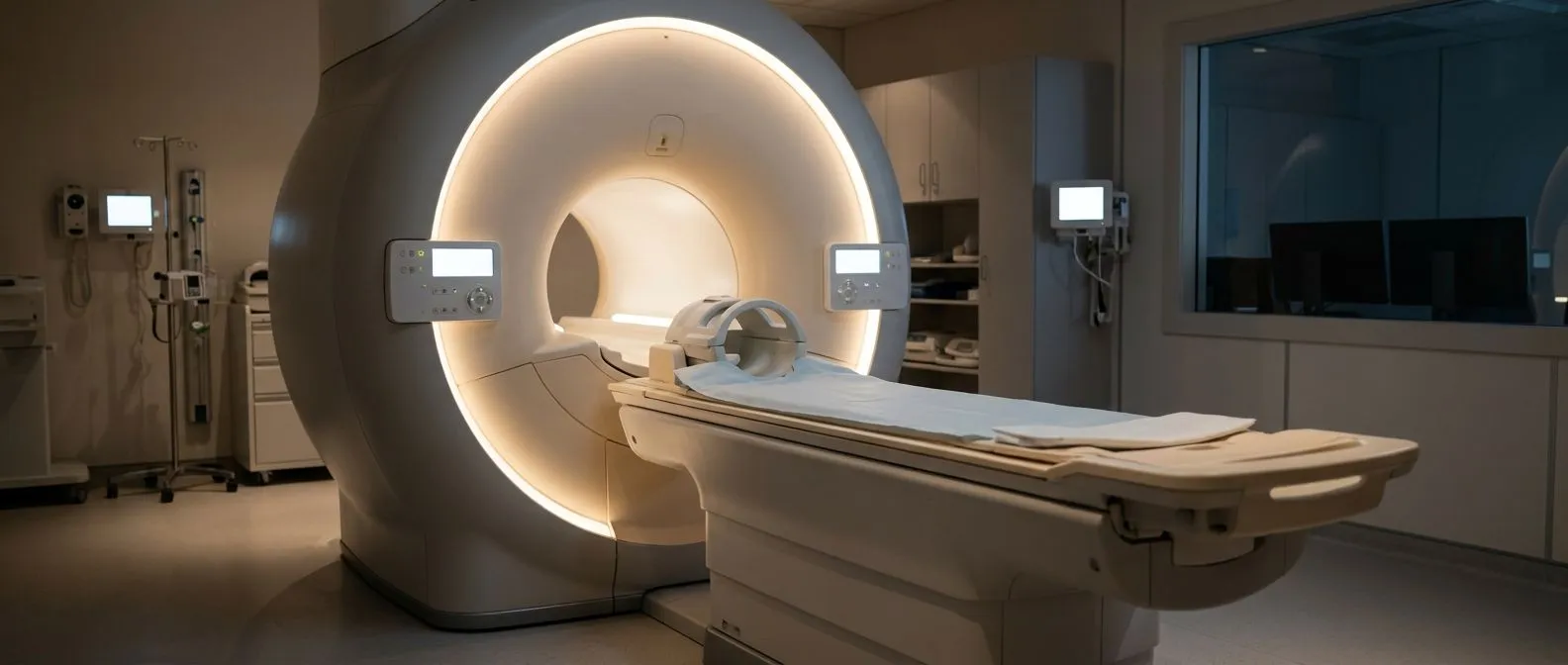
Cardiac MRI post COVID: the key test. The cardiac MRI is the most important test for confirming myocarditis. It uses magnetic fields to create detailed images of the heart muscle and can show exactly where inflammation is located, how much of the heart is affected, and whether there is scarring. This is valuable because it tells the medical team the severity of the problem and gives a baseline to compare against on follow-up scans. If your doctor recommends a cardiac MRI, it is because the question they are answering — is this inflammation, and how much? — cannot be answered well by any other test.
When more invasive testing is needed. In a small number of cases, particularly when the diagnosis is unclear or the heart is significantly weakened, doctors may recommend a heart biopsy or additional testing. This is not routine for most patients, but it is worth knowing that a full diagnostic pathway exists if symptoms persist or do not follow the expected course. In our consultations we take the time to explain what each of these studies actually shows, in plain words, and we only order the ones that will genuinely change the plan.
Myocarditis After COVID Treatment Options
COVID myocarditis recovery tips start with rest. The cornerstone of treatment for post-COVID myocarditis is, somewhat counterintuitively, to do less. The heart muscle needs time and reduced workload to recover. In the acute phase, doctors recommend avoiding exercise and strenuous activity entirely for a period — usually weeks to a few months — depending on how severe the inflammation is. This is not just caution for its own sake; intense exercise during active myocarditis can worsen the inflammation and, in rare cases, trigger dangerous rhythm problems.
Myocarditis recovery medication. Medication is used to support the heart and manage symptoms while the inflammation settles. Depending on the case, this may include:
- Heart support medications: ACE inhibitors or beta-blockers to reduce the heart's workload and help it recover
- Anti-inflammatory treatment: in some cases, specific anti-inflammatory therapy is used when the immune response is thought to be the main driver
- Rhythm management: medication to control palpitations or abnormal rhythms if they occur
- Diuretics: water tablets to reduce fluid buildup if the heart is struggling to pump
When the heart is severely affected. In a small minority of patients, the inflammation is severe enough that the heart needs more active support — sometimes in an intensive care setting, and occasionally with mechanical circulatory support devices that do the pumping work temporarily while the heart recovers. These cases are rare, and they are exactly why the diagnosis and severity assessment matter so much: knowing the severity lets the medical team match the right level of care to the right patient.
COVID Heart Inflammation Recovery Time
What the typical timeline looks like. COVID heart inflammation recovery time varies widely. For most people with mild myocarditis, the inflammation settles over weeks to a few months, and the heart returns to normal function. Some people feel better within a couple of weeks while the underlying inflammation is still healing, which is why symptom improvement alone is not enough to clear you for full activity — follow-up testing matters. More significant cases may take three to six months or longer, with periodic checks to confirm the heart is recovering as expected.
What follow-up testing looks like. During recovery, your cardiology team will typically repeat tests to confirm the heart is healing. This usually means a repeat echocardiogram to check the pumping function, and in many cases a repeat cardiac MRI to confirm the inflammation has resolved. A follow-up MRI showing no active inflammation is generally the point at which doctors feel comfortable lifting restrictions on exercise. This testing rhythm is what makes recovery safe — not guesswork.
COVID vaccine myocarditis recovery follows the same pattern. It is worth noting that myocarditis after COVID-19 vaccination, particularly in younger males, follows a similar recovery pattern. It is generally milder and resolves more quickly than post-viral myocarditis, and the underlying approach is the same: diagnosis, rest, monitoring, and gradual return to activity once inflammation has cleared. If you have concerns about your own history, a cardiologist can explain what applies in your case.
Exercise After COVID Myocarditis
Why the return to exercise must be gradual. Exercise after COVID myocarditis is one of the most common questions patients ask — and one of the most important to get right. When the heart muscle is inflamed, intense exercise can worsen the injury and, in rare cases, trigger dangerous arrhythmias. Doctors follow a stepwise approach: full rest during active inflammation, then a gradual return to light activity, then moderate activity, and only then full exercise — with each step gated by testing. The evidence base for this approach in athletes is documented in research on exercise testing to assess athletes for post-COVID myocarditis, which emphasizes that clearance should be based on objective testing, not just how a person feels.
What a graded return looks like in practice. A typical progression looks like this:
- Weeks 1–4: complete rest from structured exercise; gentle walking is often allowed
- Weeks 4–8: light aerobic activity, keeping intensity low, if follow-up testing is reassuring
- Months 2–3: moderate activity, gradually increasing duration before intensity
- Months 3–6: full return to sport and exercise, once inflammation has cleared on testing
The exact schedule depends on the severity of the inflammation and the results of follow-up testing, so treat these as a general framework rather than a prescription. In our practice, every return-to-exercise plan is reviewed case by case by the multidisciplinary team against international guidelines, so the patient receives a clear proposal with the alternatives — and the final decision is always theirs.
Post-COVID Cardiac Rehabilitation
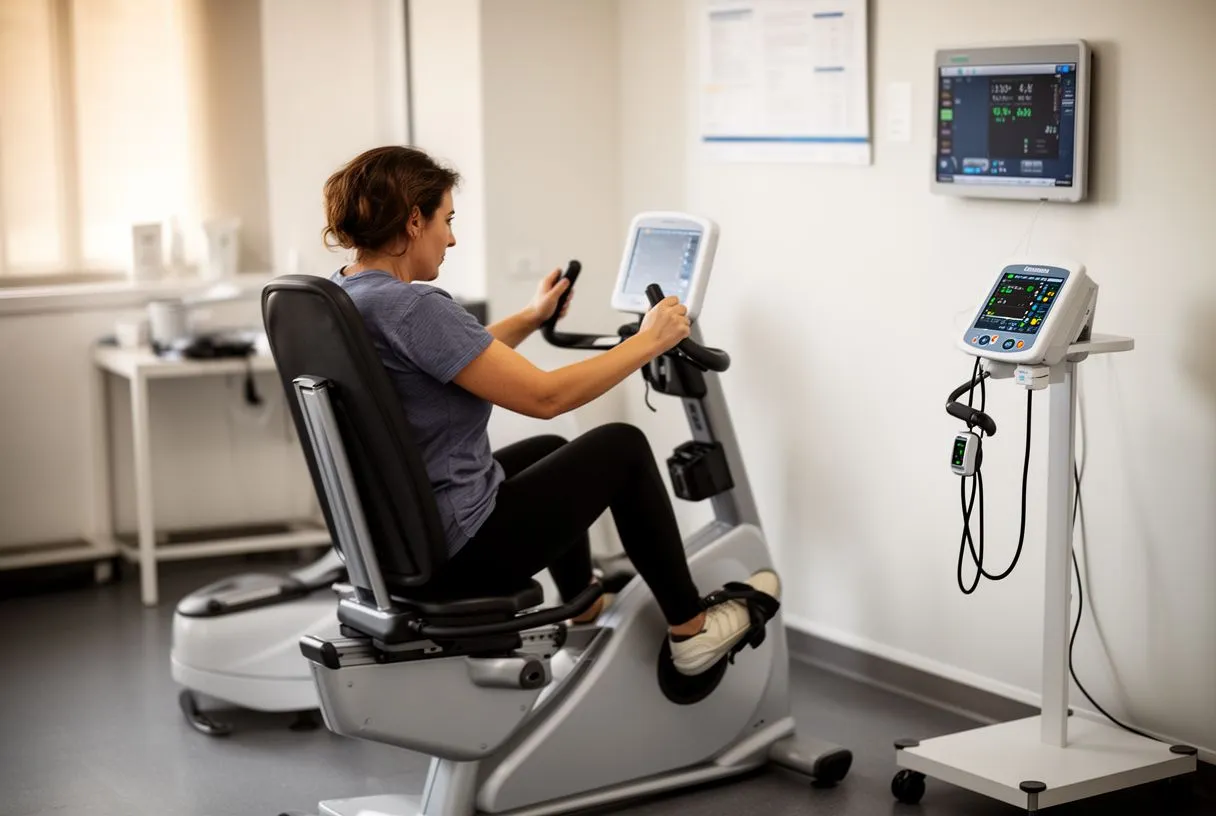
What post-COVID cardiac rehabilitation actually involves. Post-COVID cardiac rehabilitation is a supervised program that helps the heart recover safely and gradually. It is not a gym class; it is a medically guided program with monitored exercise sessions, education about the heart, and regular check-ins on how you are responding. A supervised program is valuable because it takes the guesswork out of the return to activity — the intensity and progression are set by professionals who can see your heart's response in real time.
How rehabilitation supports recovery. Cardiac rehabilitation offers three main benefits during recovery from post-COVID myocarditis:
- Safe, monitored exercise: sessions are supervised, so your heart rate and rhythm are watched while you work, and the plan is adjusted based on your response
- Confidence and reassurance: many people feel anxious about moving their heart again after a diagnosis like this; a structured program removes the uncertainty
- Education and habits: the program covers heart-healthy diet post COVID, stress management, sleep, and the warning signs to watch for going forward
Who benefits most from it. Rehabilitation is particularly valuable for people who had moderate to severe myocarditis, those who were hospitalized, and anyone whose symptoms — fatigue, breathlessness, exercise intolerance — persist beyond the acute phase. It is also helpful for people who feel fine but want a structured, medically supervised way back to their previous activity level rather than trying to judge it on their own.
Heart Palpitations After COVID: When to Seek Help
Why palpitations are common after COVID. Heart palpitations after COVID are extremely common, even in people who never developed myocarditis. The reasons include lingering effects of the illness on the autonomic nervous system (the part that controls heart rate), dehydration during and after the illness, deconditioning from being less active, and, less commonly, true arrhythmia. In most people, palpitations settle as the body recovers overall — but that does not mean they should be dismissed without evaluation.
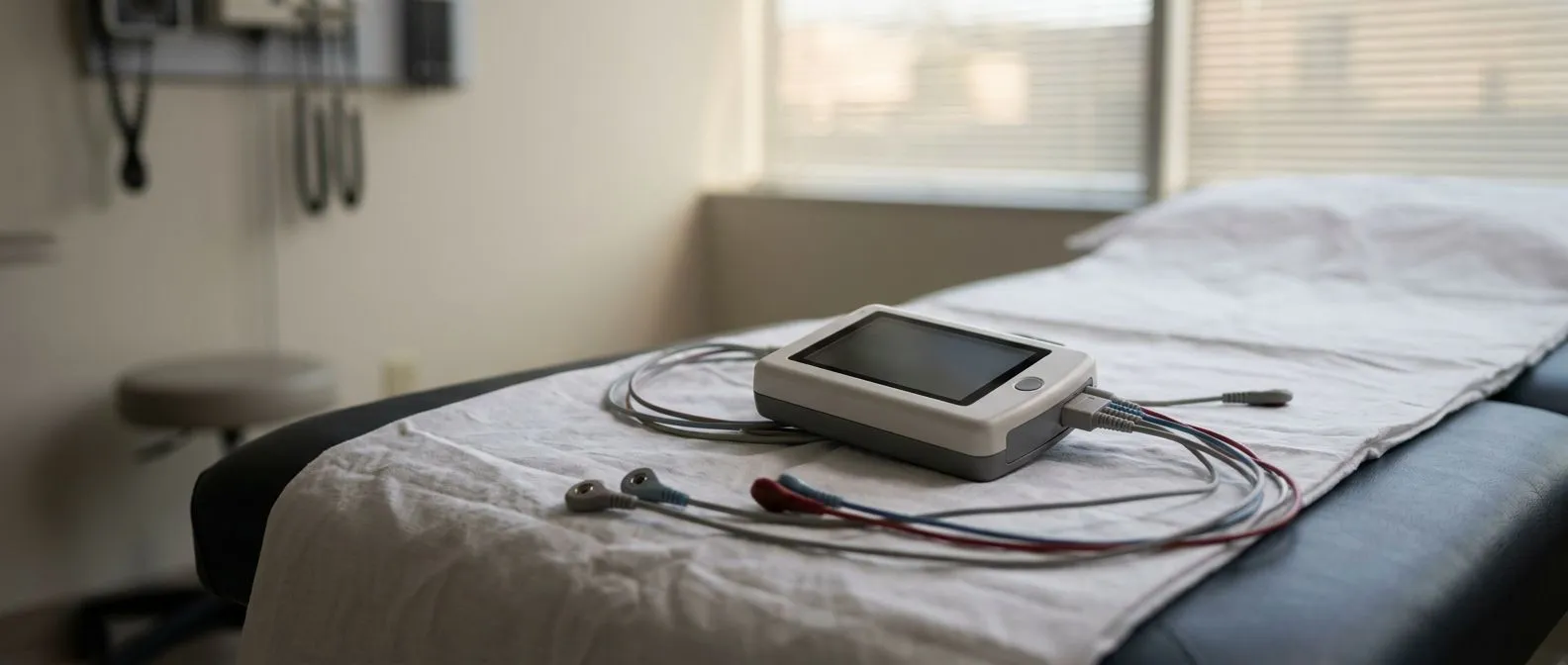
Post-COVID heart monitoring: what to expect. When palpitations are frequent, prolonged, or accompanied by dizziness or fainting, your doctor may recommend post-COVID heart monitoring. This usually means wearing a Holter monitor — a small portable device that records your heart rhythm continuously for 24 to 48 hours — or, for less frequent events, an event recorder you keep at home for weeks. These recordings let doctors see exactly what the rhythm is doing at the moment of symptoms, which is far more useful than guessing from a description.
What the results usually show. Most often, monitoring after COVID shows either a normal heart rhythm with a higher resting rate, or benign premature beats (extra heartbeats that feel like skips or flutters). Both are common after viral illness and generally improve with time and hydration. Occasionally, monitoring reveals an arrhythmia that needs specific treatment — and that is precisely why the test is worth doing. When a patient brings us recordings or reports from monitoring done elsewhere, we review them in the same consultation, in plain words, so the patient understands exactly what they show and what they do not.
Returning to Work After Myocarditis
What determines the timeline back to work. Returning to work after myocarditis depends on what your job involves and how your heart has recovered. Someone with a desk job may be able to return in two to four weeks once symptoms have settled and acute phase has passed, since sitting and light mental work place modest demands on the heart. Someone whose job involves physical labor — lifting, climbing, sustained exertion — will need a longer period, often aligned with the graded exercise clearance timeline above. The key principle is that the return should match the demands of the job, not the calendar.
Talking to your employer about it. Many people worry about how to raise this at work. In most cases, a letter from your cardiologist stating your restrictions and expected timeline is enough — employers generally accommodate medical recovery, and you do not need to disclose the full medical detail. If your job is physically demanding, a phased return (reduced hours or lighter duties initially) is a reasonable and common arrangement. Your cardiology team can help you frame this.
Signs you may be pushing too soon. As you return to work, listen to your body. Recurring chest discomfort, palpitations that become frequent again, or fatigue that does not resolve with rest are signals that you are exceeding what your heart is currently ready for — and those symptoms should be reported to your doctor rather than pushed through. A slightly slower return is always safer than a setback.

Long COVID Heart Problems and Life After Recovery
How myocarditis fits into Long COVID. Long COVID refers to a set of symptoms that persist for weeks or months after the initial infection — fatigue, breathlessness, brain fog, and palpitations among them. Long COVID heart problems can include persistent palpitations, exercise intolerance, and in some people ongoing inflammation or autonomic dysfunction (where the nervous system that regulates heart rate does not quite return to its normal calibration). It is important to understand that not every symptom is myocarditis; a full evaluation separates true ongoing heart inflammation from deconditioning and autonomic issues, because these are managed differently.
Post-viral myocarditis prognosis: what the long-term picture looks like. The post-viral myocarditis prognosis for most patients is good. The majority of people who develop myocarditis after a viral infection, including COVID-19, recover full heart function and return to normal life. A smaller group has some residual scarring on follow-up imaging — and even then, many people remain stable and symptom-free for years when the heart function has recovered. Heart failure after COVID recovery is uncommon in this setting, but it is the reason follow-up imaging matters: it confirms that the heart has fully healed or identifies anything that needs ongoing attention.
Making decisions with the right team. If you are reading this because you or someone you love is facing symptoms after COVID, the most useful thing you can do is get a proper evaluation rather than self-diagnose or wait. A clear diagnosis — is it inflammation, deconditioning, or something else? — is what turns anxiety into a plan. We are a multidisciplinary cardiac team led by Dr Alejandro Molina, with consulting rooms in Guadalajara, Querétaro and Hermosillo, and every case is reviewed by the whole team against international practice guidelines before a recommendation is made. We encourage second opinions and treat seeking one as a normal part of deciding about heart care — the patient receives a clear proposal with the alternatives, and the final decision is always theirs.
How to start with us. The first contact is a free video consultation: we get to know the patient, talk through the condition, and say which studies are still needed so no unnecessary ones are ordered. A face-to-face visit at the consulting rooms follows when the patient decides to go ahead. Our team also has experience in the full spectrum of cardiac care — from conventional surgery to minimally invasive, robotic and transcatheter procedures — and we recommend the less invasive route only where the evidence supports it for that patient. Recovery from post-COVID myocarditis is, for most people, a matter of time, proper testing and a careful plan — and having the right team beside you makes that journey far clearer. Book a consultation to discuss your own situation rather than trying to navigate it alone.

If there is one takeaway from everything above, it is this: myocarditis after COVID-19 is common enough to take seriously and treatable enough to be hopeful about. Recognize the symptoms, get tested, rest when told to rest, return to activity on the guidance of follow-up testing — and lean on a cardiac team you trust at every step.