

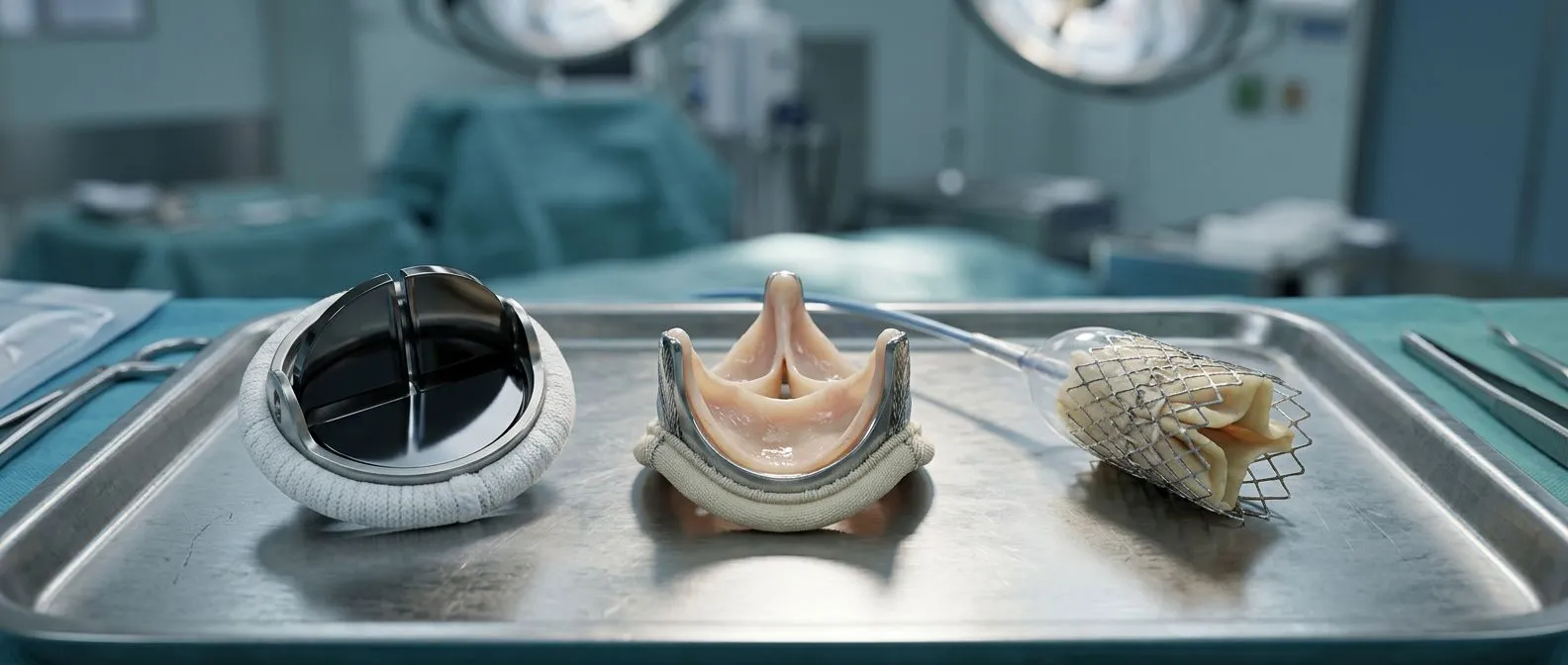
Prosthetic Heart Valve Types: Mechanical, Tissue, Transcatheter
Prosthetic heart valve types explained—compare mechanical, tissue, and transcatheter options.
If your heart valve team has told you that you need a new valve, one of your first questions is usually about the different prosthetic heart valve types and how they differ from each other. It is a fair question, and the answer shapes your whole life afterwards: the medication you take, the follow-up visits you book, and how long you can expect the valve to last. This guide walks through mechanical, tissue and transcatheter valves in plain language, then explains how a surgical team decides which of the heart valve replacement options truly suits you.
What Are Prosthetic Heart Valves?
A prosthetic valve is a manufactured or biological valve that a surgeon or cardiologist places into the heart to replace one that has become too narrow or too leaky. The aortic valve and the mitral valve are the two most commonly replaced, because they carry the greatest pressure and work the hardest with every heartbeat. A damaged valve forces the heart to strain against resistance, which over years leads to breathlessness, fluid in the lungs, and reduced heart function.
Why a valve cannot simply be repaired. Some valves can be repaired, especially in mitral valve prolapse, where the leaflets that normally close together slip backward. But when the valve is heavily calcified, damaged by infection, or structurally beyond repair, replacement is the only option. The replacement restores smooth, one-way blood flow so the heart no longer has to overwork.
There are two broad families of replacement: mechanical valves made of engineered materials, and tissue valves made from animal or human tissue. Within those families sit surgical valves implanted through open or minimally invasive surgery, and transcatheter valves delivered through a catheter, usually from an artery in the groin. In our practice every valve case is reviewed by the multidisciplinary team against international guidelines before a recommendation is made, and the patient receives a clear proposal with the alternatives spelled out.
Types of Prosthetic Heart Valves
Understanding the map of options makes every later conversation easier. The main categories are:
- Mechanical valves: durable metal-and-carbon devices designed to last a lifetime but requiring lifelong blood thinners.
- Tissue valves: biological valves built from bovine pericardial or porcine tissue, which do not need long-term blood thinners but may need re-replacement after 10 to 20 years.
- Transcatheter valves: tissue valves delivered through a catheter without opening the chest, used mainly in the aortic position and increasingly in the mitral position.
Where each type is implanted. Surgical valves are described by their position relative to the natural valve ring. An intra-annular valve sits inside the ring, a supra-annular valve sits above it, and this affects sizing and blood-flow characteristics. A stented valve is mounted on a wire frame that supports it, while a stentless valve relies on the patient's own aortic root, which preserves more natural flow but takes longer to implant.
The transcatheter category keeps growing. Devices such as the Lotus Valve are self-expanding systems designed to be repositioned during the procedure. The important point is that the different prosthetic heart valve types are not competing products in a catalogue; each exists for a specific valve position, patient age and anatomy. The team's job is to match them.
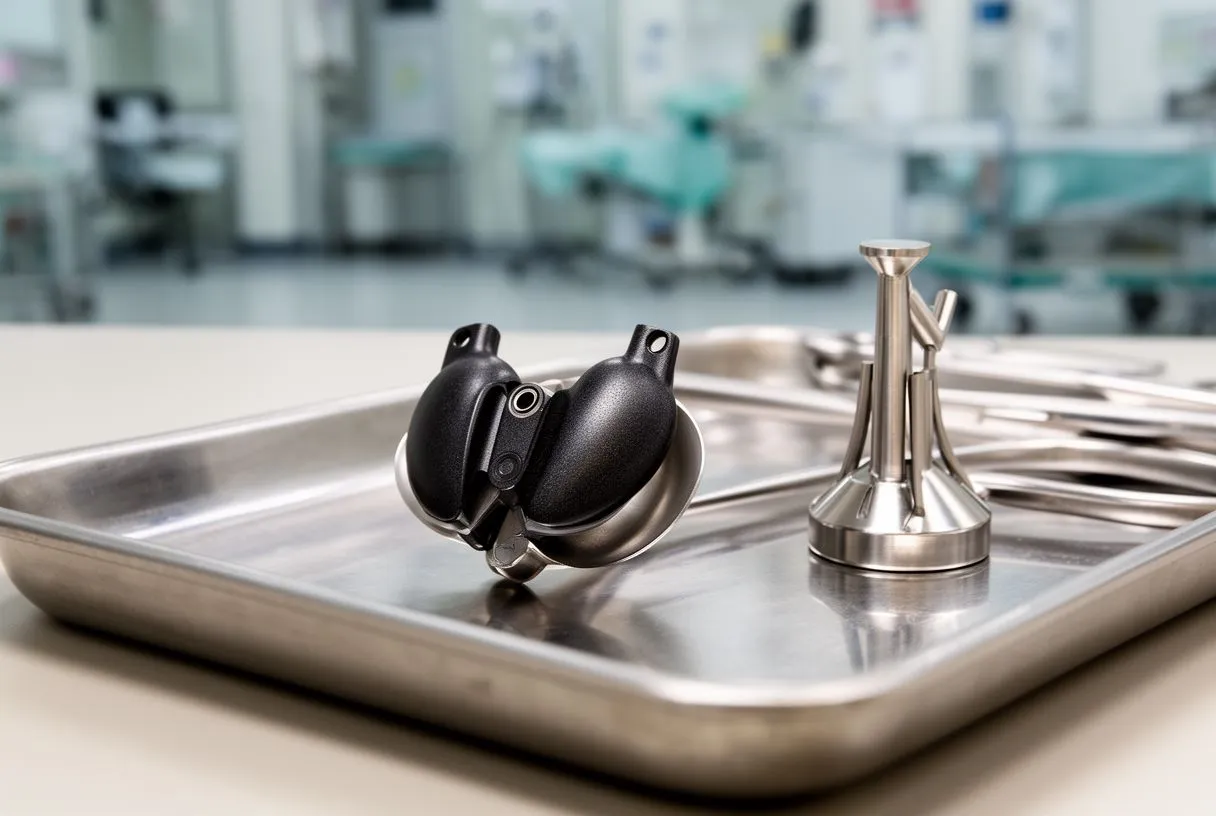
Mechanical Heart Valves: How Do They Work and Who Needs One?
A mechanical valve is built from pyrolytic carbon discs or leaflets within a metal ring. It opens and closes with each heartbeat in a way very similar to a natural valve, and modern designs have refined the flow pattern so blood passes through with little turbulence. The great advantage is durability: a well-functioning mechanical valve can reasonably be expected to last for the patient's lifetime.
Who is a mechanical valve right for? It is generally preferred in younger patients, in those who already take warfarin for another reason, and in people with a connective tissue disorder whose valves may deteriorate faster. If a patient already needs anticoagulation, the lifelong blood-thinning requirement of a mechanical valve adds little extra burden.
The trade-off is blood thinning, forever. Because blood tends to clot on artificial surfaces, patients with a mechanical valve take warfarin indefinitely, with regular blood tests called INR checks that keep the level in a safe window. In our team's experience, patients who understand this routine from day one manage it well; we take the time to explain exactly what the monitoring involves before any decision is made, because the decision is always the patient's.
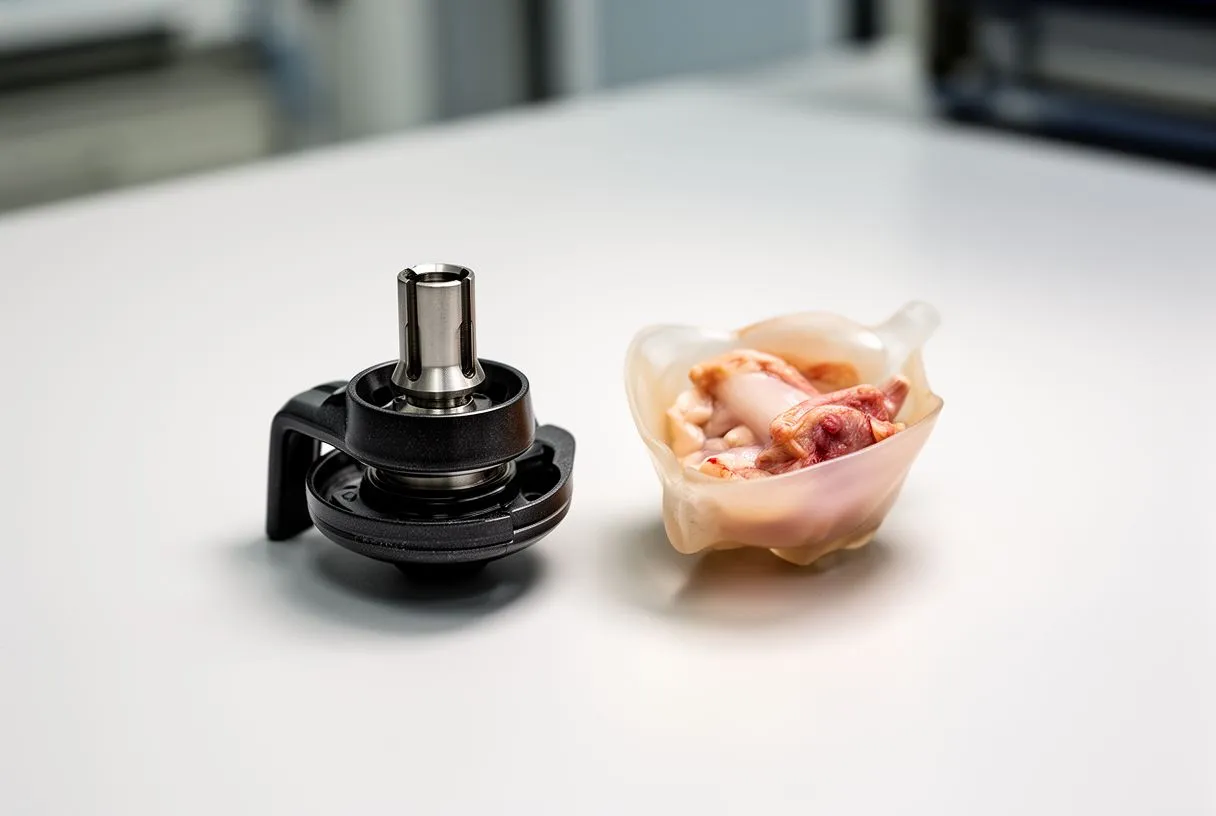
Tissue (Bioprosthetic) Valves: What Are the Biological Heart Valve Types?
A bioprosthetic heart valve is one made from biological tissue rather than metal. The tissue usually comes from a cow or a pig: a bovine pericardial valve is built from the tough membrane around a cow's heart, while porcine valves use the pig's natural aortic valve. Human donor valves are also used in selected situations. The tissue is treated to be non-reactive and mounted on a frame or sewing ring.
What biological heart valve types comparison actually shows. Across the biological heart valve types, the differences are subtle: some designs favor flow characteristics, others favor ease of implantation or resistance to calcification. None is universally better. What matters most for the patient is how the valve performs in their own anatomy and how their age and other conditions affect the rate of tissue wear.
Why patients like them. The main appeal is freedom from long-term warfarin. Most tissue-valve patients take a short course of blood thinners after surgery and then stop, or stay on aspirin only under their cardiologist's guidance. For an active young woman planning pregnancy, or an older patient who cannot tolerate blood-thinning tests, a tissue valve is often the sensible choice. In our team we match the tissue valve type to the valve position and the patient's surgical plan, since each design behaves differently in the aortic and mitral positions.
Mechanical vs Tissue Heart Valve: Which Should You Choose?
The mechanical vs tissue heart valve debate is really a debate about your age, your priorities and your future plans. Modern guidelines increasingly favor tissue valves up to around age 65 for most patients, and mechanical valves for younger patients, but these are starting points, not rules. Individual factors can shift the recommendation either way.
What the trade-offs look like in daily life. A mechanical valve means a lifelong, predictable routine: one medication, regular blood tests, and attention to diet and drug interactions. A tissue valve means freedom from that routine, but acceptance that a second procedure may be needed one day. Both are legitimate choices, and studies show survival can be similar over long follow-up when the valve is well matched to the patient.
Questions that decide it. Bring these to your consultation:
- How old am I? Younger patients generally get more years out of a mechanical valve before the tissue-vs-reoperation math changes.
- Do I plan to become pregnant? Pregnancy is difficult on warfarin, which often tilts the choice toward a tissue valve in women of childbearing age.
- Can I manage warfarin reliably? Honest answers here matter more than any guideline.
We encourage second opinions and treat seeking one as a normal part of deciding about heart surgery. A patient who understands the mechanical vs tissue trade-offs in their own life will make a better decision than one who was simply handed a default.
Transcatheter Aortic Valve Replacement Types: What Is TAVR?
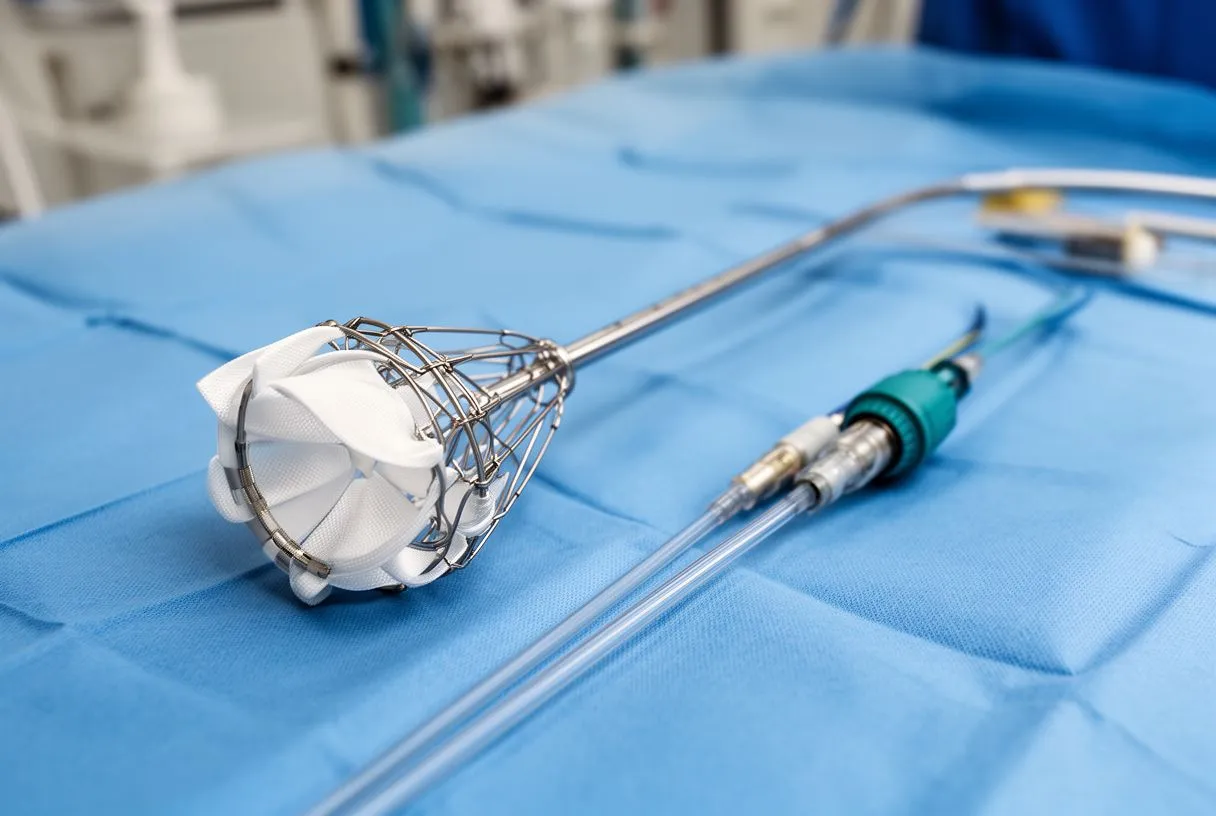
Transcatheter aortic valve replacement, always shortened to TAVR, is a way of placing a tissue valve into the aortic valve without opening the chest. A catheter, usually inserted from an artery in the groin, carries a crimped valve inside a sheath to the heart. Once in position, it is expanded in place, and the old valve is pressed to the side. There is no open-chest incision and in many cases no need for the heart-lung machine.
Who benefits from TAVR. TAVR was originally reserved for elderly patients too frail for open surgery, and it remains the lowest-risk route for many older or high-risk patients. Guidelines now allow its use in intermediate-risk patients as well. What it delivers is a shorter hospital stay and a faster return to normal life compared with conventional surgery, with the trade-off that the implanted valve is a tissue valve and carries the durability expectations of one.
How the different transcatheter aortic valve replacement types differ. Balloon-expandable and self-expanding systems behave differently during implantation, and access routes can be transfemoral, transapical or trans-subclavian; single-center experience with trans-subclavian implantation across various bioprosthetic valves has shown it to be a workable route when the leg arteries are not suitable (Turkish Journal of Cardiology). In our team, we perform both conventional and transcatheter procedures and recommend the less invasive route only where the evidence supports it for that patient; a TAVR case is always reviewed by the multidisciplinary team before it is proposed.
Transcatheter Mitral Valve Replacement: When Is It an Option?
The mitral valve is harder to replace through a catheter than the aortic valve. Its anatomy, the pressures it withstands, and its proximity to other structures make transcatheter mitral valve replacement a procedure reserved mainly for patients whose valve disease is severe and who are high risk for conventional mitral surgery. It is real and advancing, but it is not a universal alternative to surgery in the mitral position.
When transcatheter technology is most established here. The clearest role today is the valve-in-valve procedure, in which a catheter valve is placed inside a failing surgical bioprosthesis. If a tissue valve from years ago has degenerated, a valve-in-valve TAVR-style procedure can renew it without reopening the chest. For the mitral valve, this can spare a very high-risk patient a major repeat operation.
What to ask if this is offered to you. Ask whether your own anatomy and prior valve model suit a transcatheter approach, and ask what the results data show for your specific situation. In our team, we explain in plain words what the studies actually show for each option, and we answer every question before any decision is made; the patient decides in the end, and we make sure the decision is informed.
How Long Do Prosthetic Heart Valves Last?
Durability is where the prosthetic heart valve types divide most sharply. A mechanical valve can last for the patient's lifetime; many remain in place for decades. A tissue valve gradually stiffens and calcifies as the body reacts to the biological material, and its useful life depends heavily on the patient's age: in younger patients, tissue calcifies faster, which is a key reason guidelines steer younger people toward mechanical valves.
Tissue valve replacement longevity in practice. Tissue valve replacement longevity is commonly described as around 10 to 20 years, with shorter life in the mitral position and in younger patients. That figure is a broad expectation, not a promise for any individual. The rate of deterioration is also affected by factors like kidney disease and calcium metabolism, which your team should weigh explicitly.
What happens when a valve wears out. Degeneration does not usually announce itself as a catastrophe. It shows up gradually on echocardiogram as narrowing or leaking, often before symptoms return. If you have a tissue valve, your follow-up plan should catch deterioration early. In our team's experience, patients with tissue valves who attend regular follow-up typically have the option to plan a re-replacement calmly rather than rush in an emergency.
Prosthetic Heart Valve Complications: What Should You Watch For?
Every prosthetic valve carries some risks, and knowing them helps you act early rather than worry vaguely. Complications fall into a few recognizable groups.
Infection: prosthetic valve endocarditis. Bacteria can settle on any prosthetic surface, causing prosthetic valve endocarditis, a serious infection that requires urgent care. This is why patients with any replacement valve take antibiotics before certain dental and surgical procedures. Warning signs include fever that will not settle, chills, and feeling generally unwell for days; these deserve a same-day call to your doctor, not a wait-and-see approach.
Clots and paravalvular leaks. On the blood-contacting surface, clots can form and, in the worst case, embolize, which is why mechanical valves require warfarin. Another specific issue is a paravalvular leak, where blood escapes around the edge of the implanted valve rather than through it. The PREDICT study of a self-expanding transcatheter valve identified patient and procedural factors that predict these leaks, underscoring that leak risk varies with anatomy and valve type (Open Heart). Small leaks are often tolerated; larger ones can cause anemia or heart strain and need assessment.
What we check in follow-up. At follow-up, valve function is checked on echocardiogram, blood-thinning control is reviewed, and you will be asked specifically about breathlessness, palpitations and fatigue. We also counsel every patient with a prosthetic valve about antibiotic prophylaxis and the symptoms that should never wait for the next scheduled visit.
Prosthetic Valve Selection Criteria: How Is the Right Valve Chosen?
Prosthetic valve selection criteria combine several factors, and no single one decides alone. Your team weighs:
- Your age and valve position: younger patients and mitral positions favor mechanical valves; older patients and aortic positions favor tissue or transcatheter valves.
- Your anatomy and prior surgery: a small aortic root, prior valve replacement or a connective tissue disorder all change the equation.
- Your ability to take blood thinners: warfarin tolerance, other medications, and lifestyle all matter.
- Your surgical risk: scores such as EuroSCORE II help estimate the risk of open surgery and guide whether a transcatheter route is safer.
What is the best heart valve replacement type? The honest answer is that the best heart valve replacement type is the one matched to your circumstances. Age 35, pregnant-planning, robust: one answer. Age 82, frail, aortic stenosis: a very different one. Beware of anyone who names a single "best" valve without first asking about your life. The search phrase "best heart valve replacement type" has no universal answer, only a personalized one.
How the decision is actually made. In our practice, every valve case is reviewed by the multidisciplinary team against international practice guidelines before a recommendation is given. Dr Molina trained in cardiothoracic surgery at the Universidad de Guadalajara, in cardiac, minimally invasive, robotic and structural surgery at the University of Montreal, and in structural cardiology and TAVR at CHU Bordeaux, and the team also trained at Jena, Bad Berka and Buffalo; that breadth means both surgical and transcatheter options are considered on their merits for each patient, not by habit.
Bringing it all together. The different prosthetic heart valve types fall into three practical families: mechanical valves that last a lifetime but need warfarin, tissue valves that free you from blood thinners but may need replacing in 10 to 20 years, and transcatheter valves delivered through a catheter without opening the chest. Within each family sit variations such as different mechanical valve designs, bovine pericardial valves, stented and stentless designs, and valve-in-valve procedures, each suited to particular patients. If a valve problem has been diagnosed in you or someone you love, do not choose a valve from a chart. Discuss your own heart valve replacement options with a qualified cardiac team, ask what the evidence supports for your specific anatomy and age, and book a consultation. Our team offers a free first video consultation, where we talk through your condition, identify only the studies that are genuinely still needed, and give you a clear proposal with every alternative laid out before you decide anything.






