
Pulmonary Embolism Recovery: Treatment and Prevention
Recovering from a pulmonary embolism: treatment, prevention, recovery timelines, home care, exercise and diet.
If you or someone close to you has just been told there is a blood clot in the lungs, the first question is usually the same one: what does recovery from a pulmonary embolism actually look like? A pulmonary embolism — often shortened to PE — happens when a clot, usually formed in a deep vein of the leg, travels through the bloodstream and lodges in one of the Pulmonary Arteries, the vessels that carry blood from the heart to the lungs to pick up oxygen. This blocks part of that blood flow, which is why the condition can be frightening and, when large, dangerous. The encouraging news is that most people who are diagnosed and treated in time go on to live full, active lives. This guide walks through what happens in the body, how the condition is treated, a realistic recovery timeline, and the practical steps that lower the chance of it happening again.
What Is a Pulmonary Embolism?
A pulmonary embolism begins almost always with a deep vein thrombosis — a clot forming in a deep vein, most often in the calf or thigh. Veins in the legs return blood upward against gravity, and when blood moves too slowly, clots can form along the vein wall. A piece of that clot can break off and travel with the blood, through the heart, and into the Pulmonary Veins' counterparts on the arterial side, lodging in the lung circulation.
Why it matters so much: the lungs oxygenate the blood. When a clot blocks a pulmonary artery, part of the lung cannot do its job, and the right side of the heart has to pump against higher Pulmonary Artery Pressure. In small clots, the body often dissolves the blockage over weeks with the help of blood thinners. In large clots, the strain on the heart becomes the urgent problem.
Can a person recover? Yes. With prompt diagnosis and the right treatment, most clots are broken down naturally by the body's own clot-dissolving systems while medication prevents new ones from forming. The lung tissue itself does not "heal" in the way skin does, but the circulation around the blocked vessel usually reroutes and the clot shrinks. Survival has improved dramatically since effective anticoagulant drugs became standard care, as reviewed in major clinical references such as The BMJ.
What Are the Early Warning Signs of a Pulmonary Embolism?
Sudden breathlessness is the most common first sign, and it tends to appear at rest or with activity that was previously easy — climbing a few stairs, walking to the car. It comes on quickly, over minutes to hours, rather than gradually over months.
Sharp chest pain is the second hallmark. It is usually worse when breathing in deeply, coughing, or bending over, and it can be mistaken for a pulled muscle or, more worryingly, for a heart attack. The pain comes from the inflamed lining around the affected area of lung.
Other signs to take seriously:
- Coughing up blood or blood-streaked sputum, which happens when the blocked area of lung is damaged
- A racing or pounding heartbeat, as the heart compensates for reduced oxygen
- A swollen, painful, warm leg — often only one — which may reveal the clot's original home in a deep vein
Lightheadedness, fainting, or unexplained sweating are the signs that suggest a larger clot and call for emergency care immediately. If you experience sudden breathlessness with chest pain, do not wait to see if it passes; call emergency services.
How Do Doctors Diagnose Pulmonary Embolism?
The first tests are quick and simple. Doctors start with a history and physical exam, a blood test called a D-dimer (which measures fragments released when a clot breaks down), an electrocardiogram, and often an ultrasound of the legs looking for the deep vein clot. A normal D-dimer in a low-risk patient can effectively rule the condition out.
The definitive test is a CT pulmonary angiogram. This is a CT scan with contrast dye injected into a vein, showing the pulmonary arteries directly. It takes only minutes and clearly reveals where clots sit and how large they are. In some settings, a lung ventilation-perfusion scan is used instead — particularly during pregnancy, when radiation exposure to the fetus must be minimised.
How the diagnosis shapes treatment: doctors also assess the strain on the heart with an echocardiogram (an ultrasound of the heart) and may run Pulmonary Function Tests later, during follow-up, to check how well the lungs are working once the acute episode has settled. At our practice, when a patient with a recent PE comes to us for a cardiac opinion, we review every study already done and explain in plain words what each one shows before we suggest anything further — we never order a test that answers a question already answered.
What Treatments Help Recovery From a Pulmonary Embolism?
Anticoagulants are the foundation. These "blood thinners" — heparin, low-molecular-weight heparin, fondaparinux, and tablet anticoagulants such as rivaroxaban, apixaban or warfarin — do not dissolve the existing clot directly. They stop it from growing and prevent new clots, while the body's own fibrinolytic system slowly breaks the old one down. Most patients with a small-to-moderate clot are managed with medication alone.
Clot-dissolving drugs (thrombolysis) for large clots: when a PE is massive and the heart is struggling, doctors may give a powerful clot-busting drug such as alteplase. It works faster than anticoagulants but carries a real bleeding risk, so it is reserved for unstable patients. Newer catheter-based techniques thread a thin tube into the pulmonary artery and deliver lower doses of the drug directly into the clot — often with mechanical clot removal — which lowers the bleeding risk.
Surgical embolectomy and filters: in the rare situations where thrombolysis is contraindicated and the patient is deteriorating, open surgical removal of the clot is an option. For patients who cannot take anticoagulants — for example, with active bleeding — an inferior vena cava filter can be placed in the large abdominal vein to trap clots travelling from the legs; the historical development of the permanent IVC filter was driven precisely by the need to prevent Pulmonary Embolism in patients who could not be anticoagulated. In our own practice, we see IVC filters mostly in patients who also need cardiac surgery, where the filter bridges them safely through the operation until anticoagulation can restart.
Every treatment decision weighs the size of the clot, the condition of the heart, and the patient's bleeding risk. In our team, every case is reviewed by the multidisciplinary group against international practice guidelines before a recommendation is made, and the patient receives a clear proposal with the alternatives — the final decision is always theirs.
How Long Is Pulmonary Embolism Recovery Time?
The acute phase usually lasts days to a few weeks. Most hospitalised patients go home within three to five days once they are stable on anticoagulants and their oxygen levels are acceptable without support. Breathlessness and chest discomfort improve noticeably over the first two to four weeks, though they rarely vanish overnight.
The fuller pulmonary embolism recovery timeline runs three to six months for the majority of patients. The clot continues to shrink during this period, and exercise tolerance returns in stages. Some patients feel fully recovered at eight weeks; others describe lingering fatigue or mild breathlessness on hills and stairs for six months or longer. Both patterns are normal, and neither means the treatment is failing.
What influences how long pulmonary embolism recovery takes:
- The size of the original clot and how much of the lung circulation it blocked
- Whether the right side of the heart was strained at the time of diagnosis
- How quickly effective anticoagulation was started
- Age, fitness before the event, and other conditions such as diabetes or lung disease
Recovery after a pulmonary embolism is not a straight line — good weeks are followed by tired days. We tell our patients to judge progress month by month rather than day by day, because the overall trend matters far more than any single morning.

Recovering From Pulmonary Embolism at Home
Taking the medication properly is the single most important task. Modern tablet anticoagulants are taken once or twice daily, and missing doses raises the risk of a new clot. Set an alarm, use a pill organiser, and never stop or adjust the dose without speaking to your doctor — even if you feel completely well. Bleeding precautions matter too: report unusual bruising, blood in urine or stool, or prolonged bleeding from small cuts.
Listening to your body during activity: recovering from pulmonary embolism at home means gradually resuming normal life. Walk daily from the first week, increasing distance as it feels comfortable. It is normal to feel more tired than before; rest when you need to, but avoid becoming completely sedentary, since immobility itself encourages new clots. Most patients return to office work within two to four weeks and to more physical jobs once cleared by their doctor.
Watch for warning signs during the weeks after discharge: new or worsening breathlessness, chest pain, a swollen leg, or coughing blood all need urgent medical attention. Keep the follow-up appointments your team arranges. After a pulmonary embolism, structured follow-up at set intervals helps ensure recovery is monitored, not assumed.
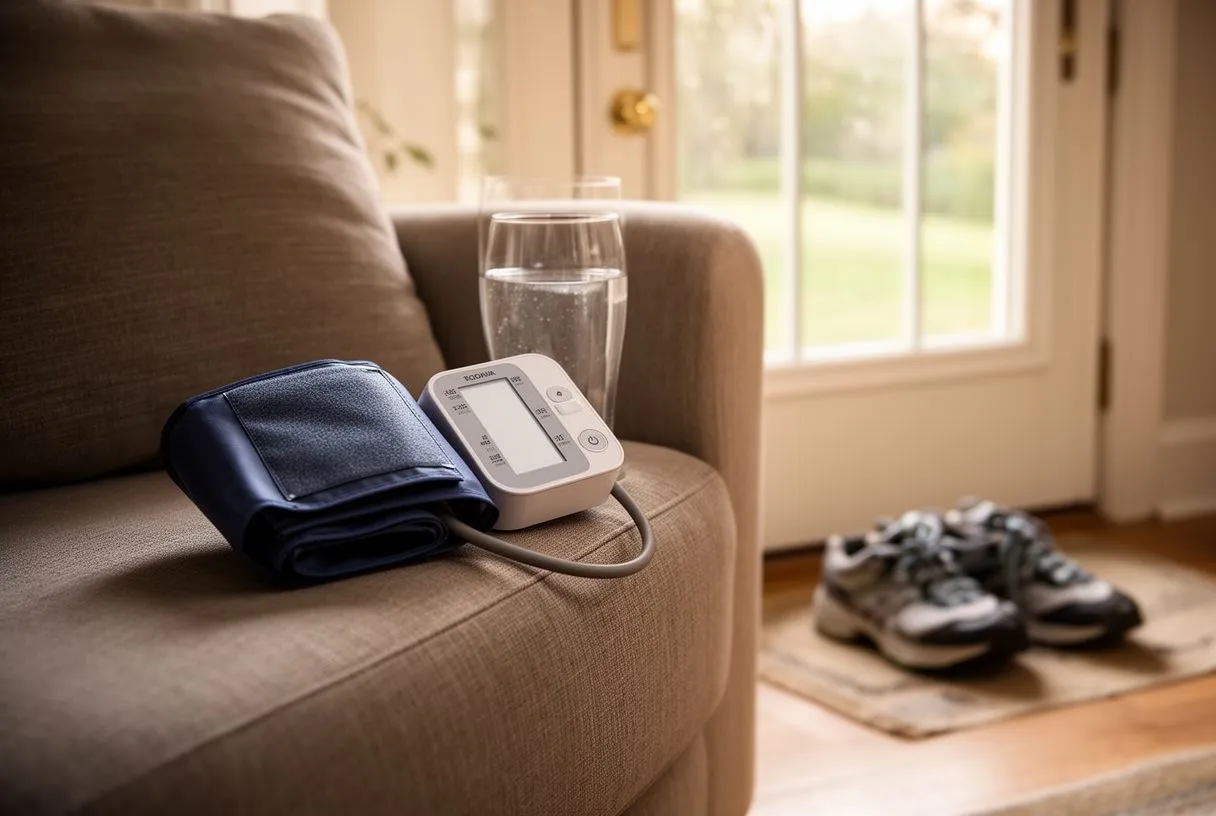
What Exercise and Diet Support Blood Clot Recovery in the Lungs?
Exercise is medicine after a PE. Clinical experience shows that graded, progressive activity helps restore lung capacity, strengthens the heart, and reduces the deconditioning that follows any hospital stay. Start with short walks, then build toward thirty minutes of moderate activity most days over several weeks. Formal pulmonary embolism rehabilitation — a supervised programme of graded exercise and breathing work — is worth asking about if your recovery feels slow.
Simple exercises most patients tolerate well:
- Daily walking, starting at ten to fifteen minutes and building gradually
- Deep breathing exercises, five slow breaths several times a day, to fully expand the lungs
- Ankle circles and calf pumps, especially during any long period of sitting
Diet plays a supporting role. There is no special "pulmonary embolism recovery diet," but the practical points are real: drink plenty of water, since dehydration thickens the blood; keep meals rich in vegetables, fruits and whole grains to support vascular health; and limit salt if the heart was strained. If you take warfarin, keep vitamin K intake (leafy greens) consistent rather than avoiding it, because sudden changes affect the drug's action. Patients on the newer anticoagulants do not need vitamin K restrictions. Alcohol should be moderate, and smoking must stop — it is among the strongest factors that promote new clots.
What Complications Can Follow Pulmonary Embolism Recovery?
Chronic thromboembolic pulmonary hypertension is the most important long-term complication. In a small minority of patients, the clot material never fully resolves and instead scars the pulmonary vessels, permanently raising Pulmonary Artery Pressure and forcing the right side of the heart to work harder. Persistent breathlessness that does not improve after three months should always prompt a specialist evaluation for this condition, because it has specific treatments — including targeted drugs and, in selected patients, a specialised operation on the pulmonary arteries.
Bleeding is the trade-off of anticoagulation. Blood thinners protect against clots at the cost of easier bleeding. Most bleeding episodes are minor, but any head injury while anticoagulated warrants immediate assessment. Your team will also monitor kidney function, since some anticoagulants are cleared by the kidneys and doses need adjusting over time.
Recurrence and post-PE syndrome: a new clot can form even on treatment, which is why ongoing reviews matter. Some patients also describe lasting fatigue and reduced exercise tolerance after an otherwise uncomplicated PE — sometimes called post-PE syndrome. Patients who recover well are often the ones whose follow-up was regular and whose questions were answered early, rather than left to worry at home.
How to Prevent Blood Clots and Pulmonary Embolism After Recovery?
The duration of anticoagulation is the central prevention decision. After a first PE with a clear temporary cause — an operation, a long-haul flight, a leg cast — treatment typically lasts three months. After an unprovoked PE, or a second episode, doctors usually recommend longer treatment, often lifelong, because the underlying tendency to clot persists. This is an individual decision weighing clot risk against bleeding risk, and it should be revisited at each follow-up.
Everyday measures that genuinely help prevent blood clots:
- Stay well hydrated, especially on flights longer than four hours
- Move every hour during travel — walk the aisle, or at minimum flex and extend the ankles
- Avoid sitting with legs tightly crossed for long periods; use compression stockings if your doctor advises them
- Reach and keep a healthy weight, since excess weight raises clot risk
- Stop smoking — the single most modifiable vascular risk factor
Special situations deserve extra care. Pregnancy raises the risk of pulmonary embolism because hormones increase clotting tendency and the growing uterus slows venous return from the legs — pregnant women with prior clots or clotting disorders need a specialist plan. Some clotting tendencies run in families: if several relatives have had unexplained clots at young ages, mention it to your doctor, as inherited thrombophilia testing may be appropriate. Cancer is another major trigger, as tumours can provoke clotting; there are reported cases where a recurrent venous thromboembolism was the first sign of an underlying cancer, which is why unexplained or recurrent clots deserve a thorough search for a cause.
When to See a Pulmonary Embolism Specialist?
Seek emergency care immediately for sudden severe breathlessness, crushing chest pain, fainting, or coughing up significant blood. These symptoms may signal a large clot and cannot wait for a scheduled appointment.
Book a specialist consultation when breathlessness persists beyond three months, when questions remain about how long anticoagulation should continue, when a second clot occurs, or when you are planning surgery or pregnancy after a PE. A specialist team can reassess Pulmonary Artery Pressure, review the recovery trajectory, and tailor the plan. Because the heart takes the strain in these cases, a cardiac team with experience in both catheter-based and surgical treatment is well placed to advise on every option.
What a consultation with us involves. We are a multidisciplinary team of cardiac surgeons led by Dr Alejandro Molina, with consulting rooms in Guadalajara, Querétaro and Hermosillo. The first contact is a free video consultation: we get to know you, talk through your condition, and identify which studies are still needed so no unnecessary ones are ordered; a face-to-face visit follows when you decide to go ahead. Dr Molina trained in cardiothoracic surgery at the Universidad de Guadalajara, in cardiac, minimally invasive, robotic and structural surgery at the University of Montreal, and in structural cardiology and TAVR at CHU Bordeaux, and he performed the first robotic mitral valve repair in the Ángeles Health System. We encourage second opinions and treat seeking one as a normal part of deciding about heart care — if another team's view helps you decide, that is a good decision process.
The takeaway: recovery from a pulmonary embolism is a gradual, measurable process, not a leap of faith. With prompt treatment, faithfully taken anticoagulation, graded exercise and honest follow-up, most patients return to the life they had before the clot. If you are navigating this recovery and want clarity on your own situation, reach out to a qualified cardiac team and book a consultation — you do not have to manage the questions alone.