

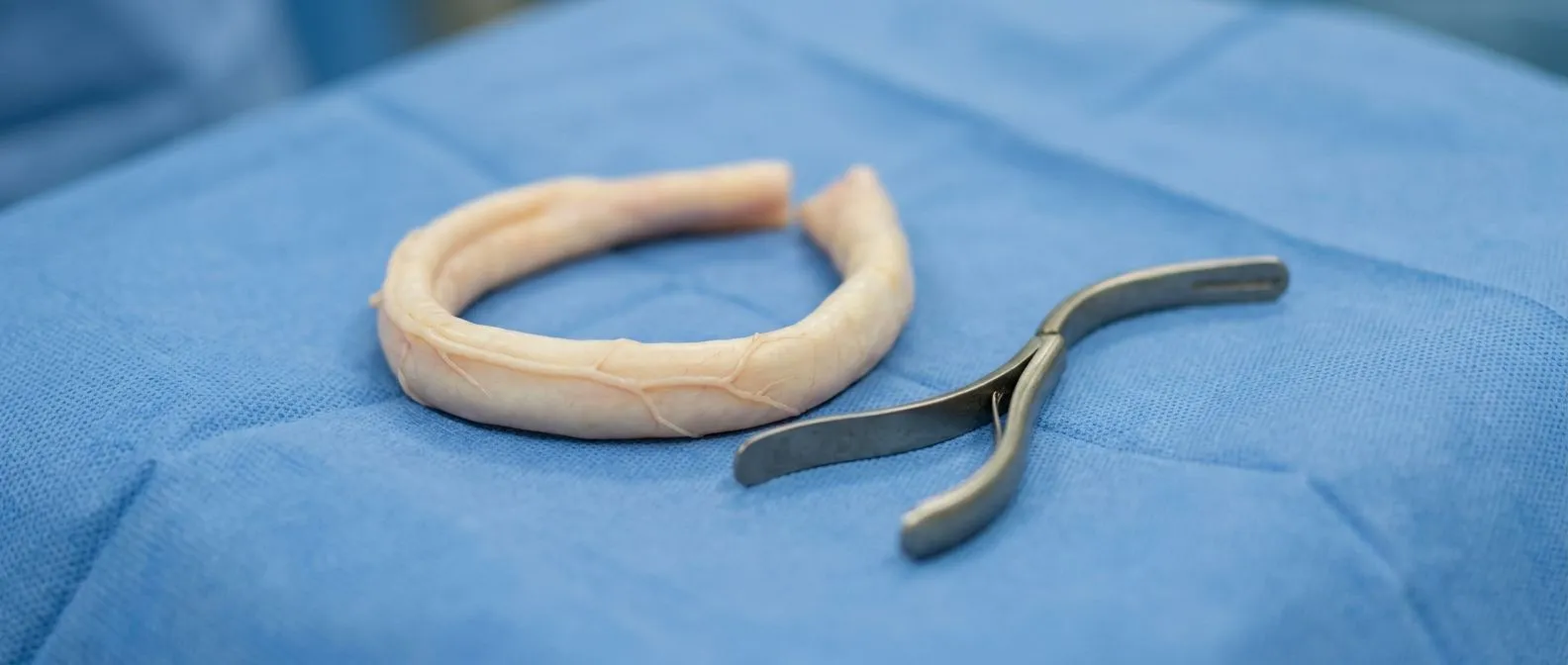
Saphenous Vein Graft: How Long a Leg Vein Bypass Lasts
Saphenous vein graft lifespan—discover how long leg vein bypasses last, patency rates over time, warning signs of failure.
If you or someone you love is facing Coronary Artery Bypass Grafting — the operation we usually call bypass surgery — one of the quiet questions hanging in the background is simple: how long will the bypass actually last? Surgeons often use a segment of the saphenous vein, the long surface vein running from ankle to groin, as a replacement route for blood around a blocked coronary artery. Understanding the saphenous vein graft lifespan helps you plan follow-up care, recognise warning signs early, and protect the investment your body makes during surgery.
What Is a Saphenous Vein Graft?
A vein used as an artery. During bypass surgery, a surgeon takes a piece of your own saphenous vein — usually from the thigh or lower leg — and attaches one end to the aorta, the body's main artery, and the other end to a coronary artery beyond the blockage. Blood then flows through this new channel, bypassing the narrowed or obstructed segment of the native artery. Because the conduit comes from your own body, it is called an autologous venous graft, and it remains one of the most widely used conduits in heart surgery worldwide.
Where the term SVG comes from. In medical notes you will often see "SVG" — it simply stands for saphenous vein graft. When a cardiologist or surgeon reviews your catheterisation images and says "the SVG to the right coronary artery is open," they are checking that the vein segment grafted onto that artery is still carrying blood. Each graft is named by the artery it feeds, which is why you may hear several SVGs mentioned if more than one bypass was performed.
Other conduits in the same operation. A bypass operation may combine conduits: an arterial graft such as the internal mammary artery from inside the chest wall, the radial artery from the forearm, or occasionally vein from other sites like the femoral vein in the groin region when the saphenous vein is unsuitable. The surgical team chooses the combination based on the pattern of blockages, the quality of the available vein, and the patient's overall health. In our practice, every case is reviewed by the multidisciplinary team against international guidelines before we recommend a specific graft strategy, and the patient receives a clear proposal with the alternatives — the final decision is always theirs.
How Long Does a Saphenous Vein Graft Last?
The honest short answer. A saphenous vein graft does not have a single expiry date. Its durability depends on three distinct phases: an early phase in the first weeks and months after surgery, a middle phase of gradual change over years, and a late phase where the graft behaves increasingly like an artery that can itself develop atherosclerosis — the build-up of fatty plaque. Broadly, most vein grafts that survive the first year continue to function well for many years, but vein grafts do fail at a measurable rate over time, which is exactly why monitoring matters.
Why the first year matters most. Early graft failure usually comes from technical factors or the vein's response to being exposed to arterial pressure — something it was never designed for. A vein is a low-pressure vessel; when connected to the aorta it suddenly carries high-pressure arterial blood, and its wall thickens in response. Grafts that make it through the early period with good flow are far more likely to serve the patient long term, and studies in the surgical literature have repeatedly shown this pattern. Research published in The Lancet has contributed substantially to our understanding of long-term graft outcomes after coronary surgery.
The realistic picture for patients. Rather than promising a fixed number of years, we talk about durability in percentages that change with time, and about what each patient can do to stay in the favourable group. When we counsel patients at our Guadalajara, Querétaro and Hermosillo consulting rooms, we explain that the graft lifespan is not written on the day of surgery — it is shaped over the following years by blood pressure, cholesterol, smoking status and follow-up. That framing is both truthful and empowering: some of the factors that determine longevity are genuinely in your hands.
What Is Vein Harvesting for a Coronary Bypass?
The procedure itself. Vein harvesting is the surgical step in which the saphenous vein segment is removed from the leg and prepared for grafting. In traditional open harvesting, the surgeon makes an incision along the inner thigh and calf to expose and remove the vein. In endoscopic harvesting, small incisions and a camera-guided instrument allow the vein to be removed through minimal cuts, which reduces leg wound problems and speeds recovery of the harvest site. Both techniques are established; the choice depends on the surgeon's assessment and the patient's leg anatomy.
How the vein is handled matters. Research into no-touch saphenous vein grafting — where the vein is removed with its surrounding tissue cushion intact and handled minimally — has shown that gentle handling preserves the vein wall and may improve long-term patency compared with conventional handling. Surgical teams therefore pay close attention to how the vein is distended, stored and handled between removal and grafting, because every step can influence the saphenous vein graft lifespan.
- Open harvesting: one longer incision, direct vision of the vein, slightly more leg wound discomfort.
- Endoscopic harvesting: one or two small incisions, camera-guided removal, less leg wound healing difficulty.
- No-touch technique: vein removed with surrounding cushion of tissue, minimal handling, studied for potential long-term benefit.
Healing at the harvest site. The leg heals on its own timeline independent of the heart. Most patients walk normally within weeks, and the residual vein removal does not impair circulation because the deep veins of the leg take over. Some patients notice mild leg swelling or numbness along the incision for months, and a small number develop more persistent swelling. Report any swelling, redness or drainage at the leg wound — most issues are minor, but they respond far better when caught early.
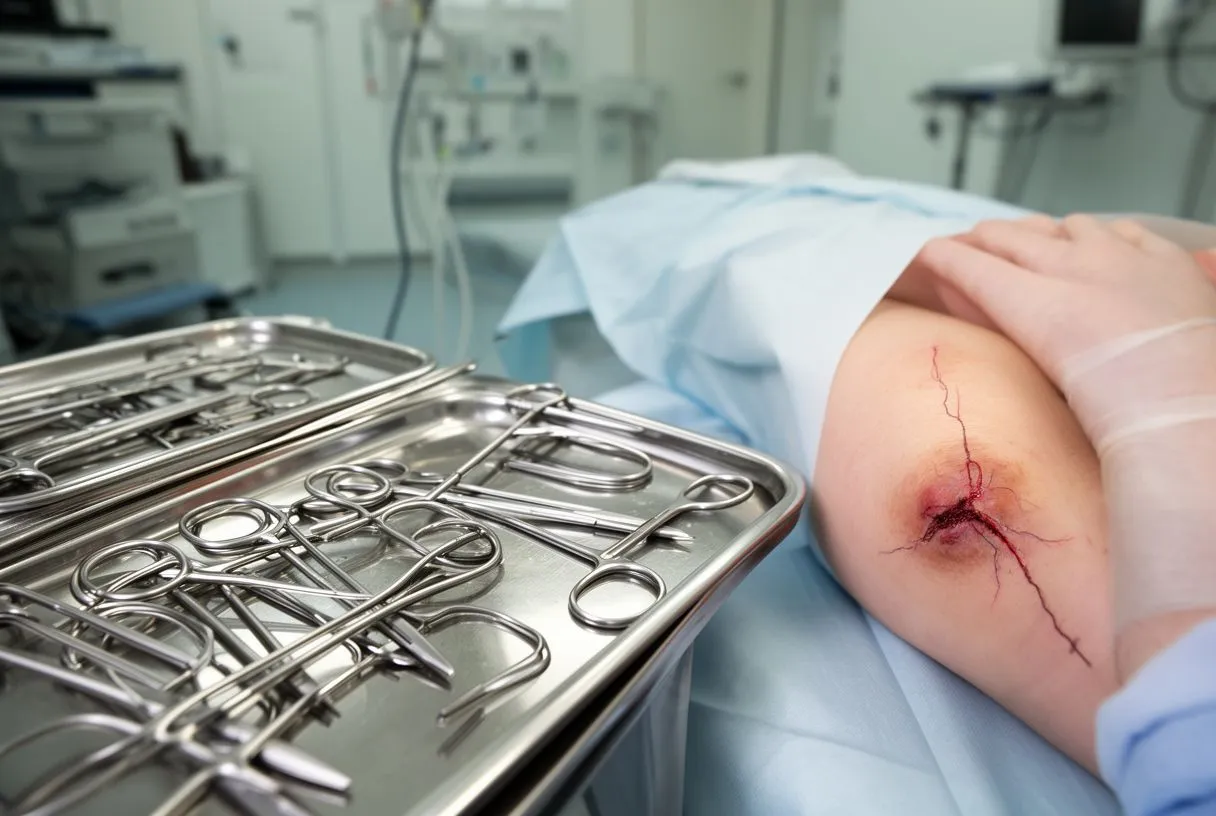
Internal Mammary Artery vs Saphenous Vein Graft
Why arteries last longer. The internal mammary artery is an artery already adapted to arterial pressure, taken from inside the chest wall and connected directly to a coronary artery — usually the left anterior descending artery, the vessel that supplies the front of the heart. Because it is an arterial graft, it does not undergo the same pressure-shock adaptation that a vein must endure, and its long-term patency is generally superior to that of vein grafts. This is the core reason the internal mammary artery vs saphenous vein comparison comes up in every serious discussion of bypass durability.
Why veins are still used. There are only two internal mammary arteries, and some patients need three, four or five bypasses. Vein is plentiful, easy to shape, and reaches arteries that the chest-wall arteries cannot conveniently access. Modern practice therefore combines conduits: internal mammary artery to the most important vessel, vein grafts to the others. This combination strategy has been refined over decades and is standard in contemporary coronary surgery.
What the evidence says. Long-term follow-up studies comparing arterial and venous grafts consistently show better durability for arterial conduits, particularly beyond ten years. Our team, trained in conventional, minimally invasive, robotic and transcatheter techniques, discusses with each patient whether an all-arterial or a combined strategy fits their anatomy — we recommend the less invasive or more complex route only where the evidence supports it for that specific patient. For many patients the answer is a hybrid: one arterial graft protecting the long-term future, plus vein grafts solving the immediate problem.
Saphenous Vein Graft Patency Rates Over Time
What patency means. Graft patency simply describes whether the graft is open and carrying blood. Surgeons track patency at defined time points — typically at discharge, at one year, and at five and ten years — using angiography or CT imaging. Understanding patency rates in general terms helps patients interpret what their own team tells them, without expecting a personal prediction from population averages.
The typical pattern. The overall pattern reported across large follow-up studies is consistent: the steepest losses occur early, within the first year; the rate of loss then slows through the middle years; and after roughly a decade, grafts progressively develop atherosclerotic narrowing similar to the native arteries. Losses at each stage have different causes, which is one reason the timing of your follow-up imaging matters.
- First year: highest risk period; failures here usually relate to technical factors or early thrombosis (clotting inside the graft).
- Years one to five: slower, steady attrition; intimal thickening — the vein wall's response to arterial pressure — narrows some grafts.
- Beyond ten years: graft atherosclerosis becomes the dominant issue; vein grafts progressively behave like diseased arteries.
Reading your own numbers. If your cardiologist quotes a patency figure for your graft, ask which artery it supplies, which conduit was used, and at what time point the figure applies. In our consultations we take the time to explain what studies actually show, in plain words, and to answer every question before any decision — graft numbers are no exception.
Saphenous Vein Graft Failure Symptoms to Watch For
Recognising the warning signs. Saphenous vein graft failure symptoms usually resemble the symptoms that led to bypass surgery in the first place: chest pressure or tightness, especially with exertion; shortness of breath on activity that was previously comfortable; or, in more serious cases, symptoms of a heart attack. Some graft narrowing is silent and discovered only on routine imaging, which is why symptoms and surveillance work together rather than either replacing the other.
Why early detection matters. A narrowing graft caught on surveillance imaging can often be treated before it causes a heart attack — with medication adjustment, a stent placed inside the graft, or, in selected cases, reoperation. A graft that fails silently and abruptly, particularly one that occludes completely, may cause a heart attack without warning. This asymmetry is the strongest argument for keeping your follow-up appointments even when you feel well.
When to seek help urgently. New or worsening chest discomfort, unexplained breathlessness, palpitations, or fainting after bypass surgery should prompt immediate medical attention — do not wait for a scheduled appointment. We tell every patient we discharge: you know your own body better than anyone, and if something feels different from your normal recovery, that instinct deserves to be checked.
Why Vein Grafts Narrow Over Time
Intimal hyperplasia — the vein's own response. When a saphenous vein is placed under arterial pressure, the cells lining and populating its wall multiply in response — a process called intimal hyperplasia. This thickening happens in the first months to years and can narrow the graft's channel. It is a biological adaptation, not a surgical mistake, and it is one reason meticulous handling of the vein during harvesting influences later patency.
Graft atherosclerosis — the late problem. In the years beyond ten, the vein graft can develop true atherosclerosis: plaque deposits, lipid accumulation, and ulceration much like a diseased native artery. This graft atherosclerosis timeline parallels the disease that caused the original blockages, which is why controlling cholesterol and blood pressure protects not only native arteries but the graft itself. Graft occlusion — the complete blockage of the graft — is usually the endpoint of this slow process, though clot can also form rapidly on a disrupted plaque.
Risk factors you control. Smoking, uncontrolled blood pressure, untreated high cholesterol, and diabetes all accelerate graft disease. Conversely, the medications proven to protect grafts — antiplatelet therapy such as aspirin, and statin lipid-lowering therapy — are among the highest-value treatments in all of medicine for this purpose. Reviewing the medication list at each follow-up matters, because a graft can be lost to something as fixable as a stopped statin.
Saphenous Vein Graft Monitoring and Surveillance
What surveillance involves. Saphenous vein graft surveillance typically combines symptom review, exercise or stress testing, and imaging — most commonly CT coronary angiography, which maps the grafts non-invasively. Invasive angiography is reserved for abnormal findings or symptoms. There is no single universal surveillance schedule; cardiologists tailor follow-up to the patient's risk profile, the number of vein grafts, and findings from earlier studies.
Why it matters even when you feel well. Silent graft disease is real. Some of the most consequential interventions — a stent in a narrowing graft, an intensification of medical therapy — happen because routine imaging found a problem before symptoms did. Skipping surveillance does not make the disease less likely; it only makes it less likely to be caught early. Ask your team for a personalised follow-up calendar, so you never have to guess when your next check should happen.
What to bring to surveillance visits. Keep a simple record between appointments: any chest symptoms, changes in exercise tolerance, medication changes, and blood pressure readings. In our video consultations — the first contact with our team is free — we review exactly these details and tell patients which studies are still needed, so no unnecessary tests are ordered.
How to Extend Your Bypass Graft Lifespan
Medication adherence comes first. The single most powerful set of tools for graft longevity is pharmacological: antiplatelet drugs such as aspirin reduce clotting inside the graft; statins slow atherosclerosis in both native vessels and the graft itself; blood pressure and diabetes control reduce the wall stress and metabolic damage that drive graft disease. These medications work quietly and their benefit is invisible day to day, which is why adherence often slips — and why it matters so much that it does not.
Lifestyle as graft protection. Complete smoking cessation is non-negotiable for graft protection — smoking is among the strongest accelerators of graft disease. Regular moderate exercise, a Mediterranean-style diet, weight control, and good sleep all contribute to the same goal: slowing the biological processes that narrow grafts. None of these is glamorous, and all of them compound over years.
Practical checklist.
- Take medications as prescribed: antiplatelet and statin therapy are the backbone of graft protection.
- Quit smoking completely: every smoke-free month measurably helps the graft and native arteries.
- Control blood pressure and diabetes: follow your targets set with your cardiologist.
- Keep moving: regular moderate activity supports circulation and overall cardiac health.
- Attend every follow-up: surveillance catches problems while they are still treatable.
Reoperation and repeat bypass options. When a graft fails despite good care, options still exist: a stent inside the failing graft, a new bypass to the same artery using a different conduit, or medical therapy alone in some cases. Repeat heart bypass options have improved considerably, and arterial grafts — including redo internal mammary artery or radial artery grafts — play a growing role. When we evaluate a patient with a failing graft, our multidisciplinary team reviews every option against international practice guidelines, and we actively encourage seeking a second opinion as a normal part of that decision.

Can a Person Live 30 Years After Bypass Surgery?
Yes — with realistic expectations. Many patients live for decades after Coronary Artery Bypass Grafting, and long-term survivors of 30 years or more are well documented in surgical follow-up literature. Survival at that horizon depends on the whole picture: the state of the heart muscle at the time of surgery, whether an internal mammary artery graft was used, control of risk factors afterwards, and the natural trajectory of other conditions. A 30-year survivor typically had good graft durability and diligent follow-up — not luck alone.
What long-term survivors have in common. Across decades of follow-up studies, a consistent pattern emerges: patients who took their medications, stayed smoke-free, kept active, and attended surveillance tended to keep their grafts open longer and avoid repeat interventions. It is a quiet, disciplined pattern rather than a dramatic one. Some patients also benefit from later revascularisation — a stent or a new graft — which itself has become safer and more refined over the years.
Special situations worth knowing about. Some patients develop postoperative atrial fibrillation — an irregular rhythm — after bypass surgery, and it is worth knowing that rhythm disturbances occurring after coronary bypass surgery are a recognised, studied phenomenon that your team can manage with medication and monitoring. Patients also sometimes ask about leg vein problems years later: if the saphenous vein was removed, the deep veins carry the load, but any new leg swelling deserves evaluation, since venous issues and Deep Vein Thrombosis can occur independently of the heart surgery. Report any new symptom, however small it seems — early questions almost always have simpler answers than late ones.
Conclusion: What to Remember About Your Graft
The takeaway in plain words. The saphenous vein graft lifespan is not a fixed number but a trajectory shaped in the first year and protected in the years after. Vein grafts are workhorse conduits that solve the immediate problem of blocked arteries, while arterial grafts carry the longest-term durability; modern bypass surgery uses both strategically. The saphenous vein graft lifespan you actually get depends heavily on medication adherence, smoking cessation, blood pressure and cholesterol control, and consistent surveillance — factors substantially within your influence.
Next steps for you or your family. If you are facing bypass surgery, ask your surgical team which conduits they plan to use and why. If you already have a bypass, ask when your next surveillance check is due and whether your medication plan matches current guidelines. Every situation is individual, and a conversation with a qualified cardiac team — not self-diagnosis — is the right way to settle these questions. Our multidisciplinary team, led by Dr Alejandro Molina, offers a free video consultation as a first step: we listen to your story, review your studies, and tell you honestly what your options are, in plain words. The saphenous vein graft lifespan question deserves an answer built on your own anatomy, your own studies and your own goals — and that answer comes from sitting down with the people who will look after you.






