

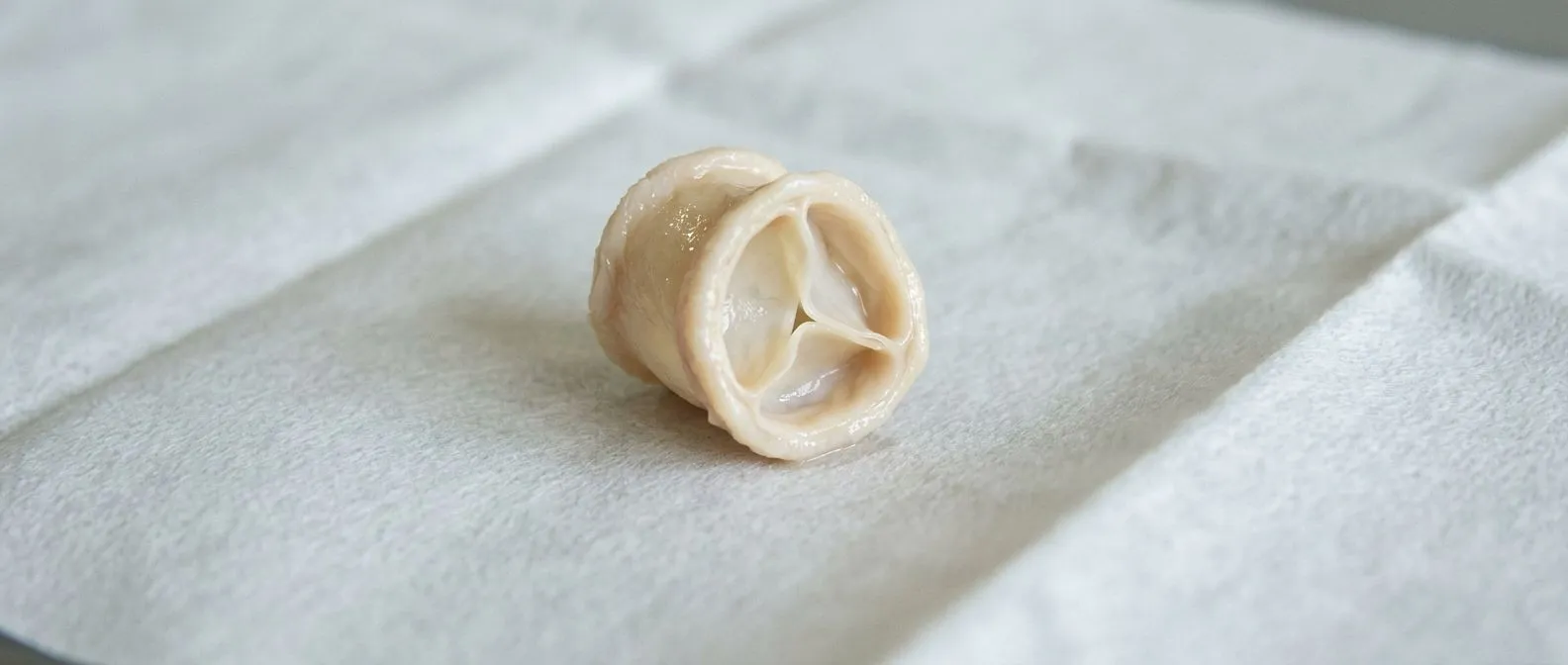
Stentless Valve for Aortic Valve Replacement
Stentless valve aortic replacement: learn how this advanced option improves blood flow, durability and recovery.
If your aortic valve has narrowed or begun to leak, your cardiac team will likely have mentioned several ways to replace it. One option that surprises many patients is the stentless valve — a replacement valve that arrives without the rigid metal frame most valves are built on. Because a stentless valve aortic replacement sits directly in the valve's natural position, it behaves more like a healthy human valve and can offer better blood flow and a quieter heart. This guide explains what stentless valves are, how they differ from stented valves, who they suit best, and what recovery and long-term outcomes realistically look like.
What Is a Stentless Valve?
A stentless valve is a biological tissue valve — usually made from pig (porcine) or cow tissue — that is implanted without the rigid metal or plastic frame, called a stent, that supports most replacement valves. Instead, the surgeon trims the tissue valve and sews it directly into the aortic root, the ring of tissue where your own valve used to sit. This is sometimes called a full root technique, because the valve plus its surrounding tissue cylinder replaces the root itself.
Why the stent was removed. Traditional bioprosthetic valves are mounted inside a stent to keep their shape and make implantation faster. But that frame takes up space inside the heart and can restrict blood flow. Removing the stent means the whole valve can open wider and sit closer to your own anatomy, so the leaflets — the thin flaps that open and close with each heartbeat — move more naturally.
Where the idea came from. Stentless designs have been used in aortic valve surgery since the 1990s. Some of the best-known models are porcine valves. Jude Toronto valve, and the concept has been studied for decades, with reviews of the technique published in the scientific literature — European Society of Cardiology guidance on valve disease covers the range of prosthetic valve options in current use.
Stentless Valve vs Stented Valve: What Is the Difference?
The difference between a stentless valve and a stented valve comes down to one thing: the supporting frame. In a stented valve, the tissue leaflets are sewn onto a fabric-covered scaffold. In a stentless valve, there is no scaffold — the surgeon constructs the valve's position from the tissue itself, which takes longer and requires more surgical skill.
Trade-offs at a glance. Both valve types have their place, and neither is universally better. The main differences are:
- Blood flow: A stentless valve offers a wider opening, so the heart does not have to work as hard to push blood through.
- Implantation time: Stented valves are quicker to implant; stentless valves add surgical time to the operation.
- Future options: If a stentless valve degenerates later, it can usually be replaced with a transcatheter procedure — a Valve-in-valve implant placed through the leg artery.
What the stent actually does. It is worth understanding that the stent is not a safety feature. It is simply a mounting device that holds the valve shape and speeds up surgery. In the aortic position, where the valve sits in a high-pressure outflow tract, the stent's bulk is the main reason a stented valve has a smaller effective opening than a stentless one.
Stentless Valve Hemodynamics: Why Flow Matters
Hemodynamics is the study of how blood moves through the heart and vessels. In the aortic position, hemodynamics matter a great deal: every beat of your life, blood must squeeze through the valve opening. If the opening is too narrow, the heart muscle thickens over time to compensate, a condition called left ventricular hypertrophy.
What the studies show. Research comparing stentless versus stented valve replacement has consistently found that stentless valves produce lower pressure gradients — a measure of how much resistance the flow meets — and larger effective orifice areas. Reviews of the evidence have noted that regression of the thickened heart muscle is greater after stentless valve implantation, though long-term survival advantages over modern stented valves are harder to demonstrate.
What this means for you. Better hemodynamics can translate into a more comfortable daily life, especially for patients with a small aortic root or a physically active lifestyle. On an echocardiogram — the ultrasound of the heart done after surgery — the numbers look closer to a healthy native valve. In our practice, we review the preoperative echocardiogram together with the patient and explain what the gradient and orifice size will mean for their everyday activity before any valve is chosen.
What Is a Stentless Bioprosthetic Aortic Valve Made Of?
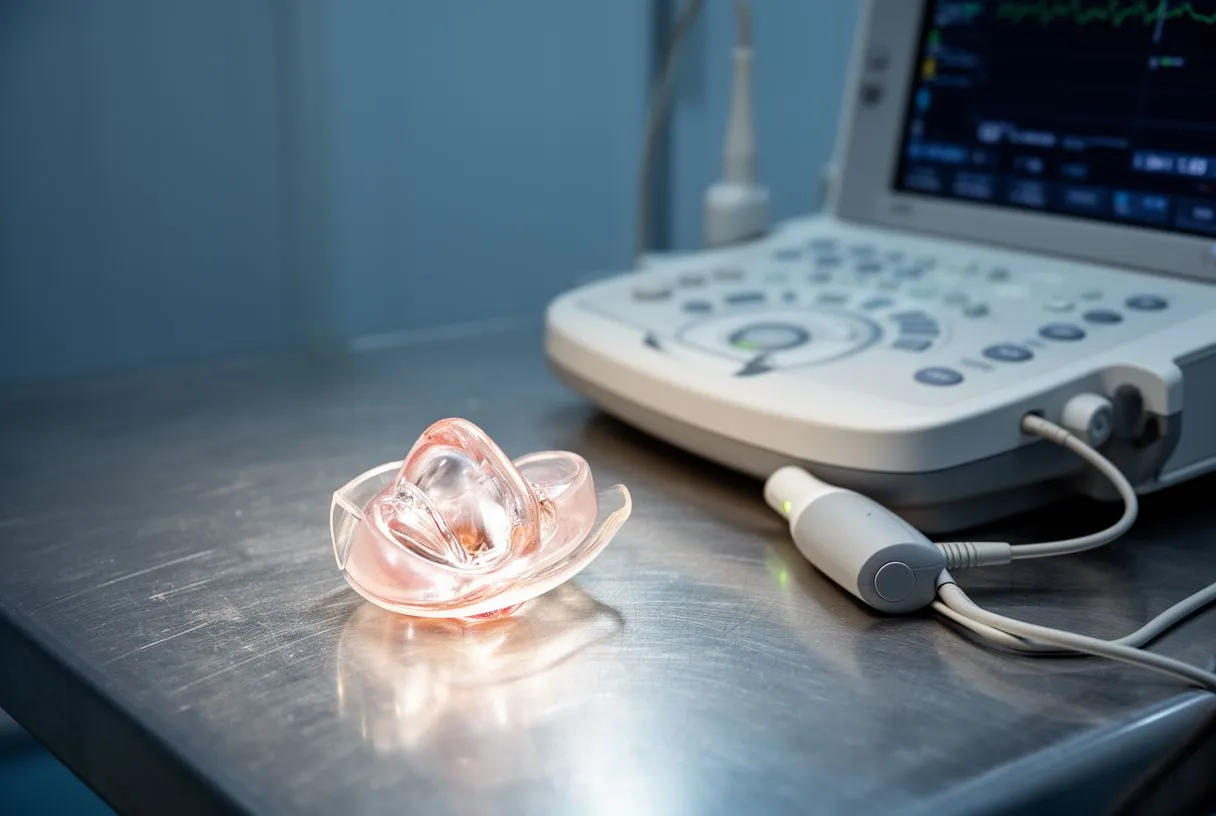
A stentless bioprosthetic aortic valve is made from animal tissue, most often treated porcine heart valve tissue, sometimes combined with bovine pericardium — the tough outer sac of a cow's heart — used as a supporting material. The tissue is chemically preserved so the body does not reject it, and the valve is designed to last years without the blood-thinning medication required by mechanical valves.
Porcine versus bovine tissue. Most stentless designs are porcine valves, because the pig aortic valve most closely resembles the human one. A stentless bovine pericardial valve exists in some designs, where pericardial tissue is shaped into leaflets. Both types are tissue valves, so neither requires lifelong warfarin in the way mechanical valves do, and both will eventually show wear.
No metal, no clicking. Because there is no frame and no mechanical parts, a stentless valve is silent. Patients who have heard a mechanical valve described sometimes ask whether they will hear theirs click — with a tissue valve, whether stented or stentless, they will not.
How Does Stentless Valve Aortic Replacement Surgery Work?
Stentless valve aortic replacement is performed through conventional open-heart surgery or, in suitable patients, through a minimally invasive approach. It requires general anesthesia, a heart-lung machine, and a surgeon experienced in the technique — the implantation itself is more demanding than a stented valve because the valve must be tailored to the patient's root.
The steps in brief. While the details vary by surgeon and valve design, the operation typically follows this sequence:
- Anesthesia and access: The team puts you to sleep and reaches the heart through the chest, sometimes with a smaller incision than full open surgery.
- Valve removal: The diseased aortic valve is excised, and the root is measured carefully so the stentless valve is sized correctly.
- Implantation: The surgeon sews the tissue valve into the root in layers, creating a stable, blood-tight seal before the heart is restarted.
Minimally invasive stentless valve replacement. In some patients, the valve can be implanted through a smaller incision at the side of the chest or the upper sternum. Our team performs conventional, minimally invasive, robotic and transcatheter procedures, and we recommend the less invasive route only where the evidence supports it for that specific patient. The goal is always the same result with less disruption to the body, not a shortcut for its own sake.
Who Is a Candidate for Stentless Valve Aortic Replacement?
Stentless valve replacement is best suited to patients with aortic stenosis or aortic regurgitation who need a surgical replacement, want a tissue valve, and have a root anatomy that fits the valve design. Age matters: younger patients who will outlive a bioprosthetic valve may benefit from the better hemodynamics, while older patients who would not expect a reoperation may find a transcatheter approach fits better.
When the root is involved. Some patients have disease of the aortic root itself — the widened section of the aorta just above the valve — and need a Valve-sparing Root Replacement or an Aortic Root Replacement. In these cases, a stentless valve can be combined with the root reconstruction, since the valve and root are handled as one unit. This is one of the situations where stentless designs have a genuine practical advantage.
How the decision is made. Every case is reviewed by our multidisciplinary team against international practice guidelines before a recommendation is given, and the patient receives a clear proposal with the alternatives — the final decision is always theirs. Factors weighed include the valve's diameter, the degree of calcification, heart function, and your own priorities. We encourage a second opinion and treat seeking one as a normal part of deciding about heart surgery.

Stentless Valve Durability and Long-Term Outcomes
Stentless valve durability is comparable to stented bioprosthetic valves: most tissue valves will show wear over 10 to 20 years, and the rate of structural deterioration depends on age, blood pressure, and how calcium and fats are handled in the body. There is no reliable evidence that a stentless valve lasts dramatically longer than a modern stented one — the honest advantage is the better hemodynamics, not the lifespan.
What patients should watch. All tissue valves degenerate gradually. Signs include a new heart murmur, breathlessness on exertion, or changes on a routine echocardiogram. The key practical point is that degeneration, when it happens, is usually slow enough to plan a replacement calmly rather than in an emergency.
Future options if the valve wears. A degenerated stentless valve can often be treated with a transcatheter valve — a valve-in-valve procedure, where a new valve is placed inside the old one via a catheter in the leg artery. This avoids open-heart surgery entirely. The same technology applies to Transcatheter Aortic Valve Implantation for native valves, and the approach is well established for degenerated bioprosthetic valves.
What Is Recovery Like After Stentless Aortic Valve Replacement?
Stentless aortic valve replacement recovery is similar to other surgical aortic valve replacement: a hospital stay of roughly five to seven days, a few weeks of gradual activity increase, and cardiac rehabilitation to rebuild strength. The operation itself is longer than a stented valve implantation, so the immediate recovery may be a little more demanding, but the long-term outcome in terms of heart function is generally favorable.
What to expect week by week. Most patients can walk short distances within a few days, drive after several weeks, and return to normal activity over two to three months, depending on overall fitness. The breastbone, if opened through the middle, takes about six to eight weeks to heal, and heavy lifting is restricted during that time.
What we check after surgery. We take the time to explain what the postoperative echocardiogram actually shows, in plain words, and to answer every question before any decision about the next step. Follow-up echocardiograms are done at intervals to confirm the valve is functioning well and that the heart muscle is recovering as expected. A pulse oximeter and blood-thinning guidance are handled at discharge, and patients are given clear instructions on when to call the team.

Stentless Valve Reoperation Rates and Risks
Stentless valve reoperation rates are in line with other bioprosthetic valves — the valve will eventually need replacement, usually after a decade or more. The risks of the operation itself are those of any heart surgery: bleeding, infection of the new valve (Prosthetic Valve Endocarditis), irregular heart rhythm, and stroke. These are uncommon, and individual risk is best estimated with a scoring tool such as the EuroSCORE II, which weighs age, kidney function, lung function and prior heart surgery.
How the risks compare with TAVR. Transcatheter aortic valve replacement (TAVR) is less invasive, but it carries its own specific complications — the so-called "big five": bleeding and vascular injury at the access site, stroke, conduction disturbances requiring a pacemaker, kidney injury, and valve malpositioning or leakage. TAVR has shown good outcomes in selected patients and continues to develop, with techniques such as percutaneous vessel closure studied for patients with unusual vascular anatomy — for example, a report of a novel closure technique for a TAVR patient with a prior bypass graft was published in a peer-reviewed journal (dx.doi.org/10.1155/2021/4253570). In patients with aortic stenosis, trials comparing stentless valves against stented alternatives and against transcatheter routes have been conducted, including the REpositionable Percutaneous Replacement of Stenotic Aortic Valve through Implantation of Lotus™ Valve System trial (clinicaltrials.gov/study/NCT01627691).
What is the hardest valve to replace in the heart? Aortic valve surgery is among the most commonly performed, but the mitral valve — the valve between the left atrium and the left ventricle — is often considered the hardest to replace or repair, because of its complex anatomy and its relationship to the heart muscle. Mitral Valve Replacement, Mitral Valve Prolapse, and the newer Transcatheter Mitral Valve Replacement each have their own indications, and the aortic valve is generally more straightforward surgically than the mitral valve.
Stentless valve surgery cost in Mexico varies widely depending on the hospital, the valve chosen, the surgical approach, and whether any additional procedures are needed at the same time. We do not publish prices here, because an honest estimate requires a review of the actual studies and imaging. The practical advice is to ask any cardiac team for a written proposal covering the operation, the hospital stay, the valve, and the follow-up plan.
Questions to ask any team. Whether you are considering surgery in Mexico, the United States, or elsewhere, these questions will help you compare options:
- Which valve is recommended and why? Ask for the reasoning behind stentless, stented, or transcatheter options for your specific anatomy.
- What is the surgeon's experience with this technique? Stentless implantation is technique-dependent, and volume matters.
- What are the follow-up plans? Ask how echocardiograms, blood tests, and reviews will be arranged, and what happens if you live far away.
How we work with patients. The first contact with our team is a free video consultation: we get to know the patient, talk through the condition, and say which studies are still needed so no unnecessary ones are ordered. Dr Molina trained in cardiac, minimally invasive, robotic and structural surgery at the University of Montreal, and in structural cardiology and TAVR at CHU Bordeaux, and our team also trained at Jena, Bad Berka and Buffalo. We work with patients from Mexico and abroad, and we make sure the treatment plan is explained before any decision is made.
Stentless Valve Surgery Cost in Mexico and Choosing the Right Team
Stentless valve surgery cost in Mexico varies widely depending on the hospital, the valve chosen, the surgical approach, and whether any additional procedures are needed at the same time. We do not publish prices here, because an honest estimate requires a review of the actual studies and imaging. The practical advice is to ask any cardiac team for a written proposal covering the operation, the hospital stay, the valve, and the follow-up plan.
Questions to ask any team. Whether you are considering surgery in Mexico, the United States, or elsewhere, these questions will help you compare options:
- Which valve is recommended and why? Ask for the reasoning behind stentless, stented, or transcatheter options for your specific anatomy.
- What is the surgeon's experience with this technique? Stentless implantation is technique-dependent, and volume matters.
- What are the follow-up plans? Ask how echocardiograms, blood tests, and reviews will be arranged, and what happens if you live far away.
How we work with patients. The first contact with our team is a free video consultation: we get to know the patient, talk through the condition, and say which studies are still needed so no unnecessary ones are ordered. Dr Molina trained in cardiac, minimally invasive, robotic and structural surgery at the University of Montreal, and in structural cardiology and TAVR at CHU Bordeaux, and our team also trained at Jena, Bad Berka and Buffalo. We work with patients from Mexico and abroad, and we make sure the treatment plan is explained before any decision is made.
Living with Aortic Stenosis: What to Avoid and When to Seek Help
If you have aortic stenosis but have not yet had surgery, the question of what to avoid is important. The short answer: avoid anything that causes sudden, extreme exertion without medical clearance, and avoid uncontrolled blood pressure, high cholesterol, and smoking — all of which accelerate valve deterioration. How quickly does aortic stenosis get worse? Progression is gradual, but it speeds up with age, kidney disease, and other risk factors, which is why regular echocardiograms matter.
What is the average life expectancy after surgery? There is no single figure that applies to everyone. Survival after aortic valve replacement depends on age, overall health, how the heart has recovered, and the presence of other conditions. What matters is that the valve relieves the obstruction before the heart muscle has been permanently damaged, which is why surgery is usually offered once symptoms appear or the valve's function crosses a defined threshold.
What should you not do with aortic stenosis? Avoid competitive sports or heavy lifting without your cardiologist's approval, and do not ignore new symptoms — breathlessness, fainting, chest discomfort — especially if they are new or worsening. A stentless valve aortic replacement, or a transcatheter valve, or a conventional stented valve, is a decision that should be made with a team that explains the reasoning clearly.
Stentless valve aortic replacement is one of several options for a diseased aortic valve, and its main advantage is the way blood flows through the heart once the valve is in place. It suits patients who want a tissue valve and can tolerate a surgical operation, and it offers the possibility of a less invasive valve-in-valve procedure if the valve ever wears out. No single valve is right for everyone, and the correct choice depends on your anatomy, your health, and your priorities. If you are considering a stentless valve, we encourage you to discuss your own situation with a qualified cardiac team, and we welcome you to book a consultation so we can review your studies and explain what the options actually mean for your life.






