

Sutureless Valve: Faster Aortic Valve Replacement
Sutureless valve replacement reduces surgery time and speeds recovery for aortic stenosis.
If you or a family member has been told the aortic valve needs replacing, you have probably heard the words "open heart surgery" and felt your stomach tighten. A sutureless valve replacement changes that picture. It is a real surgical option designed to shorten the time on the heart-lung machine, reduce the size of the incision, and speed up recovery — while still being a proper surgical procedure performed by a cardiac team. This guide explains what these valves are, who they suit, what the operation involves, and what recovery honestly looks like, so you can walk into any consultation knowing the right questions to ask.
What Is a Sutureless Valve?
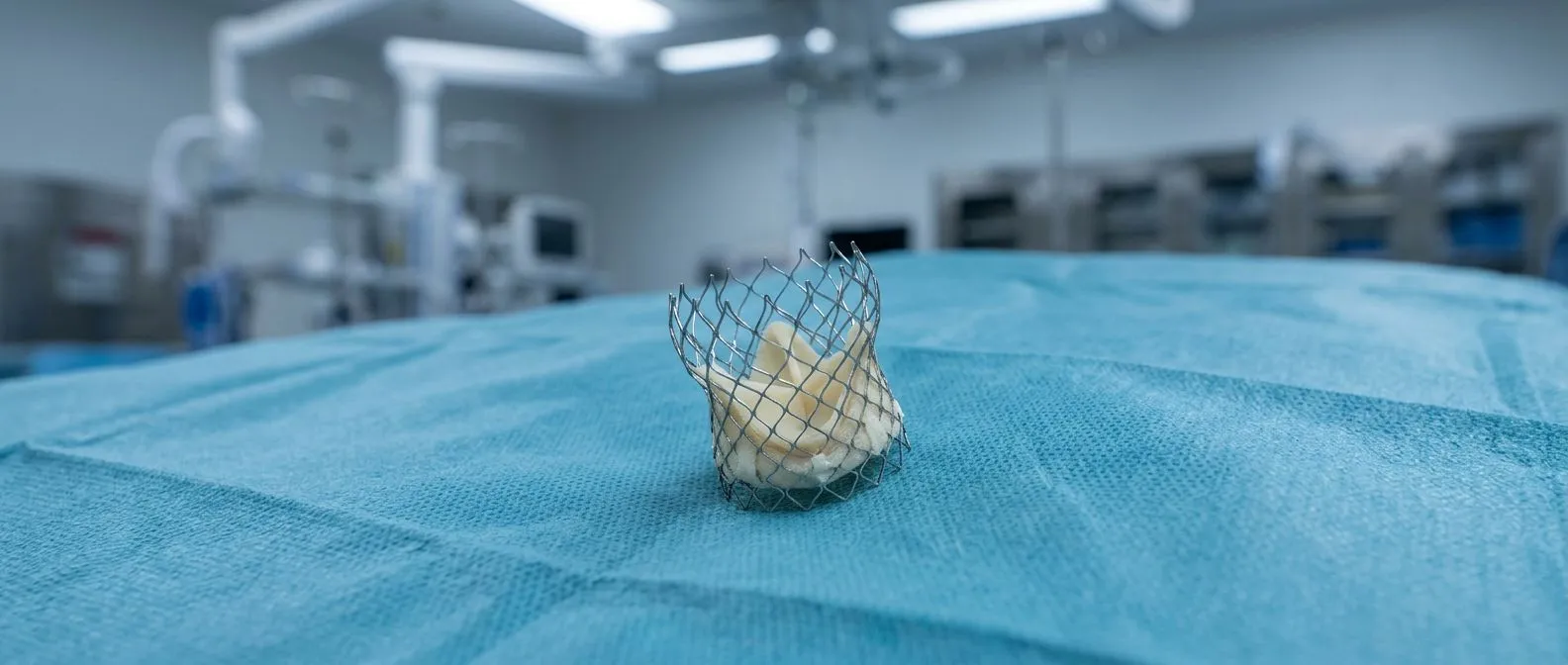
A sutureless valve is a biological (tissue) valve designed to be fixed in place without the traditional row of stitches that surgeons normally use to sew a replacement Heart Valves prosthesis into the aortic position. Instead of sutures, the valve has a soft, expandable outer ring or skirt. Once it is positioned inside the old valve's "annulus" — the firm ring of tissue where your natural valve sat — the ring self-expands or is inflated into place and holds firmly against the surrounding tissue within minutes.
These valves sit in the same family as the rapid deployment valve, another design that still uses a few anchor sutures but cuts the implantation time dramatically compared with a conventional stitched bioprosthesis. Both were developed for one reason: every extra twenty minutes a patient spends on the heart-lung machine adds risk, especially for older or frailer patients.
Why the aortic valve specifically? The aortic valve is the outflow door of the heart — blood leaves the left ventricle through it into the aorta, the body's main artery. In aortic stenosis, the most common reason for replacement in older adults, this door stiffens and narrows, forcing the heart to push against rising resistance. The aortic position is also the easiest place for a self-fixating valve to seat securely, which is why sutureless designs have focused there. The Cleveland Clinic lists aortic valve replacement among the most common and well-established heart operations, and sutureless technology is a refinement of that same operation — not a different one.
How Does Sutureless Valve Replacement Work?
In a conventional Surgical Aortic Valve Replacement (SAVR), the surgeon removes the diseased valve and then sews the new one in with a continuous or interrupted line of sutures. That sewing step is meticulous and can take a significant portion of the total operation time. With a sutureless valve, the surgeon removes the diseased valve leaflets, sizes the annulus, and then positions the valve — which expands and seals itself against the native tissue, often within two to three minutes.
What the heart-lung machine has to do with it. During aortic valve surgery, a perfusion team temporarily takes over the function of the heart and lungs using a heart-lung machine. Shorter machine time means less inflammatory response, less blood thinning required, and generally a smoother course afterward. A typical conventional aortic valve replacement may spend a considerable part of its cross-clamp time on the sewing step; a sutureless implantation compresses that to minutes. Studies of single valve replacement have explored how the whole intraoperative strategy — from cardioplegia (the solution that protects the heart while it is paused) to implantation technique — affects outcomes, including research on Single-Dose Lignocaine-Based Blood Cardioplegia in Single Valve Replacement Patients published in the Brazilian Journal of Cardiovascular Surgery, which examined how protective solutions during these operations support the heart.
Where the incision goes. Many sutureless valve replacements are done through a minimally invasive approach — a small incision in the right side of the chest between the ribs (a "mini-thoracotomy") or a partial upper sternotomy — rather than a full sternotomy. The valve's fast deployment makes these smaller approaches more practical, because the surgeon does not need a long, uninterrupted window to sew a valve in place deep in a small space.
In our practice, every case is reviewed by the multidisciplinary team against international practice guidelines before a recommendation is made, and the patient receives a clear proposal with the alternatives — the final decision is always theirs.
Sutureless Valve vs TAVR: What's the Difference?
This is one of the most common questions patients ask, and it deserves a clear answer. TAVR — transcatheter aortic valve replacement — delivers a crimped valve on a catheter, usually through an artery in the groin, without opening the chest at all. A sutureless valve, by contrast, is implanted surgically: the surgeon directly sees the valve, removes the diseased leaflets under direct vision, and places the valve through a small incision.
The middle ground between the two. Think of sutureless valves as sitting between conventional surgery and TAVR. Compared with TAVR, the surgical route gives the surgeon complete control of the annulus, allows removal of the calcified leaflets, and avoids the concerns about valve placement in the artery that can matter in younger patients. Compared with conventional surgery, the sutureless design cuts implantation time and makes minimally invasive access easier. Valve-in-valve procedures — placing a new valve inside a failed one — are possible with both approaches later in life, which matters for younger patients planning ahead.
- Conventional surgery: full sternotomy, stitched valve, longest machine time, the most proven long-term record.
- Sutureless valve: small incision, valve fixes itself in minutes, surgical access to the annulus, shorter operation.
- TAVR: catheter through the groin, no chest incision, no machine time, reserved for patients whose anatomy and risk profile suit it.
We perform conventional, minimally invasive, robotic and transcatheter procedures, and we recommend the less invasive route only where the evidence supports it for that specific patient — never as a blanket policy.
Who Is a Candidate for Sutureless Aortic Valve Replacement?
Candidacy depends on three things: your valve anatomy, your overall risk, and your age. Sutureless aortic valve replacement is most often considered for patients with severe, symptomatic aortic stenosis whose annulus is a suitable size for the available valves, and who are older or have moderate surgical risk — people who benefit from a shorter operation but who are still better served by a surgical approach than by TAVR.
Sizing matters enormously. Sutureless valves are sized to the patient's annulus measured on echocardiography and CT. If the annulus is too small, too large, or heavily calcified in an irregular way, the valve may not seal predictably, and a conventional stitched valve becomes the safer choice. Certain anatomical situations — for example, patients needing an Aortic Root Replacement because the root itself is diseased, or cases involving an Aortic Arch Replacement for disease extending into the arch vessels — usually call for conventional techniques, since those operations address more than the valve alone.
How risk is measured. Before any recommendation, teams calculate a surgical risk score such as EuroSCORE II, which weighs age, lung function, kidney function, prior operations and urgency. A high score does not automatically rule out surgery; it shapes which approach is safest. And when the aorta itself has torn or is at risk — an Cleveland Clinic describes aortic dissection as a tear in the aorta's wall that is a true cardiovascular emergency — the priority is always the aortic repair, with valve decisions made around it.
In our consultations we take the time to explain what the studies actually show in plain words, and to answer every question before any decision is made.
What Are the Benefits of Sutureless Valve Surgery?
Shorter operation, shorter ischemic time. The clearest benefit is time. The valve deploys in minutes rather than the long sewing phase of a conventional implant, which means less time the heart is stopped and less time on the heart-lung machine. For older patients or those with fragile lungs and kidneys, that difference can genuinely matter.
Easier minimally invasive access. Because the implantation step is fast, the surgeon can work comfortably through a small right-sided chest incision. Patients avoid a full sternotomy — the bone is not cut down the middle — which usually means less pain, a lower chance of the chest wound taking weeks to knit, and a faster return to driving and daily activity.
Real surgical control retained. Unlike TAVR, the surgeon still sees the annulus directly and removes the diseased valve. If anything unexpected is found — calcium in an unusual spot, a small tear, a second valve problem — it can be addressed in the same operation. For example, a patient needing a Hemiarch Replacement of the upper aorta, or a Mitral Valve Replacement at the same time as the aortic valve, can have both handled in one sitting. Research on hemostasis — controlling bleeding — after complex cases, such as Achieving Hemostasis Posttranscatheter Aortic Valve Replacement in a Patient with Aortobifemoral Bypass Graft Using Perclose Device: A Novel Technique in Cardiology Research and Practice, shows how the field keeps refining techniques for difficult vascular situations, and surgical access gives the team the widest range of such tools.
I trained in structural cardiology and TAVR at CHU Bordeaux alongside my cardiothoracic training, and I have seen firsthand how the sutureless and rapid deployment options changed the conversation with older patients — the operation we can responsibly offer them is simply shorter than it was a decade ago.
What Happens During Sutureless Valve Implantation?
Knowing the sequence in advance takes much of the fear out of the day. Here is the typical flow, step by step.
- Anesthesia and preparation: general anesthesia, monitoring lines, and the surgical team preparing the small chest incision site.
- Access and heart-lung support: the surgeon reaches the aortic valve through a mini-thoracotomy or partial sternotomy; the heart-lung machine takes over circulation.
- Valve removal and sizing: the diseased leaflets are removed under direct vision and the annulus is measured with sizers to choose the exact valve size.
- Deployment: the sutureless valve is positioned and expands — or is balloon-expanded — into place, sealing against the tissue in a few minutes.
- Checks and closure: the surgeon confirms the valve works perfectly on ultrasound, checks for leaks around it, and closes the small incision.
How long does the operation take? A sutureless aortic valve replacement through a minimally invasive approach is typically a shorter operation than a conventional replacement, though the exact duration depends on your anatomy, whether other procedures are needed, and how your heart responds to the pause. Your surgeon should be able to give you a realistic estimate for your specific case, not an average.
What happens while you are asleep? You are unaware of any of it. The perfusion team keeps your body perfused and oxygenated, the heart is protected with cardioplegia, and the anesthesiologist manages your blood pressure and temperature throughout. From your perspective, the operation is a single seamless sleep.
What Is the Recovery Time and Hospital Stay After a Sutureless Valve?
The first days. Most patients wake up in the intensive care unit with a breathing tube already removed or coming out within hours. Drainage tubes from the chest come out within a day or two, and most patients move to a regular ward by day two. Because there is no full sternotomy, pain is typically managed with oral medication and patients are up walking earlier than after conventional surgery.
Hospital stay. A shorter, less invasive operation generally means a shorter hospital stay — many patients go home within roughly four to six days when nothing unexpected arises, compared with longer stays after a full sternotomy. Your team decides based on your rhythm, your kidney function, and how steadily you are walking, not by a calendar.
The first six months. This is where the "what should I expect 6 months after an aortic valve replacement?" question comes in, and honesty is important. At six weeks most patients are walking comfortably and doing light daily activity. By three to six months, most feel essentially back to normal: driving, shopping, gardening, travel. Heart rehabilitation — a supervised walking and strengthening program — is strongly worth doing if it is offered. Expect follow-up echocardiograms at regular intervals to confirm the valve is functioning well. In our experience, patients who ask for a clear written recovery timeline before surgery navigate those six months with far less anxiety than those who do not.

Are Sutureless Valves Safe? What Are the Risks?
The honest baseline. Aortic valve surgery — conventional or sutureless — carries real risks: bleeding around the valve, heart rhythm problems such as the need for a pacemaker, stroke, kidney strain, and infection. Sutureless valves have accumulated a substantial safety record in the published literature, including large registries and systematic reviews comparing them with conventional and transcatheter options. The design's main theoretical concern — that a self-fixating valve might not seal perfectly and could leak ("paravalvular leak") — is monitored in every study, and modern valves and sizing techniques have made clinically significant leaks uncommon.
Who should be cautious. Very small or very irregular annuli, severe calcification extending beyond the valve, active infection, and patients whose anatomy makes sizer fitting unreliable may all steer the team toward a conventional stitched valve or an Intra-annular Valve design instead. This is not a limitation of the concept — it is the discipline of matching the right valve to the right anatomy.
What a good team checks before recommending it. A complete echocardiogram, a CT of the aorta and valve, and a candid risk-score calculation. We encourage second opinions and treat seeking one as a normal part of deciding about heart surgery — a trustworthy team should welcome it, not resist it.
What Are the Long-Term Outcomes of a Sutureless Valve?
Durability of the tissue. Sutureless valves are biological valves, made from treated animal tissue. Like all tissue valves, they will gradually stiffen over the years — typically a matter of a decade or more, with wide individual variation — and may eventually need attention. For older patients, the valve often outlasts the period in which durability matters. For younger patients, the possibility of a future valve-in-valve procedure (placing a new transcatheter valve inside the old one, without open surgery) is a genuine planning consideration worth discussing in advance.
Life expectancy after replacement. Patients frequently ask, "What is the average life expectancy of a person with aortic stenosis after valve replacement surgery?" The honest answer: severe symptomatic aortic stenosis left untreated carries a poor prognosis, and replacement removes that threat — most patients return to a life expectancy shaped by their age, other health conditions and lifestyle rather than by the valve itself. No surgeon can promise a number; what the surgery does is take a progressive, eventually fatal condition off your list of problems. Quality of life — energy, breathing, sleep — usually improves noticeably within weeks to months.
Follow-up matters more than the implant. Yearly echocardiograms, dental care before any dental procedures, and attention to blood pressure protect any tissue valve. Patients who keep those appointments detect problems early, when they are simple to address.
Understanding cost in a cross-border context. That said, the price of a sutureless valve procedure depends on the implant chosen, hospital stay, whether other procedures are needed, and your insurance coverage. Rather than quoting a figure you should treat as reliable, your team should provide a written, itemized estimate after reviewing your studies — and if no such estimate is offered, that itself is a signal.
How to evaluate a team. Ask about the surgeon's training and volume in valve surgery, whether the hospital has a dedicated cardiac ICU, and whether the team offers the full spectrum — conventional, minimally invasive, robotic and transcatheter — rather than pushing one approach for every patient. A team that only does one thing will tend to recommend that one thing.
What the first steps look like with us. Our multidisciplinary team of cardiac surgeons led by Dr Alejandro Molina works from consulting rooms in Guadalajara, Querétaro and Hermosillo. The first contact is a free video consultation: we get to know the patient, talk through the condition, and identify which studies are genuinely still needed so no unnecessary ones are ordered. A face-to-face visit follows when the patient decides to go ahead. Dr Molina trained in cardiac, minimally invasive, robotic and structural surgery at the University of Montreal and in TAVR at CHU Bordeaux, and the team also trained in Jena, Bad Berka and Buffalo; he performed the first robotic mitral valve repair in the Ángeles Health System and the first robotic heart surgery in Guadalajara.
Deciding on heart surgery is one of the most significant decisions a family makes, and you should never have to make it alone or in a hurry. A sutureless valve replacement is a genuinely useful option for the right patient — shorter operation, smaller incision, faster recovery — but it is one option among several, and the right choice depends on your anatomy, your age and your overall health. Bring your questions, your studies, and a family member to the conversation. We warmly invite you to book a free video consultation with our team to review your situation — and to seek a second opinion wherever you feel you need one.






