Time Is Muscle: Why Heart Attack Treatment Cannot Wait
Time is muscle in a heart attack: every minute without blood flow kills heart cells.
When a heart attack strikes, the phrase "time is muscle in a heart attack" is not a slogan — it is the single most important thing to understand. Every minute that a blocked coronary artery stays closed, part of the heart muscle, called the myocardium, loses oxygen and begins to die. That damage cannot be reversed. Once heart muscle cells are gone, they do not grow back, and what remains has to carry the work of the whole heart for the rest of the patient's life. This guide explains why heart attacks are so time-sensitive, what happens inside the heart, what the warning signs look like, and how fast treatment protects the heart for the years ahead.
What Does the Phrase "Time Is Muscle" Mean in a Heart Attack?
Cardiologists and cardiac surgeons use "time is muscle" as a shorthand for a simple truth: the amount of heart muscle that survives a heart attack depends directly on how quickly blood flow is restored. The medical term for a heart attack is myocardial infarction, which literally means "death of heart muscle." The infarction is not an event that happens in a single instant — it is a process that unfolds over hours, and the earlier the artery is reopened, the smaller the final area of damage.
Time is muscle in a heart attack because the heart muscle lives on a supply of oxygen-rich blood delivered through the coronary arteries. When one of these arteries is blocked, the muscle downstream begins to suffer within minutes. Some of that tissue is stunned — it can recover if blood returns quickly. But as the minutes pass, more and more of it becomes permanently injured. The goal of all emergency heart attack treatment is to shrink that window of injury as much as possible, which is why the urgency of a myocardial infarction is treated like any other true emergency.
Why heart attacks are time-sensitive: unlike a broken bone, which will heal with time and rest, heart muscle that is lost is lost forever. The surviving heart must then pump harder to compensate. That is why the size of the damage matters not only for the days after the attack but for decades — a larger scar raises the risk of heart failure, rhythm problems, and reduced quality of life.
What Happens to the Heart Muscle During a Heart Attack?
The process starts with a narrowed artery. A buildup of cholesterol and fatty material called plaque grows inside the wall of a coronary artery over years. At some point, the surface of this plaque can rupture, and the body responds by forming a blood clot at the site — a response that would normally be protective, but here it blocks the artery completely. This is what is called myocardial ischemia: the heart muscle is alive, but it is starving for oxygen.
Within the first few minutes, the muscle cells switch to less efficient forms of energy production and begin to fail. Within the first hour, cells closest to the blockage start to die. Over the following hours, the zone of injury expands outward, like a spreading stain. Injured heart cells also release distress signals into the bloodstream — the heart communicates its damage through small particles and molecules that carry biological messages to other tissues, a process studied in detail in work on Biological properties of extracellular vesicles and their physiological functions. This is one reason blood tests taken after a heart attack show elevated markers of heart injury.
Reperfusion therapy: the medical term for restoring blood flow. It can be done by opening the artery with a catheter (angioplasty) or by dissolving the clot with clot-dissolving drugs. Reperfusion is what saves the muscle — but only the muscle that is still alive when it happens. The heart attack treatment time window is measured in hours, not days, and the earlier within that window, the better.
What Type of Muscle Is the Heart Muscle?
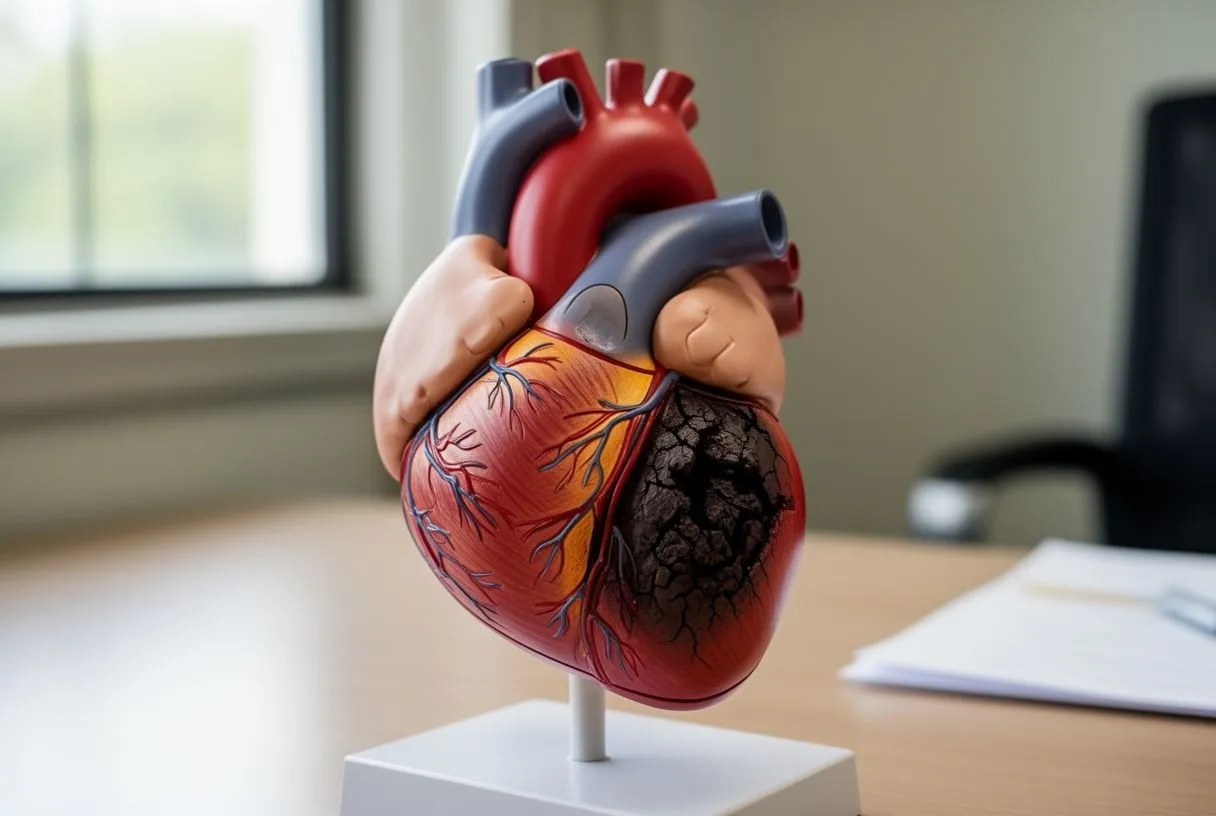
The heart is made of cardiac muscle, a type of muscle found nowhere else in the body. It is distinct from the skeletal muscle that moves your arms and legs, and from the smooth muscle that lines the intestines and blood vessels. Cardiac muscle has three special properties that make it uniquely suited to a lifetime of nonstop work.
First, it contracts automatically. The heart generates its own electrical rhythm; the brain does not tell it to beat. Second, it contracts in a highly coordinated way, with specialized conduction pathways that spread the signal across the chambers so they squeeze together efficiently. Third, and most importantly for this topic, cardiac muscle cells are essentially unable to divide and replace themselves. In the body, damaged muscle fibers can be replaced by scar tissue, but scar tissue does not contract — it is simply a patch that holds the heart together.
What this means for the patient: this is the biological reason the phrase "time is muscle" exists. The heart has a limited ability to repair itself. A person who loses a large portion of the pumping chamber (the left ventricle) to a heart attack may live with permanent weakness in the heart's pumping. The papillary muscle — small muscles inside the heart that anchor the mitral valve flaps — is one of the structures at risk; when it is damaged, the valve can start to leak. Protecting the myocardium means protecting every one of these structures.
What Causes Heart Attacks?
Most heart attacks share a common root: coronary artery disease. Over decades, cholesterol, inflammation, and other factors build plaque inside the arteries that feed the heart. Some plaques are stable and cause symptoms only with exertion. Others are "unstable" — thin-capped, inflamed — and can rupture suddenly without warning, forming the clot that triggers a heart attack.
The main drivers of this plaque buildup are well established: smoking, high blood pressure, high cholesterol, diabetes, obesity, physical inactivity, and a family history of early heart disease. Age and sex also play a role, with risk rising after middle age. Knowing your own risk factors is one of the most powerful things you can do, because a heart attack that never happens is the best outcome of all.
Causes beyond plaque: less commonly, a heart attack can be caused by a spasm of the coronary artery, by a tear in the artery wall (a dissection), by a clot that travels from elsewhere in the body, or by very low blood pressure or oxygen levels during another illness. It is worth distinguishing a heart attack from cardiac arrest: a heart attack is a plumbing problem — a blocked artery damaging the muscle — while cardiac arrest is an electrical problem where the heart stops pumping effectively. A heart attack can trigger cardiac arrest, but they are not the same event, and the emergency response differs.
What Is the Golden Hour for a Heart Attack?
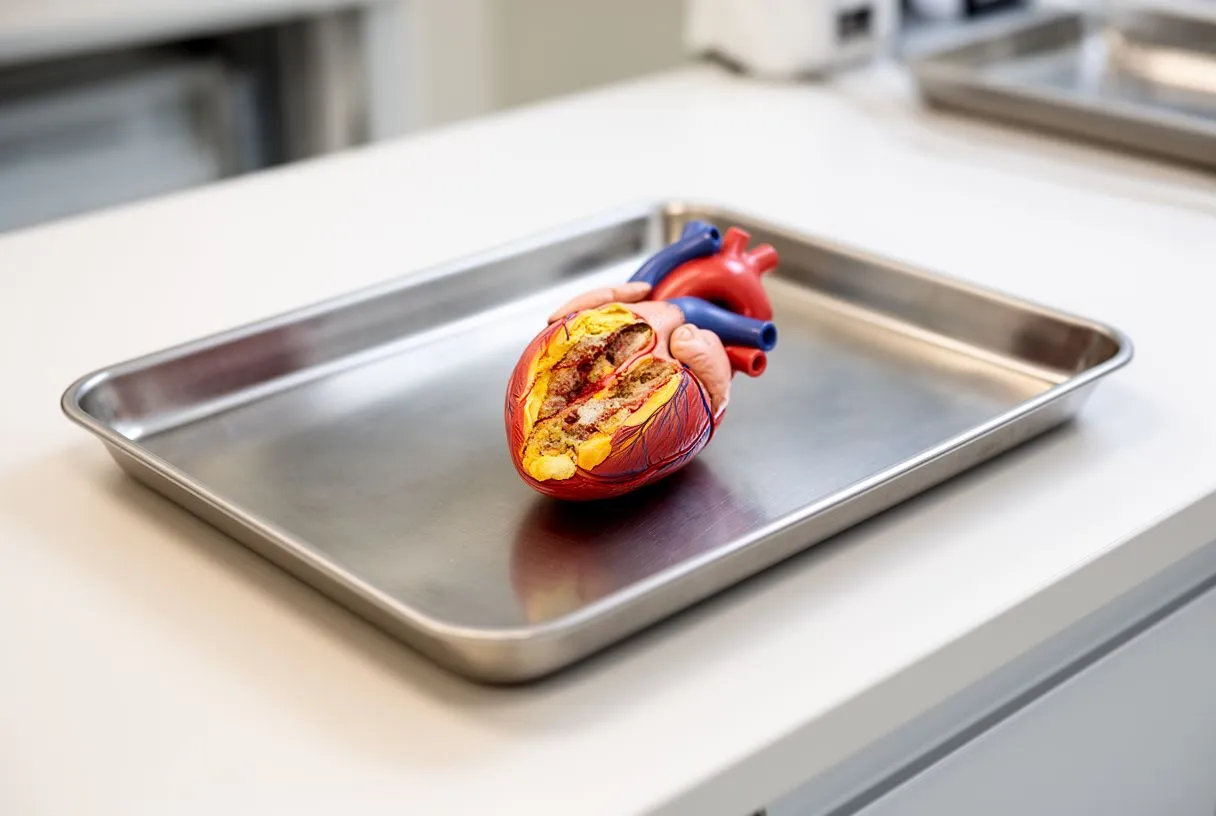
The "golden hour" refers to the first sixty minutes after heart attack symptoms begin — the period in which treatment has the greatest impact on saving heart muscle. During this hour, the largest portion of the endangered muscle is still salvageable, and restoring blood flow now can prevent the scar from growing. It is the heart attack treatment time window where every minute counts most.
The reality, however, is that most people delay. Studies of emergency care consistently show that patients wait far longer than they should before seeking help — often because they are unsure of their symptoms, hope they will pass, or do not want to "make a fuss." The golden hour can be lost at home before the ambulance is even called. This is why public education matters as much as the medical response itself.
Door-to-balloon time: hospitals measure how long it takes from the patient's arrival at the emergency department to the moment the blocked artery is opened with a balloon catheter. This is called door-to-balloon time, and quality standards around the world push for it to be as short as possible — ideally within 90 minutes. But the clock that matters for the patient starts when the first symptoms appear, not when the hospital doors open. The total time from symptom onset to reperfusion is the number that determines how much heart muscle survives.
What Are the 5 P's of a Heart Attack?
Emergency medicine uses the "5 P's" as a memorable way to describe both the presentation of a heart attack and the factors that cause delays. The classic five are:
- Pain: the classic symptom — pressure, tightness, or heaviness in the center of the chest, often described as "an elephant sitting on the chest." It may spread to the arm, jaw, neck, or back.
- Pale skin and cold sweat: the body's stress response, often visible to family members before the patient recognizes how sick they are.
- Pulse: the heart may beat irregularly, too fast, or the patient may feel palpitations as the deprived muscle becomes irritable.
- Prostration: sudden weakness, dizziness, shortness of breath, or collapse — the heart simply cannot pump as it should.
- Prevention: the fifth P reminds us that the best heart attack is the one that never happens — controlling risk factors, knowing your numbers, and acting early.
In practice, the 5 P's are a checklist for recognition. Not every patient has every "P," and women, older adults, and people with diabetes often present atypically — with fatigue, nausea, or breathlessness rather than dramatic chest pain. But pain and sudden unwellness are the two signals that should never be ignored, because they are the ones that open the door to the golden hour.
What Happens 1 Hour Before a Heart Attack?
The hour before a heart attack often sends warning signals that are easy to dismiss. The most common is unstable angina: chest discomfort that comes on with less exertion than usual, lasts longer, or appears even at rest. This is the same plaque in the process of becoming dangerous — the artery is narrowing or the clot is forming. Chest discomfort that wakes someone from sleep, or that feels different from anything before, deserves immediate attention.
Prodromal symptoms: in the hours or days before, some people experience unusual fatigue, shortness of breath with minimal activity, indigestion-like discomfort, pain in the jaw, teeth, or back, nausea, or a sense of impending doom. Women more often report these subtler symptoms. They are not a diagnosis — but they are the body's early warning, and one or two of them together is enough reason to call for medical help.
Why the warning matters: an hour of warning is an hour of opportunity. In our experience, the patients who did best are often the ones who acted on the "small" warning signs — who came in for chest discomfort that turned out to be unstable angina, before the artery closed completely. In the consultation we take the time to explain exactly what the studies show in plain words, so the patient knows what is happening and what to do next.
What to Do If Someone Has a Heart Attack?
If you or someone near you has symptoms of a heart attack, the single most important action is to call emergency services immediately. In Mexico, dial 911. Do not drive yourself to the hospital if you can avoid it — an ambulance can start treatment on the way and alert the hospital so the catheterization team is ready.
While waiting for the ambulance:
- Sit the person down and keep them calm and still; physical exertion increases the heart's oxygen demand.
- Give aspirin if available and the person is not allergic — chewing a regular tablet helps slow the clot's growth. Emergency operators can guide this.
- Loosen tight clothing and stay with the person; if they collapse and are not breathing normally, start CPR and follow the dispatcher's instructions.
Do not wait and see: the most common and costly mistake is hoping the symptoms will pass. If the discomfort lasts more than a few minutes, treat it as a heart attack until proven otherwise. It is far better to arrive at the emergency department and be told it was indigestion than to arrive too late. Time is muscle in a heart attack, and every minute of hesitation is muscle that cannot be recovered.
How Emergency Cardiac Catheterization and Angioplasty Restore Blood Flow
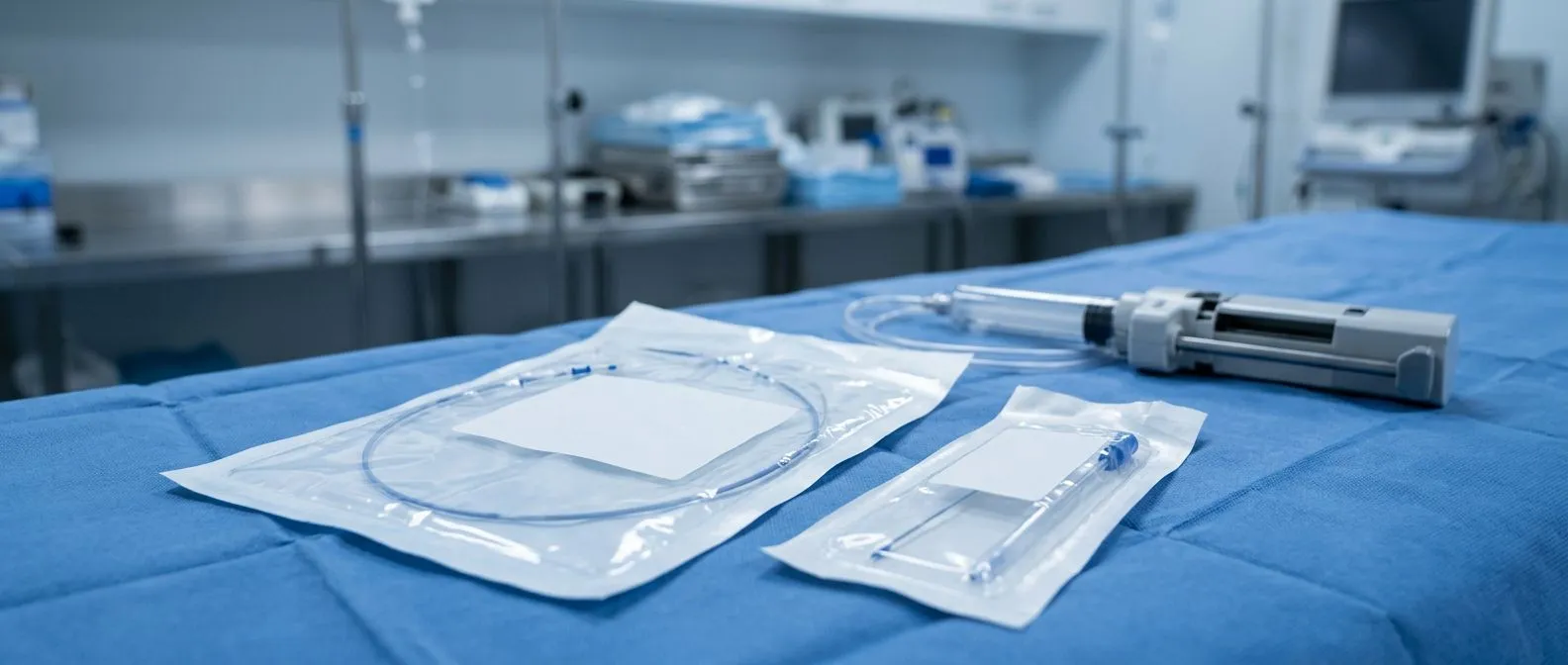
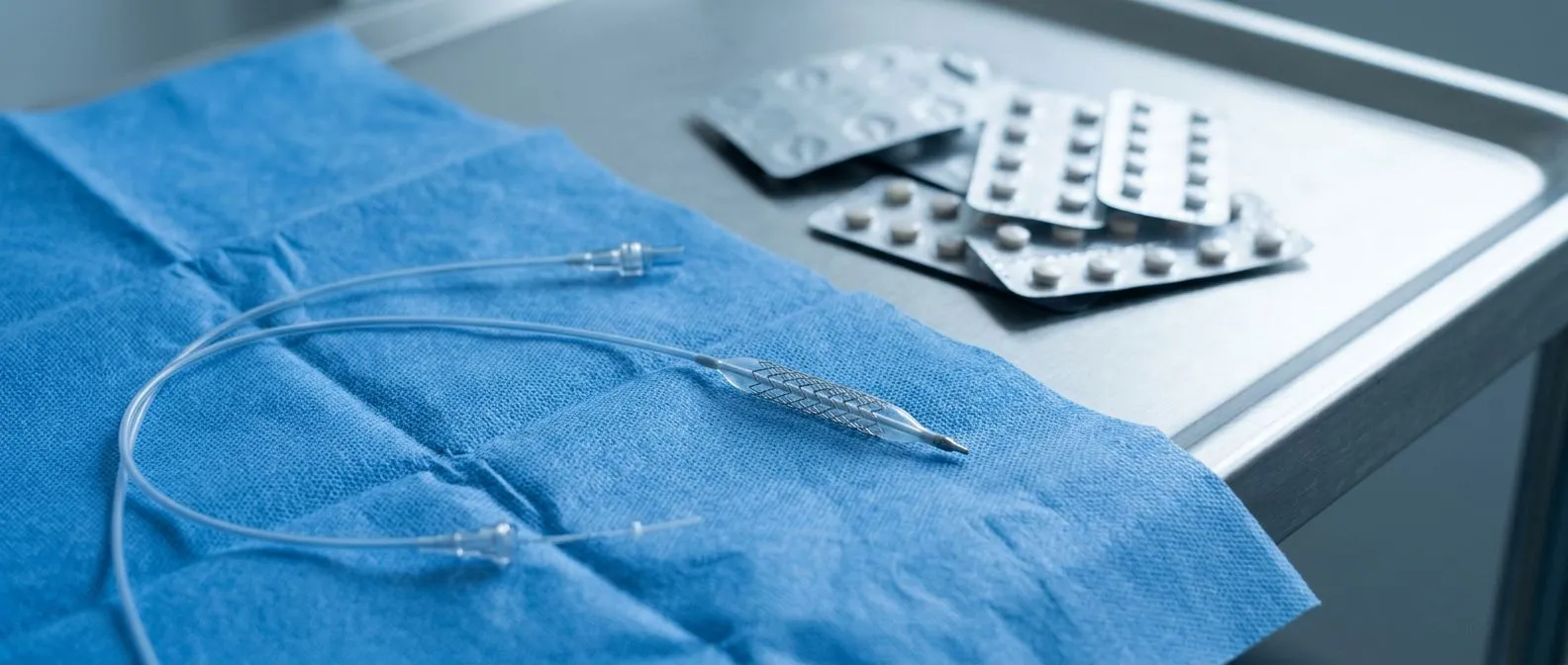
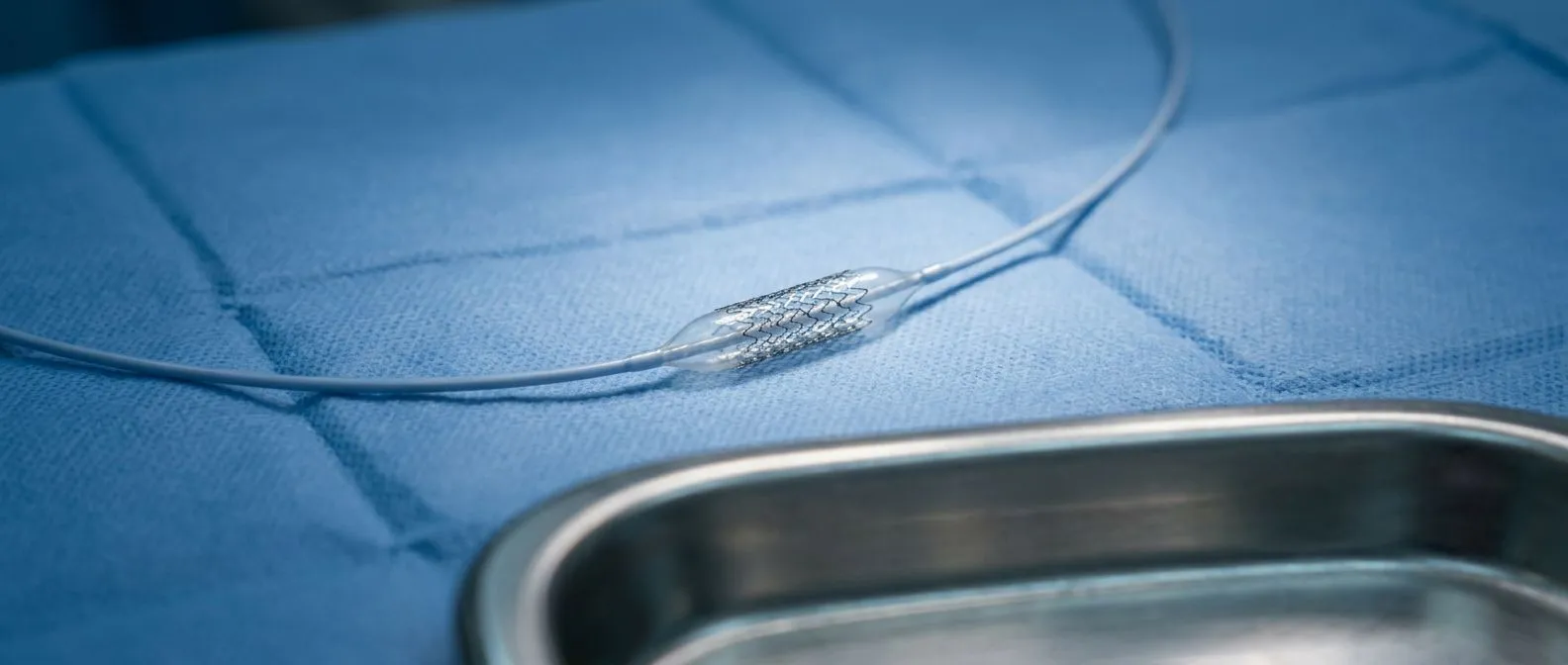
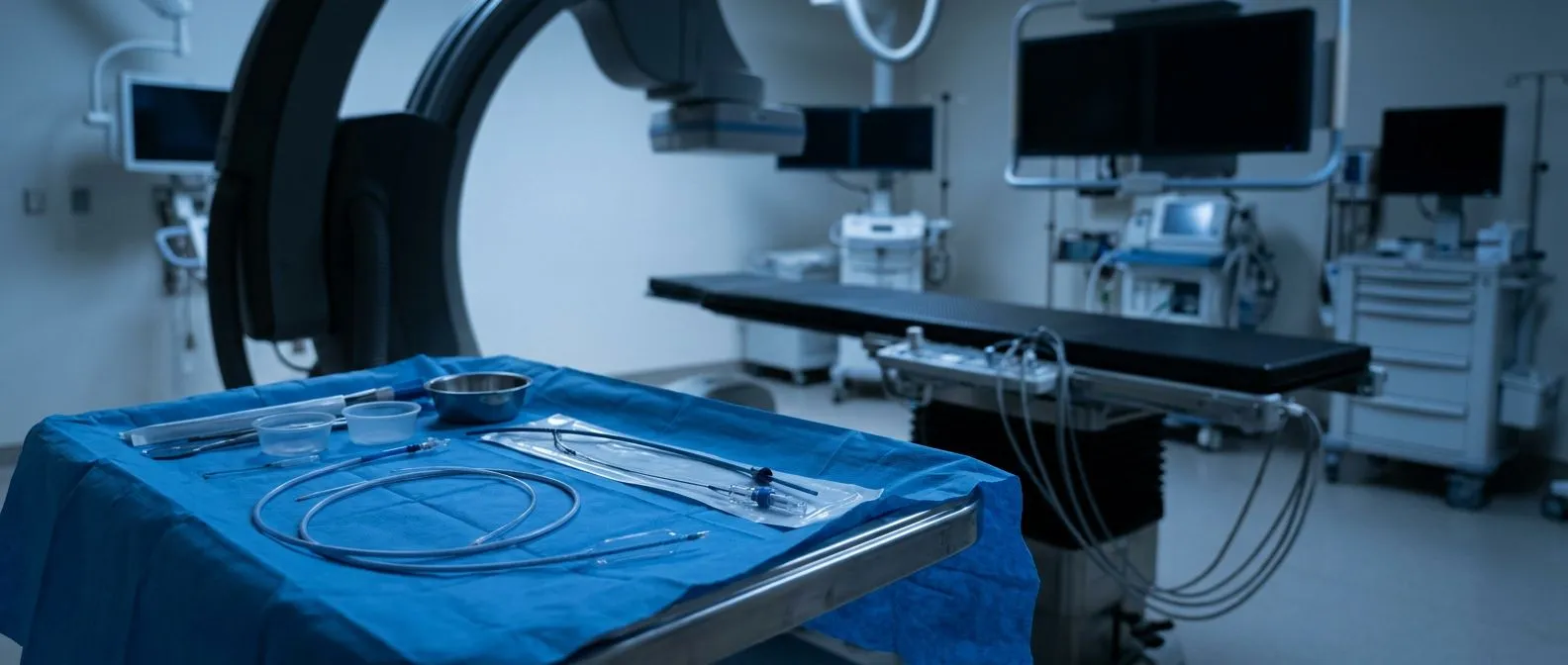
The modern treatment for a major heart attack is emergency cardiac catheterization, also called coronary angiography. A thin tube (catheter) is threaded through an artery in the wrist or groin up to the heart, dye is injected, and the coronary arteries are visualized on X-ray to find the exact spot of the blockage. If a blockage is confirmed, the cardiologist performs coronary angioplasty: a small balloon is inflated at the site to open the artery, and a stent — a tiny metal mesh scaffold — is placed to keep it open.
This is called primary angioplasty, and it is the preferred reperfusion therapy when it can be performed within the recommended window. Where a catheterization lab is not available in time, clot-dissolving drugs (thrombolysis) are used instead, followed by transfer to a hospital that can do angioplasty. The choice between these strategies depends on how long it takes to reach the right hospital — which is why knowing the nearest cardiac center matters.
What the team does: in our practice, every case is reviewed by the team against international practice guidelines before a recommendation is given. The patient receives a clear proposal with the alternatives, and the final decision is always theirs. Some patients after a heart attack need a stent; others need bypass surgery, especially when multiple arteries are involved or the anatomy is complex. We recommend the less invasive route only where the evidence supports it for that patient.
How to Prevent Heart Failure After a Heart Attack?
Surviving a heart attack is the first milestone. The second is making sure the heart can pump well for the rest of your life. When a large part of the muscle is damaged, the heart can weaken over time and develop heart failure — a condition in which the heart cannot meet the body's demands, causing breathlessness, fluid retention, and fatigue. Preventing heart failure after a heart attack is largely about the same principle that governed the emergency: protect the muscle that remains.
Fast treatment at the time of the attack is the single biggest factor in reducing the scar size. After that, the evidence-based pillars are: taking all prescribed medications consistently (blood thinners, statins, beta-blockers, ACE inhibitors), controlling blood pressure, diabetes, and cholesterol, quitting smoking completely, attending cardiac rehabilitation, and gradually returning to activity as advised. Each of these measurably reduces the risk of a second event and of progressive heart weakening.
The recovery reality: recovery is not just physical. Many patients and families feel anxious after a heart attack — afraid of the next event, unsure of what activities are safe, and uncertain about what treatment is really needed. This is where a clear, unhurried explanation matters. Our team encourages second opinions and treats seeking one as a normal part of deciding about heart surgery. The first contact is a free video consultation: we get to know the patient, talk through the condition, and say which studies are still needed so no unnecessary ones are ordered. A face-to-face visit at the consulting rooms follows when the patient decides to go ahead.
To summarize: the phrase "time is muscle in a heart attack" captures everything that matters in the first hours. Heart muscle dies progressively with each passing minute of a blocked artery; the golden hour is the window to save the most; emergency catheterization and angioplasty restore blood flow; and the long-term goal is to prevent heart failure after a heart attack by protecting the remaining muscle. Know the warning signs, call 911 without hesitation, and then — once the emergency is managed — discuss your own situation with a qualified cardiac team. If you are in Guadalajara, Querétaro, or Hermosillo, or would like to talk with us from anywhere, we invite you to book a consultation with Dr. Alejandro Molina's team. We will explain what the studies show, in plain words, and help you decide with confidence.