Unstable Angina: Emergency Signs and Treatment
Unstable angina treatment starts with fast action.
Unstable angina treatment is, by definition, a race against time. If you or someone close to you has been told the chest pain you are feeling is "unstable," that word carries real weight: it means the heart muscle is not getting enough blood, and the situation can worsen without warning. This guide walks you through what unstable angina actually is, how it differs from the more predictable kind, which symptoms deserve an emergency call, and what treatment looks like step by step — from the first ambulance ride to the decisions about stents, bypass surgery and life afterwards.
What Is Unstable Angina and Why It Is a Medical Emergency
The basic mechanism. Angina is chest pain caused by the heart muscle not receiving enough oxygen-rich blood. It usually happens when the coronary arteries — the vessels that feed the heart itself — are narrowed by fatty deposits called plaque. Unstable angina is the form in which that supply problem arrives suddenly, worsens quickly, or appears at rest, with no predictable pattern.
What makes it unstable is usually a plaque that has cracked or ruptured inside the artery wall. The body responds by forming a blood clot at the site, which partially blocks the vessel. Because the blockage can grow at any moment, doctors classify unstable angina as part of acute coronary syndrome — the same spectrum of conditions that includes heart attack. The difference is that in unstable angina the artery is still open enough that the heart is not yet dying, which is precisely why acting early matters so much.
This is why unstable angina is treated as a Harvard Health-style emergency topic in every major guideline: the goal of all early treatment is to stop the partially blocked artery from closing completely. Chest pain that is new, worsening or appearing at rest should be treated as urgent until proper testing proves otherwise.
Unstable Angina Symptoms: What Patients Actually Feel
The classic pattern. Most people describe unstable angina symptoms as pressure, tightness, squeezing or a heavy weight across the center of the chest. Some use the word "burning"; others say it feels like a band tightening around the ribs. The pain often spreads to the left arm, jaw, neck, back or shoulder, and it may come with sweating, nausea, shortness of breath or a sudden sense of dread.
Symptoms that look different. Not everyone experiences the movie-version of chest pain. Women, older adults and people with diabetes more often report unusual fatigue, breathlessness, indigestion-like discomfort, or pain in the back or jaw without much chest sensation at all. If such symptoms are new, occur with less and less effort, or wake you at night, they deserve the same urgency as obvious chest pain.
Can you have an angina attack every day? Frequent attacks are never something to normalize. If angina episodes are happening daily, becoming longer, or appearing with less activity than before, the pattern itself is the warning sign. We often tell patients in our Guadalajara and Querétaro consulting rooms that a change in the "rhythm" of their angina is more important than any single episode — and that such a change warrants an urgent conversation, not a wait-and-see approach.
Unstable Angina vs Stable Angina: The Differences That Matter
Stable angina is predictable. With stable angina, the narrowed artery allows enough blood through at rest, and symptoms appear only when the heart works harder — climbing stairs, walking uphill, carrying loads. The pain follows a familiar pattern: it comes with a known level of effort and reliably eases within minutes of resting or taking nitroglycerin. That predictability is what "stable" means.
Unstable angina breaks the pattern. The defining features are change and unpredictability: new-onset pain, pain at rest, pain that lasts longer than usual, or pain that previously manageable activities now trigger. Unstable angina can also appear as crescendo angina — episodes that are suddenly more frequent, more severe, or easier to provoke than they used to be.
Why the distinction changes everything. Stable angina is usually managed with scheduled medication and lifestyle work, while unstable angina requires emergency assessment because the underlying plaque may be actively tearing. In our practice, every case is reviewed by the multidisciplinary team against international practice guidelines before any recommendation is made, and the patient receives a clear proposal with the alternatives — because the right pathway depends entirely on which form of angina you actually have.
What Are the Causes of Heart Spasms?
Plaque is the main driver. Most unstable angina traces back to coronary artery disease: years of cholesterol, inflammation and scar tissue building plaque inside the artery walls. When a plaque ruptures, clot formation follows, and that clot — not the plaque itself — is what suddenly restricts flow. Risk factors include smoking, high blood pressure, high cholesterol, diabetes, obesity and a family history of early heart disease.
Coronary spasm is a separate cause. Sometimes the artery muscle itself contracts sharply — a coronary artery spasm — temporarily narrowing the vessel even without major plaque. Causes of heart spasms include smoking, cocaine or other stimulant use, extreme emotional stress, very cold exposure, and certain migraine or asthma medications. Variant angina, the form caused mainly by spasm, tends to occur at rest and often in the early morning hours.
Less common mechanisms. Severe anemia, an overactive thyroid, very low blood pressure, and spontaneous coronary artery dissection — a tear in the artery's inner layers, more often seen in younger women — can all starve the heart of blood without classic blockages. This is one reason emergency teams run a structured set of tests rather than assuming the most common cause.
When Is Chest Pain an Emergency? Warning Signs You Should Never Ignore
Emergency care is about thresholds, and the clearest ones can be listed plainly:
- Chest pain at rest lasting more than a few minutes, especially pressure or squeezing that does not ease.
- Pain that is new or escalating — angina triggered by far less activity than before, or attacks becoming longer and more frequent.
- Nitroglycerin no longer works — if your usual tablet or spray fails to relieve the pain as it used to.
- Pain with accompanying symptoms such as sweating, nausea, breathlessness, fainting or an irregular heartbeat.
- Pain spreading to the jaw, neck, back, shoulder or arm, particularly when combined with any of the above.
Do not drive yourself to the hospital if you suspect a heart problem — call emergency services. Ambulance crews can begin electrocardiogram monitoring and treatment on the spot, and hospitals prioritize chest pain arrivals. In a genuine chest pain emergency, minutes of delay translate directly into heart muscle at risk.
One caution worth repeating: never try to "test" symptoms at home by waiting to see whether the next episode is worse. Patients sometimes downplay escalating angina for days out of fear of overreacting. From our experience reviewing cases in consultation, the patients who fare best are those who arrived "too early" by their own reckoning — nobody regrets that decision.
Unstable Angina Diagnosis: Tests Your Cardiac Team Will Order
In the emergency department. Unstable angina diagnosis begins with an electrocardiogram (ECG), which records the heart's electrical activity and can show the tell-tale changes of reduced blood flow. Blood tests for troponin — a protein released when heart cells are damaged — are taken at least twice, because rising troponin distinguishes a heart attack from unstable angina, where the levels typically stay normal.
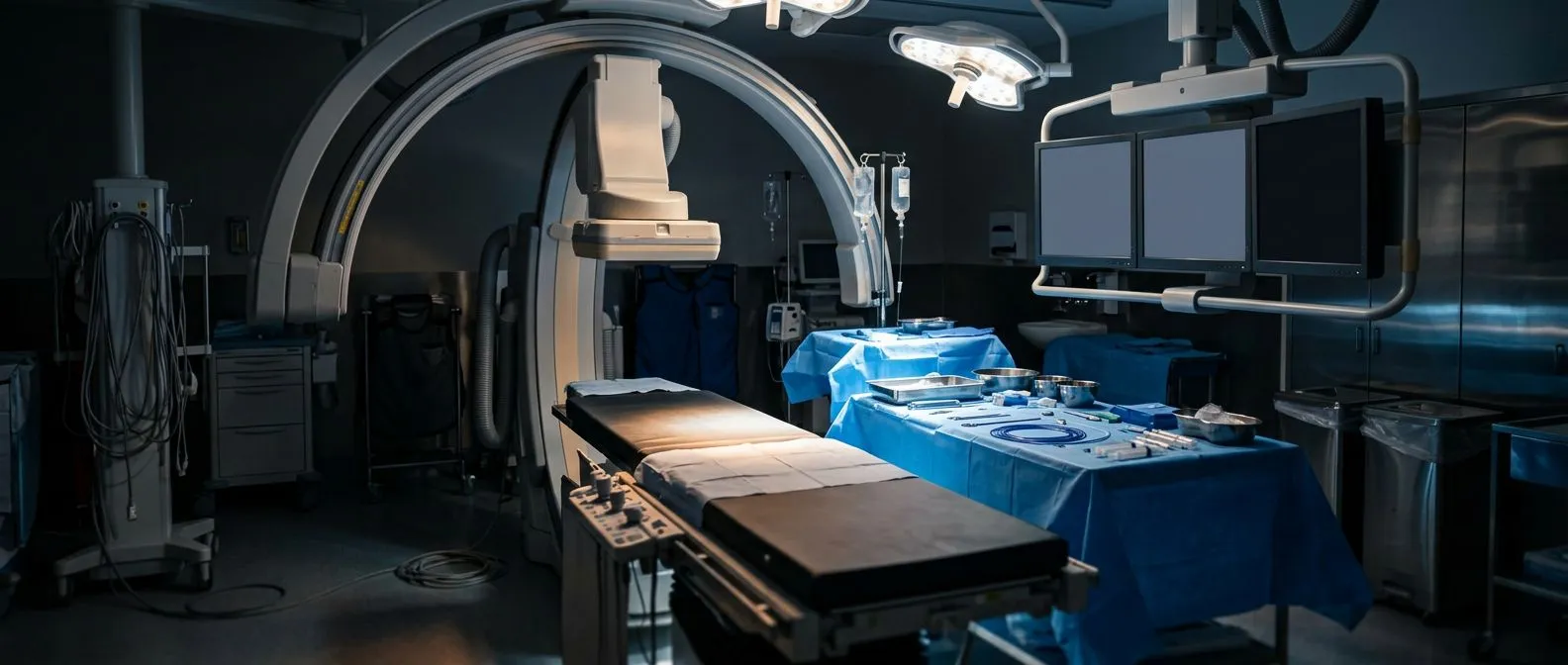
Imaging the arteries. If the initial results suggest unstable angina, the next step is usually a coronary angiogram, performed during cardiac catheterization: a thin tube is threaded from the wrist or groin into the coronary arteries, and contrast dye reveals exactly where and how severely the arteries are narrowed. This test moves the diagnosis from suspicion to a precise map.
Risk scoring. Emergency teams also use standardized risk scores that combine age, ECG changes, troponin results and symptom frequency to decide how quickly catheterization should happen — from immediate to within days. In our own evaluation process, we take the time to explain what each study actually shows in plain words, and we tell patients which studies are genuinely still needed, so that no unnecessary ones are ordered.
Unstable Angina Medication: What Treatment Looks Like First
Immediate drugs. Unstable angina medication in the acute phase has several jobs at once: reduce the heart's oxygen demand, prevent the clot from growing, and control symptoms. Antiplatelet drugs such as aspirin, often combined with a second agent like clopidogrel or ticagrelor, make platelets less sticky. Anticoagulants such as heparin stop the clot from enlarging. Beta-blockers slow the heart rate and lower its workload, while nitroglycerin widens the vessels to relieve pain and statins stabilize the plaque itself.
Oxygen and monitoring. Supplemental oxygen is given only when blood oxygen levels are genuinely low, and continuous ECG monitoring stays in place because the situation can evolve. Pain that persists despite medication is itself an alarm that pushes the team toward urgent catheterization.
Medication is not the finish line. Drugs buy time and stabilize the situation; they rarely remove the underlying narrowing. That is why guidelines recommend early invasive assessment for most unstable angina patients rather than medication alone. Our team recommends the least invasive route only where the evidence supports it for that specific patient — and in unstable angina, that evidence almost always points toward looking at the arteries directly.
Cardiac Catheterization for Angina and Stent Placement
What the procedure involves. Cardiac catheterization for angina is performed in a catheterization laboratory under local anesthesia at the wrist or groin entry point. The catheter's journey through the arteries is painless from the inside — most patients feel only pressure at the entry site. Once dye outlines the coronary arteries, the team can see which vessel is compromised and how badly.
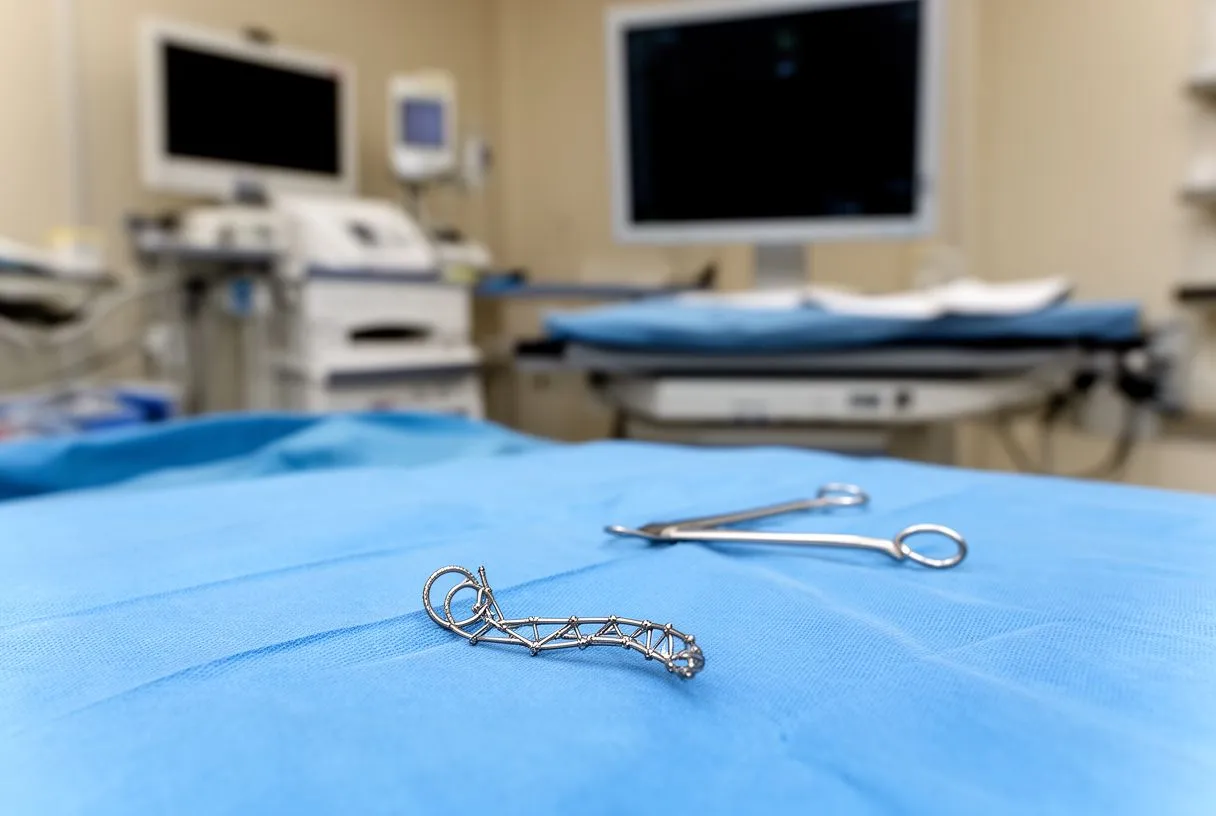
Stent placement for unstable angina. If a critical narrowing is found, the most common fix is angioplasty with stent placement: a small balloon briefly inflates to open the artery, and a stent — a tiny metal scaffold — keeps it open permanently. Modern stents carry a drug coating that reduces the chance of re-narrowing. For many patients with unstable angina, this single procedure resolves the acute threat.
What patients ask us most. Recovery from catheterization is usually fast: a few hours of flat rest, then walking the same day or the next, and home within a day or two in uncomplicated cases. The trade-offs to discuss are bleeding at the access site, and the necessity of months to a year of dual antiplatelet medication after a stent, which must never be stopped early. Dr Molina trained in structural cardiology at CHU Bordeaux, and in our consultations we walk patients through these decisions patiently — including whether a stent is the right answer for their anatomy or whether another approach fits better.
Unstable Angina Surgery Options: Bypass and Beyond
When bypass is chosen. Not every patient with unstable angina is best served by stents. If the angiogram shows severe disease — for example, blockages of the left main coronary artery, disease in all three major coronary vessels, or anatomy where stenting would not hold — coronary artery bypass grafting (CABG) offers a more complete solution. In bypass surgery, a surgeon creates new routes for blood using grafts taken from a leg vein, an arm vein or arteries from the chest wall, steering blood around the blocked segments.
Conventional and less invasive approaches. CABG can be done through the traditional sternum-opening approach, or in selected patients through minimally invasive techniques with smaller incisions, or with robotic assistance. Modern evidence also favors performing some bypass operations on the beating heart, avoiding the heart-lung machine in suitable cases. Each approach carries specific trade-offs in recovery time, completeness of revascularization and durability, and the right one depends on the patient's anatomy and overall health.
Experience matters here. Dr Molina performed the first robotic mitral valve repair in the Ángeles Health System and the first robotic heart surgery in Guadalajara, and trained in minimally invasive and robotic techniques in Montreal. We mention this not as decoration, but because in unstable angina surgery options, matching the least invasive approach that the evidence supports — no more, no less — is a genuine technical judgment. We also encourage second opinions and treat seeking one as a normal, healthy part of deciding about heart surgery.
There are rare situations where unstable angina escalates into a life-threatening aortic problem or a complicated course requiring Emergency Surgery — for instance when a dissected or ruptured vessel is discovered during the workup. These are the scenarios that justify having a full surgical team involved early, not only an interventional cardiology service.

Life After Unstable Angina: Diet, Exercise and Heart Attack Prevention
The recommended diet for people with angina. A Mediterranean-style eating pattern is the most consistently supported choice: vegetables, fruits, legumes, whole grains, olive oil, fish several times a week, and nuts, with red meat, processed foods and added sugars kept to a minimum. Salt reduction helps blood pressure; limiting saturated and trans fats helps the plaques themselves stabilize. For patients with diabetes, coordinating the diet with their endocrinologist is essential, since glucose control and coronary risk move together.
Is exercising safe for people with stable angina? Yes — in fact, structured exercise is one of the strongest protections after an angina diagnosis, provided it is prescribed sensibly. Cardiac rehabilitation programs set safe intensity levels, usually targeting moderate effort where you can still talk, and teach patients to recognize the warning signs that mean stopping. Activity limits are stricter in the first weeks after stent placement or bypass surgery, and each patient needs an individual plan rather than a generic rule.
- Stop smoking completely: it is the single most powerful change for preventing new plaque rupture.
- Take antiplatelet and statin therapy as prescribed: these medications are the backbone of heart attack prevention after unstable angina.
- Control blood pressure, cholesterol and diabetes: each target met measurably lowers the risk of another event.
- Address stress and sleep: severe emotional strain and poor sleep both strain the cardiovascular system.
The realistic picture of recovery. Most people who come through unstable angina with prompt treatment return to normal daily life, and many describe the event as the turning point that finally reset their health habits. The honest trade-offs — medication side effects, the discipline of follow-up, the emotional shadow a cardiac scare leaves behind — are worth discussing openly with your team rather than absorbing silently.

The team sees patients in consulting rooms in Guadalajara, Querétaro and Hermosillo. The first contact is a free video consultation: we get to know you, talk through your condition and your studies, and tell you plainly which tests are still needed and which are not. If unstable angina has touched your life or you have been living with angina that is changing, we invite you to book that consultation with a qualified cardiac team — because the right decision is one you make informed, with every question answered, and the final choice is always yours.