VA ECMO: Supporting the Heart and Lungs in Shock
VA ECMO for cardiogenic shock supports failing hearts and lungs.
When a heart can no longer pump enough blood to keep the body alive, doctors sometimes need a machine to do the work temporarily. VA ECMO is one of the most advanced forms of that support — it takes over for both the heart and the lungs at the same time, giving critically ill patients a window for recovery or further treatment. For families hearing this term for the first time, often in an intensive care setting, the technology can sound frightening. This guide explains what VA ECMO does, who it helps, what the risks are, and what recovery looks like, so you can ask informed questions when speaking with your cardiac team.
What Is VA ECMO and How Does It Support the Heart?
VA ECMO stands for venoarterial extracorporeal membrane oxygenation. The name describes exactly what happens: blood is drained from a large vein (veno-), pumped through an artificial lung that adds oxygen and removes carbon dioxide, and then returned to a large artery (arterial) so it reaches the body under pressure. In effect, the machine replaces the pumping function of the heart and the gas-exchange function of the lungs simultaneously. It does not heal the heart — it buys time.
Why both heart and lungs at once: Some critically ill patients have failure in both organs at the same time. A massive heart attack can cause the lungs to fill with fluid, or severe pneumonia can overwhelm the right side of the heart. VA ECMO is specifically designed for these situations, unlike VV ECMO, which supports only the lungs. The arterial return means oxygenated blood reaches the body even when the heart itself cannot generate meaningful blood flow.
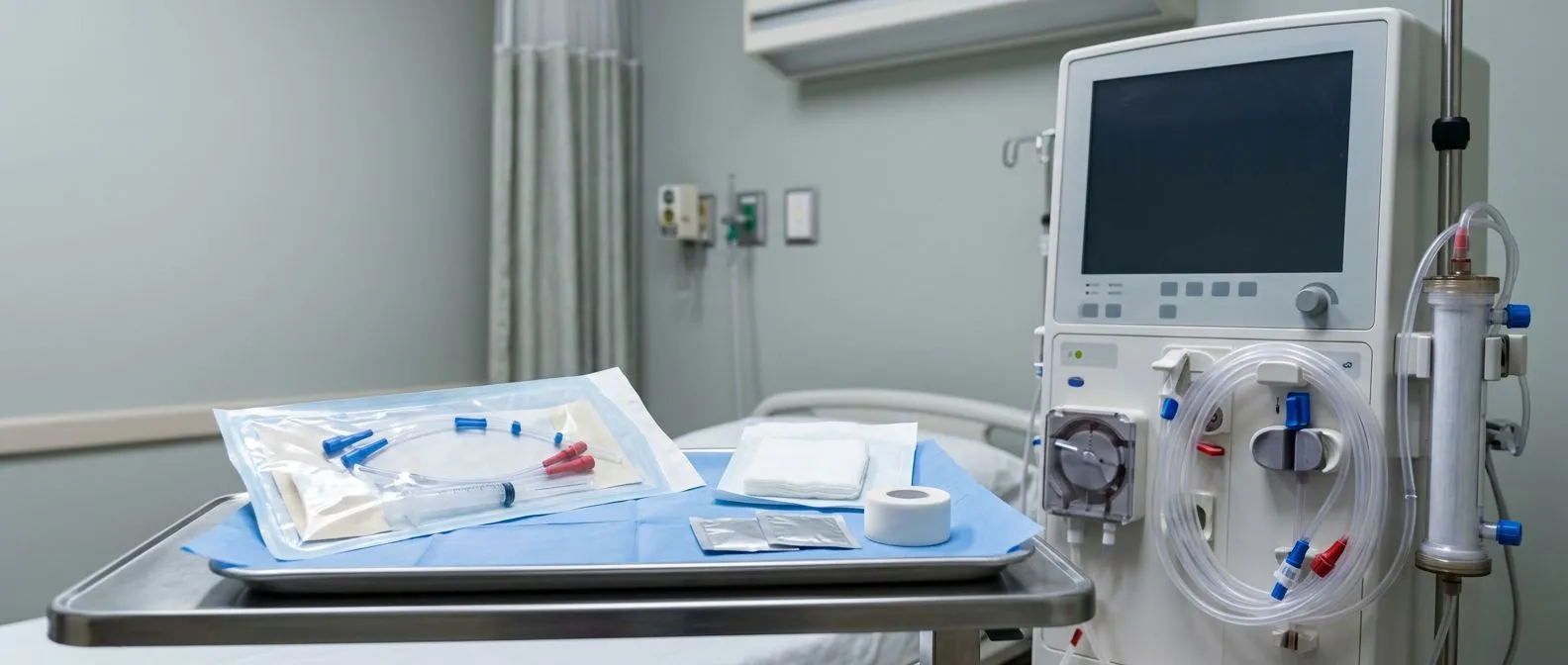
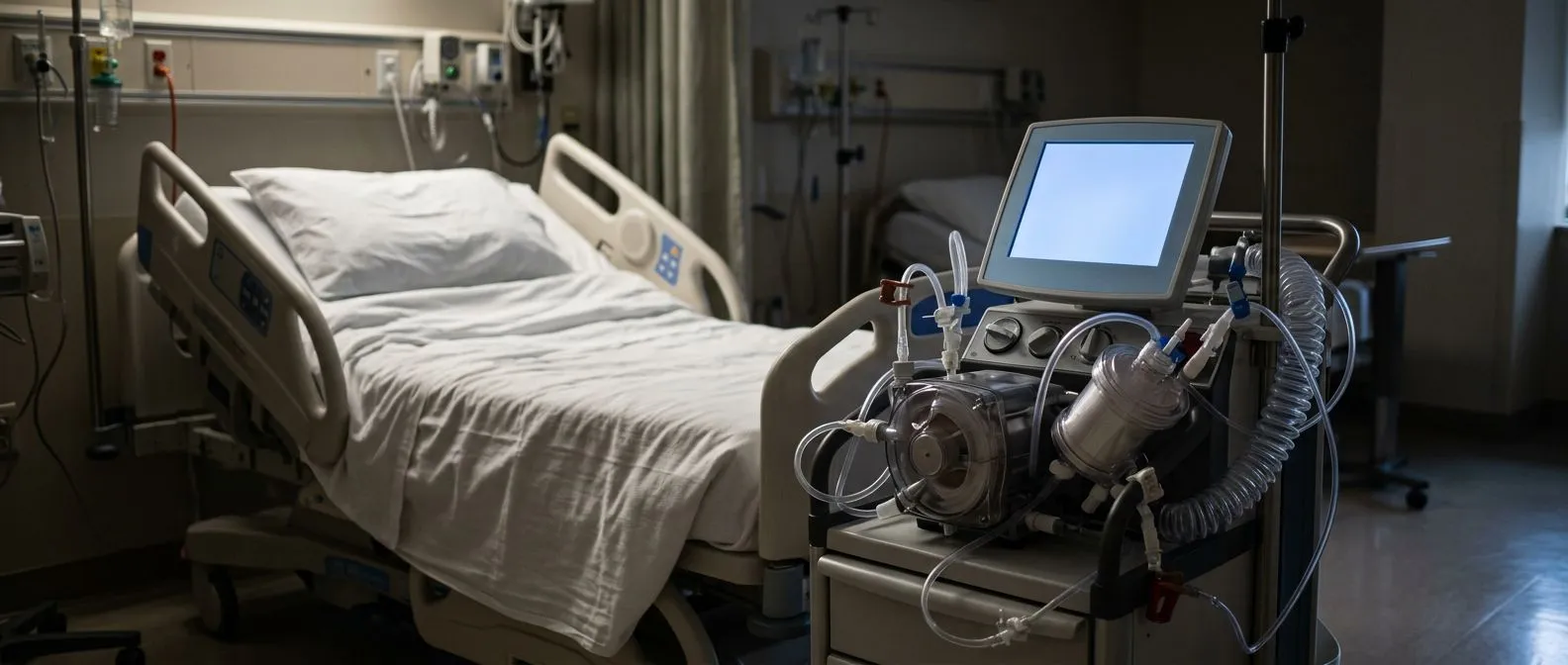
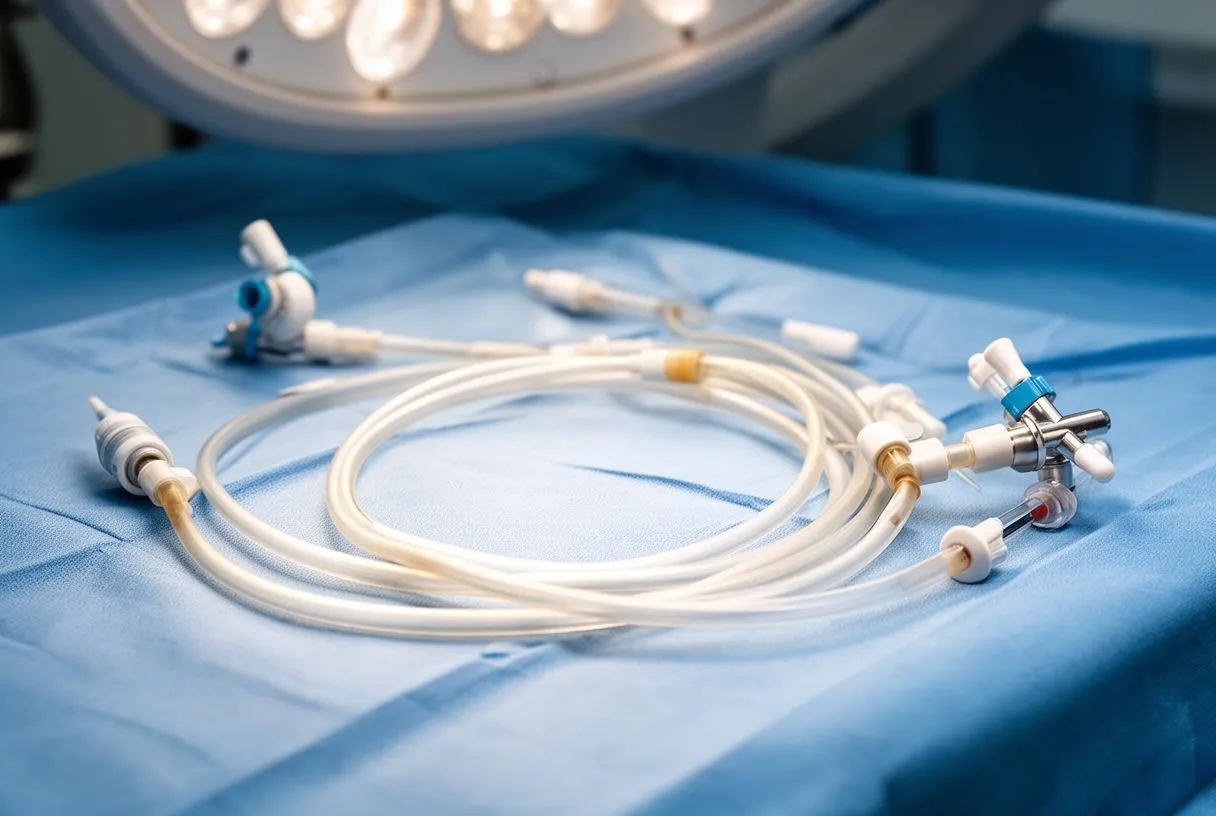
Patients on VA ECMO are typically in an intensive care unit, connected to the machine by large catheters called cannulas. One cannula is an arterial cannula placed in a major blood vessel, and another drains venous blood out. The circuit includes a pump, an oxygenator, and a heat exchanger that keeps blood at body temperature. The patient remains on the machine for days or sometimes weeks, depending on the underlying problem and whether the heart shows signs of recovery. According to Stanford Health Care, ECMO is used when conventional treatments such as medications and mechanical ventilators are no longer sufficient to sustain life.
When Is VA ECMO Used for Cardiogenic Shock?
Cardiogenic shock is a state in which the heart suddenly cannot pump enough blood to meet the body's needs. Blood pressure drops, organs begin to starve for oxygen, and without rapid intervention the situation is life-threatening. VA ECMO is deployed when standard treatments — intravenous medications called inotropes, fluids, and a breathing tube with a ventilator — are not enough to stabilise the patient. It is most commonly used after a massive heart attack, but the indications are broader than many people realise.
Common scenarios that lead to VA ECMO:
- Acute myocardial infarction: a large heart attack that leaves the heart too weak to pump, even after emergency treatment such as balloon angioplasty to open a blocked artery.
- Fulminant myocarditis: sudden, severe inflammation of the heart muscle, often from a viral infection, that can recover if the heart is rested.
- Post-cardiotomy shock: the heart cannot restart effectively after open-heart surgery, such as a procedure on the ascending aorta, and needs temporary support.
- Decompensated chronic heart failure: a patient with long-standing heart failure suddenly worsens and needs stabilisation before a longer-term solution, like a transplant or a ventricular assist device, can be arranged.
It is important to understand that VA ECMO is not a cure. It is a bridge — to recovery, to a more permanent device, or to a decision about further care. The cardiac team evaluates each patient individually, weighing the chance of meaningful recovery against the risks of the therapy itself. Timing matters enormously: the sooner VA ECMO is initiated after the onset of shock, the better the odds of a good outcome, because prolonged low blood flow causes irreversible organ damage.
How the VA ECMO Circuit Works
The ECMO circuit is a closed loop of tubing that carries blood out of the body, through the machine, and back in. Understanding the components helps families make sense of what they see at the bedside. Blood leaves the body through a drainage cannula placed in a large vein, often the femoral vein in the groin or the internal jugular vein in the neck. A centrifugal pump draws the blood through the tubing at a controlled flow rate.
Inside the oxygenator: The blood then passes through the oxygenator, which is the artificial lung. Here, a thin membrane separates the patient's blood from a stream of oxygen-rich gas. Oxygen diffuses into the blood, and carbon dioxide diffuses out, exactly as it does in a healthy lung. The blood is warmed to body temperature and returned through the return cannula into a large artery — typically the femoral artery in the groin — where it flows backward toward the heart and forward to the body. In some configurations, surgeons place the return cannula directly into the ascending aorta through the chest, particularly when the sternum is already open from surgery.
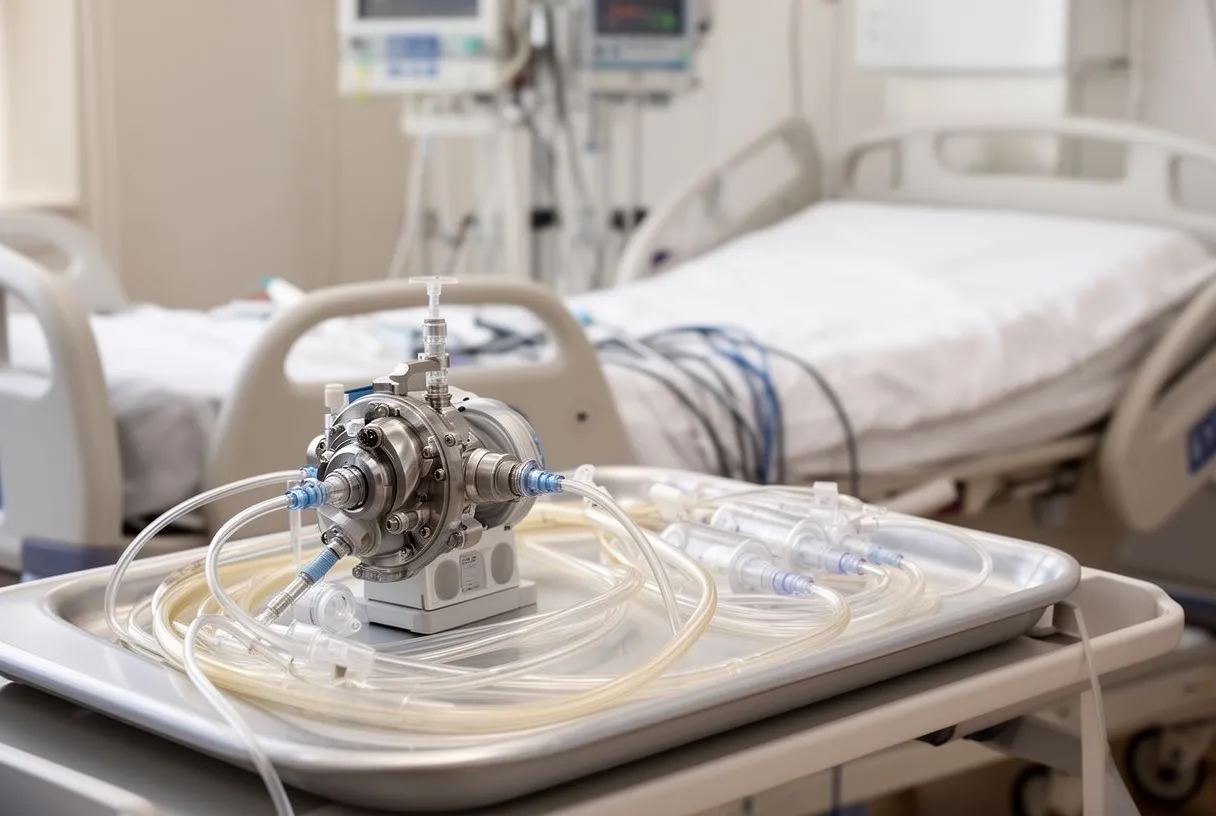
Flow rates on VA ECMO can be adjusted from partial to full support. At full support, the machine may be doing nearly all the work of the heart and lungs. As the patient's own heart begins to recover, the team gradually reduces the flow, allowing the native circulation to take over. This process requires constant monitoring of blood pressure, oxygen levels, and markers of organ function. The circuit also includes sensors and safety mechanisms to detect air bubbles, clots, or changes in pressure that could signal a problem.
VA ECMO vs Ventilator: What's the Difference?
One of the most common questions families ask is whether a ventilator and ECMO serve the same purpose. They do not, and understanding the difference is key to grasping why VA ECMO is reserved for the most critical patients. A mechanical ventilator pushes oxygen-rich air into the lungs through a tube in the windpipe. It supports breathing, but it relies on the patient's own heart to pump that oxygenated blood to the body. If the heart has failed, a ventilator alone cannot save the patient.
When the ventilator is not enough: VA ECMO goes a step further. It removes blood from the body, oxygenates it artificially, and pumps it back into the arterial system — effectively bypassing both the heart and the lungs. Patients on VA ECMO are almost always on a ventilator as well, because the ventilator keeps the lungs inflated and helps with carbon dioxide removal, but the ECMO machine is doing the heavy lifting of circulation and oxygenation. In some cases, patients on ECMO can have ventilator settings reduced to very gentle levels, which gives the lungs a chance to rest and heal from injury.
A related concept is awake ECMO, where patients who are alert and stable enough may avoid heavy sedation and remain conscious while on support. This approach is not suitable for every patient, but it can help preserve muscle strength, reduce delirium, and allow earlier participation in physical therapy — factors that matter greatly for long-term recovery. Your team will determine whether this is appropriate based on the reason for ECMO, the cannulation site, and the patient's overall neurological status.
Who Qualifies for VA ECMO? Candidacy Criteria
Not every patient in shock is a candidate for VA ECMO. The decision to initiate support involves a careful evaluation of the underlying cause, the likelihood of recovery, and the risks involved. Cardiogenic shock that has a reversible cause — such as a blocked artery that can be opened, or a myocarditis that is expected to resolve — is one of the strongest indications. Conversely, if the heart failure is end-stage and irreversible with no plan for transplant or durable mechanical support, ECMO may not be appropriate.
Key factors the team weighs:
- Neurological status: patients with catastrophic brain injury from lack of oxygen before ECMO started may not benefit.
- Bleeding and clotting risk: the circuit requires blood thinners, so active bleeding or a high risk of fatal haemorrhage is a major concern.
- Irreversibility: if there is no realistic path to recovery, transplant, or a long-term device, ECMO becomes a bridge to nowhere.
- Duration of shock: prolonged shock before cannulation increases the chance of irreversible organ damage.
Contraindications are not always absolute. A patient who is actively bleeding might still receive ECMO if the bleeding source can be controlled, and the risk of death without support is judged to be greater. Age alone is not a disqualifier, but frailty and the overall burden of chronic disease strongly influence the decision. The team uses validated risk scores, including EuroSCORE II for surgical patients, to help quantify the risk-benefit balance. Ultimately, the decision is made by a multidisciplinary group including cardiac surgeons, intensivists, and perfusionists, often in urgent consultation with the patient's family.
VA ECMO as a Bridge to Transplant or Recovery
Because VA ECMO is temporary, the team must have a plan for what comes next. This plan falls into three broad categories: bridge to recovery, bridge to decision, and bridge to transplant or durable device. Bridge to recovery is the most straightforward — the heart was stunned by an acute event, and with time and rest on ECMO, it regains enough function to sustain the body independently. This is the goal in cases of fulminant myocarditis or post-cardiac arrest shock where the underlying injury is expected to heal.
Bridge to a longer-term solution: When recovery is unlikely, VA ECMO may serve as a bridge to a ventricular assist device, which is a pump implanted in the chest or abdomen that can support the heart for months or years. It can also serve as a bridge to heart transplantation, keeping the patient alive while waiting for a donor organ. In these cases, ECMO is a holding measure — it does not solve the problem, but it keeps the patient alive long enough for a definitive treatment to become available. The decision about which path to pursue depends on the cause of heart failure, the patient's overall health, and the availability of donor organs or surgical resources.
Sometimes the initial course is unclear, and the team uses ECMO as a bridge to decision. This means supporting the patient for a limited time — often 48 to 72 hours — while gathering more information: imaging, neurological assessments, organ function trends, and response to other therapies. If the picture improves, the plan shifts toward recovery. If it does not, the team discusses longer-term options with the family. This approach acknowledges the uncertainty inherent in critical illness and avoids premature decisions that cannot be reversed.
What Are the Risks and Complications of VA ECMO?
VA ECMO is a life-saving technology, but it carries serious risks. The most significant is bleeding, because the circuit requires continuous anticoagulation — usually with a medication called heparin — to prevent blood from clotting inside the tubing. Patients on ECMO may need transfusions of autologous blood (the patient's own blood collected and returned) or donor blood products. Bleeding can occur at the cannula insertion sites, in the chest, in the digestive tract, or in the brain. Stroke is one of the most feared complications and can occur from bleeding or from clots that form in the circuit and travel to the brain.
Other major complications include: infection, which is a constant threat because of the large foreign-body catheters entering the body; kidney injury, often from the combination of shock, medications, and the inflammatory response to the circuit itself; and limb ischaemia, meaning inadequate blood flow to the leg where the arterial cannula is placed. To reduce this risk, the team often inserts a small additional catheter called a distal perfusion cannula that directs blood flow down the leg. Haemolysis — the breakdown of red blood cells as they pass through the pump — can also occur and is monitored with daily blood tests.
Long-term complications in survivors include muscle weakness, cognitive difficulties, and psychological effects such as anxiety and post-traumatic stress, which are common after any prolonged critical illness. The team works to minimise these risks through vigilant monitoring, early mobilisation when safe, and coordination with rehabilitation services. A key reference for understanding the complexity of these patients is the ESC working group position paper on myocardial infarction with non-obstructive coronary arteries, which addresses some of the diagnostic challenges in patients who present with shock and complex coronary anatomy.
VA ECMO Recovery Time and Weaning Protocol
The duration of VA ECMO support varies widely depending on the underlying condition. Some patients need only a few days of support — for example, after a reversible insult such as drug toxicity or a brief period of cardiac arrest. Others remain on ECMO for weeks while awaiting a transplant or a ventricular assist device. There is no fixed timeline, and the team adjusts the plan based on daily assessments of heart function, organ recovery, and overall clinical trajectory.
How weaning works: Weaning is a gradual, deliberate process. As the heart shows signs of recovery — seen on echocardiography and reflected in improving blood pressure and organ function — the team slowly reduces the flow rate on the ECMO machine. This allows the native heart to take over more of the workload. If the patient tolerates the reduction, flow is decreased further, often to a minimal level, while the team monitors closely. Echocardiography during this phase helps assess how well the heart pumps on its own. If the heart maintains adequate output, the cannulas are surgically removed.
Recovery does not end at decannulation. Many patients need weeks to months of cardiac rehabilitation to rebuild strength, and some require long-term heart failure medications even after a successful recovery. If the patient was bridged to a transplant or a durable device, recovery focuses on adapting to that new reality. Throughout this process, families play an essential role in providing emotional support, advocating for rehabilitation services, and recognising signs that the patient may need additional help. The Repair-oriented classification of aortic insufficiency: Impact on surgical techniques and clinical outcomes illustrates how detailed anatomical assessment guides decisions in related cardiac interventions, underscoring the importance of imaging in planning recovery pathways.
VA ECMO Survival Rates and Outcomes
Outcomes for VA ECMO depend heavily on the reason for support and the patient's overall health before becoming ill. Patients with a reversible cause — such as fulminant myocarditis or a treatable blocked artery — tend to have better survival than those with end-stage chronic heart failure and multiple organ failure. Published registry data suggest that roughly half of patients placed on VA ECMO survive to discharge, but this figure varies widely between centres and patient groups. It is essential to discuss your specific situation with the treating team, because general statistics may not reflect an individual patient's prognosis.
Factors that influence survival: age and frailty, the duration of shock before ECMO initiation, the number of organs already failing, the presence of neurological injury, and whether a clear plan exists for what comes after ECMO. Patients who are cannulated rapidly after the onset of shock, in a centre with high ECMO volume and experienced staff, tend to do better. Long-term quality of life in survivors is another important consideration. Many patients return to meaningful lives, but some face lasting physical or cognitive limitations, and ongoing cardiac care is usually necessary.
It is worth noting that survival statistics do not capture everything that matters to a family. Some patients survive but require a permanent device or a transplant; others recover fully and return to their previous activities. The conversation about prognosis should include not just whether the patient will live, but what kind of life they can expect. This is a difficult discussion, and it is entirely appropriate to ask the team to explain their expectations clearly, including what signs they are watching for and what thresholds would prompt a change in direction.
Finding ECMO Care in Mexico: What Families Should Know
For patients and families in Mexico — and those travelling to Mexico for cardiac care — access to ECMO is an important consideration when choosing a hospital or a surgical team. Not every centre offers ECMO, because it requires specialised perfusionists, intensive care staff, and surgeons experienced in cannulation. If you or a loved one has a condition that might require ECMO, it is worth asking whether the hospital you are considering has an active ECMO programme and what volume of cases they manage each year.
Practical questions to ask your team: Does this hospital have 24-hour ECMO capability? What is the typical response time for initiating support in an emergency? Who is part of the ECMO team — surgeons, intensivists, perfusionists, nurses? What is the follow-up plan after discharge — cardiac rehabilitation, heart failure clinic, regular imaging? If a transfer to another facility becomes necessary, what are the logistics and risks involved? These are not unreasonable questions. A well-prepared team will welcome them, because informed families make better partners in care.
Cost and insurance coverage are also important. ECMO is an expensive therapy, involving specialised equipment, blood products, prolonged intensive care stays, and a large multidisciplinary team. In Mexico, coverage varies depending on whether you use public or private healthcare. Some private insurance policies cover ECMO, while others may exclude it or require pre-authorisation. If you are planning elective cardiac surgery and there is any chance ECMO might be needed as a backup, clarify this with your insurer before the procedure. Dr Alejandro Molina and the team at Cirugía de Corazón in Guadalajara, Querétaro, and Hermosillo are available to discuss your individual situation, explain the options in plain language, and help you make an informed decision about your cardiac care. Book a consultation to review your specific case rather than relying on general information alone.
In summary, VA ECMO is a powerful but complex therapy that supports both the heart and lungs when they cannot function on their own. It is used in the most critical moments — during cardiogenic shock, after massive heart attacks, and as a bridge to recovery or transplant. The risks are real, the recovery can be long, and outcomes depend on many individual factors. If you or someone you love is facing a situation where ECMO may be involved, the most important step is to have a direct, honest conversation with a qualified cardiac team that can assess your specific circumstances and guide you through the decisions ahead.