

Valvular Heart Disease: Types, Symptoms and Treatment
Valvular heart disease treatment options explained by Guadalajara specialists.
Valvular heart disease treatment has changed dramatically over the past decade, and that is genuinely good news for anyone diagnosed with a problem heart valve. A valve that once required open-heart surgery can now often be repaired through a small incision, or replaced through a catheter threaded from the wrist or groin. The challenge for patients is knowing what the diagnosis means, which symptoms matter, and which options are realistic for their situation. This guide walks through the types of valve disease, the warning signs, and the treatments available today, so you can walk into a consultation informed and ready to ask the right questions.
What Is Valvular Heart Disease and How Does It Affect Your Heart?
Your heart has four valves — the aortic, mitral, tricuspid and pulmonary valves — that work like one-way doors. They open to let blood flow forward and close tightly to stop it from flowing backwards. When a valve narrows so blood struggles through, doctors call it stenosis. When a valve leaks and blood flows backwards, they call it regurgitation, or sometimes insufficiency. Either way, the heart has to work harder than it should, and over months or years that extra work changes the heart's shape and function.
Why the valves matter so much: the heart is a pump, and valves are what make it efficient. A healthy valve lets the heart move about five litres of blood a minute with very little effort. A diseased valve turns that same job into hard labour. The heart muscle thickens, stretches, or weakens in response, and symptoms eventually follow.
Valvular heart disease is more common than many people realise, and its burden grows as populations age. Large global analyses of disease trends, such as the Global Burden of Disease study published by King's College London, have documented rising prevalence of cardiovascular conditions worldwide, with valve disease becoming an increasingly important cause of disability in older adults. The encouraging part: with modern imaging and modern treatment, most valve problems can be identified early and managed effectively.
What Are the Main Types of Heart Valve Disease?
Doctors classify valve disease by which valve is affected and what the valve is doing wrong. Understanding the type matters because treatment differs significantly from one to the next.
- Aortic stenosis: the aortic valve narrows, restricting blood flow out of the heart to the body. This is the most common valve problem requiring intervention in older adults.
- Mitral regurgitation: the mitral valve, between the left upper and lower chambers, leaks blood backwards. This is the most common leaky valve requiring treatment.
- Aortic regurgitation: the aortic valve leaks, so blood flows back into the heart with every beat.
- Mitral stenosis: the mitral valve narrows, usually as a late result of rheumatic fever.
- Tricuspid and pulmonary valve disease: less common, often seen alongside other heart conditions.
Stenosis vs regurgitation: narrowing valves tend to cause symptoms like chest tightness, breathlessness and fainting, because the heart cannot get enough blood out. Leaking valves tend to cause fatigue and fluid buildup, because blood pools where it should not. In valve stenosis symptoms in adults, the classic trio is shortness of breath on exertion, chest discomfort, and dizziness or fainting during activity. Any one of these in a person over 60 deserves a cardiology evaluation.
Each valve can also have more than one problem at once — a valve can be both narrowed and leaky — and more than one valve can be diseased. Imaging with an echocardiogram, an ultrasound scan of the heart, sorts this out precisely.
What Causes Heart Valve Disease?
Age-related wear: the most common cause in developed countries is simple wear and tear. Over decades, calcium deposits build up on the aortic valve, stiffening it. This degenerative process resembles hardening of the arteries and shares many of the same risk factors, including high blood pressure, diabetes and smoking.
Rheumatic heart disease: in many parts of the world, valve damage still comes from rheumatic fever, an inflammatory illness triggered by untreated strep throat. Repeated episodes scar the valve leaflets, producing Rheumatic Heart Disease, which typically narrows or damages the mitral valve. The Centers for Disease Control and Prevention notes that rheumatic fever remains a significant cause of valve disease globally, which is why prompt treatment of strep infections in children matters so much.
Other causes: some people are born with an abnormal valve — a bicuspid aortic valve has two leaflets instead of three, and it wears out earlier in life. This links to certain forms of Congenital Heart Disease. Infections of the valve itself, called infective endocarditis, can destroy leaflets quickly. Tumour-related conditions such as Carcinoid Heart Disease affect the right-sided valves, and Chronic Kidney Disease accelerates valve calcification through mineral imbalances. Blocked arteries play a role too: Ischaemic Heart Disease and Coronary Artery Disease can damage the muscles that support the mitral valve, causing it to leak.
Knowing the cause shapes the treatment. A calcified valve in an 80-year-old and a rheumatic valve in a 40-year-old face very different decisions.

What Are the Symptoms of a Heart Valve Not Closing Properly?
A valve that does not close properly leaks, and the heart ends up pumping the same blood twice — once forward, once backwards. The symptoms depend on how much is leaking and how quickly it developed.
Slow leaks: when a mitral valve leaks gradually over years, the body adapts. Many people feel only vague fatigue, or notice they cannot walk uphill like they used to. Some feel a fluttering or pounding in the chest as the atrium enlarges and rhythm problems begin. This slow, silent progression is why leaking valves are often found by chance during a routine examination.
Sudden leaks: when a valve fails abruptly — after a heart attack, an infection, or a torn supporting cord — symptoms arrive fast and severe: sudden breathlessness, waking at night gasping for air, swelling of the ankles and abdomen. This is a medical emergency.
Floppy valve symptoms: people ask what the symptoms of a floppy aortic valve are — more precisely, a floppy mitral valve, known as mitral valve prolapse, where the leaflets billow backwards. Most floppy valves cause no symptoms at all. When they do, people describe palpitations, a racing heart, chest twinges that are not typical angina, and fatigue. A small subset develop significant leaking over time, so a known floppy valve deserves periodic monitoring with echocardiography.
Leaking heart valve treatment options range from watchful waiting, to medication that eases the heart's workload, to mitral regurgitation surgery to repair or replace the valve. The severity of the leak, measured on the echocardiogram, drives that decision — not the symptoms alone, since a severe leak can exist with few symptoms.
What Is Aortic Stenosis and Why Does It Matter in Adults?
Aortic stenosis is the narrowing of the valve between the heart's main pumping chamber and the aorta, the great artery that carries blood to the body. As the valve stiffens and calcifies, the heart must squeeze harder to push blood through the smaller opening. For years it manages. Eventually it cannot.
The progression: aortic stenosis follows a predictable course. There is a long quiet period, then a period of mild symptoms, then a period where symptoms worsen quickly. Once significant symptoms appear — breathlessness, chest pain, or fainting — the risk of serious complications rises, and treatment should not be postponed indefinitely. This is the one valve disease where the timeline itself is a medical fact worth knowing.
Who gets it: most patients are over 70 with a calcified valve. Younger patients with a bicuspid valve can develop stenosis in their 50s. People with a history of kidney disease, high cholesterol or radiation therapy to the chest are also at higher risk.
The key message is simple: aortic stenosis is treatable at almost any age, with options that did not exist fifteen years ago. The mistake to avoid is dismissing breathlessness as "just getting old."
When Should You See a Heart Valve Specialist?
If you have a new murmur: a heart murmur evaluation is often the first step. A murmur is the sound blood makes as it crosses a diseased valve, and a doctor usually hears it with a stethoscope before you feel anything. Not every murmur means disease — many are harmless — but a new murmur in an adult should be checked with an echocardiogram. That scan measures the valve's opening, the severity of any leak, and the heart pump's strength.
If you have symptoms: seek evaluation promptly if you experience breathlessness during activities that used to be easy, chest pressure, fainting or near-fainting spells, a pounding heartbeat, or new swelling in your legs. These overlap with many conditions, but they are exactly the symptoms that can signal a valve problem needing attention.
If you already know you have a valve condition: regular heart checkup for valve problems is essential, even when you feel well. Mild valve disease is usually monitored with an echocardiogram every one to three years, and severe disease more often. The purpose of monitoring is to intervene at the right moment — early enough to protect the heart, not so early that risks outweigh benefits.
In our practice, the first contact is a free video consultation: we get to know the patient, talk through the condition, and say which studies are still needed so no unnecessary ones are ordered. That conversation often resolves months of uncertainty, and a face-to-face visit follows when the patient decides to move forward.
Heart Valve Repair vs Replacement: Which Option Is Right for You?
Repair when possible: the general principle in modern valve surgery is to repair a valve whenever a durable repair is achievable. Repair keeps your own tissue, avoids the lifelong considerations of an artificial valve, and often means better long-term heart function. This is especially true for the mitral valve, where experienced surgical teams can repair a large majority of leaking mitral valves with excellent durability. Mitral regurgitation surgery today is, in most cases, repair surgery.
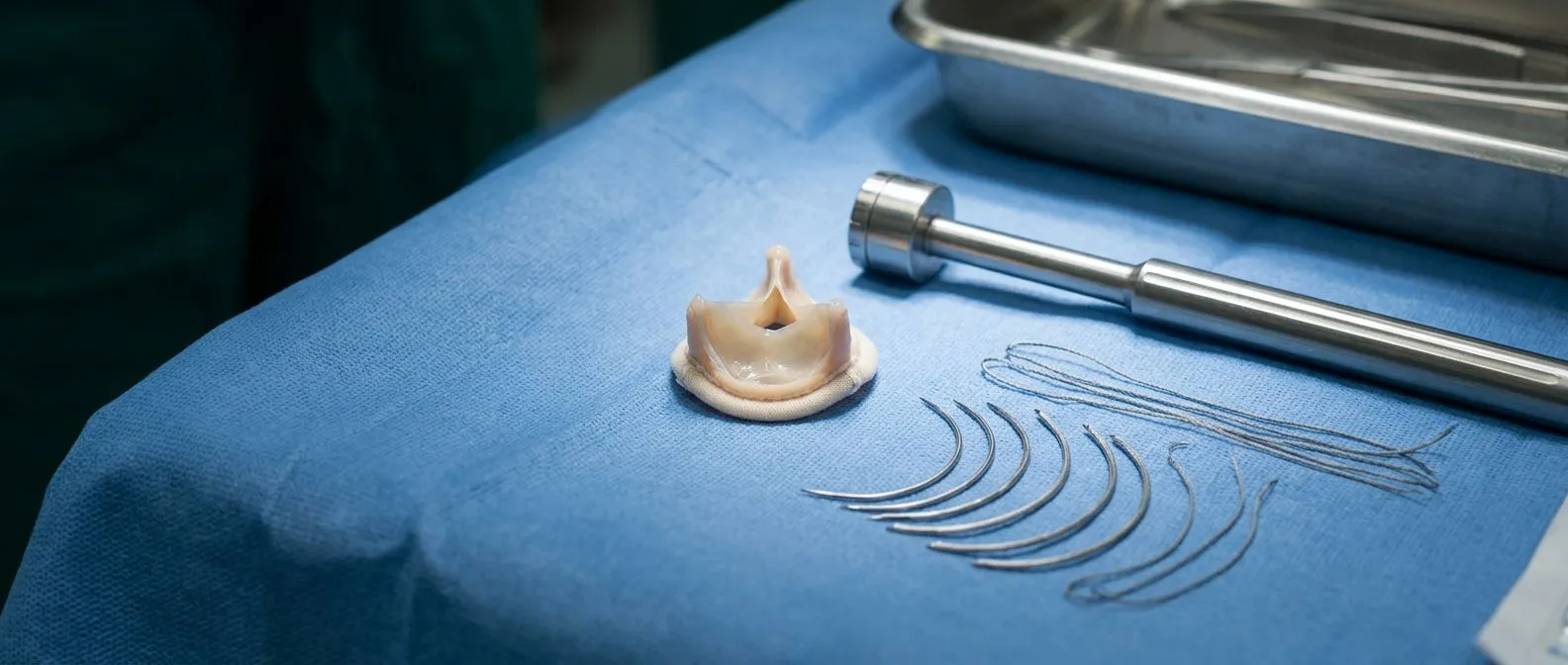
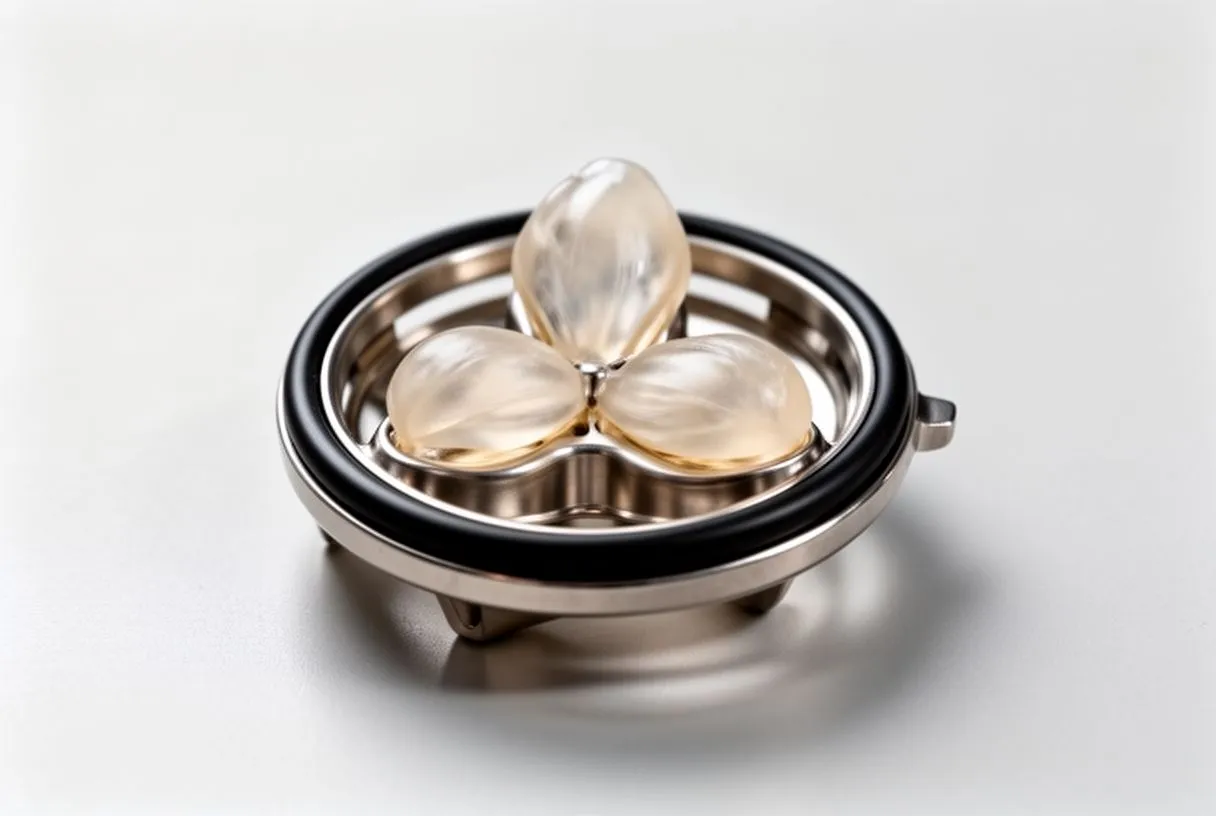
Replacement when necessary: some valves cannot be repaired — a heavily calcified aortic valve, for example, must usually be replaced. Replacement valves come in two families. Mechanical valves, made of durable materials, last for decades but require lifelong blood-thinning medication. Tissue valves, made from animal or human tissue, avoid blood thinners but wear out sooner, typically within ten to fifteen years, sometimes less in younger patients.
- Mechanical valve: longest durability; requires lifelong anticoagulation (warfarin) and regular blood tests.
- Tissue valve: no long-term blood thinner usually needed; will eventually need re-replacement, often possible through a catheter the second time.
- Valve repair: your own tissue preserved; best outcomes depend heavily on the surgeon's experience with repair techniques.
Every case in our team is reviewed by the multidisciplinary group against international practice guidelines before a recommendation is given; the patient receives a clear proposal with the alternatives, and the final decision is always theirs. We also encourage second opinions and treat seeking one as a normal part of deciding about heart surgery — a good team welcomes it.
What Are the Aortic Stenosis Treatment Options, Including TAVR?
Conventional surgery: surgical aortic valve replacement through the breastbone remains the standard for many patients, particularly those who are younger, need other heart procedures at the same time, or have anatomy unsuited to catheter techniques. It is a well-established operation with decades of outcome data behind it.
TAVR — the transcatheter option: Transcatheter Aortic Valve Replacement, always called TAVR, replaces the aortic valve without opening the chest. A new valve is mounted on a catheter, usually inserted through an artery in the groin, and guided up to the heart, where it is expanded into place. Originally developed for patients too frail for surgery, TAVR is now validated for a widening range of patients, and in several guidelines it is the preferred option for many people over 75 and for those at high surgical risk.
TAVR procedure recovery: recovery is typically much faster than open surgery. Many patients walk within hours and go home within a few days, compared with a week or more in hospital after conventional replacement. Full recovery usually takes weeks rather than months. That said, TAVR carries its own risks — including potential effects on the heart's electrical system that occasionally require a pacemaker — which is why patient selection matters so much.
We perform conventional, minimally invasive, robotic and transcatheter procedures, and we recommend the less invasive route only where the evidence supports it for that patient. Dr Molina trained in structural cardiology and TAVR at CHU Bordeaux, and the team's approach is to match the technique to the patient's anatomy, age and goals rather than to a preference for any single method.

What Does Minimally Invasive Valve Surgery Recovery Look Like?
What "minimally invasive" means: minimally invasive valve surgery replaces the long breastbone incision with a small incision between the ribs, or in some cases uses robotic instruments through even smaller ports. The valve operation inside the heart is the same; the approach to reaching it is what changes. The benefits are real but specific: less pain, less blood loss, lower infection risk at the incision, and a shorter hospital stay.
Surgical valve replacement recovery time: after a conventional sternotomy, most patients spend five to seven days in hospital and need six to eight weeks for the breastbone to heal before returning to driving and most work. Minimally invasive approaches often cut that roughly in half, though individual recovery varies with age, fitness and whether other procedures were done at the same time. Cardiac rehabilitation — a supervised programme of graded exercise — helps patients regain strength safely and is strongly worth attending.
Heart valve surgery cost in Mexico: for international patients, heart valve surgery cost in Mexico is typically substantially lower than in the United States or Canada, while quality at established cardiac centres compares well. Costs vary widely with the technique, the valve chosen, hospital stay length and any complications, so the honest advice is to request a detailed written estimate that itemises each component. Reputable teams provide this without hesitation.
I trained in cardiac, minimally invasive and robotic surgery at the University of Montreal, and in our consulting rooms we take the time to explain what the studies actually show, in plain words, and to answer every question before any decision. Recovering well starts with understanding exactly what was done and why.
Can Chronic Valve Disease Be Managed Without Surgery?
Medication has a real role: not every valve problem needs an operation. Mild valve disease is managed with monitoring and, where needed, medication to control blood pressure, prevent fluid retention, or steady the heart rhythm. Chronic valve disease management focuses on protecting the heart while the valve is still doing an acceptable job, and on timing any intervention correctly. For some patients, medication plus surveillance is the right plan for years.
Valve disease prevention tips: you cannot prevent every valve problem, but you can lower your risk of the ones that develop or worsen over time. The evidence-backed basics:
- Control blood pressure and cholesterol: these accelerate valve calcification and hardening of the arteries alike.
- Treat strep throat promptly and care for your teeth: untreated strep can lead to rheumatic fever, and gum infections can seed valve infections in people with abnormal valves.
- Stop smoking: smoking speeds degeneration of both arteries and valves.
- Manage weight, diabetes and kidney health: all three influence valve disease progression.
- Keep your follow-up scans: valve disease changes slowly, then sometimes quickly — regular echocardiograms catch the turning point.
Knowing when intervention is needed: guidelines set clear thresholds — for example, severe valve narrowing or leaking with symptoms, or severe disease with signs of heart strain even without symptoms. When those thresholds are crossed, the evidence favours treating the valve rather than waiting. Aortic disease follows similar logic; an aorta widened beyond roughly 5.5 cm generally warrants surgical evaluation.
Our team, led by Dr Alejandro Molina, reviews every recommendation together before presenting it, and Dr Molina performed the first robotic mitral valve repair in the Ángeles Health System — experience we bring to judging exactly when repair, replacement or watchful waiting serves each patient best.
Valvular heart disease treatment today offers more choices, smaller incisions and faster recoveries than at any time in history. The essentials to take away: know your valve diagnosis by name and severity, watch for breathlessness, chest discomfort, fainting and palpitations, and never dismiss a new murmur without an echocardiogram. Repair is preferred over replacement where possible, TAVR has transformed care for aortic stenosis, and mild disease can often be managed with monitoring and medication for years. If you or someone in your family has been told there is a valve problem, the next step is a conversation with a qualified cardiac team — not self-diagnosis. Our consulting rooms in Guadalajara, Querétaro and Hermosillo are open to new patients, and a free video consultation is the simplest way to start. Bring your questions; we will answer every one of them.






