

Acute Myocardial Infarction: Treatment in the First Hours
Acute myocardial infarction treatment in the first hours saves heart muscle and lives.
Acute myocardial infarction treatment has one rule that outweighs every other: the sooner blood returns to the heart muscle, the more heart the patient keeps. If you or someone close to you has been told the words "heart attack", you already know how frightening that moment is. This guide walks through what happens in the first hours — what the emergency team does, why every minute counts, what a stent actually is, and what the days after look like — in plain language, so you can face those decisions with clearer eyes.
What Is an Acute Myocardial Infarction?
A myocardial infarction is the medical name for a heart attack. They are the same event, described in two vocabularies — your cardiologist says "myocardial infarction", your family says "heart attack". The word acute means it is happening right now, as opposed to the scarred, healed tissue an old infarction leaves behind. During an acute event, one of the arteries that feeds the heart muscle becomes suddenly blocked. Without blood, the muscle downstream starts to die within minutes.
The heart has its own blood supply: the coronary arteries, which run across the surface of the heart like a crown (that is what "coronary" means). The left main artery divides into two major branches, and the right coronary artery supplies its own territory. Where the blockage sits matters enormously. A clot high in a large branch threatens a big area of muscle; a clot in a small side branch threatens less. This is why two patients can have "the same diagnosis" and very different recoveries.
This is also why urgency defines everything that follows. Heart muscle does not regrow in any meaningful way. The entire goal of the first hours is to reopen the artery and limit the area of damage. Everything in this article — the ambulance, the catheterization laboratory, the intensive care unit — exists to buy the muscle time.
What Causes an Acute Myocardial Infarction?
In the great majority of cases, the cause is coronary artery disease. Over decades, cholesterol, fat, inflammatory cells and scar tissue build up inside the artery wall in patches called plaque. This process, atherosclerosis, is usually silent. Many people walk around with significant narrowing and never feel a thing, which is exactly why the first sign can be so dramatic.
The infarction itself usually begins when a plaque ruptures. The body treats the exposed contents of that plaque like an injury and forms a clot — a thrombus — on the spot. In seconds, the clot can completely obstruct an artery that was only partially narrowed. From that moment, the heart muscle beyond the clot is starving.
Not every infarction starts the same way: some are caused by a temporary spasm that squeezes the artery shut, others by a spontaneous tear in the artery wall (more often seen in younger women), and a few by a clot that travels from elsewhere in the body. Knowing the mechanism matters, because the prevention plan afterwards is not identical for everyone.
Where Does a Heart Attack Typically Feel Painful?
The classic location is the centre of the chest or slightly to the left. Patients describe pressure, tightness, heaviness or squeezing — "like something sitting on my chest" — rather than a sharp, stabbing pain. The discomfort often spreads to the left arm, the jaw, the neck, the back or the upper stomach. It usually lasts more than a few minutes and does not disappear with rest or a change of position.
Atypical infarction: women, older adults and people with diabetes frequently present differently. Their infarction may feel like severe fatigue, shortness of breath, nausea, indigestion, or pain only in the jaw and back — sometimes with almost no chest sensation at all. An infarction discovered later, on an electrocardiogram or ultrasound, without the patient ever recalling a dramatic event, is called a silent myocardial infarction. These presentations delay care, which is precisely what makes them dangerous.
If any of the following is happening, treat it as an emergency and call for an ambulance rather than driving yourself:
- Chest pressure or squeezing lasting more than five minutes
- Discomfort spreading to the arm, jaw, neck or back
- Shortness of breath, with or without chest pain
- Cold sweat, nausea or sudden overwhelming fatigue that feels unlike anything usual
Calling the emergency number is the single most important decision anyone in this situation can make. Ambulance crews can start care on the spot and take the patient directly to a hospital equipped to reopen the artery.

How Is a Heart Attack Managed in the First Hours?
Cardiologists speak of the golden hour — roughly the first hour after symptoms begin, when the amount of muscle that can still be saved is at its highest. The phrase is not marketing; it reflects how heart muscle dies on a clock. The practical meaning for families is simple: do not wait to "see if it passes", and do not wait for morning.
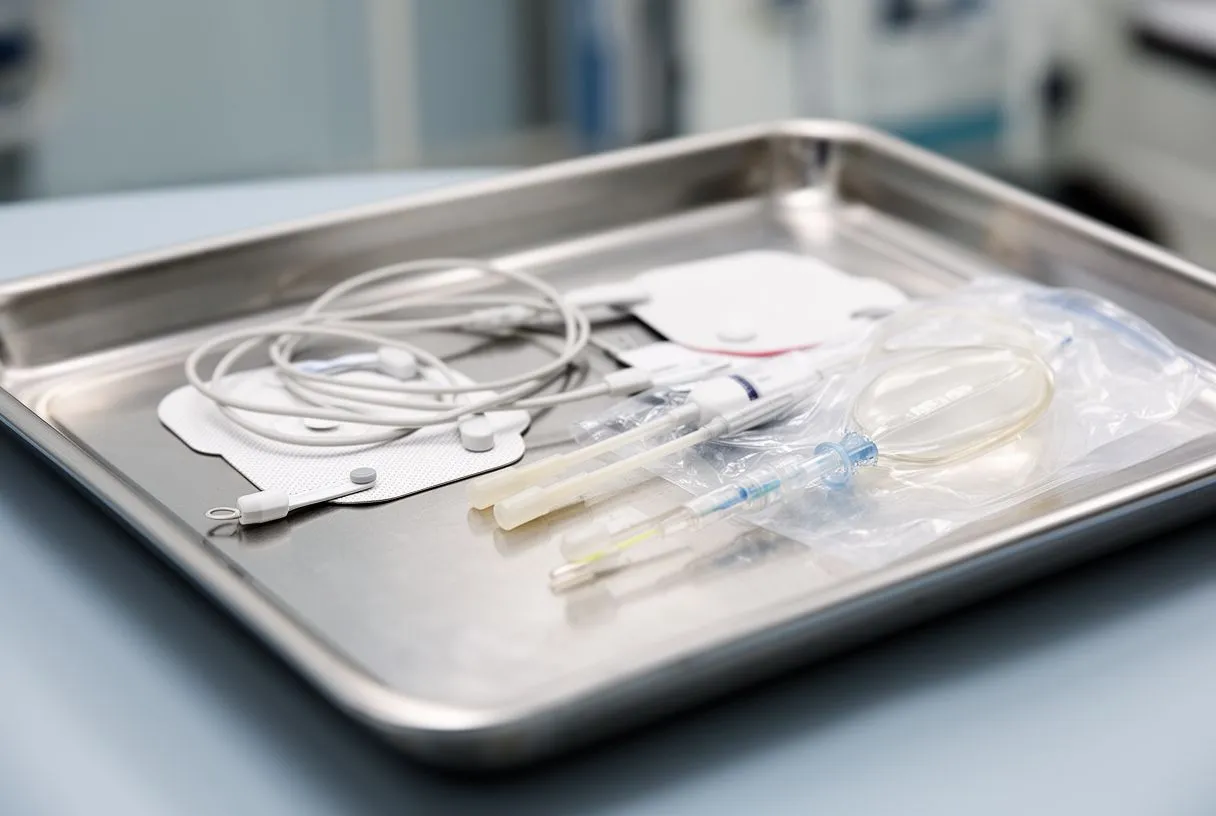
The acute myocardial infarction treatment protocol actually begins before the hospital doors. Paramedics attach an electrocardiogram (ECG), a test that reads the heart's electrical signals, often before the ambulance moves. If it shows a complete blockage, they may give aspirin to chew — it thins the clot forming on the plaque — and warn the hospital's catheterization laboratory so the team is waiting when the ambulance arrives.
Immediate treatment also has a version for the people standing next to the patient: call for help, keep the person calm and seated, unlock the front door, and bring a list of their medications. One thing to avoid: do not drive the patient yourself unless there is truly no other option. A crew that arrives with equipment is safer than a frightened relative behind a wheel.
Acute Myocardial Infarction Treatment: The First Steps
So how is acute myocardial infarction treated once the patient reaches the hospital? The first step is confirming what kind of event this is. An ECG done within the first ten minutes separates a STEMI — a fully blocked artery, visible as a specific electrical pattern — from a NSTEMI, where the artery is severely narrowed but not completely closed. A blood test for troponin, a protein released by dying heart cells, confirms how much injury has occurred. The team also rules out other causes of severe chest pain, such as acute aortic syndrome, a dangerous condition of the aorta that requires a completely different approach.
Acute myocardial infarction treatment steps then follow a well-rehearsed sequence:
- Confirm with an ECG within minutes of arrival and classify the infarction
- Start medications — aspirin, a second anti-clotting drug and anticoagulants — to stop the clot from growing
- Activate the catheterization laboratory while preparations continue around the patient
- Reopen the artery with a balloon and stent, or dissolve the clot with drugs when a cath lab is not reachable in time
- Monitor closely in intensive care while the heart stabilizes
If the nearest catheterization laboratory cannot be reached within the guideline window, the team may use fibrinolytic drugs — strong clot-dissolving medication given by intravenous infusion — instead, or as a bridge on the way to the lab. They are less effective than a stent and carry a bleeding risk, but in the right circumstances they save muscle that would otherwise be lost.
What Is Reperfusion Therapy and Why Does Time Matter?
Reperfusion therapy is the umbrella term for everything that restores blood flow to the starved heart muscle — reopening the artery with a balloon and stent, or dissolving the clot with medication. It is the single most powerful intervention in modern cardiology, and decades of trials summarized in journals such as JAMA established the time targets every emergency department now works to: ideally, from first medical contact to a reopened artery in under ninety minutes.
Treatment time is not an administrative detail; it is the therapy itself. Myocardial protection — the protection of the heart muscle — is literally what reperfusion achieves, and every minute of delay before the artery is opened means more muscle converting into permanent scar. Each delay measurably increases both the amount of muscle lost and the risk of serious complications afterwards.
Why patients delay: most people who arrive late did not ignore their symptoms out of carelessness. They mistook the event for indigestion, muscle strain or anxiety, or they did not want to alarm anyone at two in the morning. If there is one message worth repeating to your whole family, it is this: an hour of doubt is worth an ECG.
What Happens During Cardiac Catheterization and Stent Placement?
Today, most acute myocardial infarction treatment happens in the catheterization laboratory, usually called the cath lab. Cardiac catheterization involves passing a very thin, flexible tube — a catheter — into an artery, most often at the wrist, sometimes at the groin. Local anesthetic numbs the entry point, and the patient stays awake throughout. Contrast dye injected through the catheter makes the coronary arteries visible on X-ray, showing the team exactly where the blockage is and how severe it is.
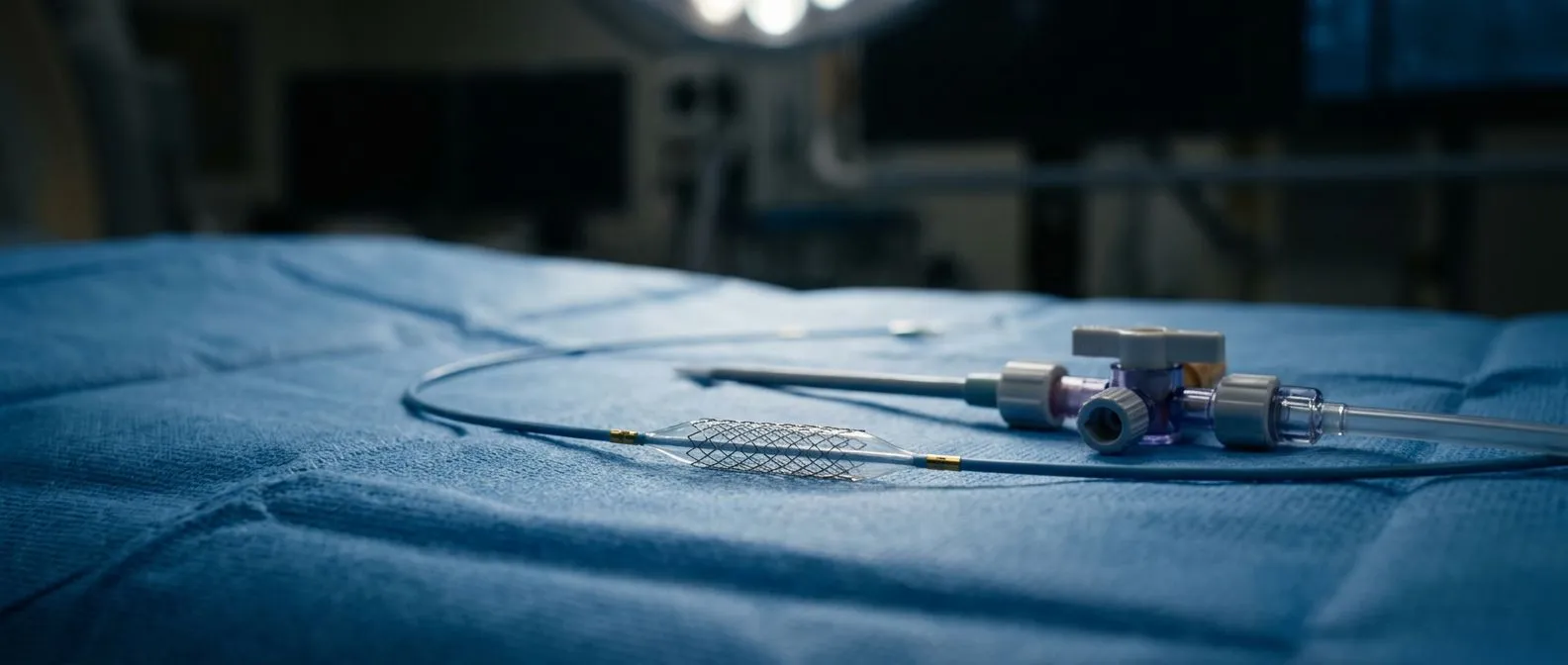
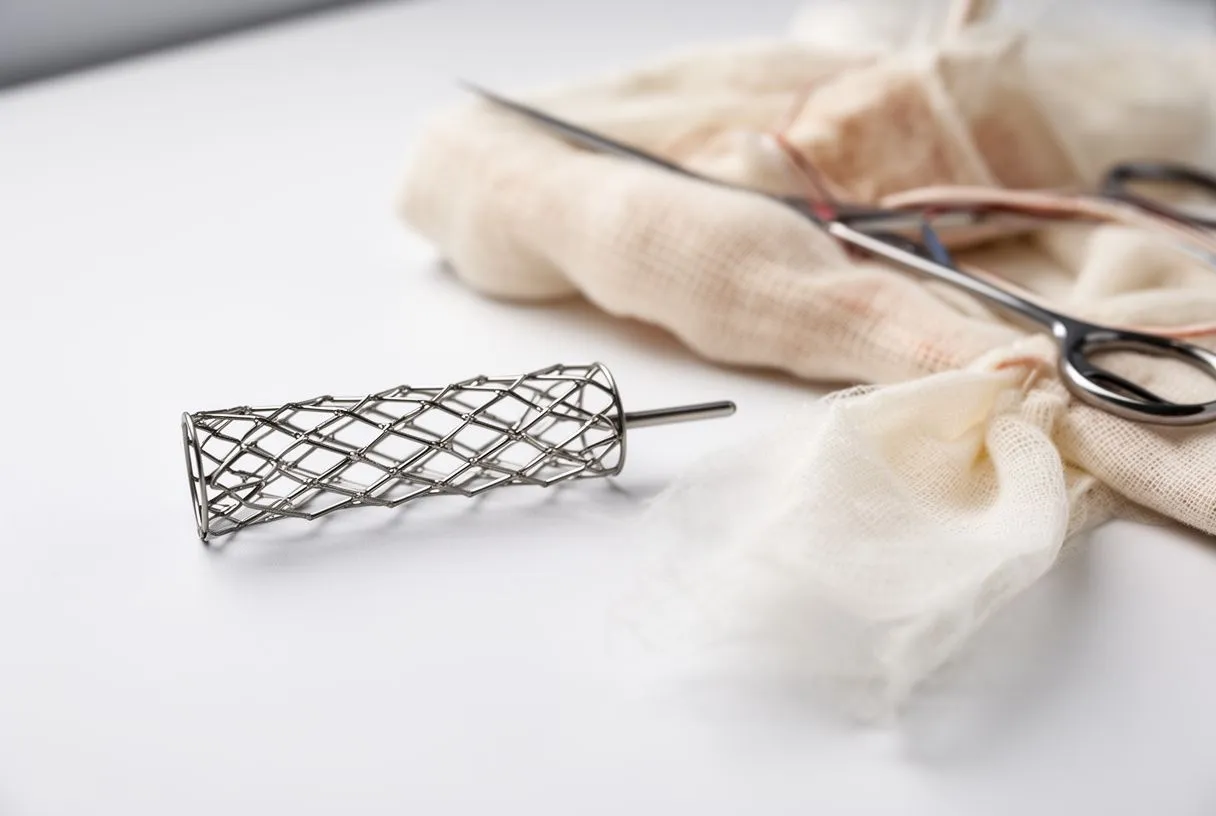
Once the blockage is found, the angioplasty treatment itself begins: a small balloon at the tip of the catheter is inflated at the site of the clot, pressing the plaque aside and restoring flow. In the same session, the team performs stent placement — leaving behind a tiny mesh tube that props the artery open permanently. Most modern stents are drug-eluting, meaning they release medication that prevents scar tissue from re-narrowing the vessel.
What the procedure feels like: pressure rather than pain, occasionally a warm flush when the dye goes in, and often, remarkably quickly, relief of the crushing chest sensation that brought the patient in. Stents have transformed the outcome of this disease, though they are not a cure — long-term follow-up matters, because complications can emerge years after stenting, as case reports such as one published in SciELO on late complications after stenting for infarction make clear.
What Are the Treatment Options for Coronary Artery Disease?
Medications: after the emergency, drug treatment for acute myocardial infarction continues for life, and each pill has a job. Two anti-platelet drugs keep new clots from forming on the stent or on other plaques. Statins calm the inflammation inside artery walls and lower cholesterol. Beta-blockers ease the heart's workload, and ACE inhibitors or similar agents help the heart remodel and protect the kidneys. Stopping these early, without a doctor's guidance, is one of the most common and avoidable causes of a second event.
Some blockages cannot be handled well with a stent. When several arteries are diseased, when the left main artery is involved, or when the anatomy is unsuitable, myocardial revascularisation by bypass surgery — grafting vessels from the chest, arm or leg to route blood around the blockages — gives a more durable result. Our team performs conventional, minimally invasive, robotic and transcatheter procedures, and we recommend the less invasive route only where the evidence genuinely supports it for that patient.
When the infarction damages a large amount of muscle, the heart can fail acutely — acute heart failure — and in its most severe form, cardiogenic shock, the heart is too weak to supply the body. These patients need intensive support, sometimes temporary mechanical pumps, and occasionally urgent surgery. It is a serious situation, but one where rapid, coordinated care makes a real difference.
Heart Attack Treatment in the First 24 Hours
The day after acute myocardial infarction treatment is about vigilance rather than intervention. In the coronary care unit, the heart is monitored continuously by ECG, because the irritated muscle is most prone to dangerous rhythm disturbances — arrhythmias — in these first hours. Nurses watch for them around the clock, and defibrillators are at every bedside for a reason.
Kidney and lung checks: the contrast dye used in the cath lab can briefly stress the kidneys, so blood tests over the next day or two watch for acute kidney injury, especially in patients who already have reduced kidney function or diabetes. In severe, extensive infarctions, the lungs can also become congested or inflamed — in the gravest cases a condition called acute respiratory distress syndrome — which is why breathing and oxygen levels are checked so frequently.
Before discharge, an echocardiogram — an ultrasound of the heart — measures how strongly the muscle is pumping and whether the valves are affected. Most patients sit up and walk short distances within the first day, because early, graduated movement speeds recovery. In the consultation we take the time to explain what these studies actually show, in plain words, and to answer every question before any decision is made.
How to Live Life After a Heart Attack?
Life after an infarction is structured around preventing a second one. That means the medications for life we described, control of blood pressure, diabetes and cholesterol, complete cessation of smoking, and regular, progressive exercise. Cardiac rehabilitation — a supervised program of exercise, education and emotional support — is one of the most underused tools in cardiology, and we encourage every patient who qualifies to take part. Research also continues into repairing damaged muscle, including the use of stem cells, reviewed in publications such as Use of Stem Cells in the Treatment of Myocardial Infarction.
Follow-up is not optional, and it is not a formality. Whether a heart surgeon needs to be involved after an acute myocardial infarction is a question worth asking openly, particularly if a second infarction has occurred or symptoms persist. We encourage second opinions and treat seeking one as a normal, sensible part of deciding about heart surgery — never as an offense to the first doctor.
Access to care varies, and it is fair to ask about it. Emergency treatment for a heart attack in Mexico is available through both public and private systems, and in Guadalajara, cardiac emergency treatment is available at several hospitals with catheterization laboratories. We are a multidisciplinary team of cardiac surgeons led by Dr Alejandro Molina, with consulting rooms in Guadalajara, Querétaro and Hermosillo, and every case is reviewed by the team against international practice guidelines before a recommendation is made.
An acute myocardial infarction is a race against the clock, and the treatments are genuinely effective — but only if they start in time. Recognize the symptoms, call an ambulance without hesitation, and understand what the stent, the drugs and the rehabilitation are each there to do. Recovery does not end at discharge from hospital; it continues for months, and it goes best when the patient and family understand the plan. If you have questions about your own situation — or about whether surgery should be part of your treatment — discuss it with a qualified cardiac team rather than deciding alone. Our team offers a first video consultation at no cost, where we review your studies, explain them clearly and tell you honestly what we would recommend. Book a consultation instead of self-diagnosing; your heart deserves an informed decision.






