
Angina Treatment: Medicines, Stents or Bypass Surgery
Explore angina treatment options with Guadalajara heart specialists.
Angina treatment is designed to restore comfortable breathing, relieve constriction in the chest, and safeguard your heart muscle from irreversible damage. When coronary arteries narrow due to fatty plaque buildup—a condition known as coronary artery disease—the heart muscle starves for oxygen during moments of exertion or emotional stress. Finding the right clinical path between medical therapy, catheter interventions, and surgical reconstruction requires balancing your diagnostic anatomy, overall vitality, and personal goals for daily life.
What Are Angina Treatment Options?
Initial clinical assessment: Every journey begins with defining the exact mechanism restricting myocardial perfusion. Clinical evaluation often incorporates non-invasive diagnostics such as Cardiac CT and advanced echocardiography to map the vascular architecture and observe how blood flows across the cardiac chambers under varying workloads.
Modern management divides care into three primary therapeutic categories: optimal medical therapy, percutaneous coronary intervention using intracoronary stents, and coronary artery bypass graft surgery. Authoritative data from ncbi.nlm.nih.gov demonstrate that tailoring therapy to the patient's coronary anatomy reduces hospital readmissions and symptom burden.
Selecting among these avenues depends on whether your pain is predictable or escalating unexpectedly. While stable patterns allow for deliberate outpatient testing, unstable symptoms necessitate immediate hospital stabilization to prevent progression toward acute myocardial infarction.
How Angina Treatment Relieves Chest Pain
Restoring vascular balance: Chest discomfort occurs when myocardial oxygen demand outstrips available vascular supply. Angina treatment focuses on rebalancing this dynamic either by lowering the physical work the heart must perform or by physically widening obstructed luminal channels.
When systemic inflammation or metabolic strain compromises vascular health, the inner lining of the coronary arteries struggles to dilate appropriately. Insights from Cardiovascular and metabolic outcomes associated with moderate-to-severe atopic dermatitis: A systematic review and meta-analysis highlight how broad systemic inflammation interacts with vascular integrity and metabolic function across diverse patient groups.
By using targeted pharmaceuticals or mechanical revascularization, flow is preserved down to the microscopic capillaries. Patients notice this physiological improvement as an immediate reduction in chest heaviness, reduced shortness of breath on stairs, and an improved capacity to enjoy active days without fear.

Types of Angina and Treatment Approaches
Stable versus microvascular patterns: Classical stable angina presents predictably during physical exertion or acute mental strain, resolving within minutes of rest. Microvascular angina, by contrast, stems from dysfunction in the microscopic arterial branches where standard stents cannot physically reach, necessitating specialised pharmacological regimens.
Vasospastic or Prinzmetal angina involves sudden, severe spasms of the epicardial coronary vessels, frequently waking individuals during the early morning hours. Systematic protocols outlined in the Global Strategy for the Diagnosis, Management, and Prevention of Chronic Obstructive Pulmonary Disease underscore how coexisting respiratory conditions can complicate cardiopulmonary stability, making precise symptom differentiation essential.
Understanding these distinct presentations ensures that clinicians do not apply a generic solution to a nuanced issue. Your multidisciplinary team evaluates your symptoms carefully, ensuring that structural narrowing, vessel spasms, or microcirculatory resistance receive the exact therapy required.
- Stable angina: Triggered by physical exertion and reliably eased by rest or sublingual nitrates.
- Unstable angina: Sudden, prolonged chest pain occurring at rest, signalling acute plaque instability requiring urgent intervention.
- Prinzmetal angina: Driven by episodic coronary arterial spasms, highly responsive to calcium channel antagonists.
- Microvascular angina: Chest discomfort stemming from tiny capillary resistance, managed predominantly with medical therapy.
Best Medications for Angina Management
First-line anti-anginal drugs: Pharmacological management serves as the foundation for all coronary care, whether or not invasive procedures follow. Beta-blockers remain a central tool, slowing the resting heart rate and dampening contractility to substantially decrease myocardial oxygen requirements throughout daily tasks.
Nitrates provide rapid symptomatic relief by relaxing vascular smooth muscle, expanding peripheral capacitance vessels, and reducing the cardiac preload against which the left ventricle must pump. Calcium channel blockers act as robust alternatives or adjuncts, widening coronary vessels and helping control systemic hypertension simultaneously.
Long-term protection also incorporates antiplatelet therapies such as aspirin alongside high-potency statins to stabilize vulnerable atherosclerotic plaques. Newer metabolic agents like ranolazine assist heart cells in using oxygen more efficiently during periods of reduced perfusion, all without causing precipitous drops in resting blood pressure or heart rate.
Coronary Stent for Angina Treatment
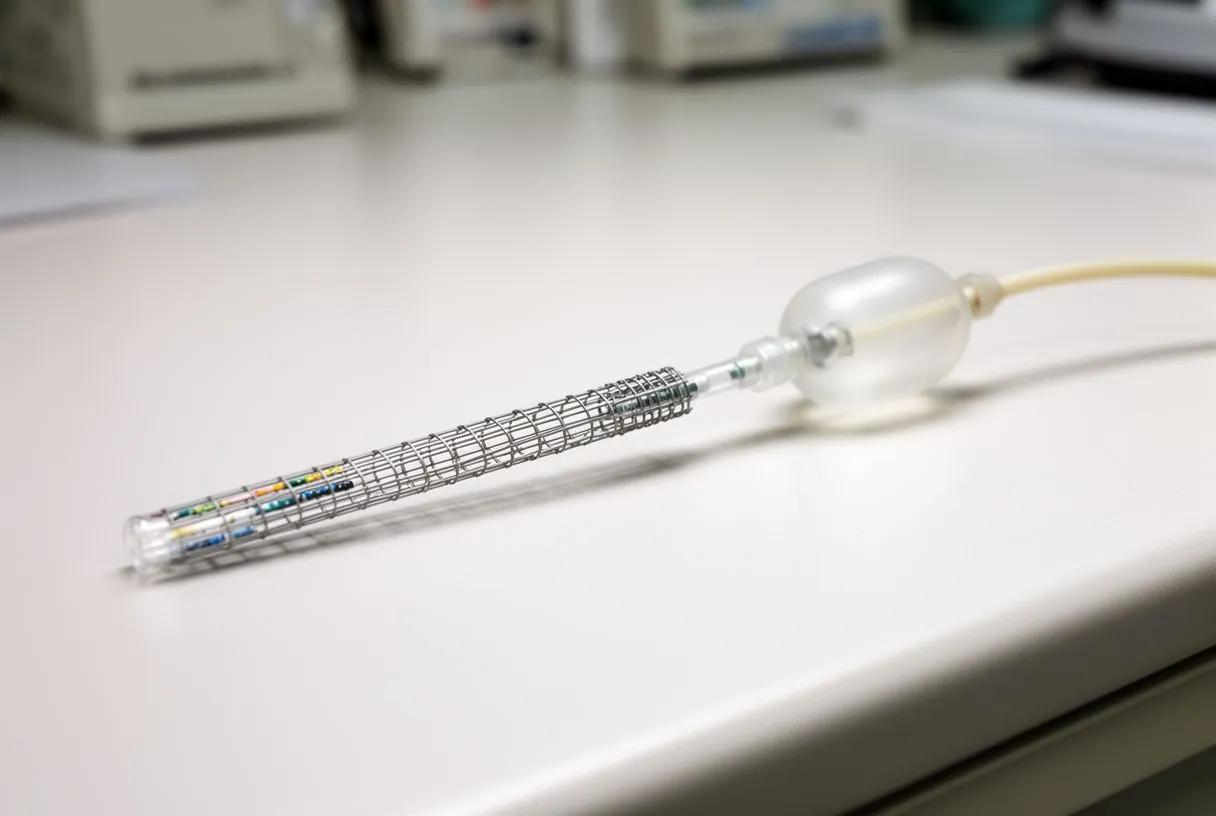
Percutaneous coronary intervention: When medications alone cannot resolve persistent lifestyle-limiting symptoms, catheter-based intervention offers a rapid, minimally invasive solution. A thin sheath is threaded through the radial artery in the wrist, allowing delicate microcatheters to travel retrograde into the aortic root and coronary ostia.
Under continuous fluoroscopic guidance, interventional cardiologists advance a flexible guidewire across the vascular narrowing before inflating an ultra-thin balloon to expand the calcified vessel. Following pre-dilation, a drug-eluting stent is deployed to scaffold the arterial wall, releasing antiproliferative compounds that discourage tissue overgrowth and in-stent restenosis.
While historically a bare-metal stent was utilized in specific scenarios involving bleeding risks, contemporary drug-eluting platforms represent the standard for durability. The entire procedure avoids sternotomy, allowing patients to ambulate hours after completion and return home within twenty-four to forty-eight hours.
Bypass Surgery for Complex Angina
Surgical coronary revascularization: Coronary artery bypass graft (CABG) surgery is an established procedure for individuals with extensive multivessel disease or left main coronary trunk involvement. By constructing anatomical detours around high-grade narrowings, bypass surgery restores durable, high-volume blood flow directly to ischemic territories.
Cardiovascular surgeons preferentially harvest the left internal mammary artery from behind the breastbone, as its biological longevity remains unmatched over decades of follow-up. Supplemental conduits, such as the great saphenous vein from the leg or the radial artery from the arm, bridge blood flow from the ascending aorta to downstream targets.
For patients navigating severe diffuse blockages combined with diabetes or reduced ventricular function, surgical revascularization provides comprehensive symptomatic relief and long-term myocardial protection. Open procedures involve careful monitoring, structured postoperative physical therapy, and an in-hospital recovery window spanning five to seven days.
Comparing Angina Treatment Pathways
Evidence-based decision frameworks: Determining whether to proceed with continued medical management, stenting, or bypass surgery depends upon objective risk scoring and anatomical mapping. Multidisciplinary heart teams examine coronary angiograms alongside complex clinical indicators like the SYNTAX score to objectively quantify lesion complexity.
The choice between catheter-based interventions and open heart surgery is rarely arbitrary; each intervention offers specific strengths. Clear dialogue between the patient, non-invasive cardiologists, and cardiac surgeons ensures all diagnostic nuances and recovery expectations are fully weighed.
- Diagnostic risk assessment: Stratifying disease extent through stress imaging, fractional flow reserve, and coronary angiography.
- Medical optimization: Initiating anti-ischemic, lipid-lowering, and antiplatelet drugs to test clinical responsiveness.
- Anatomical triage: Evaluating single-vessel focal lesions for stenting versus complex multivessel bifurcation patterns for bypass surgery.
- Shared team decision: Aligning anatomical guidelines with personal functional goals and international travel capabilities.
Are Angina Treatments Safe?
Managing clinical procedural risks: Every intervention carries specific trade-offs that your cardiac team actively mitigates through comprehensive preoperative planning. Modern cardiac catheterisation carries low complication rates, though minor risks of access site hematomas, contrast-induced nephropathy, or coronary dissection are carefully guarded against.
Surgical bypass entails standard perioperative concerns, including bleeding, arrhythmias like atrial fibrillation, superficial wound infections, and occasional need for blood transfusion during complex repairs. Surgical teams assess validated global metrics, such as the EuroSCORE II or STS scores, ensuring that calculated benefits substantially outweigh the operational risk profile before entering the operative theater.
Technological refinements, including transradial catheter access, blood-conservation strategies, and high-definition surgical cameras, have rendered these procedures safer than at any point in medical history. Careful monitoring during the critical forty-eight hours post-procedure helps identify unexpected hemodynamic changes early.

Rehabilitation and Lifestyle Angina Treatment
Structured secondary prevention: Revascularization physically opens blocked conduits, but comprehensive lifestyle restructuring protects the remainder of the arterial tree from advancing atherosclerosis. Participating in structured cardiac rehabilitation provides a medically supervised setting to rebuild stamina, safely elevate heart rates, and restore self-confidence.
Nutritional changes focusing on whole foods, lean proteins, Mediterranean-style dietary patterns, and sodium moderation relieve systemic vascular pressure and decrease atherogenic lipids. Stopping tobacco exposure remains the single most impactful lifestyle modification, halting ongoing endothelial irritation and platelet hyper-reactivity immediately.
Stress management and restful sleep hygiene further protect against catecholamine surges that exacerbate chest pain. When paired with consistent medication adherence, these daily habits transform procedural success into lifelong cardiovascular vitality.
Choosing the Right Angina Treatment in Mexico
Accessing specialized international care: For patients seeking high-caliber cardiovascular therapy, Mexico has emerged as an internationally respected destination offering state-of-the-art clinical infrastructure.
Dr Alejandro Molina and his multidisciplinary team bridge advanced cardiovascular surgical interventions with compassionate, individualized patient education. International and regional travelers receive dedicated coordination, ensuring transparent logistical schedules, language-accessible guidance, and seamless transitions from preoperative evaluation to postoperative recovery.
If you or a loved one is living with chronic chest tightness, shortness of breath, or an uncertain cardiac diagnosis, do not navigate these options in isolation. Contact the team to book a free video consultation and discuss your treatment options.
Finding the ideal angina treatment requires thoughtful assessment of your anatomy, symptoms, and lifestyle. By combining optimal medications, advanced stents, or bypass surgery with dedicated secondary prevention, you can look forward to an active, fulfilling future with confidence.