


Annulus Sizing for TAVR: Choosing the Right Valve
Annulus sizing TAVR is the key step to a safe valve fit.
When a narrowed aortic valve needs replacing, the single most important technical decision your team makes is not which brand of valve to use — it is measuring your heart properly first. This measurement, called annulus sizing for TAVR, determines whether the new valve seals well, opens freely, and lasts. In this guide we explain what the aortic annulus is, how it is measured, why the numbers matter so much, and what you can expect from the process. We write it for patients and families, in plain language, so you can follow every step of your own evaluation.
What Is Annulus Sizing for TAVR?
Defining the annulus. The aortic valve sits between the heart's main pumping chamber and the aorta, the large artery that carries blood to the whole body. The valve opens and closes with every heartbeat — around 100,000 times a day. The ring of tissue where the valve attaches is called the valve annulus, and it is not a circle at all; it is more of an oval, slightly tilted. Annulus sizing for TAVR is the process of measuring that oval precisely so the replacement valve fits it snugly.
Why fit matters. A transcatheter aortic valve replacement — always abbreviated TAVR — is a procedure where a new folded valve is delivered through an artery, usually in the groin, and expanded inside the old one. If the chosen valve is too large for your annulus, it can stretch the surrounding tissues; if too small, it can slip or leak. Neither outcome is common when the measurement is done well, which is exactly why the measurement deserves so much attention before anything else happens.
Where the measurement comes from. Your annulus is measured from imaging studies — a computed tomography (CT) scan and usually an ultrasound of the heart. At our practice, every TAVR case is reviewed by the full multidisciplinary team, and we review the annulus measurements together before a valve is proposed, because a single number read by one person can miss the whole picture. The patient receives a clear proposal with the alternatives, and the final decision is always theirs.
What Is a Normal Aortic Annulus Size?
Typical numbers. Most adults have an aortic annulus diameter between roughly 2.0 and 2.6 centimetres, measured as the average of the widest and narrowest internal dimensions of the oval. Women tend to sit at the smaller end of that range; men at the larger end. Height and body size influence the number, so there is no single "correct" value — only a range that is normal for your anatomy.
Is 3.8 cm aortic root normal? Patients sometimes see "3.8 cm" on a report and worry. That figure almost always refers to the aortic root — the widened section of the aorta just above the valve — not the annulus itself. A root of 3.8 cm is within normal limits for most adults; the root is naturally larger than the annulus because it bulges to receive the outgoing blood flow. Guideline thresholds for the aorta itself usually become relevant around 5.5 cm, which is why cardiologists track that number separately.
What if my annulus is bigger than average? An annulus larger than the usual range does not automatically mean disease. What matters is the valve function seen on the scan: whether the leaflets open and close properly. If the valve works, a larger annulus is simply your anatomy. If the valve is leaking or stiff, the measurement becomes central to planning the repair or replacement — which brings us to the procedures themselves.
How Is Annulus Sizing Done for TAVR?
Step one: imaging before any procedure. Annulus sizing for TAVR begins weeks before you enter a procedure room. You will have a cardiac CT scan — a detailed X-ray of the heart, often with medication to slow the heartbeat for sharper pictures — and a transthoracic echocardiogram, an ultrasound taken from the chest wall. Both are painless and take an hour or less.
Step two: the measurements. From the CT, the team measures the annulus at its narrowest point on the CT image, taken in systole (when the heart contracts and the ring is at its most open). From the ultrasound, they confirm the valve's function and the blood-flow gradients. The team may also use a transoesophageal echocardiogram (TEE) — an ultrasound probe passed through the oesophagus — for a closer view when the standard scan is not clear.
Step three: choosing the valve. Each manufacturer publishes a sizing chart: for a given annulus perimeter or area, the recommended valve size follows. The heart team — a cardiac surgeon and an interventional cardiologist — review these together. In our consultations we take the time to explain what the studies actually show, in plain words, and to answer every question before any decision. Patients are never rushed into a choice about their own valve.
What it means for you. Knowing how annulus sizing is done for TAVR removes much of the anxiety around the procedure itself. The measurement is done before you consent to anything, it involves no incision, and it shapes every downstream decision about access route, valve type, and even anaesthesia.
CT Annulus Sizing for TAVR: Why It Is the Gold Standard
What a cardiac CT shows. Computed tomography builds a three-dimensional picture of your heart from dozens of thin X-ray slices. For annulus sizing, the CT allows the team to see the valve ring in cross-section, measure its widest and narrowest diameters, and calculate its perimeter and area automatically. It also reveals the calcium deposits that stiffen a diseased valve, which matters for predicting where the new valve will sit.
Accuracy and reproducibility. CT annulus sizing for TAVR has replaced older two-dimensional methods largely because it measures the true oval shape of the annulus, not just one line through it. Published comparisons in the European literature have shown that echocardiography alone can underestimate the annulus compared with CT, which is why the heart team uses CT as the reference in most cases EuropeanPMC. The measurement also guides calcium distribution assessment — where the heavy deposits are — which affects both valve choice and how it is positioned.
Other things the CT tells us. The same scan covers several planning questions at once, which is why it has become standard across TAVR programmes worldwide.
- Access route: the CT maps the arteries from groin to heart, so the team can confirm whether the femoral artery is wide enough for the delivery catheter.
- Root dimensions: the scan measures the aortic root and the distance to the coronary artery openings, which determines whether the new valve could block them.
- Angle of approach: the CT shows the tilt of the annulus, which helps the operator plan the fluoroscopy angle on the day.
Before a TAVR case is decided, the CT annulus measurements are reviewed carefully, because they guide valve sizing. Nothing proceeds on a single person's reading.
TEE Annulus Sizing for TAVR: When Ultrasound Is Enough
What TEE adds. A transoesophageal echocardiogram places an ultrasound probe in the oesophagus, directly behind the heart. This gives sharper images than a chest-wall scan because there is no lung or rib in the way. TEE annulus sizing for TAVR was the traditional method before CT became routine, and it remains valuable when CT is not possible — for example, when a patient's kidneys cannot tolerate the contrast dye, or when the CT is motion-blurred.
Where TEE fits today. In most modern programmes, TEE has two roles. Before the procedure, it can confirm or refine annulus measurements made on CT. During the procedure itself, it is often used in real time to confirm the new valve is seated correctly, to check its function once deployed, and to detect any leak around it immediately. It also guides patients safely through the procedure if the team chooses to avoid full general anaesthesia.
What the patient experiences. A TEE is done with a numbing spray on the throat and often light sedation. Most people describe mild discomfort at most, and they rest for a couple of hours afterwards before going home. When our team plans a TAVR, we explain in advance which of these studies are truly needed and which are not, so no unnecessary tests are ordered — the first step is always a free video consultation where we review what you already have.
Annular Area vs Perimeter Sizing for TAVR
Two ways to express the same measurement. Because the annulus is an oval, a single diameter can mislead — a narrow-and-long oval and a wide-and-short oval can share a diameter but differ in size overall. Annular area vs perimeter sizing for TAVR is the modern answer to this: the CT software calculates the enclosed area of the oval and the length of its boundary, and both numbers map to the manufacturer's sizing chart.
Why perimeter is often preferred. For balloon-expandable valves, the perimeter of the annulus determines how much the balloon will stretch the tissue, so many teams size primarily by perimeter. For self-expanding valves, the enclosed area drives the recommendation, because the valve must exert enough outward force across the whole surface. Neither approach is wrong; they are matched to the valve type.
What this means for your valve. Two patients with the same average diameter could receive different valve sizes if their annulus shapes differ. This is one of the quiet but decisive ways that good annulus sizing for TAVR improves outcomes — the team matches the valve to the shape of your anatomy, not just to an average number. If you ever want to see the numbers, your team can show you the annulus perimeter and area on your own scan; a reputable programme will always walk you through them.
Small Annulus TAVR Valve Size: What If My Annulus Is Small?
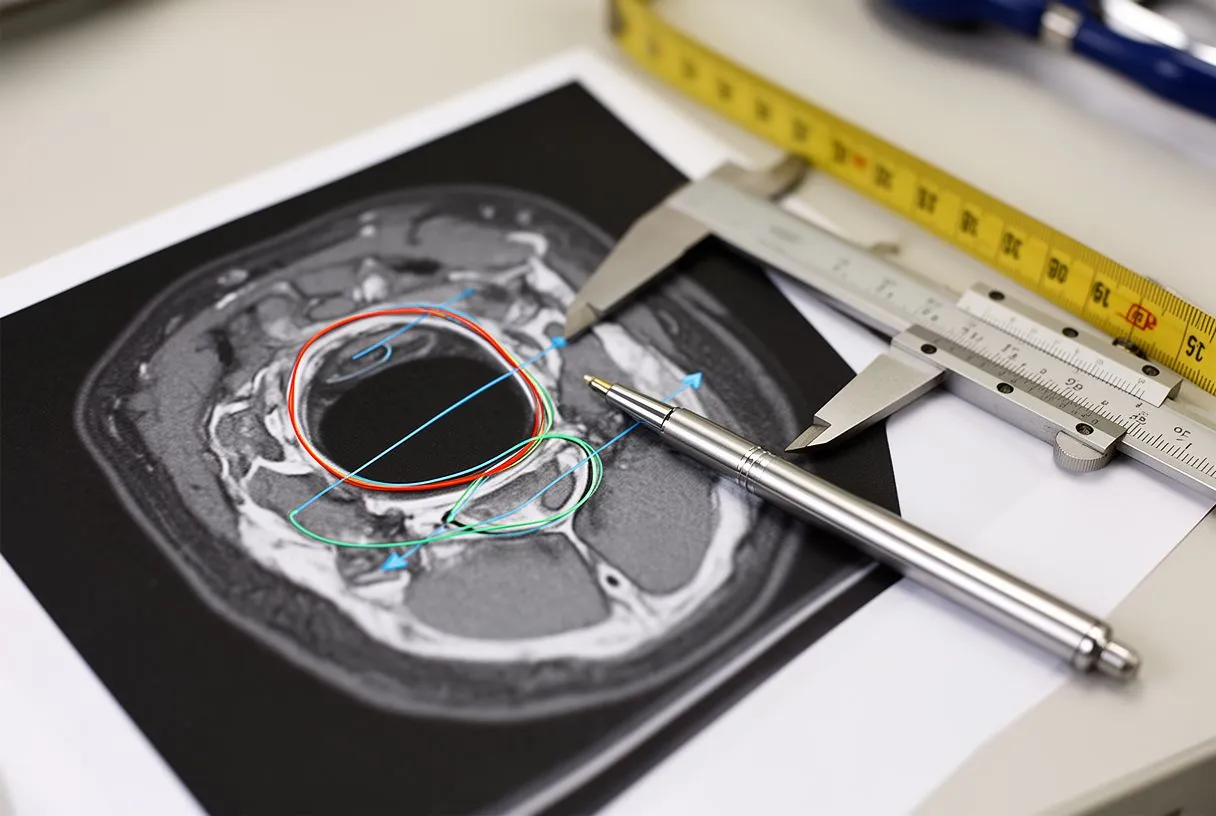
Why a small annulus needs care. A small annulus — commonly under 2.0 centimetres in diameter, or under about 320 square millimetres in area — is more frequent in women. The challenge is that the smallest available valves are, by definition, near the lower limit of what manufacturers make. A small annulus TAVR valve size choice therefore has less room for error: the valve must fit tightly enough to prevent leakage, yet be small enough not to over-stretch the ring.
How the team handles it. Modern programmes manage small annuli in three main ways, each with its own logic.
- Careful imaging first: the CT is repeated or refined if the measurement is borderline, because a 0.5 mm difference in measurement can change the valve size chosen.
- Valve design choice: some valve designs are engineered specifically for small annuli, with lower profiles and different sealing skirts; the team may favour one over another.
- Leak monitoring after: because the risk of paravalvular leak is slightly higher in small annuli, the team checks the result carefully with ultrasound before you leave the procedure room.
The takeaway. A small annulus is not a barrier to TAVR. It is simply a situation where measurement precision matters more. Many of the small annuli we see belong to women who were once told their valves were "too small to fix" — but with current devices and good imaging, most are very manageable.
Large Annulus TAVR Prosthesis: What If My Annulus Is Big?
The other end of the scale. A large annulus — typically above 2.8 centimetres or so in diameter — presents the mirror problem: the valve must be big enough to seal, but the largest valves exert more outward force on the tissue. A large annulus TAVR prosthesis choice therefore depends on both the measurement and the strength of the surrounding tissue, which the CT also shows through the amount and distribution of calcium.
Why this matters. If a large annulus is under-sized, the valve can migrate or leak. If it is over-stretched, the tissue between the annulus and the aorta can be damaged — a rare but recognised complication that the heart team works specifically to avoid by choosing the size from the manufacturer's chart rather than by feel. This is one of the clearest arguments for doing the measurement properly on CT before the procedure rather than guessing on the day.
When the annulus is too big for any valve. Occasionally, a very large annulus, or one that sits in a weakened aorta, makes standard TAVR unsuitable. In those cases the team may propose surgical replacement instead, or a hybrid approach. Our team reviews every case against international practice guidelines before recommending a route, and we favour the less invasive approach only where the evidence supports it for that particular patient. Where a surgical alternative would genuinely be safer, we say so plainly.
Annulus Sizing and Paravalvular Leak
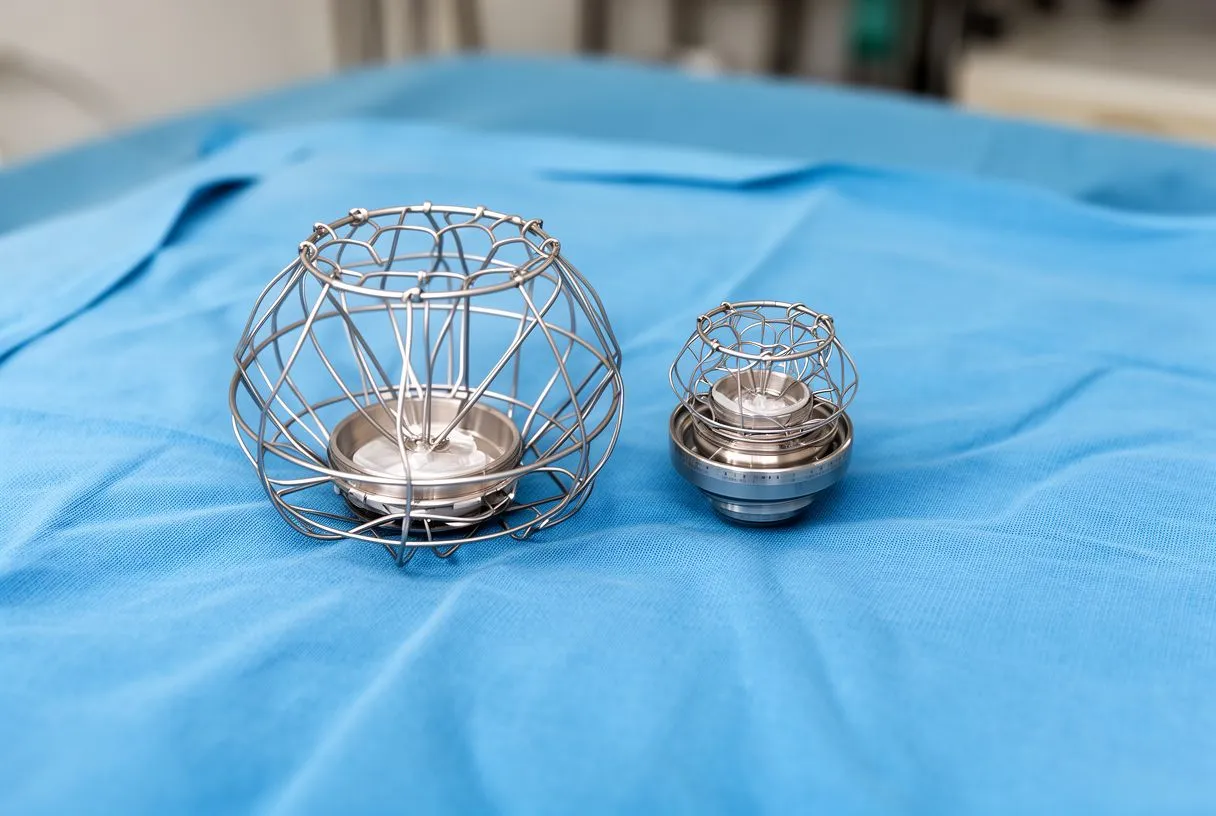
What a paravalvular leak is. When a new valve is expanded inside the old one, blood can occasionally escape around the edge of the valve rather than through it — a paravalvular leak. Small leaks are common and often harmless; larger ones can strain the heart over time. Annulus sizing and paravalvular leak are directly connected, because a valve matched correctly to the annulus is far less likely to leak around its edge.
How sizing prevents it. Two measurements drive this risk. The first is the annulus itself — if the valve is undersized for the annulus, a gap can remain between the valve's outer edge and the tissue. The second is the calcium distribution: heavy calcium on one side of the annulus can push the valve slightly off-centre, leaving a crescent-shaped gap. The CT scan lets the team predict both in advance and choose a valve design and a placement strategy that accounts for them.
What happens after the procedure. During the procedure itself, the team checks the result with ultrasound and angiography — an X-ray dye study — before you leave the room. If a leak is seen, the team can often correct it on the spot by post-dilating (inflating a balloon once more) or, in rare cases, by adding a second small valve. We have found that patients who understand this safety net in advance feel considerably calmer about the day itself, which is why we explain it during the consultation rather than after.
Self-Expanding vs Balloon-Expandable Annulus Sizing
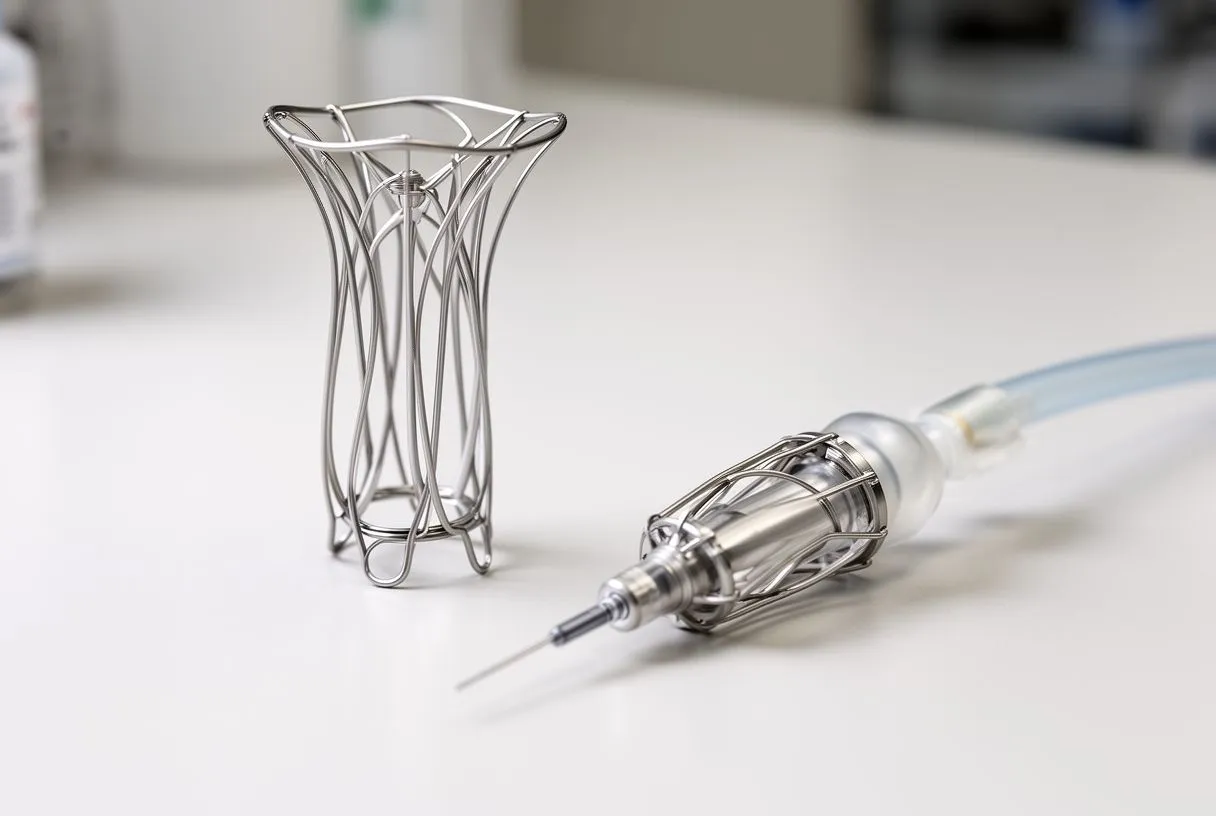
Two valve families, two sizing philosophies. The devices used in TAVR fall into two broad groups. Self-expanding valves are made of a springy metal alloy (usually nitinol) and open on their own inside the annulus, continuing to exert gentle outward pressure. Balloon-expandable valves are mounted on a balloon, inflated once to the correct size, and then hold their shape rigidly. Self-expanding vs balloon-expandable annulus sizing is a real distinction: each family is sized differently, and each has its own strengths.
How each family is sized. For self-expanding valves, the team sizes by annular area — because the valve must exert enough outward force across the whole surface to seal. For balloon-expandable valves, the team sizes by annulus perimeter and by the degree of valve calcium, because the balloon stretches the annulus to a fixed diameter. In heavily calcified annuli, a balloon-expandable valve sometimes holds its shape better; in soft or mildly calcified annuli, a self-expanding valve may conform better to the oval shape.
What the team considers together. The heart team weighs several factors when choosing between the two, including your annulus size and shape, the degree of calcium, the position of the coronary arteries, and the planned access route.
- Measurement fit: which valve's sizing chart gives the most comfortable margin for your annulus perimeter and area.
- Device design: self-expanding valves can sometimes be repositioned after deployment; balloon-expandable valves cannot.
- Guideline fit: the team's recommendation follows international practice guidelines, and the reasoning is explained to you in plain language.
What this means for you. You do not need to become an expert in valve design. You need to know that your team looked at your annulus specifically, considered more than one valve option, and can explain why the recommendation fits your anatomy. That is exactly what a good annulus sizing for TAVR evaluation is designed to deliver.
Bringing it together. The annulus is the foundation of the whole TAVR decision. A careful measurement, taken by a team that reads it together, gives you the lowest risk for your situation — the valve that fits your heart, not a general average. If you or a family member are facing a valve decision, the most useful next step is a conversation with a cardiac team that will review your own scans and explain the options in plain words. We offer a free video consultation for exactly that purpose, and we welcome second opinions as a normal part of any heart surgery decision. Book a consultation rather than trying to interpret your scans alone — a proper measurement and a proper conversation together are what turn an anxious situation into a clear plan.






