


Aortic Aneurysm Repair: Open Surgery or Stent Graft
Aortic aneurysm repair options explained: compare open surgery vs stent graft, recovery time, risks, and how to choose the right treatment.
If you or a family member has just been told there is an aneurysm in the aorta — the body's largest artery — the first questions are usually the same: does this need surgery, and if so, which kind? The two main aortic aneurysm repair options are open surgery, where a surgeon replaces the weakened section of the vessel with a fabric tube, and stent graft repair, a less invasive technique threaded through the arteries from inside. This guide walks through both approaches in plain language: what each involves, how doctors decide between them, what recovery really looks like, and what questions to ask before you agree to anything.
What Is Aortic Aneurysm Repair?
An aortic aneurysm is a balloon-like bulge in the wall of the aorta, the artery that carries oxygen-rich blood from the heart to the rest of the body. Over years, pressure from blood flow can stretch a weak spot in this wall. The danger is not the bulge itself but what it can become: a rupture, or an aortic dissection, which is a tear in the vessel's inner lining and a true cardiovascular emergency. Repair means reinforcing or replacing that weakened section before either event happens.
Why repair is not one single operation. There are several ways to fix an aneurysm, and the right one depends on where the bulge sits, how large it has grown, its shape, and your overall health. Some aneurysms are best treated with traditional open aortic aneurysm surgery through the chest or abdomen. Others suit an endovascular approach — stent graft repair — done through small incisions in the groin. A third group of small, slow-growing aneurysms is best managed with monitoring and medication rather than any operation at all.
What guidelines say about timing. Most international guidelines recommend elective repair once an abdominal aortic aneurysm reaches about 5.5 cm in diameter, or earlier if it is growing quickly or causing symptoms. A thoracic aortic aneurysm — one in the chest portion of the aorta — is often considered for repair around 5.5 to 6 cm, though the threshold drops for people with connective tissue conditions or a family history of dissection. In our practice, every case is reviewed by the multidisciplinary team against international practice guidelines before a recommendation is made, and the patient receives a clear proposal with the alternatives — the final decision is always theirs.
What Is an Abdominal Aortic Aneurysm?
An abdominal aortic aneurysm, often shortened to AAA, forms in the part of the aorta that runs through the belly, below the arteries that supply the kidneys. This is the most common location for an aneurysm, especially in men over 65, in smokers, and in people with a close relative who has had one. Most abdominal aneurysms cause no symptoms at all — many are discovered by accident on an ultrasound or scan done for another reason.
Warning signs worth knowing. A growing abdominal aneurysm may produce a deep, steady pain in the abdomen or back, a pulsing sensation near the navel, or unusual fullness. Sudden, severe, tearing pain in the back or abdomen with sweating and lightheadedness is a medical emergency and needs immediate attention, since it can signal rupture or dissection. The American Heart Association emphasizes that prompt recognition of these symptoms saves lives, because treatment for a ruptured aneurysm is time-critical.
- Silent growth: most abdominal aneurysms cause no symptoms until they are large, which is why imaging surveillance matters once one is found.
- Emergency signs: sudden severe back or belly pain, fainting, or a rapidly dropping blood pressure needs emergency care, not a scheduled appointment.
- Who is at higher risk: age over 65, smoking history, high blood pressure, and family history of aortic disease all raise the odds.
How it is measured and followed. Doctors track an aneurysm's diameter on ultrasound or CT scans, usually every six to twelve months if it is below the repair threshold. Growth of more than about half a centimetre in a year, or any size above 5.5 cm, moves the conversation from monitoring to treatment. Knowing your own measurements — and keeping the reports — makes every consultation more productive.
Thoracic Aortic Aneurysm Surgery: When Is It Needed?
Thoracic aortic aneurysm surgery addresses bulges in the chest portion of the aorta — the ascending aorta, the arch, or the descending aorta. These are less common than abdominal ones but behave differently: they are more often linked to genetic conditions such as Marfan syndrome, bicuspid aortic valve, or a family history of aortic disease, and they can also be associated with a penetrating aortic ulcer, a deep erosion in the vessel wall that can weaken it further.
Location changes the operation. An aneurysm of the ascending aorta, the segment closest to the heart, almost always requires open surgery, often with the heart-lung machine and sometimes with a composite graft that replaces both the aorta and the valve together. Descending aortic aneurysms, by contrast, are frequently suitable for stent graft repair because that segment is easier to reach from inside the arteries. Arch aneurysms sit somewhere in between and often need the most experienced hands, sometimes with staged procedures.
Symptoms and urgency. Like abdominal aneurysms, thoracic ones are frequently silent. When symptoms appear they tend to be chest or upper back pain, a hoarse voice from pressure on a nerve, or coughing. Pain that begins abruptly and feels like tearing is a red flag for aortic dissection, which is treated as an emergency — a type A aortic dissection, involving the ascending aorta, needs immediate open surgery, while a type B aortic dissection, in the descending segment, is often managed first with medication and careful blood pressure control.
Where the threshold sits. For most people, elective repair of an ascending thoracic aneurysm is considered around 5.5 cm, and earlier — often 4.5 to 5 cm — for those with Marfan or Loeys-Dietz syndrome, a bicuspid valve, or a strong family history. These are guideline thresholds, not rigid rules, and individual factors such as body size, rate of growth, and overall fitness all weigh in. In the consultation we take the time to explain what your scans actually show, in plain words, and to answer every question before any decision is made.
Open Aortic Aneurysm Surgery: How Does It Work?
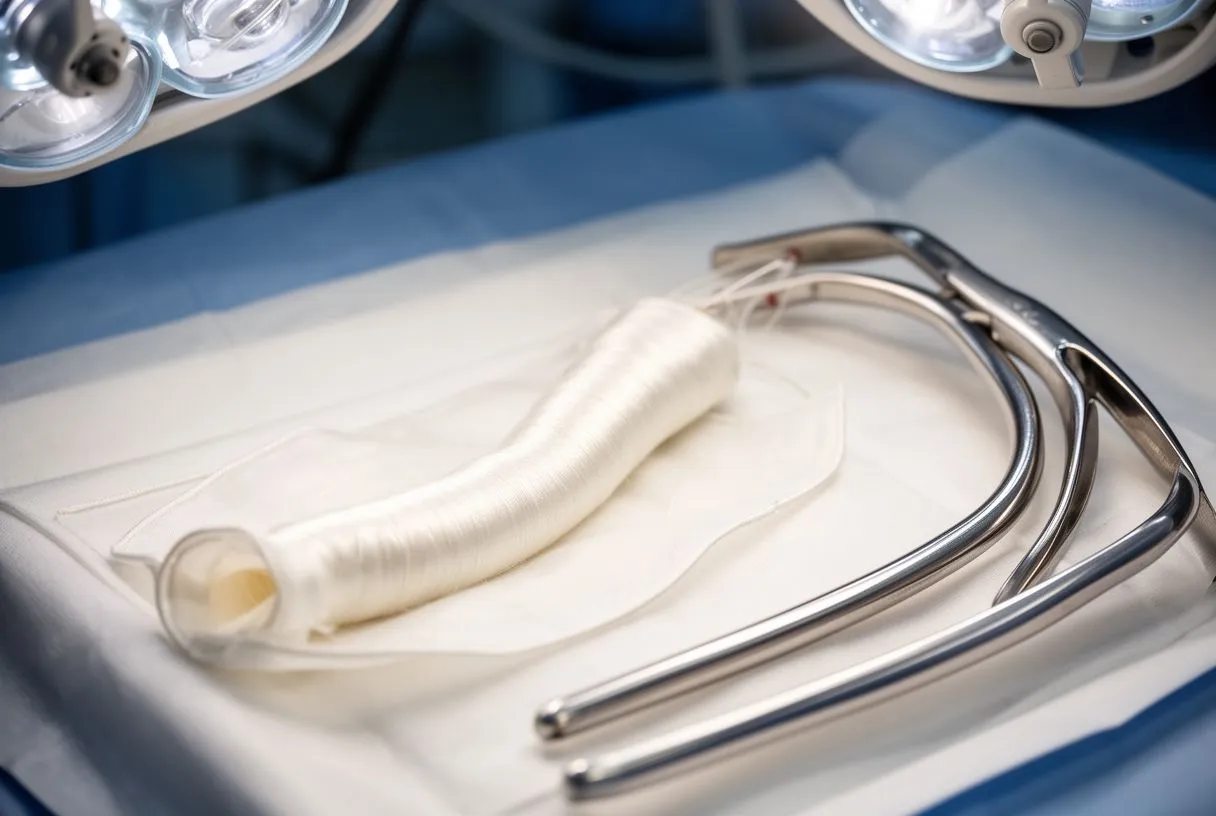
Open aortic aneurysm surgery is the traditional approach: the surgeon makes an incision in the chest or abdomen, moves the surrounding organs aside, clamps the aorta above and below the aneurysm with an instrument called an aortic cross-clamp, and replaces the weakened segment with a synthetic fabric tube — a graft — sewn into place. The aneurysm sac is often wrapped around the graft or closed over it. The operation takes several hours and is performed under general anaesthesia.
Where the clamps go matters. Surgeons can clamp the aorta above the renal arteries (supra-renal) or below them (infra-renal), and that choice affects how much blood flow the kidneys receive during the operation. A recent study comparing supra-renal versus infra-renal clamping in elective open aortic aneurysm repair at a tertiary vascular center found the technique influences kidney outcomes and operative complexity, which is exactly the kind of detail an experienced team weighs when planning your operation.
When open surgery is the better choice. Despite being the more invasive option, open repair remains the gold standard in certain situations, and it helps to know why:
- Anatomy that a stent graft cannot handle: aneurysms very close to the heart or the branching arteries of the arch often cannot be treated endovascularly without custom devices or extra procedures.
- Repairs combined with other surgery: if you also need a valve replacement or coronary bypass, doing everything through one open operation can avoid a second procedure later.
- Younger, fitter patients: open repair has decades of proven long-term durability and removes the need for the lifelong imaging follow-up a stent graft requires.
- Emergencies: a ruptured abdominal aneurysm or a type A dissection is usually repaired open, because speed and full access to the vessel are essential.
Variations you may hear about. Depending on the segment repaired, the operation may be described as aortic aneurysm repair with a tube graft, a composite graft when the valve is replaced together with the aorta, or a venous graft in some reoperations. Congenital repair techniques and dissection repair procedures follow their own specific patterns. Your surgeon should explain which applies to you and why.
What Is the EVAR Procedure? Endovascular Stent Graft Repair
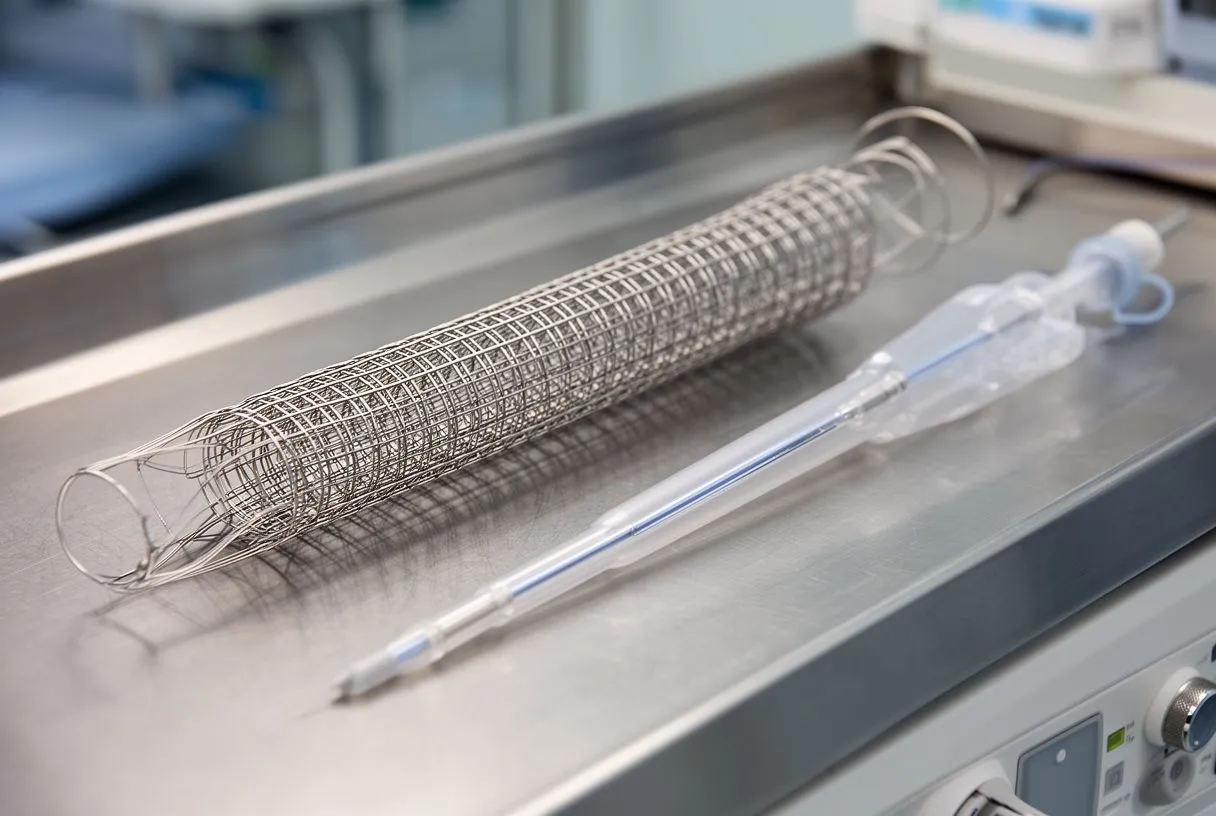
EVAR stands for endovascular aneurysm repair, and it is the defining example of minimally invasive aortic repair. Instead of opening the abdomen, the surgeon makes small incisions, usually in the groin, and threads a catheter — a thin guided tube — through the arteries up to the aneurysm. A stent graft, a fabric tube supported by a metal frame, is deployed inside the aneurysm and expands to create a new channel for blood. The aneurysm is not removed; it is simply bypassed, so pressure no longer acts on its weakened wall.
What the procedure feels like from the patient's side. EVAR is usually done under regional or light general anaesthesia. Hospital stay is commonly one to three days instead of the seven to ten typical after open surgery, and many people are walking the same evening. There is no incision through the abdominal muscles, so recovery of strength and comfort is much faster. For older patients or those with significant lung, kidney, or heart disease, this difference can be decisive.
The trade-off is lifelong follow-up. Because the stent graft works by excluding the aneurysm rather than removing it, the aneurysm sac must be watched for the rest of your life. Regular CT or ultrasound scans check that blood is not leaking back into the sac around the graft — a complication called an endoleak — and that the graft has not shifted. Most patients have imaging at one month, one year, and then annually. This is not a reason to avoid EVAR, but it is a commitment worth understanding before choosing it.
EVAR vs Open Repair: Which Aortic Aneurysm Treatment Choice Fits You?
The EVAR vs open repair question has been studied in large trials for over two decades. The consistent finding is that endovascular stent graft repair has lower short-term mortality and fewer early complications, which is why it is now the most common approach for suitable abdominal aneurysms. Open repair, however, has excellent and very stable long-term results, with fewer interventions needed over the years. The difference is essentially front-loaded: EVAR is easier at the start, open repair is more set-and-forget afterward.
What tilts the decision one way. Aortic aneurysm treatment choices are rarely about the aneurysm alone. Your anatomy, your age, your other health conditions, and your willingness to attend lifelong imaging all matter. Our team performs both conventional and minimally invasive procedures, and we recommend the less invasive route only where the evidence supports it for that specific patient — not as a default.
- Favouring EVAR: older age, weaker overall health, hostile abdomen from previous surgery, and anatomy that fits standard stent grafts.
- Favouring open repair: younger age, anatomy unsuitable for a stent graft, need for combined valve or bypass surgery, and preference for a one-time durable fix.
Asking the right questions. When you discuss options with a heart surgeon, useful questions include: Is my anatomy suitable for a stent graft, and if not, why not? How many of these procedures does this team perform each year? What will my follow-up schedule look like? What happens if the graft fails in five or ten years? A team that welcomes these questions and encourages a second opinion is showing you a good sign about how it works. We encourage second opinions and treat seeking one as a normal part of deciding about heart surgery.
Aortic Stent Graft Candidacy: Who Qualifies for Minimally Invasive Aortic Repair?
Aortic stent graft candidacy depends mainly on the anatomy of the aneurysm. The graft needs healthy aorta above and below the bulge to anchor against, and the access arteries in the groin must be large enough for the delivery system to pass through. Roughly two-thirds of abdominal aneurysms meet standard criteria; the rest may need custom-made grafts, branched or fenestrated devices, or open surgery instead.
Key factors the team evaluates. Before offering an endovascular approach, specialists review several measurements on your CT scan:
- Neck length and shape: the segment of healthy aorta between the aneurysm and the renal arteries must be long enough and straight enough to seal the graft's top edge.
- Access route: calcified or narrow iliac arteries may require a small extra incision in the side to deliver the graft.
- Branch artery positions: aneurysms that involve the arteries to the kidneys or bowel need fenestrated or branched grafts, available at specialized centers.
Unusual anatomy does not automatically rule EVAR out. A published case report from the Turkish Journal of Vascular Surgery describes successful endovascular repair of an abdominal aortic aneurysm in a patient with an ectopic kidney, showing how planning and device selection can extend stent graft candidacy to patients whose anatomy initially looks challenging. When we review a scan, we map every measurement against the criteria for each approach so the recommendation reflects your anatomy, not a one-size-fits-all template.
What disqualifies a stent graft. Very short or heavily angled aneurysm necks, infection in the area, aneurysms that rupture with extensive tissue damage, and connective tissue diseases such as Marfan syndrome — where the aorta can keep dilating around a graft — generally point toward open repair. Some of these situations have exceptions, which is why a multidisciplinary review matters more than any single measurement.
Aortic Aneurysm Repair Risks and Recovery
Every aortic aneurysm repair carries risks, and an honest conversation about them is part of good care. Open surgery risks include bleeding, infection, heart attack, kidney injury from the cross-clamp time, spinal cord injury in some thoracic repairs, and the general risks of major anaesthesia. EVAR has lower early risks but adds graft-specific ones: endoleaks, graft migration, and the need for secondary procedures over time. Your overall fitness and other conditions shape which risks matter most for you.
How long does it take to recover from aorta repair surgery? Recovery after open repair is substantial but predictable. Most patients spend five to eight days in hospital, then six to twelve weeks rebuilding strength at home — first walking, then light activity, with lifting restrictions around 5 kilograms for the first six weeks. Driving usually resumes after four to six weeks. Cardiac rehabilitation programs help enormously. In the first contact, which is a free video consultation, we walk patients through the realistic recovery timeline for their specific operation so families can plan work and support at home.
Recovery after EVAR. A typical aortic aneurysm repair hospital stay for stent graft patients is one to three days. Most return to normal daily activities within two to four weeks, with far fewer activity restrictions than after open surgery. The main "recovery" task is actually the surveillance program: keeping every follow-up scan appointment, because early detection of an endoleak or graft movement makes correction far simpler.
Restrictions after repair. Following either procedure, lifelong blood pressure control becomes part of your treatment — high pressure stresses both surgical grafts and remaining aortic tissue. Most surgeons advise against smoking permanently, since it accelerates disease in the rest of the aorta. Heavy lifting may be limited long-term after some thoracic repairs. Your own surgical team will give you a specific list based on what was repaired and how.
Long-Term Outcomes After Aortic Repair and Stent Graft Durability
Long-term outcomes after aortic repair are generally good, and this is worth stating plainly: for elective repairs — operations done before rupture or dissection — most patients return to a normal or near-normal life. What is the life expectancy after aortic aneurysm repair? No single number fits everyone, because outcomes depend on age, other conditions, and whether the repair was elective or emergency. What the large studies show is that elective repair substantially reduces the risk of aneurysm-related death compared with leaving a large aneurysm untreated.
Stent graft durability over the years. Aortic stent graft durability has improved with each device generation, and modern grafts perform well beyond ten years in most patients. The honest caveat is that roughly one in five EVAR patients needs some secondary intervention over a decade — often a small procedure to fix an endoleak or reinforce a seal zone. Open grafts, once healed, rarely need anything further. This is the core long-term trade-off between the two approaches.
Life after repair. Most people after aneurysm repair can work, travel, exercise, and live normally. Can you live a normal life with an aortic aneurysm? Yes — and after a successful repair, even more so, since the threat that shaped your daily worry has been dealt with. What changes is vigilance: ongoing blood pressure management, annual imaging of the rest of the aorta, and awareness that aortic disease can recur in other segments. Follow-up should cover the whole aorta, not just the repaired section, because the disease that caused one aneurysm can affect other segments over time.

Choosing where and whom to trust with aortic aneurysm surgery matters as much as the choice of technique. Look for a team with high procedure volumes in aortic work, genuine multidisciplinary review — cardiac surgery, vascular surgery, and cardiology discussing your case together — and the technical range to offer both open and endovascular options honestly. A stent graft procedure cost varies widely by country and device, and in Mexico, treatment costs differ substantially between public institutions and private care; ask for a detailed written estimate covering the device, the hospital stay, imaging, and follow-up scans, especially for EVAR where lifelong surveillance adds ongoing imaging costs.
What a good first consultation looks like. A heart surgeon aortic consultation should never feel like a sales pitch. It should include a careful review of your imaging, an explanation of your specific anatomy in everyday language, a comparison of the realistic options for you, and honest discussion of the risks of both treating and not treating. If you leave with questions still unanswered, that is a sign to keep asking — or to seek another opinion.
For international patients. If you are considering care in Mexico, practical questions matter: Who coordinates the pre-operative studies? How are follow-up scans arranged if you live abroad? What happens if a complication arises months later? Our multidisciplinary team of cardiac surgeons led by Dr Alejandro Molina works from consulting rooms in Guadalajara, Querétaro and Hermosillo, and the first contact is a free video consultation where we review your studies, explain your condition, and identify which tests are genuinely needed before anything else is ordered.
The bottom line. Aortic aneurysm repair options today are better than ever, and for most patients there is a genuinely good answer — whether that is open aortic aneurysm surgery with its proven long-term durability, endovascular stent graft repair with its faster recovery, or careful surveillance with medication for a smaller aneurysm. The best aortic aneurysm surgery is not the most advanced one or the newest one; it is the one that fits your anatomy, your health, and your life. If you have been diagnosed with an aortic aneurysm, the most valuable next step is a conversation with a qualified aortic specialist who can review your scans and lay out your specific choices — not self-diagnosis, and not waiting for symptoms. Dr Molina and our team offer a free video consultation as the first step, and we will always tell you clearly what we recommend, what the alternatives are, and why.






