

Cardiac Arrest and CPR: What Bystanders Should Do
Cardiac arrest and CPR bystanders need fast, clear steps to save a life.
What Is Cardiac Arrest and How Is It Different from a Heart Attack?
Cardiac arrest is a sudden, unexpected loss of heart function, breathing, and consciousness. It happens when the electrical system that controls the heart's rhythm malfunctions, causing the heart to stop beating effectively. Within seconds, blood stops flowing to the brain and other vital organs. Without immediate intervention, brain damage can begin within four to six minutes, and death can follow shortly after. Understanding the difference between cardiac arrest and a heart attack matters because the emergency response is completely different — a heart attack is a plumbing problem where a blocked artery starves part of the heart muscle, while cardiac arrest is an electrical problem where the heart's rhythm becomes chaotic or stops entirely.
A heart attack occurs when a coronary artery becomes blocked, often by an atheromatous plaque that ruptures and forms a clot. The heart muscle supplied by that artery begins to die, but the heart usually keeps beating. Symptoms build over minutes or hours: chest pressure, pain radiating down the arm (a classic form of arm pain), sweating, nausea. The person is typically conscious and talking. In contrast, cardiac arrest strikes without warning in most cases. The person collapses, loses consciousness, stops breathing normally, and has no pulse. A heart attack can sometimes trigger cardiac arrest — when damaged heart tissue destabilizes the electrical system — but they are not the same event.
Conditions like atrial flutter, severe aortic stenosis, and certain inherited rhythm disorders increase cardiac arrest risk. An atypical infarction — a heart attack with unusual symptoms — can also go unrecognized until it triggers a fatal arrhythmia. If you suspect someone is having a heart attack, call emergency services immediately and, if recommended by a dispatcher, help them take aspirin (if they are not allergic and if advised by the dispatcher). But if the person collapses and stops responding, the situation has shifted from a heart attack to cardiac arrest — and CPR must begin within seconds.
Recognizing Cardiac Arrest Symptoms in Adults
Cardiac arrest rarely gives a long warning. The most common and dramatic sign is sudden collapse — the person drops, loses consciousness, and does not respond to shaking or shouting. They will not breathe normally. You may see gasping, called agonal breathing, which looks like irregular, labored breaths or fish-like gulping. This is not effective breathing, and it should not delay starting CPR. Check for responsiveness by tapping the person firmly on the shoulder and shouting their name or asking if they are okay. If there is no response and no normal breathing, treat it as cardiac arrest.
Sudden loss of consciousness: The person will be unresponsive and may appear pale or bluish, especially around the lips and fingertips. This happens because oxygenated blood is no longer circulating. Do not waste time trying to find a pulse if you are not trained — pulse checks by untrained bystanders are often inaccurate and waste critical seconds. The American Heart Association recommends that bystanders skip the pulse check and begin compressions immediately if the person is unresponsive and not breathing normally.
Sometimes, cardiac arrest is preceded by warning signs in the minutes or hours before collapse: chest discomfort, shortness of breath, palpitations, or a feeling of lightheadedness. These symptoms overlap with many conditions, including atrial flutter and other arrhythmias, making them easy to dismiss. Auscultation — listening to the heart with a stethoscope — can reveal abnormal sounds or rhythms, but this is a clinical assessment, not something a bystander can perform. What you can do is take any sudden, unexplained collapse seriously and act fast. According to research tracked on ClinicalTrials.gov, early bystander intervention remains one of the strongest predictors of survival after out-of-hospital cardiac arrest.
How to Do Hands-Only CPR Step by Step
Hands-only CPR is the recommended technique for untrained bystanders. It involves chest compressions without mouth-to-mouth rescue breaths, and studies show it is at least as effective as conventional CPR for adults in the first several minutes of cardiac arrest. The simplicity is the point — you do not need to remember a compression-to-breath ratio, and you eliminate hesitation about close contact. If you see someone collapse and they are unresponsive and not breathing normally, call emergency services, then start compressions immediately.
Position your hands: Kneel beside the person. Place the heel of one hand on the center of their chest, on the lower half of the breastbone (sternum). Place your other hand on top, interlocking your fingers. Keep your elbows straight and your shoulders directly above your hands. This alignment lets you use your upper body weight to drive compressions rather than arm strength, which fatigues quickly and produces shallow, ineffective compressions.
Push hard and fast: Compress the chest at least two inches deep for an average adult, then let the chest fully recoil between compressions. Complete recoil allows the heart to refill with blood. Aim for a rate of 100 to 120 compressions per minute — the rhythm of the song "Stayin' Alive" by the Bee Gees is commonly used as a timing guide. Do not stop compressions unless the person starts breathing on their own, an Automated External Defibrillator arrives and is ready to use, or emergency responders take over. Keep going — every minute without compressions reduces the chance of survival.
What Is the Correct CPR Compression Rate for Adults?
The recommended compression rate for adult CPR is 100 to 120 compressions per minute. This range is based on decades of resuscitation research showing that compressions below 100 per minute do not generate enough blood flow, while rates above 120 often lead to incomplete chest recoil and shallower compressions. The goal is to maintain consistent depth and rate without pausing. Every interruption in compressions — even for a few seconds to check for a pulse — causes blood pressure to drop to zero, and rebuilding that pressure takes multiple compressions.
Depth matters as much as speed: Each compression should depress the chest at least two inches for adults, but no more than 2.4 inches. Pushing too shallow does not effectively squeeze the heart. Pushing too deep risks injuring internal organs, including the ascending aorta and other structures near the heart. Let the chest spring back fully after each push. If you lean on the chest between compressions, you prevent the heart from refilling, which makes the next compression far less effective.
Fatigue sets in quickly — often within two to three minutes — even for people in good physical condition. If another bystander is present, switch every two minutes or about 200 compressions to keep the force and depth consistent. Try to minimize the pause during the switch to under five seconds. Quality degrades without the rescuer noticing, which is why rotation is critical. These fundamentals — rate, depth, minimal interruptions — are the same ones taught in formal CPR certification courses. If you are with a family member who has known heart disease, discuss emergency plans in advance, and encourage everyone in the household to learn these basics before the need arises.
How to Use an AED as a Bystander
An Automated External Defibrillator is a portable device that analyzes the heart's rhythm and, if it detects a shockable rhythm like ventricular fibrillation, delivers an electric shock to try to restore a normal heartbeat. AEDs are designed for use by people with no medical training. They provide spoken step-by-step instructions and will only deliver a shock if the heart rhythm requires one — you cannot accidentally shock someone who does not need it.
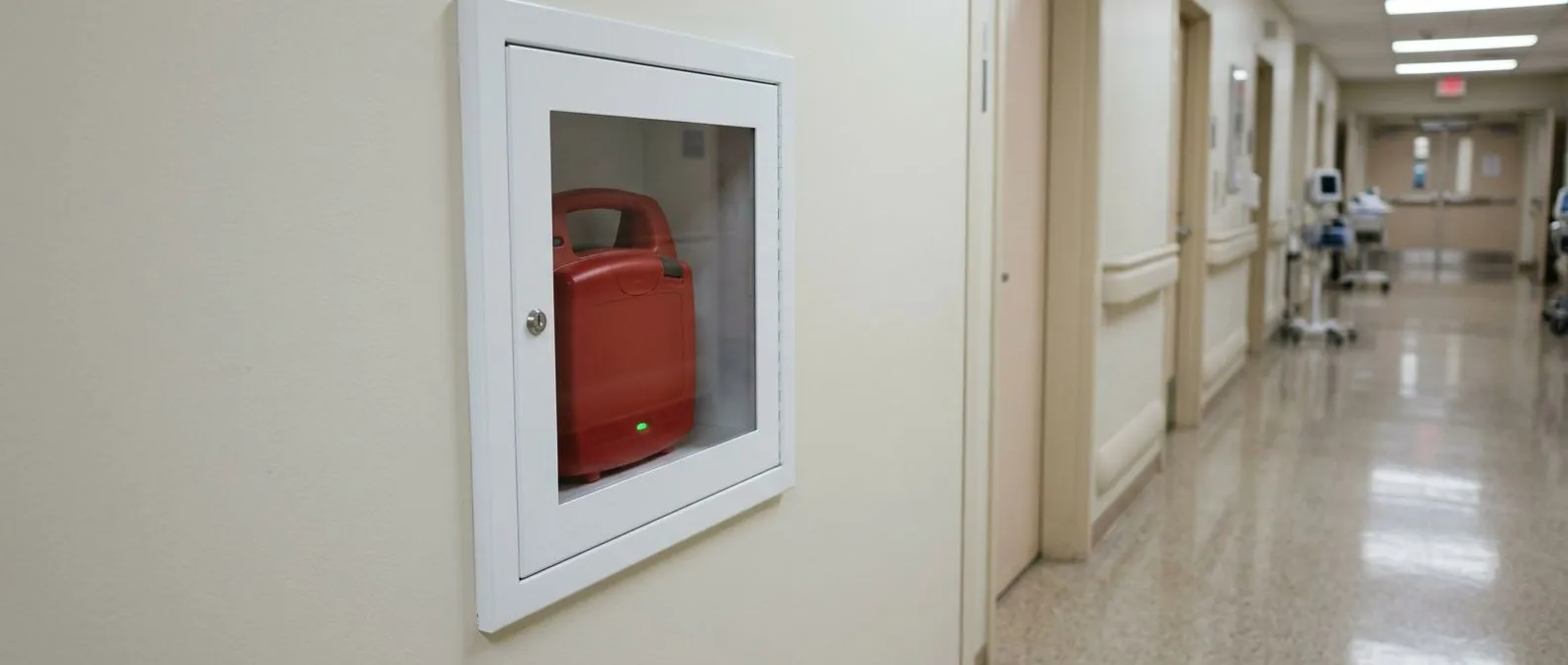
Find the nearest AED: Many public spaces — airports, shopping malls, gyms, schools, and office buildings — have AEDs mounted in visible wall cabinets, often marked with a green heart and lightning bolt symbol. If someone goes into cardiac arrest, send a specific person to retrieve the AED while you start compressions. Say something like: "You in the blue jacket — call emergency services. You by the door — find the AED and bring it here." Assigning tasks to specific people prevents the bystander effect, where everyone assumes someone else will act.
Follow the voice prompts: Once the AED arrives, turn it on. It will guide you through placing the adhesive pads on the person's bare chest — one on the upper right side below the collarbone, one on the lower left side below the armpit. The device will analyze the rhythm and tell you whether a shock is advised. It will warn everyone to stand clear before delivering the shock. After the shock (or if no shock is advised), immediately resume compressions. The AED will prompt you to stop every two minutes so it can re-analyze. Research published in PubMed 27188578 has shown that early defibrillation, combined with high-quality CPR, significantly improves survival outcomes in out-of-hospital cardiac arrest.
Are Bystanders Safe to Perform CPR?
Many people hesitate to perform CPR because they fear hurting the person or doing it wrong. This concern is understandable but largely unfounded. If someone is in cardiac arrest — unresponsive and not breathing — they are clinically dead without intervention. You cannot make their situation worse by attempting CPR. The worst outcome of doing something is a cracked rib, which heals. The worst outcome of doing nothing is death. Good Samaritan laws in most jurisdictions protect bystanders who act in good faith during emergencies, so legal liability should not be a barrier to acting.
Common fears about doing harm: People worry about causing rib fractures, puncturing a lung, or shocking a person who does not need it. Rib fractures do happen during effective compressions, especially in older adults, but they are not life-threatening and do not change the outcome compared to no CPR. You cannot puncture a lung with compressions on the sternum. And as mentioned, an AED will not deliver a shock unless it detects a shockable rhythm — there is no risk of inappropriate shocking.
The fear of performing mouth-to-mouth is another barrier, which is why hands-only CPR is now the standard recommendation for untrained bystanders. There is no need for rescue breaths in the first several minutes of adult cardiac arrest, because the blood still holds residual oxygen. The compressions are what circulate that oxygen to the brain. If you are trained in conventional CPR and confident in the technique, you can include rescue breaths in a 30:2 ratio (30 compressions, 2 breaths). But if you have any doubt, hands-only is the right choice. The most important thing is to start compressions without delay.

Cardiac Arrest Emergency Response: What to Do First
When cardiac arrest happens, the first minutes are critical. The chain of survival — a concept developed by the American Heart Association — has five links: immediate recognition and activation of the emergency response system, immediate high-quality CPR, rapid defibrillation, advanced life support, and post-cardiac arrest care. Bystanders are responsible for the first three. Your actions bridge the gap between collapse and the arrival of professional help, and that bridge is where most lives are either saved or lost.
Call emergency services first: If you are alone, call your local emergency number (911 in the United States and Canada, 112 in much of Europe, 066 in Mexico) and put the phone on speaker so you can start compressions while the dispatcher gives instructions. Dispatchers are trained to guide you through CPR over the phone, including counting compressions and telling you when to switch to the AED. If someone else is with you, one person calls while the other starts compressions immediately. Do not wait for the call to finish before starting — seconds matter.
Follow the dispatcher's guidance: Emergency dispatchers use structured protocols to identify cardiac arrest and coach bystanders through the response. They will ask whether the person is conscious and breathing normally. Be clear and direct in your answers. They may guide you to check for breathing, start compressions, and locate or use an AED. If you are calling from a public place, tell the dispatcher your exact location — building name, floor, nearest entrance. Some communities are also exploring programs that integrate community health screening into public health initiatives, similar to the approach described in Early Detection of Aortic Stenosis in the Community During Flu Vaccination, which illustrates how public settings can be leveraged for early cardiac assessment.
CPR for Family Members: Special Considerations
Performing CPR on a loved one is emotionally devastating but often lifesaving. When the person on the ground is your spouse, parent, or child, the emotional shock can paralyze you. Knowing the steps in advance — and ideally having practiced them — gives your body a routine to follow even when your mind is reeling. If a family member has been diagnosed with heart disease, heart failure, or an inherited arrhythmia, have an explicit conversation about what to do if they collapse. Keep emergency numbers posted visibly. Know where the nearest public AED is located relative to your home.
Planning for high-risk family members: If someone in your household has a known cardiac condition — severe aortic stenosis, a history of atrial flutter, prior heart surgery such as a balloon angioplasty, or risk markers like elevated apolipoprotein B levels — discuss a personal emergency plan with their cardiologist. Ask whether an AED should be kept in the home, and whether the medical team recommends keeping aspirin available (aspirin is for suspected heart attacks, not cardiac arrest — never give medication to an unconscious person). Know which hospital the cardiologist is affiliated with, and have copies of recent electrocardiograms and a medication list ready to hand to emergency responders.
- Emergency contacts: Local emergency number, cardiologist's direct line, and a designated family member to call.
- Medication list: Current prescriptions, dosages, and known allergies, printed and accessible.
- Nearest AED location: Identify the closest public defibrillator in your neighborhood or building.
- Recent cardiac records: Copies of recent ECGs, echocardiogram summaries, and surgical history.
None of these preparations can guarantee a different outcome, but they eliminate the chaos and confusion that costs precious time. When a cardiac arrest occurs at home, the difference between a household that has rehearsed the plan and one that has not can be measured in minutes — and those minutes are everything.
Cardiac Arrest Survival Rates and Why Bystander Action Matters
Survival from out-of-hospital cardiac arrest depends almost entirely on how quickly someone acts. In many communities, fewer than one in ten people who experience cardiac arrest outside a hospital survive to discharge. But when a bystander begins CPR immediately and an AED is used within the first few minutes, survival rates can double or even triple. Each minute without CPR and defibrillation reduces the chance of survival by roughly 7 to 10 percent. After ten minutes, survival is rare without intervention. These numbers are not abstract — they represent real people whose lives depended on someone nearby who knew what to do and was willing to act.
Why bystanders matter more than paramedics: Paramedics typically arrive six to twelve minutes after a 911 call, depending on location, traffic, and dispatch logistics. In a cardiac arrest, that is too long to wait without compressions. The heart and brain cannot tolerate that delay. Bystander CPR keeps a trickle of oxygenated blood moving to the brain, preserving tissue until advanced help arrives. It also makes defibrillation more likely to succeed — an AED shock is far more effective when the heart has been kept perfused by compressions in the minutes before the shock.
The broader context of cardiac risk: Some cardiac arrests are caused by coronary artery disease, where atheromatous plaque narrows the arteries supplying the heart. Others result from electrical disorders, structural problems like severe valve disease, or complications during or after procedures involving an arterial line or arterial graft. Understanding your own cardiovascular risk — through regular check-ups, blood pressure monitoring, and discussing markers like apolipoprotein B with your physician — is part of prevention. But when prevention fails, the bystander is the first responder, and their knowledge is the patient's best chance at survival.
Bystander CPR Training and How to Get Certified
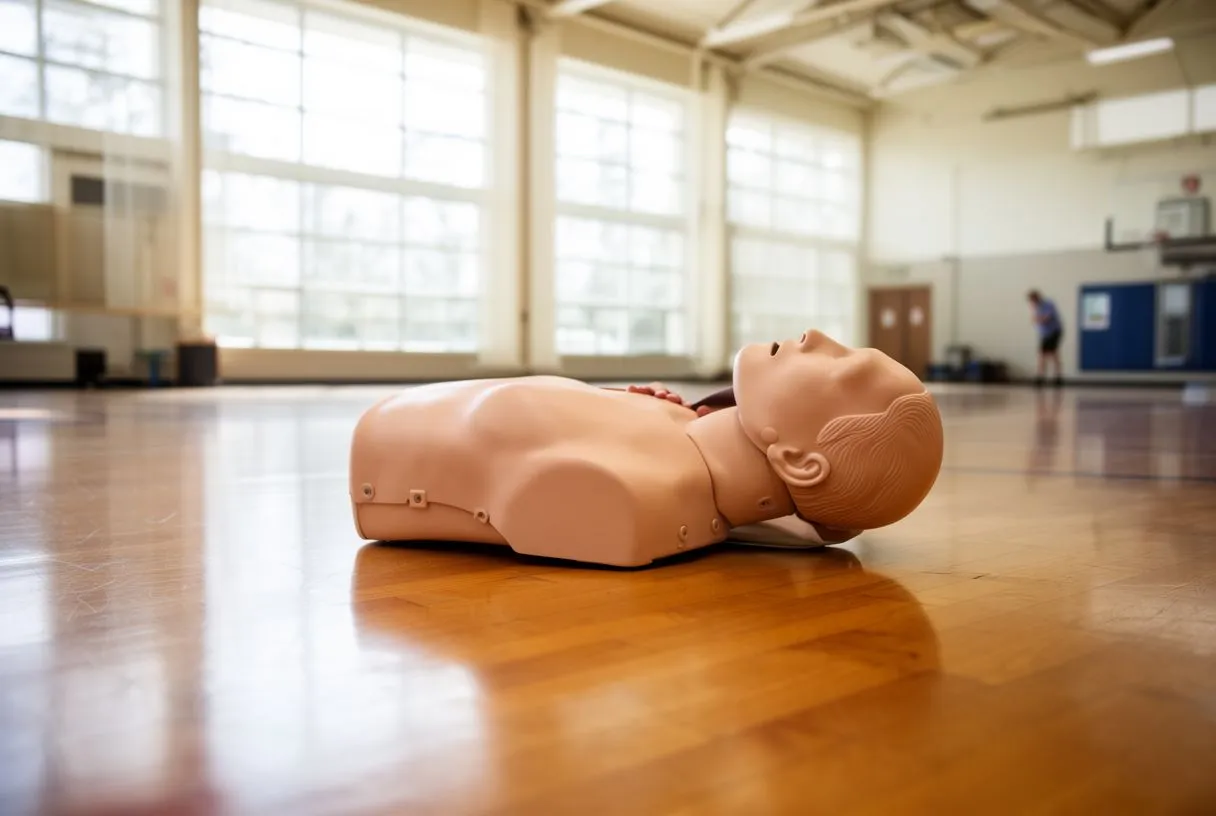
Formal CPR training takes a few hours and can change an outcome forever. Certification courses are offered by organizations such as the American Heart Association, the Red Cross, and local health institutions. These courses teach hands-only CPR, conventional CPR with rescue breaths, AED operation, and choking relief for adults, children, and infants. You practice on manikins, receive real-time feedback on compression depth and rate, and leave with the muscle memory that kicks in during an emergency. Certification is typically valid for two years.
What certification covers: A standard course includes recognizing cardiac arrest, calling for help, performing high-quality compressions, using an AED, and managing the scene until professional help arrives. Some courses also cover team dynamics — how multiple responders coordinate during a cardiac arrest, rotating compressors and managing the AED. These skills translate directly to real-world situations, whether the emergency happens at home, at work, or in a public space.
Where to find training near you: Search for CPR certification courses in your area to find local options. Many hospitals, community centers, and fire stations offer low-cost or free courses. Some employers — especially in healthcare, education, and fitness — provide training as part of workplace safety programs. If you or a family member has been diagnosed with a heart condition, ask your cardiac team to recommend a course. At Cirugía de Corazón, we encourage all patients and their families to become trained before they need the skill, not after. Book a consultation with our team to discuss your cardiac health, your risk factors, and how to prepare your household for an emergency. Do not wait for a crisis to learn what could save someone you love.
- Get certified: Complete a recognized CPR and AED course, and renew every two years.
- Make a household plan: Assign roles, post emergency numbers, and identify your nearest AED.
- Talk to your cardiac team: Discuss your personal risk factors and whether additional precautions are needed.






