


Multivessel Coronary Disease: Bypass or Stents
Multivessel disease bypass or stents—which treatment is right for you?
If your cardiologist has just told you that more than one of your coronary arteries is significantly blocked, you are likely facing one of the most consequential decisions in heart care: multivessel disease bypass or stents. Both treatments restore blood flow to the heart muscle, but they differ in how they are done, how long they last, and how well they suit particular patterns of blockage. This guide walks you through what multivessel disease actually means, which arteries are usually involved, how bypass surgery and stenting compare, what recovery honestly looks like, and how a team like ours helps patients reach a decision they feel confident about.
What Is Triple Vessel Disease?
Triple vessel disease is the everyday term for multivessel coronary artery disease that involves all three major arteries supplying the heart. Cardiologists call a narrowing "significant" when it reduces the artery's diameter by roughly 70 percent or more, a threshold usually confirmed on coronary angiography, the dye-based X-ray study that maps the arteries. When all three are narrowed to that degree, the heart muscle is at risk in several territories at once, not just one.
Why it matters more than single-vessel disease. With one blocked artery, medication and a single stent often suffice. With three, the total amount of heart muscle at risk is much larger, and symptoms such as chest tightness, breathlessness on climbing stairs, or fatigue tend to be more disabling. Most importantly, the choice of treatment becomes genuinely two-sided, because both surgery and stenting have evidence behind them and the right answer depends on the anatomy.
How doctors confirm the diagnosis. Before any decision is made, patients usually undergo a stress test to show which areas of the heart are suffering, and an angiogram to show exactly where and how severely the arteries are narrowed. Some patients also have a coronary calcium score, a CT scan that measures calcified plaque, which helps quantify the overall disease burden. In our practice, we review these studies with the patient in plain words before proposing anything.
Which Three Main Arteries of the Heart Are Most Commonly Blocked?
The three main coronary arteries are the left anterior descending artery, the circumflex artery, and the right coronary artery. The left anterior descending runs down the front of the heart and supplies the large pumping chamber, which is why a blockage there carries the highest stakes. The circumflex wraps around the side of the heart, and the right coronary artery feeds the bottom and back, including the structures that control the heart's rhythm.
Where plaque tends to accumulate. Atherosclerosis, the gradual build-up of cholesterol-laden plaque inside the artery wall, favours points where vessels branch or bend. This is why the left main artery, the short trunk that divides into the anterior descending and circumflex, is such a critical location: disease there threatens two territories simultaneously, and it is a major factor when weighing stent choice against surgery.
What this means for your symptoms. The location of the blockage shapes what you feel. A right coronary problem can cause chest discomfort with nausea or rhythm disturbances, while an anterior descending lesion may produce pressure across the chest during exertion. Knowing exactly which arteries are involved is essential before deciding on multivessel revascularization, and it is one of the first things we examine when a patient brings their angiogram to us.
What Are the Treatment Options for Multivessel Coronary Artery Disease?
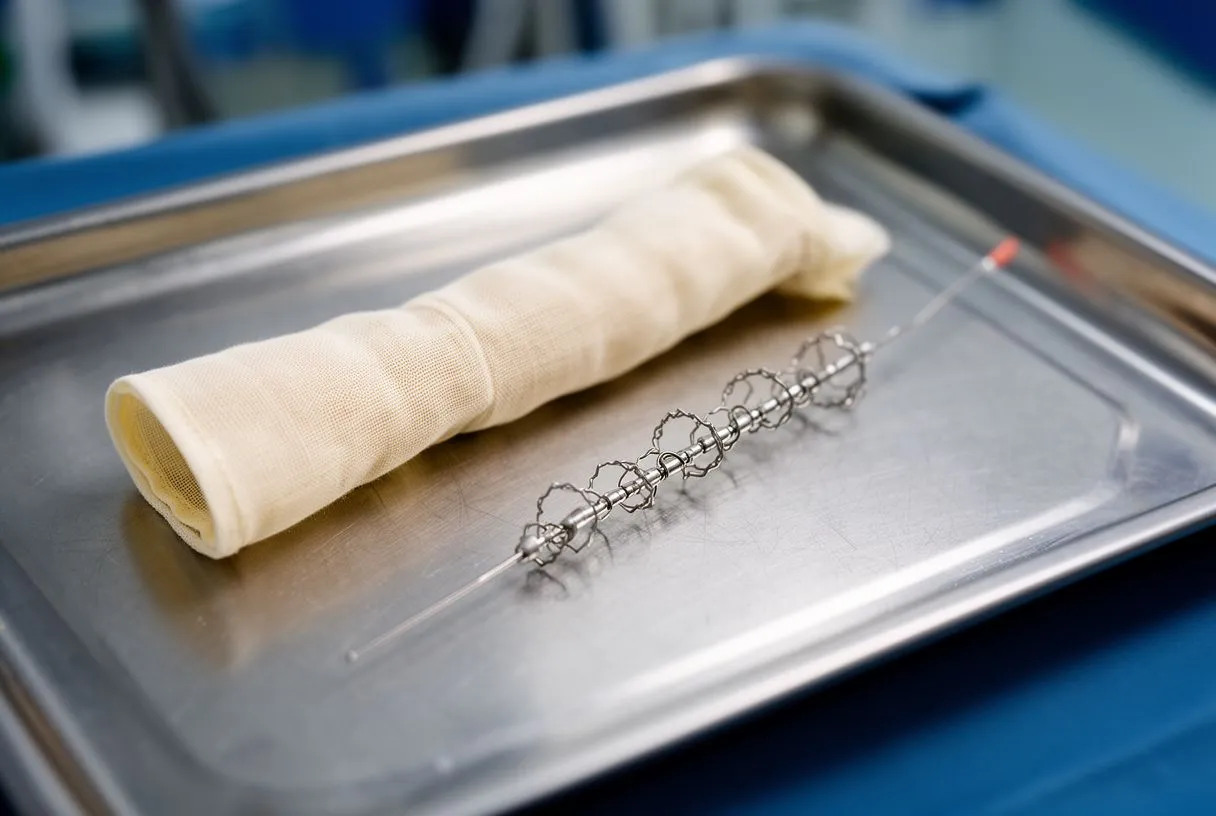
There are two established ways to restore flow in multivessel coronary artery disease surgery: coronary artery bypass grafting, often abbreviated CABG, and percutaneous coronary intervention, which is the medical term for stenting. In bypass, the surgeon takes healthy vessels, usually an artery from inside the chest wall or a vein from the leg, and constructs detours around each blockage. In stenting, a catheter is threaded from the wrist or groin to each narrowing, where a small metal mesh tube is expanded to hold the artery open.
Bypass surgery in a nutshell. CABG is performed through a breastbone incision, either with the heart stopped on a heart-lung machine, known as on-pump bypass, or while the heart is beating, known as off-pump bypass. A typical multivessel case involves two to five grafts. The internal mammary artery graft to the anterior descending artery is widely regarded as the most durable conduit in cardiac surgery, often remaining open for decades.
Stenting in a nutshell. Modern stents are drug-eluting, meaning they slowly release medication that prevents scar tissue from re-narrowing the treated segment. The procedure requires no chest incision and usually one night in hospital. Its trade-off is that a stent treats only the segment it occupies, so in a patient with soft, progressive plaque throughout the arteries, new narrowings can appear elsewhere over time.
Medication always accompanies both. Whichever route is chosen, patients need cholesterol-lowering therapy, blood pressure control, and antiplatelet medication. Revascularization relieves symptoms and, in the right patients, protects the heart muscle; it does not replace the lifestyle and drug treatment that slow the underlying disease.
When Is Bypass Better Than Stents?
Deciding when is bypass better than stents comes down to pattern, completeness, and diabetes. Large comparative trials and guideline panels have converged on several situations where surgery offers a clear advantage in survival and freedom from repeat procedures.
Diabetes with multivessel disease. In patients with diabetes and extensive multivessel disease, bypass surgery has repeatedly shown better long-term survival than stenting, because the arterial grafts are resistant to the aggressive re-narrowing that diabetes promotes inside stents. Guidelines therefore lean towards CABG in this group when the anatomy is complex.
Left main and complex anatomy. Significant disease of the left main artery, three-vessel blockage with reduced heart function, or blockages unsuitable for stenting all favour surgery. Bypass also allows treatment of diffusely diseased segments that a stent cannot bridge, and the arterial graft protects the territory downstream even if new plaque forms elsewhere.
Complete revascularization. Surgery typically achieves more complete treatment of all blocked territories in one sitting, which matters for long-term freedom from angina. Special populations also deserve mention: a population-based analysis published in Scientific Reports examined coronary artery bypass grafting outcomes across more than a million hospitalizations and documented how surgical results vary between patient groups, reinforcing the value of individualized assessment rather than one-size-fits-all rules Scientific Reports. In our team, every case is reviewed against international practice guidelines precisely so that the recommendation fits the patient's own anatomy, not a template.
When Are Stents the Right Choice?
Stenting remains an excellent, sometimes preferable option, and it should not be dismissed simply because more arteries are involved. Modern drug-eluting stents have narrowed the gap in many scenarios, and for selected patients they offer meaningful advantages.
Lower anatomical complexity. When the blockages are short, isolated, in arteries that are easy to reach, and the heart's pumping function is normal, stenting can deliver comparable outcomes to surgery with far less physical disruption. Treating two vessels with two stents is very different from treating three diffusely diseased arteries with four grafts.
Higher surgical risk or frailty. For elderly patients, those with severely weakened heart function, lung disease, or prior chest surgery that makes redo coronary surgery hazardous, the risk of open heart surgery may outweigh its durability advantage. In these situations, staged stenting with good medical therapy is often the more prudent path.
Faster recovery and patient preference. A stent procedure usually means a night in hospital and a few days back to normal activity, compared with six to eight weeks of sternal healing after bypass. Some patients also decline blood transfusion or cannot undergo surgery for other reasons. What matters is that the trade-off is explained honestly; I always tell patients in the consultation that the final decision is theirs, and we encourage second opinions as a normal part of that process.
What Happens During Coronary Artery Bypass Grafting?
Knowing what the operation actually involves removes much of its fear. Coronary artery bypass grafting is one of the most studied and refined operations in medicine, and its steps are standardized across the world.
Conduits are harvested first. The surgeon prepares the grafts: the internal mammary artery from behind the chest wall, sometimes the radial artery from the forearm, and often the saphenous vein from the leg. These healthy segments will become the detours around each blockage.
The heart is exposed and bypass is established. Through a breastbone incision, the surgeon attaches the grafts to the aorta and to each coronary artery beyond its blockage. When on-pump bypass is used, the heart-lung machine takes over circulation and the heart is deliberately stopped; the total bypass time is recorded and kept as short as safely possible. In suitable patients, the grafts are sewn on while the heart beats, avoiding the machine entirely.
Weaning from bypass and closure. Once the grafts are in place, the heart is rewarmed and resumes beating, a stage called weaning from bypass, after which the surgeon confirms each graft is delivering flow and the chest is closed. The operation typically lasts three to four hours for multivessel disease. Patients usually wake in intensive care with a breathing tube, which is removed within hours.

What Does Coronary Artery Bypass Graft Recovery Really Look Like?
Coronary artery bypass graft recovery is gradual and it rewards patience. The honest timeline looks like this: three to seven days in hospital, six to eight weeks for the breastbone to knit, and three to six months to feel genuinely back to yourself. Most patients return to desk work around the two-month mark and to driving once cleared by their surgeon.
The first weeks. Fatigue is expected and it is not a sign of failure. Walking is the main exercise at first, increasing daily. The chest incision may feel sore, and there are strict lifting limits, typically nothing heavier than a few kilograms, to protect the healing sternum.
Cardiac rehabilitation makes the difference. Supervised exercise programs after surgery improve functional capacity and strength, and evidence now shows they work even when delivered remotely. A controlled trial of a tele-cardiac rehabilitation program after coronary artery bypass grafting found meaningful gains in functional independence, hand grip strength, and exercise capacity when patients trained at home under supervision International Journal of Physiotherapy. In our practice we see patients recover fastest when they treat rehabilitation as part of the operation rather than an optional extra.
What recovery is not. Recovery does not end at the scar. Cholesterol control, blood pressure, diabetes management, and stopping smoking are the real determinants of how the grafts behave over the next decade. Follow-up should check these, not just the wound.
Are the Risks of Treating Multivessel Disease Worth It?
Both procedures carry real risks, and a candid conversation about them is part of good care. Surgeons use scoring tools such as EuroSCORE II, which estimates operative risk from age, kidney function, lung function, and urgency, to set expectations before consenting.
Stent-related risks. The main concerns are bleeding at the puncture site, kidney injury from the contrast dye, and stent thrombosis, a clot forming inside the stent, which is why dual antiplatelet therapy is prescribed for months afterwards. In-stent restenosis, re-narrowing inside the treated segment, occurs in a minority and is more likely in long lesions, small vessels, and diabetes.
Surgery-related risks. Bypass carries risks of stroke, bleeding requiring re-operation, infection of the sternal wound, rhythm disturbances, and in a small percentage of patients, cognitive changes after the pump. Death risk for routine multivessel surgery in experienced centres is low but not zero, which is exactly why the operation should only be recommended when its durability benefit justifies it.
How the risk is weighed. The decision is not "surgery is safe, stents are risky" or the reverse. It is a comparison of the risk of each procedure against the risk of leaving the heart muscle under-protected, and it depends on your anatomy, your other conditions, and your goals. Outcomes vary widely between patient groups and hospitals; a comprehensive review of perioperative considerations in revascularization summarizes how these factors are balanced in current practice Europe PMC. Our team presents the numbers for each option and the alternatives, so the patient can see the whole picture.
How to Prevent Cardiovascular Disease From Progressing?
Whichever treatment you choose, how to prevent cardiovascular disease from advancing is the question that determines your long-term outcome. Revascularization fixes the plumbing that exists today; prevention protects tomorrow's arteries and the grafts or stents themselves.
Stop smoking, aggressively. Nothing else in prevention comes close. Smoking accelerates plaque growth, promotes clot formation, and threatens both grafts and stents. Quitting after a cardiac event measurably reduces the risk of another one.
Control the metabolic drivers. High LDL cholesterol, high blood pressure, and diabetes are the three engines of atherosclerosis, which is the disease process behind coronary artery disease and ischaemic heart disease broadly. Modern cholesterol-lowering therapy can push LDL to levels where plaque stabilizes rather than grows.
- Quit tobacco completely: the single most powerful intervention, and support programs roughly double the chance of success.
- Eat for your arteries: a Mediterranean-style pattern with vegetables, legumes, olive oil and fish is the most consistently supported diet in cardiac research.
- Move every day: thirty minutes of brisk walking most days improves blood pressure, cholesterol, and mood alike.
- Take your medications as prescribed: antiplatelets, statins and blood pressure drugs work only when actually taken.
Know your numbers. Regular follow-up with lipid panels, blood pressure checks, and diabetes monitoring keeps the plan honest. Prevention is a partnership between the patient and the team, not a lecture.
How Do You Decide Between Multivessel Disease Bypass or Stents?
Facing the choice of multivessel disease bypass or stents, most patients want one clear answer. The honest answer is that the decision belongs to the anatomy, the evidence, and you, in roughly that order.
What tips the balance towards surgery. Three-vessel disease with diabetes, significant left main disease, reduced pumping function, or diffuse blockages unsuitable for stents all point towards bypass. Younger patients who want the most durable single solution also often choose surgery, accepting the longer recovery in exchange for decades of protection from an arterial graft.
What tips the balance towards stents. Limited, non-complex disease, advanced age or frailty, severe lung disease, prior cardiac surgery, or conditions that make open surgery high risk all favour a catheter-based approach. A staged plan, treating the most important artery first and reassessing, is also reasonable in some situations.
Get the decision reviewed before you commit. This is where a multidisciplinary review genuinely changes outcomes. Our team, led by Dr Alejandro Molina, includes cardiac surgeons who trained in conventional, minimally invasive, robotic and structural procedures, and we recommend the less invasive route only where the evidence supports it for that specific patient. Our work spans valve disease, coronary disease and the aorta, and the first contact is a free video consultation where we review your studies, explain what they show in plain words, and tell you which additional tests are actually needed. When the time comes to meet in person, our consulting rooms in Guadalajara, Querétaro and Hermosillo are ready for a full face-to-face evaluation.

Choosing between multivessel disease bypass or stents is one of the most important decisions in cardiology, but it should never feel like a guess. Triple vessel disease is serious, yet both treatments are mature, well-studied, and capable of restoring a full and active life. Bypass offers the most durable protection when the anatomy is complex or diabetes is present; stents offer excellent results with less disruption when the disease is more limited or surgery carries excessive risk. Bring your angiogram, ask every question, and make sure your case is reviewed by a team that explains the evidence rather than simply defaulting to one technique. If you or a family member is weighing this decision, a consultation with a qualified cardiac team is the right next step, and self-diagnosis is never the safe alternative.






