Stents and Angioplasty: Recovery and Living Well
Stents and angioplasty recovery starts the moment you leave the cath lab.
Stents and angioplasty recovery is a topic many families approach with equal parts relief and worry: relief that the blocked artery has finally been treated, and worry about what comes next. If you or someone you love has just been told they need a coronary stent — a small mesh tube that holds a heart artery open — or has already had one placed, the weeks ahead matter more than the procedure itself. This guide walks through what actually happens during the procedure, what the recovery looks like day by day and week by week, and how to protect your heart for the long term.
What Is Percutaneous Coronary Intervention (PCI)?
Percutaneous coronary intervention, usually shortened to PCI, is the medical name for what most people call angioplasty. "Percutaneous" means through the skin — the cardiologist reaches the heart through a thin tube inserted in the wrist or groin, without opening the chest. PCI is the umbrella term that covers both the balloon and the stent parts of the procedure.
It begins with a coronary angiogram, a moving X-ray of the heart arteries taken after contrast dye is injected. The dye makes narrowed segments visible. If a significant blockage is found, the same session can often continue straight into treatment.
PCI differs from open-heart surgery in a fundamental way. Nothing is sewn, no heart-lung machine is used, and the patient usually stays awake under local anaesthetic and light sedation. In our multidisciplinary team's review of each case, PCI is exactly the kind of treatment we weigh against surgical options — sometimes the stent is clearly the right answer, and sometimes bypass surgery offers better long-term protection for that particular anatomy.
Do You Always Get a Stent with Angioplasty?
No, not always. Angioplasty means widening the artery with a small balloon, and stent placement is a separate — though very common — additional step. It is one of the first questions patients ask, and the honest answer depends on how the artery behaves.
Balloon angioplasty alone is used in specific situations. If the artery opens cleanly and stays open after the balloon is deflated, with no dissection (a tear in the vessel wall) and no elastic recoil, the cardiologist may leave it alone. This is less common in coronary arteries because balloon-only widening tends to narrow again over time.
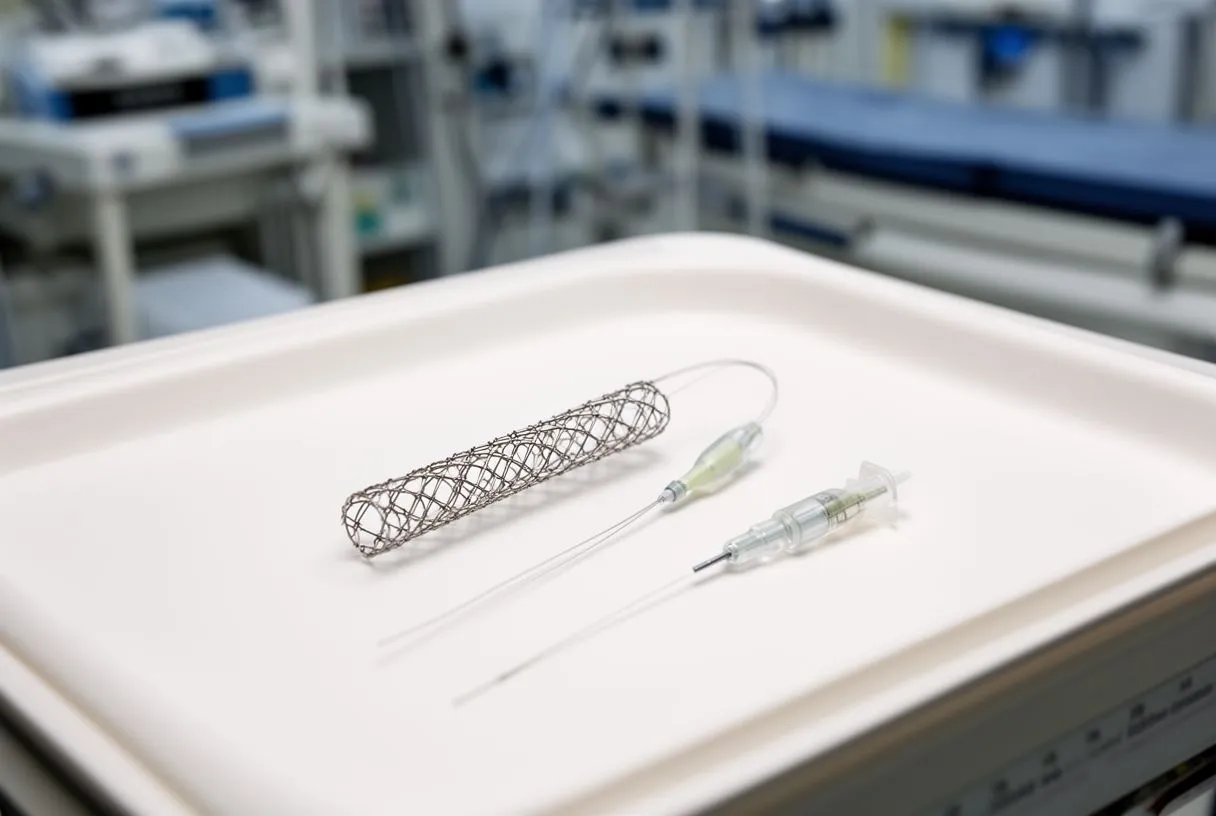
Stents are placed in most coronary cases. The stent acts as a scaffold that holds the artery open permanently. Modern practice uses a drug-eluting stent — a stent coated with medication that slowly releases to prevent scar tissue from growing through the mesh. Bare-metal stents, without this coating, are now reserved for rare situations.
- Balloon only: chosen when the artery stays open on its own and stenting adds risk without benefit.
- Drug-eluting stent: the standard choice for coronary arteries, reducing the chance of re-narrowing.
- No treatment: sometimes the angiogram shows the narrowing is not significant enough to justify any intervention at all.
Research comparing stenting in stable versus unstable coronary syndromes has shown that the procedure can be performed safely and effectively in both groups, with careful patient selection.Revista Brasileira de Cardiologia What matters for you is not the technique but the reason it is being offered.
What Is Stent Placement and How Does It Work?
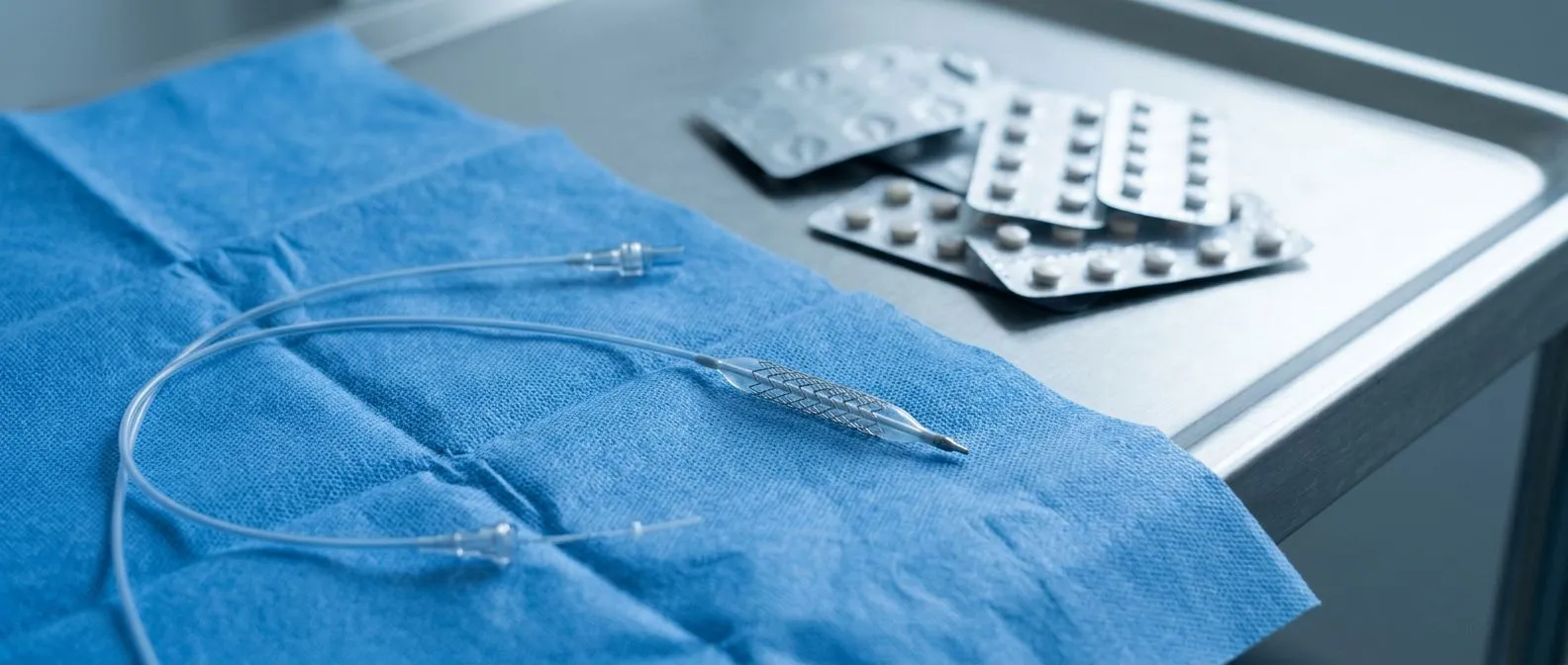
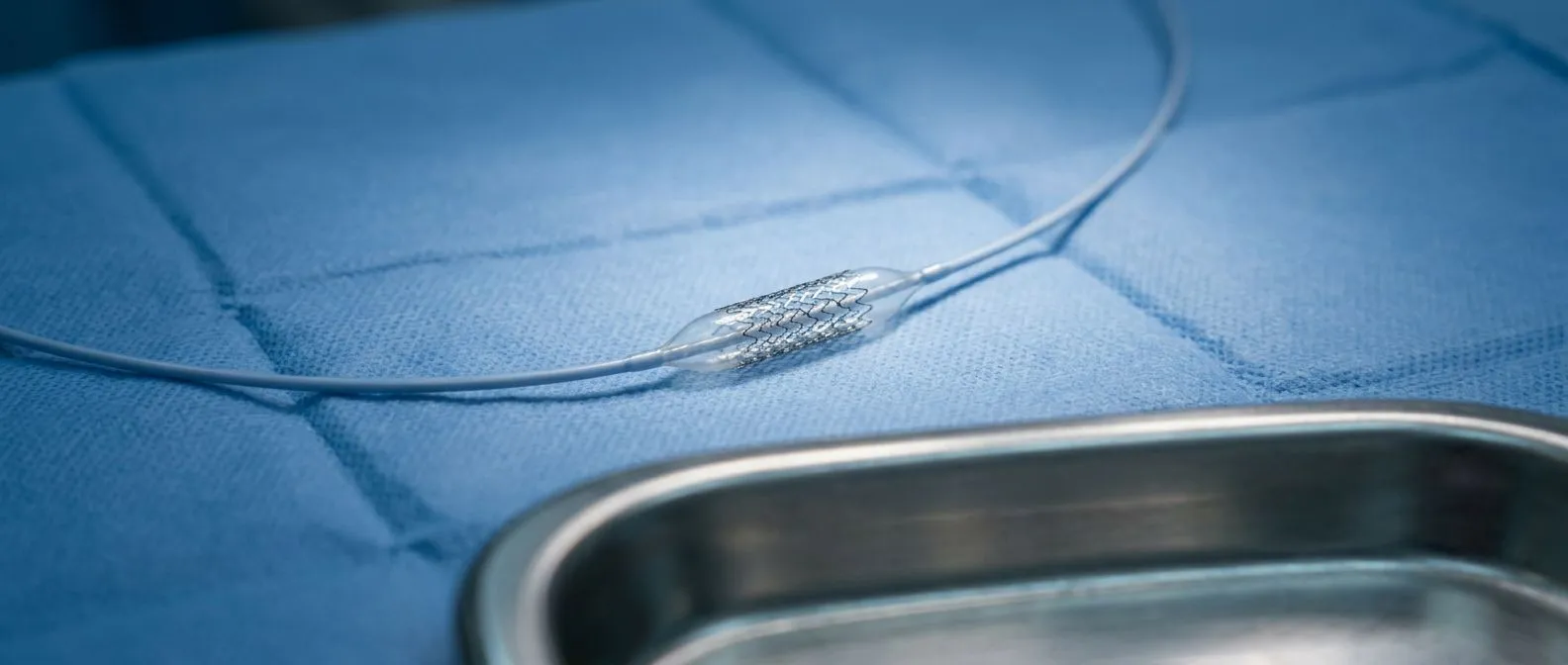
Stent placement is more straightforward than it sounds. The cardiologist threads a thin guidewire through the blockage, then slides a tiny balloon catheter over it, mounted with a collapsed stent wrapped around it. The balloon inflates at the narrowing, pressing the stent against the artery wall and pushing the plaque aside. The balloon then deflates and is withdrawn, leaving the stent expanded in place.
The stent becomes part of the artery within weeks. The lining of the vessel, called the endothelium, grows over the metal mesh, so the stent no longer sits exposed to the blood. This is why antiplatelet medication matters so much during the early months — the bare metal surface before that healing is complete can trigger clotting.
From the patient's side, the whole thing feels surprisingly uneventful. You may feel brief pressure in the chest as the balloon inflates — described by most patients as a heavy squeeze rather than pain — and then it passes. The procedure itself typically takes between 30 and 90 minutes depending on how many blockages are treated.
Stent Recovery: What to Expect in the First Days
Recovery after stent placement starts in the recovery room. After the procedure, you will be moved to a monitored area where staff watch the catheter access site — the wrist or groin — for bleeding, check your pulse, and monitor your heart rhythm. If the wrist (radial) artery was used, a pressure bandage stays on for a few hours and you may go home the same day. If the groin (femoral) artery was used, you will usually need to lie flat for several hours first.
Expect some soreness and a small bruise at the access site. A hard lump the size of a marble may form under the skin; this is usually just a healed hematoma and resolves over weeks. The chest soreness from the procedure itself typically settles within a few days.
Before going home, ask for the access-site care to be explained in plain words: how to keep the wound clean, which movements to avoid, and which symptoms need urgent attention versus normal healing.
How Long to Recover from Angioplasty?
Angioplasty recovery time is measured in days to weeks, not months. Most people who had the procedure through the wrist are back to light daily activities within 24 to 48 hours. Walking, cooking, showering, desk work — all resume quickly. The angioplasty recovery timeline in weeks looks roughly like this for an uncomplicated case:
- Days 1–3: rest, wound care, gentle walking around the house. No lifting, pushing, or pulling with the affected arm or leg.
- Week 1–2: normal light activities resume. Many desk-based workers return to their jobs.
- Weeks 2–4: gradually increasing activity. Driving is usually permitted once the access site is healed and your doctor clears you.
- Weeks 4–6: most people feel fully recovered, and structured exercise programs can proceed.
Two things slow recovery down: an access-site complication (bleeding or a false aneurysm at the puncture) and the underlying condition that led to the stent. If you had the procedure during a heart attack, your recovery reflects the heart muscle damage too, not just the stent. That is why the recovery timeline your own team gives you will always be more accurate than any general guide.
Stent Recovery Exercise Restrictions: What Can You Do?
Stent recovery exercise restrictions exist to protect the access site, not the stent. The stent itself is firmly embedded in the artery wall and cannot be dislodged by movement. The real concern is the puncture wound, which needs time to seal completely.
Heavy lifting is the main early restriction. Anything over roughly 5 kilograms (about a bag of groceries) should wait for the first week, and strenuous lifting — weights, moving furniture, carrying small children repeatedly — waits for your doctor's clearance, usually two to four weeks. Walking, on the other hand, is actively encouraged from day one.
Angioplasty recovery driving restrictions are short and practical. Most teams clear you to drive once the access site is fully healed and you can perform an emergency stop without pain — commonly one to two weeks after a wrist procedure. Commercial and professional drivers face stricter rules and should confirm with their doctor and licensing authority. If the procedure was done during a heart attack, the driving restriction may be longer.
Some patients are afraid of the slightest movement after a stent, while others return to the gym after three days; both extremes slow recovery, so ask your doctor which activities are safe at each week.
Exercise is not merely permitted after recovery — it is part of the treatment. The heart muscle benefits from regular aerobic activity, and patients who stay active after stenting do better in the long term than those who become sedentary.

Cardiac Rehabilitation After Stent: Why It Matters
Cardiac rehabilitation after stent placement is one of the most underused tools in heart care. It is a structured program of supervised exercise, education, and emotional support, usually running for several weeks. Patients who complete cardiac rehab have meaningfully better outcomes — fewer repeat hospitalizations and better quality of life — than those who do not, and this is consistently reflected in international heart stent recovery guidelines.
A typical program includes monitored exercise sessions two or three times a week, teaching sessions on diet and medications, and a chance to talk through the anxiety that almost always follows a heart procedure. The supervision is the point: your heart rate and rhythm are watched while you exercise, so you build confidence in a safe setting.
If your hospital or cardiology team offers a rehab program, take it. If it is not offered locally, ask your doctor to design a home walking program with clear targets. The evidence behind rehabilitation is strong enough that skipping it is like accepting half the treatment.
Cardiac Stent Recovery Diet and Medications
Angioplasty recovery medications are the part of recovery that never ends — and that is a good thing. The most important is a combination of two antiplatelet drugs (commonly aspirin plus a second agent such as clopidogrel, ticagrelor, or prasugrel), which keep blood from clotting inside the stent. This dual therapy typically continues for at least six to twelve months, followed by long-term aspirin. Stopping it early — even for a dental procedure — without medical approval can trigger stent thrombosis, a clot forming inside the stent, which is a medical emergency.
Beyond antiplatelets, expect statins to lower cholesterol, and often blood pressure medications. These drugs are not just treating numbers; they are treating the artery disease that caused the blockage in the first place. The stent fixes one segment, but the disease lives in the whole circulation.
The cardiac stent recovery diet follows the same principles as any heart-healthy diet. Emphasize vegetables, fruit, legumes, whole grains, fish, and olive oil. Reduce processed meats, fried foods, added sugars, and excess salt. This is the pattern supported by decades of nutrition research and by major cardiology societies — and studies published on how lifestyle and genetics interact with cardiovascular risk continue to reinforce that diet remains a powerful, modifiable factor even for people already treated with stents.Frontiers
Angioplasty recovery at home also means watching the small things. Take medications at the same time daily, keep a written list, and never stop any medication without speaking to your cardiologist first. The patients who do best after angioplasty are the ones who build a simple, boring routine and stick to it.
Stent Recovery Complications Warning Signs
Stent recovery complications are uncommon, but knowing the warning signs is essential. Most complications are local, at the access site — bleeding, swelling, or pain that worsens rather than improves. A few are cardiac, and those need immediate attention.
Call emergency services immediately if you experience:
- Chest pain that returns: pressure or squeezing in the chest, especially with exertion, similar to the pain that led to the procedure.
- Pain spreading to arm, jaw, or back: particularly with sweating, nausea, or shortness of breath.
- Rapid swelling or heavy bleeding at the access site: or a pulse that seems to throb painfully under the skin.
Re-narrowing is the main long-term concern. In-stent restenosis — scar tissue growing through the stent — affects a minority of patients, more often with bare-metal stents and less often with modern drug-eluting stents. It usually announces itself as the return of angina symptoms during exertion, which is why any recurrence of chest discomfort deserves evaluation rather than waiting.
Follow-up appointments are where problems are caught early. Stent recovery follow-up care typically includes a visit within a few weeks, continued medication monitoring, and periodic heart function checks. Patients who attend their follow-ups and report symptoms honestly are more likely to have problems caught early and to avoid emergency admissions. If you develop any of the warning signs above, do not wait for a scheduled appointment; seek emergency care.
Life After Coronary Angioplasty: Cost and Second Opinions
Life after coronary angioplasty is genuinely good for most people. The stent relieves the symptoms the blockage caused, and with medications, lifestyle changes, and cardiac rehabilitation, many patients return to work, travel, exercise, and normal family life. There is no evidence that a stent limits life expectancy when the underlying disease is properly managed — what shortens life is untreated coronary disease, not the metal in the artery.
Cost is a legitimate part of the decision. Stent recovery cost in Mexico and elsewhere varies widely depending on the hospital, the type of stent, the number of vessels treated, and whether the procedure was emergency or elective. Ask for a written, itemized estimate before an elective procedure, including the hospital stay, the stents, and the medications. A good team will give you this without being asked twice.
Second opinions are normal medicine, not distrust. Any patient can ask whether a stent is truly the right option for their anatomy, or whether medication alone or bypass surgery would serve them better. Every case is reviewed by our multidisciplinary team against international practice guidelines before a recommendation is made, the patient receives a clear proposal with the alternatives, and the final decision is always theirs.
Our team offers a free video consultation as the first step: we get to know the patient, talk through the condition in plain words, and identify exactly which studies are still needed so nothing unnecessary is ordered — and a face-to-face visit at our consulting rooms in Guadalajara, Querétaro, or Hermosillo follows when the patient decides to move forward.
The closing message is simple. A stent treats the blockage, but recovery is what you do in the weeks and years afterward: take the medications, walk every day, eat for your arteries, and never ignore returning chest symptoms. If you are deciding whether you need a stent, or whether your recovery is going the way it should, sit down with a qualified cardiac team and ask every question you have — including whether you need the procedure at all.
The right answer for one person is not the right answer for another. The best outcome is the one where the treatment fits the anatomy, the evidence supports it, and the patient understood the choice completely before agreeing to it.