


Sudden Cardiac Death: Warning Signs and Prevention
Sudden cardiac death prevention starts with knowing the warning signs.
Sudden cardiac death prevention starts with understanding what it actually is and, just as importantly, who is at risk. It is a sudden loss of heart function caused by an electrical problem, not a blockage, and it usually strikes without warning in people who may not even know they have a heart condition. The good news is that decades of research have shown that many of the underlying causes can be found before they cause harm — and treated. This guide walks you through the warning signs, the main risk factors, the screening tests that catch trouble early, and the treatment options that keep a dangerous rhythm from becoming fatal.
What Is Sudden Cardiac Death?
Sudden cardiac death is a death caused by an abrupt loss of heart function, occurring within minutes of the onset of symptoms. The heart does not simply stop moving; it continues to beat but in a disorganized, ineffective way — most often a rhythm called ventricular fibrillation, where the heart's main pumping chambers quiver instead of squeezing. Blood stops circulating to the brain and vital organs, and unless the rhythm is corrected within minutes, the outcome is fatal.
Why it happens at all: the heart is driven by an electrical system. In sudden cardiac death, that electrical system malfunctions, usually because of underlying disease — a weakened heart muscle, scar tissue from a previous heart attack, or an inherited rhythm disorder. The heart muscle itself is often healthy enough to work; it is the electrical "wiring" that fails.
Sudden Cardiac Death in numbers: it is one of the leading causes of cardiovascular mortality worldwide, and the 2022 ESC Guidelines for the management of patients with ventricular arrhythmias and the prevention of sudden cardiac death (2022 ESC Guidelines for the management of patients with ventricular arrhythmias and the prevention of sudden cardiac death) place a strong emphasis on identifying high-risk patients before an event, rather than after. That shift — from reacting to preventing — is the whole point of this article.
What Is the Most Common Cause of Sudden Cardiac Death?
Coronary artery disease is the single most common cause of sudden cardiac death in adults. This is the condition in which fatty deposits narrow the arteries that feed the heart muscle, the same arteries involved in a typical heart attack. When a coronary artery becomes blocked or a plaque ruptures, it can set off an electrical storm in the heart muscle — and sudden cardiac death is often the first and only sign of coronary artery disease that a person ever experiences.
Scar tissue is the trigger: people who have survived a heart attack carry a patch of scar in the heart muscle. Scar does not conduct electricity the way healthy muscle does, so electrical signals can travel around it in abnormal circuits, creating ventricular arrhythmias — dangerously fast heart rhythms. This is why heart failure sudden death risk rises after a large heart attack, and why doctors prescribe specific medications and, in some cases, an implantable defibrillator to patients with reduced heart function.
Beyond the arteries: the second major group of causes are the heart muscle diseases themselves — cardiomyopathy — and inherited heart conditions that affect the electrical system without any blockage at all. These are less common overall, but they dominate in younger people and in cases of sudden death young athletes. In our practice, every case is reviewed by the multidisciplinary team against international practice guidelines before a recommendation is given, so that whichever cause is at play, the patient receives a clear proposal with the alternatives.
Is Sudden Cardiac Death Quick?
Yes — in the sense that the collapse is sudden and unconsciousness follows within seconds. When ventricular fibrillation begins, the heart loses pumping function immediately. A person drops to the ground, unresponsive, and stops breathing normally within seconds to a minute. Without CPR and an electrical shock, death follows within roughly ten minutes.
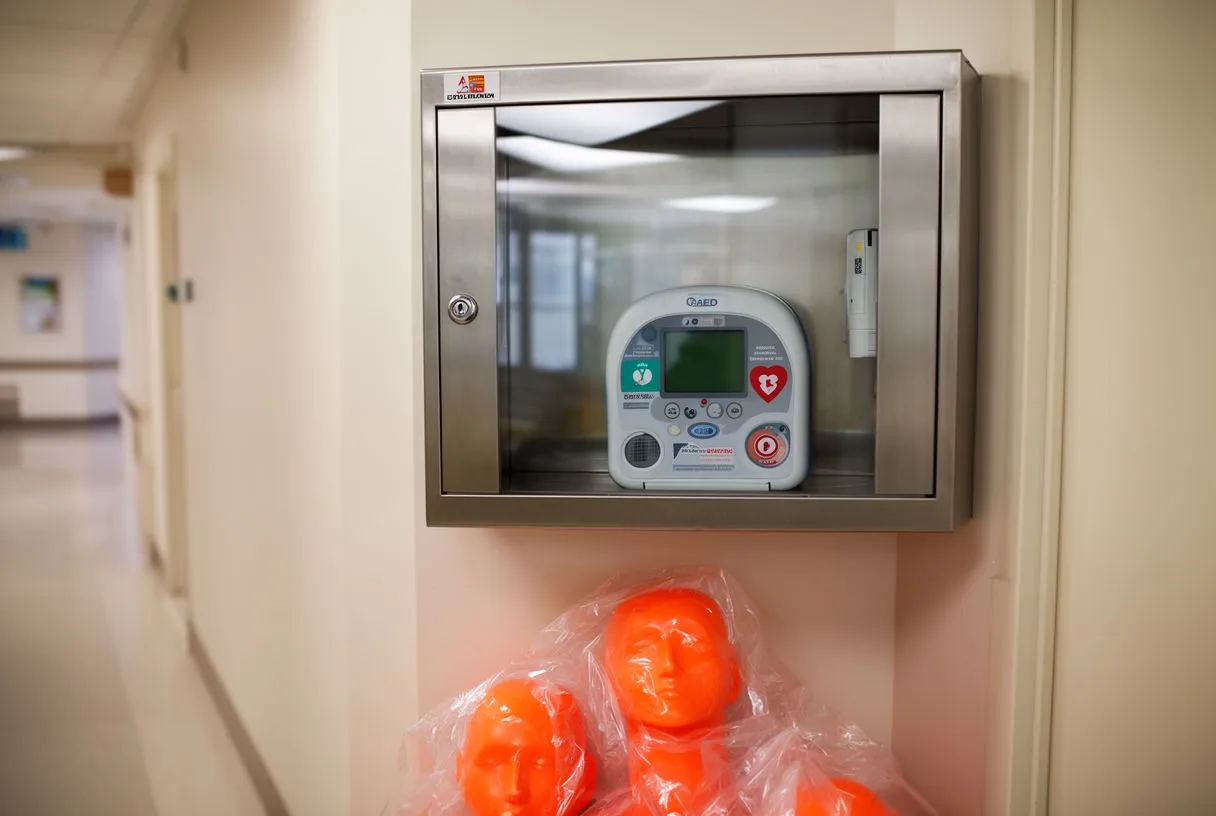
Why the first minutes matter so much: survival drops by a large percentage for every minute that passes without defibrillation. This is why cardiac arrest early warning signs are only useful when someone is around to act — and why CPR and AED training in workplaces, schools, and gyms saves lives. An AED (automated external defibrillator) is a device that reads the heart's rhythm and, if needed, delivers a shock to restart it. A bystander with no medical training can use one safely.
What the collapse feels like: for the person affected, the process itself is usually not experienced as painful, because loss of consciousness is nearly immediate. This is worth saying plainly to anxious families: the frightening part is the suddenness, not the suffering.
Is There Any Warning Before Sudden Cardiac Death?
Often, yes — though the warnings are easy to dismiss. The heart usually gives signals weeks, months, or even years before an event, and the problem is that people routinely attribute them to age, stress, or being out of shape. Sudden cardiac death warning signs deserve attention precisely because they so often precede the event.
Common warning signals include: fainting or near-fainting during exercise, chest pain or pressure during exertion, unexpected shortness of breath, palpitations (a racing, pounding, or irregular heartbeat), and extreme fatigue. Fainting during exercise is the most concerning of all — it is never normal and always deserves a cardiac workup.
Studies following cardiac arrest survivors have consistently found that many experienced chest pain, shortness of breath, or fainting in the days or weeks beforehand. In our consultation, we take the time to explain what the studies actually show, in plain words, and to answer every question before any decision — and when a patient describes exertional fainting, we never brush it off.
Cardiac Arrest Early Warning Signs to Never Ignore
Some symptoms are cardiovascular red flags that should prompt immediate evaluation. If you or a family member experiences any of these, do not wait to "see if it passes":
- Fainting during exercise: a collapse or black-out during sports or exertion is abnormal at any age and requires a cardiology assessment.
- Chest pain or pressure with exertion: pain that appears with activity and eases with rest suggests the heart muscle is not getting enough blood.
- Palpitations with dizziness: a racing or irregular heartbeat paired with lightheadedness can signal a ventricular arrhythmia.
- Unexplained breathlessness: new shortness of breath when climbing stairs or lying flat may point to heart failure or a valve problem.
- A family history of sudden death: if a relative died suddenly and young, tell your doctor — this alone justifies screening.
First aid matters too. If someone collapses and is unresponsive and not breathing normally: call emergency services immediately, start chest compressions in the center of the chest at a rate of about 100–120 per minute, and send someone for an AED if one is nearby. Continue until the person responds or help arrives. These simple steps, learned through CPR and AED training, are the bridge that keeps a victim alive until the heart rhythm can be corrected.
Heart Attack vs Sudden Cardiac Death: What's the Difference?
This is one of the most common points of confusion, and the distinction matters because the emergency response is different. A heart attack is a plumbing problem: a coronary artery is blocked, and part of the heart muscle begins to die from lack of blood. The person is usually awake, in pain, and needs urgent treatment to reopen the artery.
Sudden cardiac arrest is an electrical problem: the heart's rhythm degenerates and it stops pumping. The person collapses and is unconscious within seconds. A heart attack can cause a cardiac arrest — the blocked artery can trigger the electrical failure — but many heart attacks never lead to arrest, and cardiac arrest can occur without a heart attack at all.
Why the distinction matters for prevention: coronary artery disease prevention — controlling blood pressure, cholesterol, diabetes, smoking, and weight — reduces the risk of both. But preventing cardiac arrest in someone who has already survived a heart attack, or who has a weak heart, often requires specific tools like medication, an implantable defibrillator, or cardiac ablation for arrhythmia, on top of the basics. Reviews of the topic published in The Lancet emphasize exactly this layered approach: treat the underlying disease, then add rhythm-specific protection for those at highest risk.
What Are the Different Types of Heart Conditions?
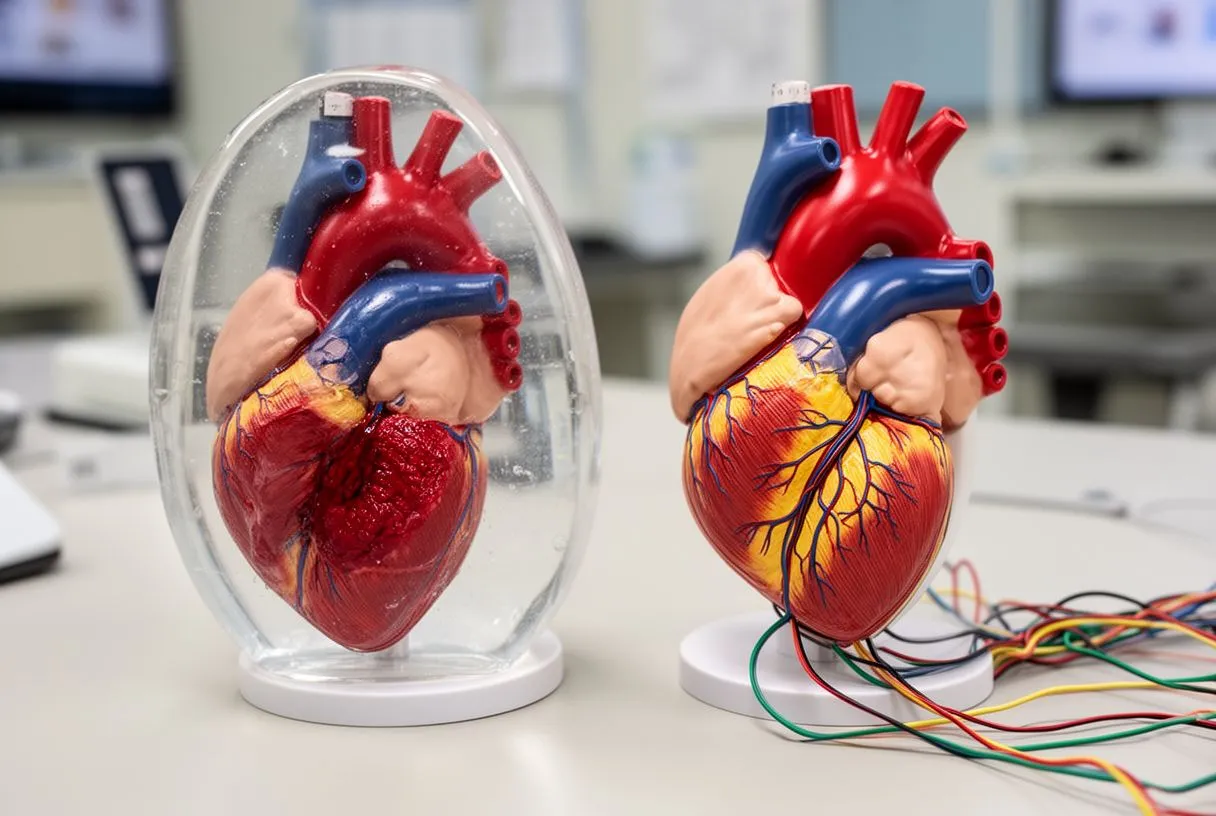
Understanding the landscape of heart disease helps you make sense of your own diagnosis. Heart conditions fall into several broad families, each with its own relationship to sudden cardiac death risk:
- Coronary artery disease: narrowing of the arteries that feed the heart; the leading cause of heart attack and sudden cardiac death in adults.
- Heart rhythm disorders (arrhythmias): electrical faults where the heart beats too fast, too slow, or irregularly; some are harmless, others are the direct mechanism of sudden death.
- Heart muscle disease (cardiomyopathy): structural weakness or thickening of the heart muscle that reduces pumping function.
- Valve disease: narrowing or leaking of the heart's valves — the aortic, mitral, and tricuspid valves — which strains the heart over years.
- Aortic disease: enlargement or tearing of the aorta, the body's main artery.
- Structural and congenital conditions: abnormalities present from birth or developing over time, such as holes in the heart or inherited electrical disorders.
Each family has its own treatment path. Valve disease, for instance, may be managed with conventional open surgery, minimally invasive surgery, robotic surgery, or transcatheter approaches such as TAVR (transcatheter aortic valve replacement, a procedure where a new valve is placed through a catheter, usually from the groin, without opening the chest). Our work covers valve disease, coronary disease, the aorta and structural heart conditions; we perform conventional, minimally invasive, robotic and transcatheter procedures, and we recommend the less invasive route only where the evidence supports it for that patient.
What Is Cardiomyopathy and Why Does It Matter?
Cardiomyopathy is a disease of the heart muscle itself — the muscle becomes enlarged, thickened, or stiff, and loses its ability to pump efficiently. It is one of the most important causes of sudden cardiac death in young people, and a significant contributor in older adults with heart failure.
The main types: dilated cardiomyopathy (the heart enlarges and the pumping chamber weakens — the most common form), hypertrophic cardiomyopathy (the muscle thickens abnormally, which can obstruct blood flow and trigger dangerous rhythms — a leading cause of sudden death in young athletes), and restrictive cardiomyopathy (the muscle stiffens and cannot fill properly). Arrhythmogenic right ventricular cardiomyopathy is a rarer form where heart muscle is gradually replaced by fat and scar, and it is strongly associated with arrhythmias.
Why cardiomyopathy sudden death risk is taken seriously: a weakened or thickened heart muscle creates the conditions for ventricular fibrillation — regions of scar and stress become electrical islands. This is why patients with significantly reduced heart function are evaluated for an implantable defibrillator (ICD), a device placed under the skin that monitors the heart's rhythm continuously and delivers a shock to terminate a dangerous rhythm. The ICD does not prevent the arrhythmia from starting, but it prevents it from being fatal. The 2022 ESC Guidelines (2022 ESC Guidelines for the management of patients with ventricular arrhythmias and the prevention of sudden cardiac death) provide the criteria doctors use to decide who benefits from one.
Sudden Death in Young Athletes and Inherited Heart Conditions Screening
Sudden death young athletes is a rare but devastating event, and almost always the result of an inherited heart condition that was present but undetected — hypertrophic cardiomyopathy, abnormal coronary arteries, inherited electrical disorders such as long QT syndrome or Brugada syndrome, or arrhythmogenic cardiomyopathy. These conditions typically cause no symptoms in early life, which is why screening matters.
Inherited heart conditions screening: if a family member died suddenly and young, or was diagnosed with a cardiomyopathy or inherited rhythm disorder, close relatives should be evaluated. Screening typically includes an ECG (electrical tracing of the heart), an echocardiogram (ultrasound of the heart's structure), and in some cases a cardiac MRI or genetic testing. Genetic testing can identify the specific mutation in a family, and relatives who carry it can be monitored or treated before an event.
What screening looks like in practice: a sports pre-participation evaluation with a history, physical examination, and ECG can flag most of the important conditions. In our team's experience, when a young athlete's evaluation shows a concerning finding, the multidisciplinary review determines whether the condition is truly high-risk and what restrictions or treatments — if any — are needed, with the patient and family fully involved in the decision.
Sudden Cardiac Death Prevention Strategies That Work
Sudden cardiac death prevention is not a single action but a layered strategy. The first layer is reducing the risk of ever developing the underlying disease. The second is finding it early. The third is treating the specific risk once it is found.
Layer one — protect the arteries: control blood pressure, keep cholesterol in check, manage diabetes, do not smoke, exercise regularly, and maintain a healthy weight. These are the pillars of coronary artery disease prevention and they remain the most effective population-level strategy. Preventive cardiology consultation exists precisely to personalize this: your doctor can calculate your risk and tailor the intensity of treatment.
Layer two — screen and investigate: if you have symptoms, a family history of sudden death, or a known heart condition, the right tests are an ECG, echocardiogram, and when indicated an electrophysiology study (a catheter test that maps the heart's electrical system and can measure how easily a dangerous rhythm can be triggered). The electrophysiology study benefits are practical: it identifies who is at real risk, and in many cases it leads directly to treatment — catheter ablation, in which the small area of heart tissue causing the abnormal rhythm is destroyed with heat or cold energy, eliminating the trigger. Cardiac ablation for arrhythmia has become a cornerstone of ventricular arrhythmia treatment in selected patients.
Layer three — treat the specific risk: for patients with weakened hearts or inherited conditions, an implantable defibrillator offers protection; for patients with dangerous scar-related circuits, ablation can reduce the frequency of dangerous rhythms; for everyone, the right medications reduce the risk. And when a structural problem is the driver — a severely narrowed aortic valve, for example — correcting it is part of the prevention plan.
Choosing that path well matters. The first contact at our practice is a free video consultation: we get to know the patient, talk through the condition, and say which studies are still needed so no unnecessary ones are ordered. Dr Molina trained in cardiothoracic surgery at the Universidad de Guadalajara, in cardiac, minimally invasive, robotic and structural surgery at the University of Montreal, and in structural cardiology and TAVR at CHU Bordeaux — and he performed the first robotic mitral valve repair in the Ángeles Health System and the first robotic heart surgery in Guadalajara. But the decision always belongs to the patient: we encourage second opinions and treat seeking one as a normal part of deciding about heart surgery.
Putting it together: sudden cardiac death prevention works because the conditions that cause it are identifiable and treatable. Know your family history, take exertional symptoms seriously, keep your arteries healthy, and if you have a weakened heart or an inherited condition, work with your cardiac team on the right protection for you — whether that is medication, an ICD, or ablation. If you have read this article because something worries you, do not self-diagnose: book a consultation with a qualified cardiac team and get your specific questions answered.
When to seek help right now: if you are experiencing chest pain, fainting, or a racing heartbeat with dizziness, seek emergency care immediately rather than waiting for a scheduled appointment.






