

TAVR Recovery and Life Expectancy: What to Expect
TAVR recovery life expectancy: learn recovery timelines, how long TAVR valves last, survival data by age.
If you or someone close to you has been told the aortic valve needs replacing, you have probably searched for answers about tavr recovery life expectancy — how long the procedure takes to bounce back from, and how long the new valve can be expected to last. This guide walks through both questions in plain language: what happens during transcatheter aortic valve replacement (TAVR), what the days and weeks afterward actually feel like, and what the evidence says about the years that follow. It is written for patients and families, not for doctors, and it closes with how to get a personal answer for your own situation.
What Is TAVR and How Does It Work?
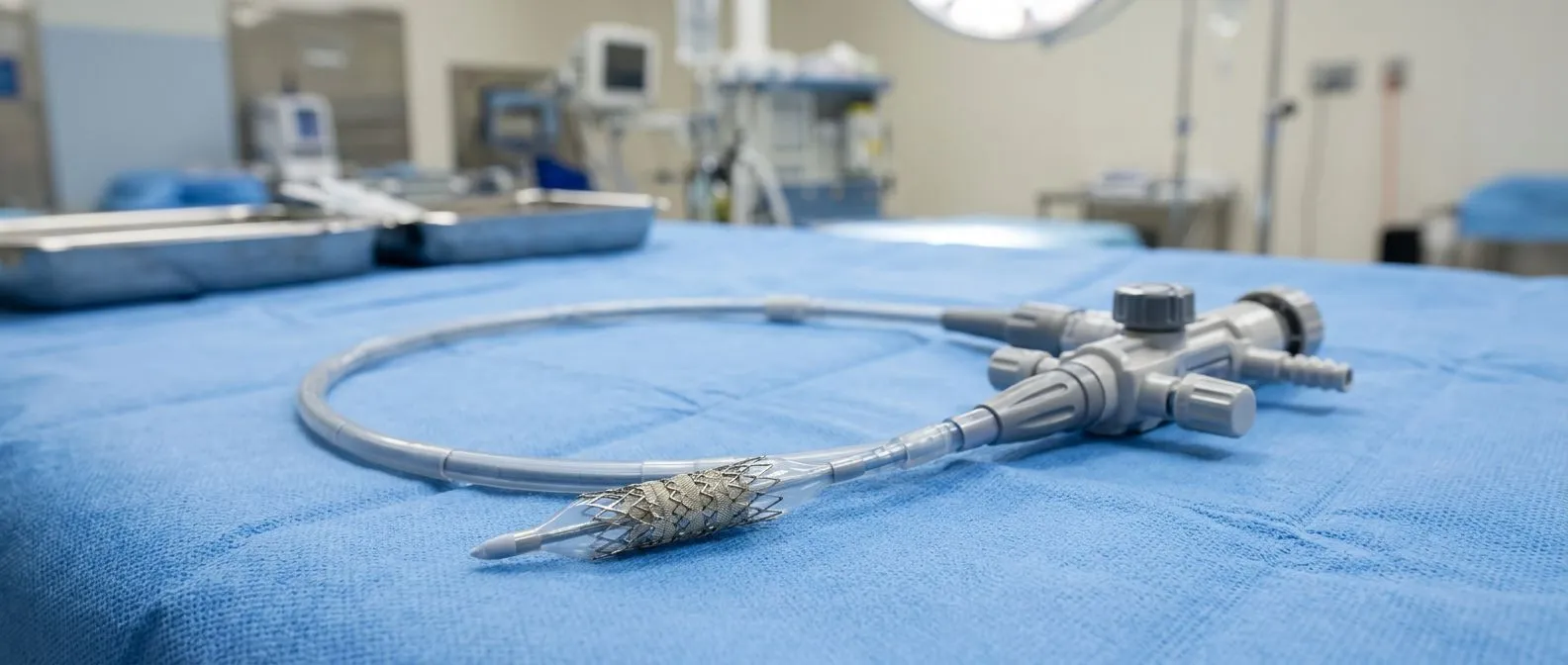
TAVR is a way of replacing the aortic valve — the one-way gate between the heart's main pumping chamber and the aorta, the large artery that carries blood to the whole body — without opening the chest. Instead, a new valve made of tissue is folded onto a thin tube called a catheter. The catheter is usually guided up through an artery in the groin, and the new valve is expanded exactly where the old, narrowed one sits.
Why the aortic valve narrows. Most people who need this procedure have aortic stenosis, a condition where calcium builds up on the valve over decades until it will not open fully. The heart then has to push against a narrowing, which causes breathlessness, chest tightness, fainting, and eventually weakening of the heart muscle itself. Once severe symptoms appear, replacing the valve is the treatment that changes the course of the disease.
How it differs from traditional surgery. In conventional aortic valve replacement, the surgeon opens the chest, stops the heart, and sews a new valve into place. In TAVR the heart keeps beating throughout, and there is no incision in the chest at all. That difference is the reason the tavr procedure recovery is measured in days rather than weeks — and it is why the approach has become the default option for many older patients and for anyone at higher surgical risk.
What Is the TAVR Recovery Timeline, Weeks After the Procedure?
The honest answer to "how long is recovery" is that most of it happens very quickly, with a tail of gradual improvement. The tavr recovery timeline in weeks looks something like this: most patients walk within hours of the procedure, go home within one to three days, feel noticeably better within two weeks, and reach a new normal by six to eight weeks. That arc surprises many people who expected months in bed.
The first 24 to 48 hours. You will spend the first day in a monitored bed, usually in an intensive care or step-down unit. The team checks your heart rhythm, blood pressure, and the artery where the catheter entered. Sitting up and walking short distances, often with a nurse beside you, usually starts the same day or the next morning. Many patients describe the first night as the hardest part — not because of pain, but because of the wires, monitors, and interrupted sleep.
Weeks one through six. Once home, the main instructions are about the puncture site: no heavy lifting, no driving until your team clears you, and gentle walking every day. Breathlessness and fatigue begin to lift early, often within the first two weeks, as the heart no longer fights a blocked valve. By six weeks most people are back to normal daily activity. Ask for a written week-by-week plan before you leave hospital, so you do not have to guess what comes next.
- Days 1–3: monitored rest, first walks, discharge home once heart rhythm and the access site are stable.
- Weeks 1–2: daily short walks, no lifting over a few kilos, puncture site healing.
- Weeks 3–8: gradually longer activity, return to most routines, follow-up echo to check the new valve.
What to Expect After a TAVR Procedure at Home?
Recovering at home is where families matter most. Knowing what to expect after a tavr procedure — the good days, the tired days, and the warning signs — turns the first month from something frightening into something manageable.
Normal, expected sensations. A bruise and a small, tender lump at the groin puncture site are normal for one to two weeks. Some patients feel occasional palpitations or brief flutters as the heart adjusts; these usually settle. Tiredness that comes and goes is expected — the body is healing while the heart, for the first time in years, is working against an open valve.
Signs that need a phone call, not a wait. Call your team if you notice spreading swelling or bleeding at the puncture site, new chest pain, a fever, sudden breathlessness, fainting, or a heartbeat that feels persistently fast or irregular. These are uncommon, but they are exactly the things home recovery is designed to catch early. In our consultations we spend as much time explaining these warning signs as we do explaining the procedure itself, in plain words, so families know exactly when to act.
Medication and follow-up rhythm. Most patients leave with a blood thinner and other heart medicines, and follow-up appointments within the first month plus a repeat ultrasound of the heart. Keeping those appointments is not bureaucracy — it is how the team confirms the valve is working exactly as intended.

How Does TAVR vs Open Heart Surgery Recovery Compare?
The clearest way to understand TAVR's appeal is to put it beside conventional surgery. The comparison of tavr vs open heart surgery recovery comes down to one fact: avoiding the chest incision and the heart-lung machine removes most of what makes surgical recovery slow.
Hospital stay. Conventional aortic valve replacement usually means several days in hospital and often a stay in the intensive care unit. TAVR patients frequently go home in one to three days, and selected patients the same day.
Time back to normal life. After open surgery, full recovery typically takes six to twelve weeks, with restrictions on lifting because the breastbone must knit back together. After TAVR, there is no breastbone to heal, so most restrictions lift within a week or two. This is the practical meaning of minimally invasive heart valve surgery recovery: less pain, fewer wounds, and a faster return to the life the valve problem had interrupted.
When surgery is still the right answer. TAVR is not automatically the better choice for everyone. Younger patients, people with certain valve anatomy, or those needing other procedures at the same time may do better with surgical replacement, which allows the diseased valve to be removed entirely. In our team every case is reviewed together by the cardiac surgeons against international guidelines before any recommendation is made, and the patient receives the alternatives. We recommend the less invasive route only where the evidence supports it for that specific patient.
In published trials, patients who are good candidates for both routes often recover faster with the transcatheter approach — but the decision belongs to the patient once both options are laid out clearly.What Is TAVR Life Expectancy by Age?
Questions about tavr life expectancy by age deserve a careful answer, because the honest one has two parts. First, the procedure itself removes the life-threatening obstruction the diseased valve was causing. Second, long-term outlook also depends on age, other health conditions, and heart function — things the valve replacement does not change.
What the survival data shows. In landmark randomized trials, patients with inoperable or high surgical risk who received TAVR lived significantly longer than those treated with medication alone — a finding reported in detail by the The BMJ and other major journals. In lower-risk patients, modern studies show survival after TAVR comparable to surgical valve replacement at early and intermediate follow-up. These results are why TAVR is now offered across a much broader range of patients than a decade ago.
Why age changes the picture. A person in their seventies without other major illness generally has a long horizon after valve replacement, while a person in their late eighties with kidney disease, lung disease, or frailty has an outlook shaped more by those conditions than by the valve. This is also why the international evidence increasingly weighs quality of Life — how patients feel and function — alongside raw survival figures, and why two patients of the same age can have very different expectations after the same procedure.
How to get a personal estimate. No article can give you your number, and any website that does should raise suspicion. What your cardiac team can do is combine your age, heart function, and other conditions into tools such as the EuroSCORE II risk score and discuss what they realistically mean for you. That conversation, not an internet statistic, is the answer to "how long to live after tavr" for your own case.
What Do TAVR 5-Year Survival and 10-Year Outcomes Show?
The deepest worry behind questions about tavr 5 year survival and tavr 10 year outcomes is usually a second one: does the valve itself hold up? Both questions have a real answer, and it is encouraging with an honest asterisk.
Five-year evidence. In the major randomized trials that compared TAVR with surgical valve replacement, survival at five years was similar between the two approaches in the populations studied, and the transcatheter valves continued to function well for the great majority of patients. Valve deterioration that needed a repeat procedure was uncommon within that window, though it was reported slightly more often after TAVR than after surgery in some comparisons.
The ten-year picture. Data on tavr 10 year outcomes is still maturing, because the technique only became widespread around a decade and a half ago. Reviews of valve durability, including analyses focused on patients with a small aortic annulus such as the one published in the Journal of Cardiovascular and Thoracic Research, emphasize that structural valve deterioration — the slow wearing-out of tissue valves — is the main long-term consideration, and that it can be monitored with yearly ultrasound so it is caught before it causes symptoms.
What "valve durability years" means for you. When you hear about tavr valve durability years, the practical point is this: tissue valves, whether placed surgically or by catheter, gradually stiffen over a decade or more. The response is not panic but surveillance — an annual echocardiogram tracks valve function, and a worn valve can often be treated with another transcatheter valve placed inside the first one, without open surgery. Long-term follow-up is built into the plan from day one.
What Is the TAVR Recovery Time for Elderly Patients?
A large share of TAVR patients are in their eighties, and families rightly ask whether age slows the tavr recovery time elderly patients experience. The honest answer: age alone matters less than frailty, and TAVR was designed precisely for people who might not tolerate open surgery.
Why TAVR suits older patients. Because there is no chest incision, no breastbone to heal, and no time on the heart-lung machine, the physical demands of recovery are dramatically lower than after open surgery. Frail patients who would struggle for months after a sternotomy are often walking comfortably within a fortnight of a catheter-based valve.
What slows recovery in older adults. The things that genuinely delay recovery are deconditioning before the procedure, kidney or lung disease, anemia, and delirium risk — none of them age by itself. This is why a good team assesses frailty, not just birthdays, before recommending anything. In our consulting rooms in Guadalajara, Querétaro and Hermosillo, our multidisciplinary team reviews every older patient together and looks specifically at these reversible factors before the procedure, because improving them beforehand often shortens the recovery afterward.
Realistic expectations for families. For a fit eighty-year-old, the tavr success rate elderly patients see is high and the recovery arc closely follows the standard timeline above. For a frailer patient, expect the tired phase to last longer and plan help at home for the first few weeks — help with shopping, cooking, and medications makes a measurable difference.

What Are the Downsides of TAVR?
Any honest guide has to answer the question "what are the downsides of tavr" directly, because every treatment trades something. The downsides are real, manageable, and worth knowing before you decide rather than after.
Heart rhythm changes. The most common complication is a need for a pacemaker. Because the new valve sits very close to the heart's electrical wiring system, some patients develop a slow rhythm afterward and need a small device implanted, usually before going home. The risk varies with the type of valve used and the patient's anatomy — one reason valve choice and annulus size are studied so carefully before the procedure.
Vascular and valve-related risks. The catheter travels through arteries in the groin, and those vessels can occasionally be injured, though modern delivery systems have made this much less common. There are also small risks of stroke, leakage around the new valve, and — over the long term — structural valve deterioration, as discussed above.
The deeper trade-offs. Beyond the procedure itself, the structural downsides include valve-in-valve limits later in life, the unknowns of very long-term durability compared with decades of surgical data, and the fact that TAVR does not repair other problems a surgical operation could address at the same time. A balanced rundown:
- Pacemaker risk: the most frequent complication; usually identified before discharge and managed with a small, routine procedure.
- Access-site issues: bruising is common, true vascular injury is uncommon and mostly repairable without open surgery.
- Stroke: a small but real risk with any valve intervention; modern techniques and cerebral protection devices aim to reduce it.
- Long-term durability: excellent at 5 years, still being proven beyond 10, with yearly monitoring as the safety net.
Is TAVR Major Surgery, or Is It Just a Stent?
Two of the most frequent questions patients ask are whether TAVR counts as major surgery and whether it is "the same as a stent." Both deserve clear answers, because the confusion shapes what people expect of the transcatheter aortic valve replacement survival rate and of recovery itself.
Is it major surgery? In hospital terms, TAVR is a major cardiac procedure — it takes place in a catheterization laboratory or hybrid operating room, involves general anesthesia or deep sedation, and carries the risks of any intervention on the heart. But in what it does to your body, it is far less invasive than open surgery: no chest opened, no heart stopped. Most patients describe it as feeling like "a big angiogram" rather than an operation. So the fair answer is: major procedure, minor physical footprint.
Is it the same as a stent? No. A stent is a small metal scaffold that holds an artery open after a blockage is cleared — it treats the plumbing of the coronary arteries. TAVR replaces an actual valve, a moving gate of tissue that opens and closes a hundred thousand times a day. The delivery technology is similar, which is where the confusion comes from, but what is left inside the body is completely different: a functioning valve, not a scaffold.
What this means for the survival rate. Because TAVR corrects the valve problem itself rather than merely relieving symptoms, the transcatheter aortic valve replacement survival rate in appropriately selected patients reflects a genuine change in the disease course — which is why trial data showed survival benefits over medication alone and parity with surgery in the studied groups. The procedure matters; it is not a temporary patch.
How Do You Choose the Best Hospital for TAVR Surgery?
Once you understand the procedure, the final question is practical: who should do it? Searching for the best hospital for tavr surgery is really a search for a few concrete qualities, and knowing them puts you in control of the decision.
Volume, teamwork, and transparency. Look for a program that does TAVR regularly, works as a true heart team — surgeons and cardiologists deciding together — and is willing to tell you the alternatives, including surgery, without pressure. A team that encourages a second opinion is a team confident in its own recommendation. In our practice we treat seeking a second opinion as a normal part of deciding about heart surgery, and every patient leaves the consultation with a clear written proposal and the alternatives beside it.
Training and technology. Ask where the operators trained and how the program handles complications: pacemakers, access-site problems, valve-in-valve procedures. Structural heart programs vary widely in depth, and depth is what shows up in results. Dr Alejandro Molina trained in structural cardiology and TAVR at CHU Bordeaux, and our team has trained at Jena, Bad Berka and Buffalo — details we are glad to share, and any serious program should be equally glad to share theirs.
The first conversation costs nothing. Getting started should be simple. We offer a free video consultation as the first contact: we get to know you, talk through the condition, and tell you which studies are genuinely needed so no unnecessary ones are ordered. If you decide to go ahead, a face-to-face visit at one of our consulting rooms follows. The final decision about any procedure is always yours — our job is to make sure it is an informed one.
Bringing it all together. The evidence on tavr recovery life expectancy points in one consistent direction: a procedure that fixes a life-threatening valve problem with days rather than months of recovery, survival that matches surgery in the studied populations, and durability that is good and closely monitored over the long term. If you have read this far because the aortic valve is your problem or a family member's, take the next step with a qualified cardiac team rather than deciding alone — and remember that the aortic valve replacement life expectancy figures in this article describe populations, while your consultation describes you. Book a consultation, bring your questions, and make the decision with every option on the table.
Our team offers exactly that kind of consultation — free, unhurried, and in plain words — and we would be glad to review your case.





