

Transaortic Access for TAVR: When the Groin Is Not an Option
Transaortic access TAVR replaces your aortic valve through a small chest incision when groin arteries won't work.
Aortic stenosis is a narrowing of the aortic valve, the gate between the heart's main pumping chamber and the artery that carries blood to the whole body. When that gate becomes stiff and tight, breathlessness, fainting and chest discomfort follow. TAVR — transcatheter aortic valve replacement — replaces the valve without opening the heart, and transaortic access for TAVR is one of the ways doctors reach the valve when the usual route through the groin arteries is not possible. In this guide we explain what the technique involves, who needs it, what the procedure looks like from the patient's side, and how recovery really unfolds.
What Is Transaortic Access for TAVR?
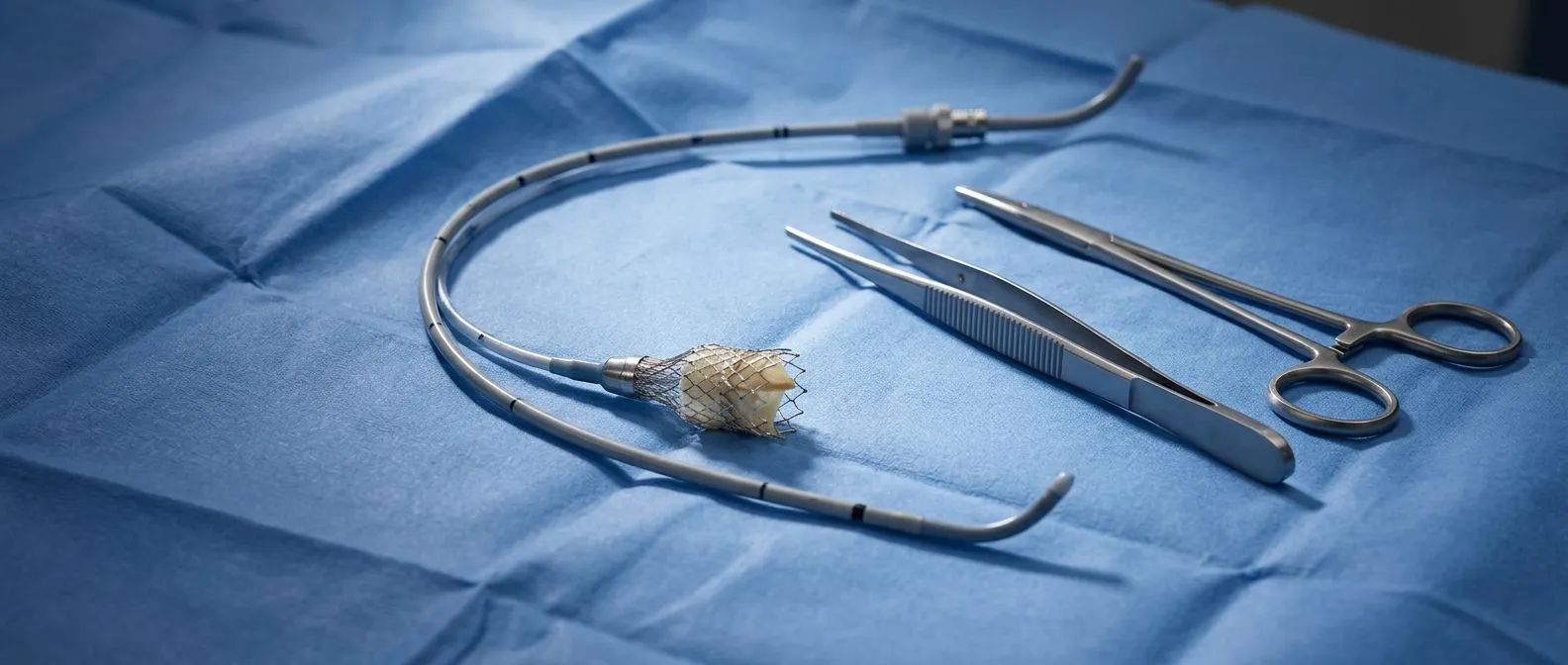
Defining the approach. In a standard TAVR, the doctor threads a thin catheter through an artery in the groin (the femoral artery) up to the heart, and a new valve is deployed inside the old one. Transaortic access means the catheter is introduced directly into the aorta — the body's main artery — through a small incision in the upper chest or between the ribs. The valve replacement itself is identical; only the doorway changes.
Why the doorway matters. The femoral route is preferred because it avoids any surgical incision in the chest and typically allows same-day or next-day discharge. But not every patient's arteries can accommodate the delivery catheter. Transaortic valve replacement keeps the transcatheter approach open for these patients, avoiding a full sternotomy — the classic operation where the breastbone is divided.
A term you will hear. Doctors sometimes call this route "direct aortic access." Whatever the label, the principle is the same: reach the valve through the aorta itself, through a small, precise surgical cut, rather than navigating from afar. It sits within the broader field of structural heart interventions, where catheters replace scalpels for many valve problems.
When Is Alternative TAVR Access Needed?
Small or diseased arteries. Some patients naturally have narrow femoral arteries, and others carry calcium, scar tissue or blockages that make the groin route unusable. TAVR for small vessels is one of the most common reasons teams turn to an alternative TAVR access route. Forcing a catheter through a diseased artery risks tearing it — an aortic rupture or dissection is the danger the team works hardest to avoid.
Peripheral vascular disease. Many candidates for TAVR are elderly and also have peripheral artery disease, where the arteries to the legs are narrowed by the same process that narrowed their valve. When both iliac arteries — the branches feeding the legs from the aorta — are compromised, the groin simply cannot serve as an entry point. A non-femoral TAVR approach becomes the safest way forward.
Previous surgery or anatomy. Prior chest operations, unusual aortic anatomy, or severe calcification of the aortic wall can all shift the decision. In our practice, every case is reviewed by the multidisciplinary team against international guidelines before any access route is recommended, and the patient receives a clear proposal with the alternatives — the final decision is always theirs.
How Does the Transaortic TAVR Procedure Work?
What the procedure looks like. The patient is placed under general anaesthesia. The surgeon makes a small incision — often just a few centimetres — in the upper chest at the base of the neck or over the second rib space, and exposes the ascending aorta. A short tube is stitched to the aortic wall, and the valve delivery catheter is passed through it directly toward the diseased valve.
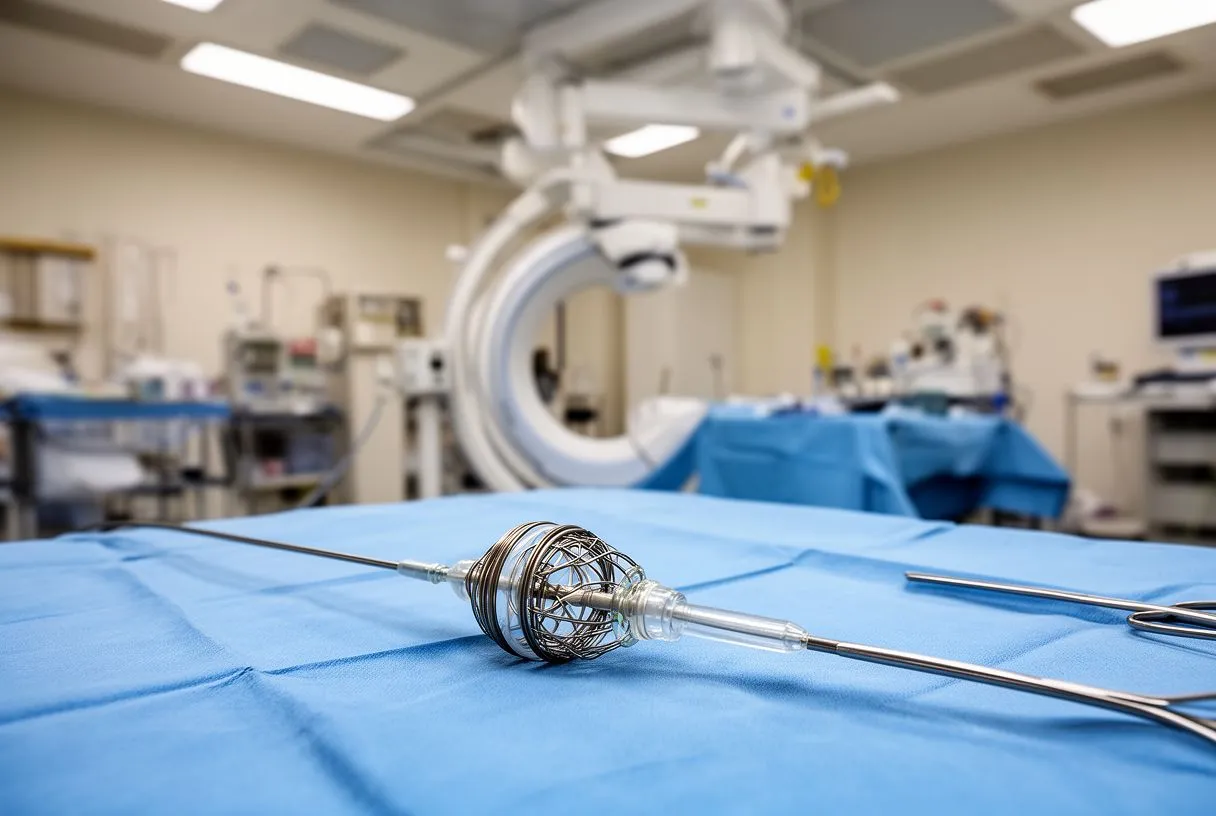
Inside the heart. Under continuous X-ray and ultrasound imaging, a wire crosses the old valve. The new valve, crimped tightly onto a balloon or self-expanding frame, is positioned exactly at the aortic annulus — the ring of tissue where the valve sits — and then released. Within moments, the new valve takes over, and the team checks immediately that it works and that there is no leak around it.
Closing up. Once the catheter is withdrawn, the small opening in the aorta is closed with fine sutures, the tube is removed, and the incision is closed in layers. The breastbone is never divided. Most transaortic TAVR procedures take one to two hours, considerably less than an open valve replacement.
Which TAVR Access Site Options Exist?
The full menu. Transaortic is only one of several routes when the groin cannot be used. Understanding the tavr access site options helps patients ask informed questions:
- Transfemoral (groin): the default route — no incision in the chest, fastest recovery, chosen in the large majority of cases.
- Transaortic (direct aortic): a small incision in the upper chest over the ascending aorta; excellent for patients with narrow or diseased leg arteries.
- Transapical: entry through a small incision between the ribs at the apex — the tip — of the left ventricle, going straight up to the valve.
- Transsubclavian: entry through the artery below the collarbone, useful when the aorta itself is heavily calcified.
- Transcarotid and transcervical: newer routes through the neck arteries, used by experienced teams in selected patients.
Choosing among them. The choice depends on the arteries' size and condition, the amount of calcium, prior chest surgery, and the patient's lung function. Some routes require general anaesthesia; the femoral route often needs only sedation. The team weighs all of this against the patient's overall surgical risk, often expressed with a score such as EuroSCORE II, which estimates the risk of the procedure from age, frailty and other conditions.
Why one size never fits all. Two patients with identical valve disease can need completely different access routes. That is exactly why the multidisciplinary review matters: in our team, the transaortic access technique is recommended only when the evidence and the anatomy genuinely support it for that individual patient.
Who Qualifies for Direct Aortic TAVR?
Assessing candidacy. Transaortic tavr candidacy is established with imaging: a CT angiogram maps the size, tortuosity and calcium of every artery from the groin to the aortic valve. If the iliac arteries are too small or too diseased, and the ascending aorta is accessible and not severely calcified, the transaortic route moves to the front of the list.
High risk TAVR patients. Many patients who need an alternative route are also those at higher surgical risk — advanced age, frailty, lung disease, or a previous sternotomy that makes a repeat open operation dangerous. TAVR itself was developed precisely for these people, and alternative access routes extend its reach. Studies such as REPRISE II, which evaluated a repositionable valve system delivered via alternative access, helped establish how these routes could be used safely in practice (ClinicalTrials.gov).
When the aorta says no. A severely calcified or aneurysmal ascending aorta can rule out the transaortic route, because stitching a tube into a brittle, dilated or diseased aorta is risky. In those situations the transapical or subclavian route is considered instead. In our consultations we take the time to explain what the CT scan actually shows, in plain words, and to answer every question before any decision is made.
What Does Transaortic TAVR Recovery Look Like?
The hospital stay. Recovery after transaortic tavr is slightly longer than after the femoral route because there is a surgical incision to heal, but far shorter than after open heart surgery. Most patients leave hospital within a few days. For comparison, patients who have a valve replaced through the groin artery typically go home within one to two days; transaortic patients should plan on a few extra days of hospital care.
The first weeks. Expect fatigue for two to four weeks — the body is healing a surgical wound even though the heart itself was not opened. Stair climbing, gentle walking and light household activity resume early. Driving is usually permitted once the incision is comfortable and medications allow. Heavy lifting is restricted for several weeks to protect the healing aorta and chest wall.
What we watch for. Follow-up after an alternative-route TAVR usually includes an echocardiogram to confirm the new valve is functioning well, a wound check, and a frank conversation about activity levels. We encourage patients to raise every symptom, however small — most turn out to be ordinary healing, and the ones that are not get caught early.
Are Transaortic TAVR Procedures Safe?
Honest risk discussion. No heart procedure is without risk, and anyone who tells you otherwise should raise a flag. The specific risks of transaortic access include bleeding from the aortic entry site, wound infection, and the general risks of TAVR such as stroke, heart block requiring a pacemaker, or residual valve leak. These risks are comparable to other alternative-access routes and lower than full open surgery in appropriate candidates.
What research shows. Large outcome registries, reported in journals such as the British Medical Journal, have followed TAVR patients across all access routes for years, and the overall trajectory has been one of steady improvement as devices, imaging and techniques mature. Valve choice and anatomy interact: the shape and structure of the underlying valve — for example a bicuspid valve present from birth — can influence outcomes, and recent analyses suggest these associations differ between men and women (Open Heart).
How we reduce risk. Careful case selection is the strongest safety tool. Every case in our practice is reviewed by the team before the route is chosen, and the less invasive option is recommended only where the evidence supports it for that specific patient.
How Do You Prepare for TAVR Through the Chest?
The work-up. Preparation centres on imaging and risk assessment. The CT angiogram decides the access route. An echocardiogram measures the valve and heart function. Sometimes a transoesophageal echocardiogram — a probe swallowed under sedation that photographs the heart from the inside — is used to assess the aortic valve in fine detail during planning or during the procedure itself.
Practical steps. Blood thinners may be adjusted ahead of time, a dental check is often advised to lower infection risk, and patients with lung disease receive breathing exercises. Arranging help at home for the first week is one of the most useful things a family can do.
- Complete the imaging: CT, echo and any stress testing ordered by the team — these decide the route and the valve.
- Review medications: bring a full list; some drugs are paused, others continued.
- Plan the recovery space: a bed near a bathroom, no stairs for the first days, help with meals.
- Ask every question: about the route chosen, the valve type, and what happens if the plan changes during surgery.
The first contact. Our team begins with a free video consultation: we get to know the patient, talk through the condition together, and say which studies are still genuinely needed so that no unnecessary ones are ordered. A face-to-face visit at our consulting rooms follows when the patient decides to go ahead.
Is a Minimally Invasive Aortic Valve Better Than Open Surgery?
Two different questions. "Better" depends on who the patient is. A minimally invasive aortic valve procedure — whether TAVR or a small-incision surgical replacement — avoids dividing the breastbone, shortens recovery and reduces bleeding risk. Conventional open surgery offers unmatched visibility, direct repair of neighbouring problems, and decades of long-term data on surgical valves.
What is cardiac aortic surgery? This umbrella phrase covers all operations on the heart and the aorta, from coronary bypass to aneurysm repair and valve replacement. TAVR grew out of this field, and modern cardiac aortic surgery now blends catheter-based and surgical techniques — sometimes in the same patient, in the same sitting. For patients whose aorta needs repair as well as their valve, the surgical option may be combined with valve work.
The trade-offs in plain terms. Open surgery demands more of the body and takes longer to recover from — typically eight to twelve weeks — but offers proven durability and the ability to fix everything at once. Catheter routes demand less and recover faster but carry their own specific risks. For many older or frail patients the catheter route offers the lowest risk for their situation; for younger, robust patients, conventional surgery may serve them for decades longer. In our team we perform both conventional and transcatheter procedures, and we say clearly which one we believe serves the person in front of us, and why.
How Do You Choose the Right Team for TAVR Without Groin Access?
Training and volume matter. Alternative access routes demand surgical skill even though the valve is delivered by catheter. A team experienced in TAVR without groin access will have performed the transaortic route many times, and will also be fluent in the other routes — because the ability to switch plans mid-procedure is part of real expertise. Dr Molina trained in structural cardiology and TAVR at CHU Bordeaux in France, the team also trained at Jena, Bad Berka and Buffalo, and Dr Molina performed the first robotic heart surgery in Guadalajara.
Questions to ask any team. Come with a list. How many transaortic cases does the team perform? What is the plan if the femoral arteries fail during the procedure? Who decides the route — one doctor or the whole team? A good team welcomes these questions.
Second opinions are normal. We encourage second opinions and treat seeking one as a normal part of deciding about heart surgery — no cardiac team worth its name will be offended. If you or a family member face valve disease and have been told the groin route is not possible, bring your imaging, ask about every access option, and book a consultation with a qualified cardiac team rather than settling for the first answer. Dr Molina and our multidisciplinary team consult in Guadalajara, Querétaro and Hermosillo, and the first video consultation is free.

Transaortic access for TAVR exists for one reason: so that patients whose arteries will not carry a catheter from the groin still have a less invasive option than open heart surgery. It uses a small chest incision, the same valve technology, and a recovery measured in weeks rather than months. The right route is the one your own anatomy and overall health point to — a decision best made with a heart team that reviews every case together, explains the options in plain words, and leaves the final choice with you.






