


Transcatheter Tricuspid Intervention: Options Without Surgery
Transcatheter tricuspid intervention options let specialists treat a leaking tricuspid valve through a vein — no open surgery needed.
If you or a family member has been told the tricuspid valve is leaking, you may have been offered two choices in the past: years of medication or open-heart surgery. Today there is a third path. Transcatheter tricuspid intervention options allow specialists to treat a leaking tricuspid valve through a vein, without opening the chest and without stopping the heart. In this guide we explain what the tricuspid valve does, why it leaks, which nonsurgical treatments exist, who qualifies for each one, and what recovery actually looks like — so you can arrive at any consultation knowing the right questions to ask.
What Is Transcatheter Tricuspid Intervention?
Transcatheter tricuspid intervention is a way of treating the tricuspid valve using thin tubes (catheters) inserted through a vein, usually in the groin, instead of open surgery. The tricuspid valve is one of the four heart valves — the others being the aortic, mitral and pulmonary valves. It sits on the right side of the heart, between the two right chambers, and opens to let blood flow from the upper right chamber (the right atrium) into the lower right chamber (the right ventricle), then closes to keep blood moving forward toward the lungs.
Because the valve is reached through the veins that already connect to the heart, the chest is never opened, the heart is never stopped, and no heart-lung machine is needed. The procedures are performed in a catheterization laboratory — often called a "cath lab" — under general anaesthesia or deep sedation. Most patients go home within a few days.
Our team performs conventional, minimally invasive, robotic and transcatheter procedures, and we recommend the less invasive route only where the evidence supports it for that specific patient. That last point matters. A catheter-based option is not automatically the right one; sometimes conventional surgery gives a better long-term result, and an honest team will say so.
What Is Tricuspid Regurgitation and Should You Worry?
Tricuspid regurgitation means the tricuspid valve leaks: each time the right ventricle contracts, some blood flows backwards into the right atrium instead of forward to the lungs. Mild leaking is extremely common and usually harmless — many healthy older adults have a trace of it found incidentally on an echocardiogram, the ultrasound scan of the heart.
When should you actually be concerned? Worry is warranted when the leak is moderate-to-severe and the heart starts to show signs of strain. Typical symptoms include swelling of the ankles and legs, abdominal bloating from fluid accumulating in the liver and belly, breathlessness on exertion, fatigue, and a prominent pulse in the neck. These are signs the right side of the heart is struggling against the backwards flow.
A severe leak that is left untreated can lead to right heart failure, atrial fibrillation (an irregular rhythm of the upper chambers), liver congestion, and progressively worsening exercise tolerance. So the honest answer to "should I worry?" is: a trace leak, no; a severe, symptomatic leak, yes — it deserves evaluation by a heart team.
- Mild regurgitation: common, monitored with periodic echocardiograms, rarely needs treatment.
- Moderate to severe regurgitation with symptoms: warrants specialist evaluation and discussion of repair options.
- Severe regurgitation with right heart strain: treatment should not be delayed, because the damage to the right ventricle can become irreversible.
In our consultations we take the time to explain what the echocardiogram actually shows, in plain words, and to answer every question before any decision is made.
What Are the Treatment Options for Tricuspid Valve Regurgitation?
Treatment depends on how severe the leak is, what is causing it, and whether other valves or arteries are also diseased. The main tricuspid regurgitation treatment options fall into three groups.
Medication is always the starting point. Diuretics ("water pills") reduce fluid overload and ease the swelling; drugs that lower pressure in the lungs or treat the underlying rhythm problems can also help. Medication manages symptoms, but it does not fix the valve itself.
Conventional surgery remains the most durable fix for suitable patients. During open-heart surgery the valve can be repaired — often with a ring, an approach known as tricuspid annuloplasty — or rarely replaced. Surgery is often chosen when the mitral or aortic valve also needs attention, since the tricuspid valve can be addressed in the same operation. Notably, Tricuspid (three-leaflet) valve anatomy makes repair the preferred strategy in most surgical cases, and repair generally outperforms replacement in durability.
Transcatheter options are the newest group and the focus of this article: edge-to-edge repair, replacement, and annular devices, all delivered through a catheter. They are aimed mainly at patients whose leak is severe and symptomatic but who are at high risk for — or have already had — open surgery.
How Does Transcatheter Edge-to-Edge Repair Work?
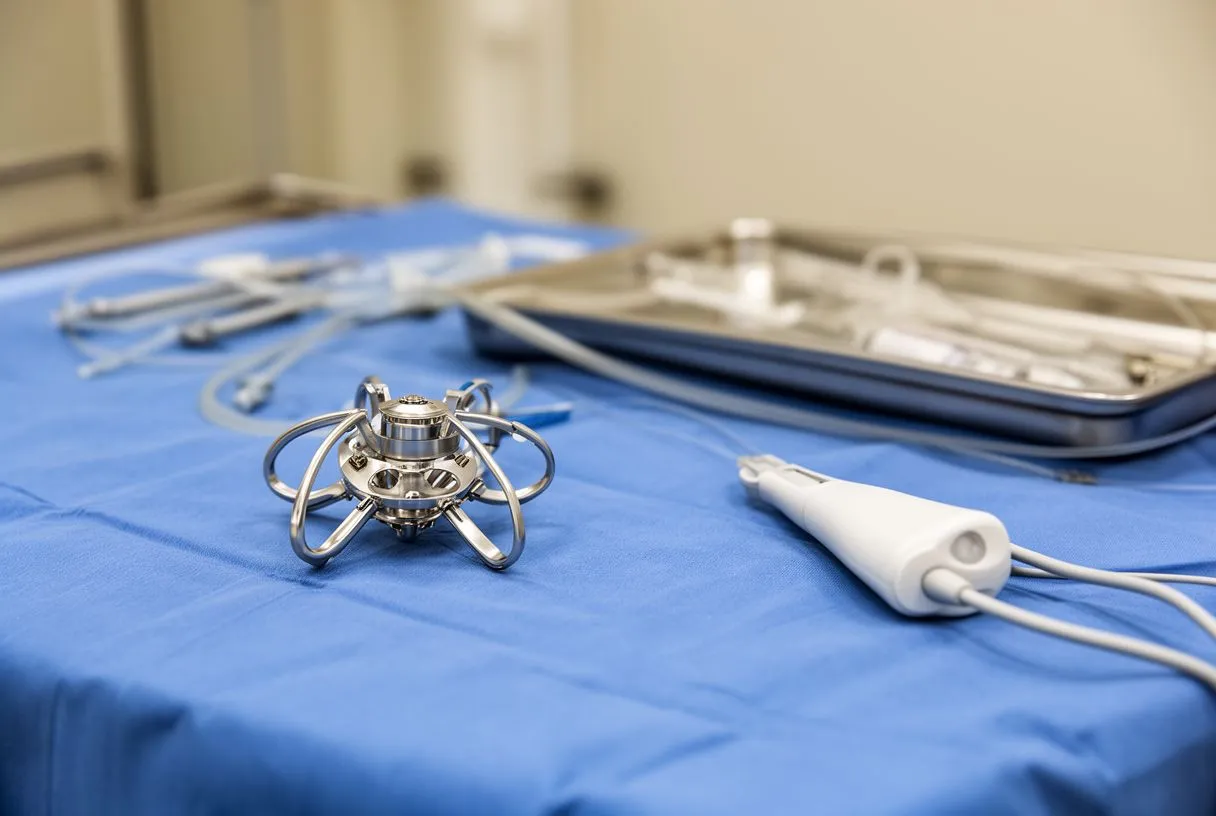
Transcatheter Edge-to-Edge Repair (TEER) is the most established nonsurgical tricuspid valve repair technique. The idea is elegant: through a vein, the specialist guides a clip-delivery catheter to the leaking valve and places one or more small clips that grasp the middle portions of the leaking leaflets — the three thin flaps of tissue that form the valve. Clipping the leaflets together reduces the area through which blood can leak backwards.
You may recognise the concept from the mitral valve, where the same technique has been used for years. In the tricuspid valve it is technically harder — the valve sits in a low-pressure environment, has thinner tissue, and the working space between the catheter and the valve is more cramped — which is why tricuspid TEER is performed in centres with specific experience in this valve.
Published registry data on TEER and other Transcatheter Tricuspid Intervention techniques show meaningful reductions in the degree of regurgitation and improvements in symptoms and quality of life for carefully selected patients (Outcomes After Current Transcatheter Tricuspid Valve Intervention). The procedure does not always eliminate the leak completely; the realistic goal is to reduce it from "severe" to "mild or moderate," which is usually enough to relieve symptoms and protect the right ventricle.
Every case at our practice is reviewed by the multidisciplinary team against international practice guidelines before a recommendation is given, and the patient receives a clear proposal with the alternatives — the final decision is always theirs.
What Are the Indications for Tricuspid Edge-to-Edge Repair?
TriClip is the name of the commercial clip system used for tricuspid TEER. Patients often ask what the indications for TriClip are — in other words, who qualifies.
Symptomatic severe tricuspid regurgitation is the core indication. The typical candidate has significant leaking confirmed on echocardiogram, symptoms such as leg swelling or breathlessness, and has been judged — ideally by a full heart team — to be at high or prohibitive risk for conventional open-heart surgery. This includes many elderly patients, patients with frailty, or patients with previous chest operations that make re-do surgery dangerous.
Good imaging quality matters. The heart team needs clear echocardiographic views of all three leaflets to plan where the clips will go. A pre-procedure transoesophageal echocardiogram (an ultrasound probe passed down the oesophagus, giving very detailed pictures) and sometimes a CT scan of the chest are required to confirm the anatomy is suitable.
Some anatomies are not suitable. Very short or tethered leaflets, extremely enlarged valve openings where no clip can reduce the leak enough, or severe calcification can disqualify a patient from TEER. In those cases the alternatives — transcatheter replacement, a different annular device, or palliative medication — are discussed instead.
- Typical TriClip candidate: severe symptomatic tricuspid regurgitation, high surgical risk, leaflet anatomy suitable for clipping.
- Work-up required: echocardiogram, transoesophageal echo, chest CT, and heart-team review.
- Realistic goal: reduction of the leak by at least one to two grades with symptom relief — not a perfect valve.
When Is Transcatheter Tricuspid Valve Replacement Used?
Transcatheter tricuspid valve replacement is the second major nonsurgical option. Instead of repairing the leaking valve, the team delivers a replacement valve — a tissue valve mounted inside a metal frame — through a vein and positions it inside the diseased tricuspid valve. Once deployed, the new valve takes over, and the old leaking leaflets are pressed aside.
This approach is reserved for valves whose anatomy cannot be clipped, or for patients in whom TEER has failed or is unlikely to achieve a sufficient reduction in the leak. Transcatheter tricuspid valve replacement is a minimally invasive alternative to surgical valve replacement, but it carries its own considerations: the prosthesis needs lifelong anticoagulation in many cases, and there is a risk of disturbing the heart's electrical conduction system, which can require a pacemaker.
The tricuspid valve also has less "landing zone" than the aortic or mitral valve — the new valve has fewer solid structures to anchor against — which is why patient selection and imaging planning are even more critical here. Experience matters enormously. Dr Molina trained in structural cardiology and TAVR at CHU Bordeaux, and the team also trained at Jena, Bad Berka and Buffalo.
Replacement may also be discussed for patients who have an existing failing surgical bioprosthesis in the tricuspid position — a so-called "valve-in-valve" procedure — where the catheter valve is placed inside the worn-out surgical one.
Can the Tricuspid Valve Be Repaired Without Open Heart Surgery?
Yes — in selected patients this is exactly what happens. The phrase patients often search is "tricuspid valve repair without surgery," and it covers several distinct techniques, all delivered through catheters.
Beyond the clip and the replacement valve, there are annular devices. The valve's ring-shaped support, the annulus, widens in most tricuspid regurgitation — that widening is a major reason the valve leaks. Several investigational devices aim to narrow the annulus from inside the veins, pulling the leaflets closer together. Some of these devices are still in clinical trials and are not yet widely available outside specialised centres.
Other adjunct techniques includedevices that create an extra passageway for blood (so-called "shunt" devices) for patients whose right ventricle is already too damaged for valve treatment to help. Your heart team will explain whether the goal is to fix the valve itself or to relieve the pressure behind it.
The honest summary: nonsurgical heart valve repair for the tricuspid valve is real, proven and growing — but it is not universal. Some patients still do better with conventional surgery, and some do better with medication alone. We encourage second opinions and treat seeking one as a normal part of deciding about heart surgery — any trustworthy team will welcome it.
What Happens During the Procedure and Recovery?
Knowing what the day actually looks like removes much of the fear. Here is the typical sequence for a transcatheter tricuspid procedure.
Preparation. You arrive the day before or the morning of the procedure. Lines are placed, final imaging is done, and you receive anaesthesia. The access site — almost always the femoral vein in the groin — is cleaned and numbed.
The procedure itself. The specialist advances the catheter through the vein to the heart, guided by X-ray and echocardiography. For TEER, clips are placed one by one, with the leak checked after each. For replacement, the new valve is positioned and deployed. Procedures typically last between two and four hours, sometimes longer when multiple clips are needed. You will feel nothing during the procedure, though you may be aware of the team working around you if you are under sedation rather than full anaesthesia.
Recovery. Most patients spend one night in a monitored ward, sometimes two. The groin site is checked regularly for bleeding. Walking usually starts the next day. Most people go home within two to four days, dramatically shorter than the recovery from open-heart surgery, which typically involves several days in intensive care and weeks of sternal healing. Gentle activity resumes within a week or two; full normal activity follows over the following weeks.
The first contact at our practice is a free video consultation: we get to know the patient, talk through the condition, and say which studies are still needed so no unnecessary ones are ordered; a face-to-face visit at the consulting rooms follows when the patient decides to go ahead.

Are Transcatheter Tricuspid Interventions Safe?
No cardiac procedure is risk-free, and pretending otherwise would be a disservice. The safety profile of transcatheter tricuspid procedures is generally better than open surgery for the high-risk patients who receive them, but specific risks must be discussed openly.
Known risks include: access-site bleeding or bruising at the groin, rhythm disturbances (especially after valve replacement, where a pacemaker may be needed), residual leaking if not enough clips can be placed, stroke (rare), and — with replacement — device migration or the need for a second procedure. The overall risk of life-threatening complications is lower than with open surgery in the populations studied, which is precisely why these techniques exist.
Large international registries of Transcatheter Tricuspid Intervention report that procedure success is achievable in the great majority of selected patients and that symptom improvement is consistent across centres, while the risk profile depends heavily on patient frailty and right-ventricular function (Outcomes After Current Transcatheter Tricuspid Valve Intervention). Right-ventricular function — how well the pumping chamber on the right side still works — matters because, as research on TAPSE (a measurement of right-ventricular contraction) after valve surgery has shown, poor right-sided function before intervention is linked to worse long-term survival (The Impact of Tricuspid Annular Plane Systolic Excursion (TAPSE) After Mitral Valve Surgery on Long Term Mortality). This is why earlier referral, before the right ventricle fails, is better.
In our consultations we walk through these risks one by one, compare them with the risks of doing nothing and of conventional surgery, and make sure every question is answered before any decision. The American Heart Association provides reliable patient-facing information on heart valve disease and treatment decisions (American Heart Association).
How Do You Choose the Right Heart Valve Team?
Your outcome depends less on the device than on the team and the process behind it. Here is what to look for when choosing where to have a tricuspid valve procedure.
- A true multidisciplinary heart team: cardiac surgeons and interventional cardiologists reviewing your case together, not a single specialist pushing one technique.
- Complete imaging before a decision: transthoracic and transoesophageal echocardiography, chest CT, and a clear explanation of what each study shows.
- Options presented, not prescribed: you should hear the surgical and the transcatheter route, with honest trade-offs for your anatomy and health.
- Transparent about experience: ask how many tricuspid procedures the team performs and what their outcomes are.
- Comfort with second opinions: a confident team welcomes them.
For international patients considering treatment in Mexico, practical questions matter too: travel timing around the procedure, accommodation for the recovery days, and how records and follow-up imaging will be shared with your cardiologist at home. We have consulting rooms in Guadalajara, Querétaro and Hermosillo.
Conclusion: Key Takeaways on Transcatheter Tricuspid Intervention Options
A severe, symptomatic leak of the tricuspid valve is no longer a choice between lifelong medication and open-heart surgery. Transcatheter tricuspid intervention options — edge-to-edge clipping, transcatheter replacement, and emerging annular devices — can reduce the leak, ease symptoms and protect the right ventricle through a vein, with days rather than weeks of recovery. The right option depends entirely on your valve anatomy, your overall health, and how early the problem is caught; earlier referral almost always means more options and better outcomes.
As a multidisciplinary team of cardiac surgeons led by Dr Alejandro Molina, we review every case against international practice guidelines, explain the findings in plain language, and give you a clear recommendation together with the alternatives — because the decision is yours, and it deserves to be an informed one.
If you have been diagnosed with tricuspid regurgitation, or you have been told your valve is not fixable without surgery and you want to know whether the transcatheter route applies to you, start with a conversation rather than a self-diagnosis. We offer a first video consultation at no cost, so you can understand your situation and your transcatheter tricuspid intervention options before committing to anything. Book a consultation with a qualified cardiac team — including ours if it is convenient for you — and take the next step with clarity instead of uncertainty.






