

Tricuspid Valve Disease: Symptoms and Treatment Options
Tricuspid valve disease treatment options from Guadalajara heart specialists.
Treatment for tricuspid valve disease has changed significantly over the past decade, and many patients who once had no options now have several. The tricuspid valve sits on the right side of the heart and has quietly been called the "forgotten valve," but when it stops working properly, the whole circulation suffers. In this guide, we walk through what the valve does, the symptoms to watch for, how the condition is diagnosed, and every repair and replacement option available today — from open surgery through transcatheter procedures. Our goal is to give you the clear, calm information you need before you sit down with a cardiac team.
What Is the Tricuspid Valve and Why Does It Matter?
The Tricuspid Valve is one of four valves in the heart, and as its name suggests, it is tricuspid (three-leaflet) — it has three thin flaps, or cusps, that open and close with every heartbeat. It sits between the right atrium, which receives blood returning from the body, and the right ventricle, which pumps that blood to the lungs to pick up oxygen.
When the right ventricle contracts, the tricuspid valve closes tightly so blood flows forward to the lungs and not backwards. The ring of tissue the leaflets attach to is called the Valve Annulus, and it is often the first part of the valve to stretch and lose its shape in disease. Unlike the aortic valve, the tricuspid valve normally operates at low pressure, which is one reason problems there were long underestimated.
If the valve leaks or narrows, blood that should be moving forward pools in the right side of the heart and in the large veins returning from the body. Over time this raises pressure throughout the system and causes the congestion — swelling, fatigue, liver congestion — that we describe below. Knowing your heart: the mitral valve and the aortic valve are discussed in detail elsewhere on this site, but the tricuspid valve deserves its own explanation, because its treatment follows different rules.
What Is Tricuspid Valve Disease?
Tricuspid valve disease is an umbrella term covering any condition that stops the valve from doing its job. The two main problems are regurgitation, where the valve leaks and blood flows backwards, and stenosis, where the valve becomes stiff and narrowed, making it harder for blood to pass through. Many patients have a mix of both, especially when the cause is rheumatic — an older streptococcal infection that scars the valves — and surgical teams must carefully evaluate both problems before operating, as described in detailed case reports on mixed rheumatic tricuspid valve disease.
Regurgitation vs stenosis: regurgitation is by far the more common problem in Western countries. It is usually "functional," meaning the leaflets themselves are normal but the ring beneath them has stretched, often because the right ventricle has enlarged under strain. Stenosis is rarer and is usually caused by rheumatic scarring.
Severity matters: cardiologists grade valve disease as trivial, mild, moderate or severe. Treatment decisions depend heavily on this grading, on symptoms, and on how the right ventricle is coping. Mild regurgitation in an otherwise healthy heart usually needs nothing more than monitoring.
At our practice, every case of suspected valve disease is reviewed by the multidisciplinary team against international practice guidelines before a recommendation is made, and we explain the findings in plain words so the final decision always rests with the patient.
What Are the Symptoms of Heart Valve Dysfunction?
Symptoms of heart valve dysfunction involving the tricuspid valve are often mistaken for other, less serious conditions, which is why diagnosis is frequently delayed. Because the problem is on the right side of the heart, the signs show up in the body's circulation rather than in the lungs.
Swelling and congestion: the most typical symptoms are swelling of the legs and ankles, abdominal swelling from fluid around the liver and bowel, and a sensation of fullness or discomfort under the right ribs. Some people notice a prominent pulsation in the neck veins, because pressure backs up into them.
Fatigue and reduced exercise capacity: because less blood reaches the lungs for oxygenation, patients often feel unusually tired or short of breath with activity. Loss of appetite and unintentional weight loss can occur in advanced disease.
These symptoms overlap with heart failure in general, so doctors rely on examination and imaging rather than symptoms alone. If you notice persistent leg swelling or new breathlessness, it is worth asking specifically about your right-sided valves — not just the left-sided ones.
What Causes Tricuspid Regurgitation and Stenosis?
The causes of tricuspid valve disease fall into two broad groups: primary, where the valve itself is damaged, and secondary, where a healthy valve is stretched by other heart problems. Understanding the cause is essential, because it shapes which treatment will work.
- Atrial fibrillation and right heart strain: an irregular, overworked right ventricle can enlarge the valve annulus and stretch normal leaflets apart — the commonest cause of secondary regurgitation.
- Primary valve disease: rheumatic fever, infection of the valve (endocarditis), and certain congenital abnormalities such as Ebstein's anomaly damage the leaflets directly. Mitral Valve Prolapse sometimes coexists with tricuspid prolapse in the same patient.
- Carcinoid and device-related causes: Carcinoid Heart Disease, caused by a rare hormone-producing tumour, thickens the tricuspid leaflets, and some older appetite-suppressant drugs and intravenous lines also damaged valves.
- Pacemaker leads: a pacemaker wire passing through the tricuspid valve can interfere with leaflet closure over time.
Ischaemic Heart Disease — blocked coronary arteries that weaken the heart muscle — can also contribute by dilating the right ventricle. Tricuspid stenosis, when it occurs, is nearly always rheumatic in origin and is rare in countries where rheumatic fever is now uncommon.
What Does "Trivial TR" Mean on an Echocardiogram?
Many patients are alarmed by the words "trivial TR" or "mild tricuspid regurgitation" on their echo report and arrive at consultation worried. The reassuring truth is that a trace of tricuspid regurgitation is extremely common and, in most people, entirely normal.
Physiological leakage: studies of healthy people show that a small amount of tricuspid regurgitation can be detected on echocardiography in a large proportion of the normal population. It is a by-product of normal valve mechanics, not a disease.
When it matters: trivial TR becomes clinically meaningful only when it is part of a progressive pattern, when the right ventricle is enlarging, or when other valves are also affected. Cardiologists therefore track it over time rather than treating it.
The practical takeaway: if your report says trivial or mild TR and you have no symptoms and a normal heart, the usual plan is simply periodic follow-up. If you are unsure what your report means, bring it to a consultation — in our practice, we take the time to explain what the studies actually show, in plain words, before any decision is made.
How Is Tricuspid Valve Disease Diagnosed?
Diagnosis starts with the echocardiogram, an ultrasound scan of the heart that shows the valve moving in real time. It measures the size of the leak, the pressure in the right ventricle, and the shape of the annulus. Most patients with suspected tricuspid valve disease will have had this test already.
Transoesophageal echo: when the standard scan is not detailed enough, a probe is passed down the oesophagus to get much closer pictures of the valve. This is essential before planning any repair or transcatheter procedure, because it defines the anatomy of each leaflet.
Additional tests: depending on the cause, your team may also order a CT scan of the chest, an ECG to check rhythm, cardiac MRI to measure the right ventricle precisely, or a catheter study to measure pressures directly. Cardiac MRI in particular is increasingly used to judge whether the right ventricle will recover after treatment.
We do not order unnecessary studies: the first contact at our practice is a free video consultation in which we review existing tests, explain them, and say exactly which studies are still needed — and which are not.
What Are the Treatment Options for Tricuspid Regurgitation?
Treatment for tricuspid regurgitation spans a spectrum from watchful waiting to surgery to new catheter-based devices. The right option depends on severity, cause, symptoms, and the patient's overall condition. The evidence base has grown rapidly in recent years, and the current state of transcatheter treatment for tricuspid valve disease shows how much the field has moved beyond conventional surgery alone.
Monitoring and medication: mild to moderate regurgitation without symptoms is usually watched with regular echocardiograms. Diuretics — "water tablets" — relieve swelling and congestion but do not fix the valve itself.
Surgery: severe regurgitation, especially with symptoms or a stretching right ventricle, is generally treated with surgery: either repair (annuloplasty) or replacement. Repair is preferred when the anatomy allows, because it preserves the patient's own tissue.
Catheter-based treatment: for patients at high surgical risk, transcatheter options — devices delivered through a vein without opening the chest — are now an established alternative in selected patients. Because we perform conventional, minimally invasive, robotic and transcatheter procedures, our team can discuss all of these routes with you and recommend the less invasive one only where the evidence supports it for your situation.
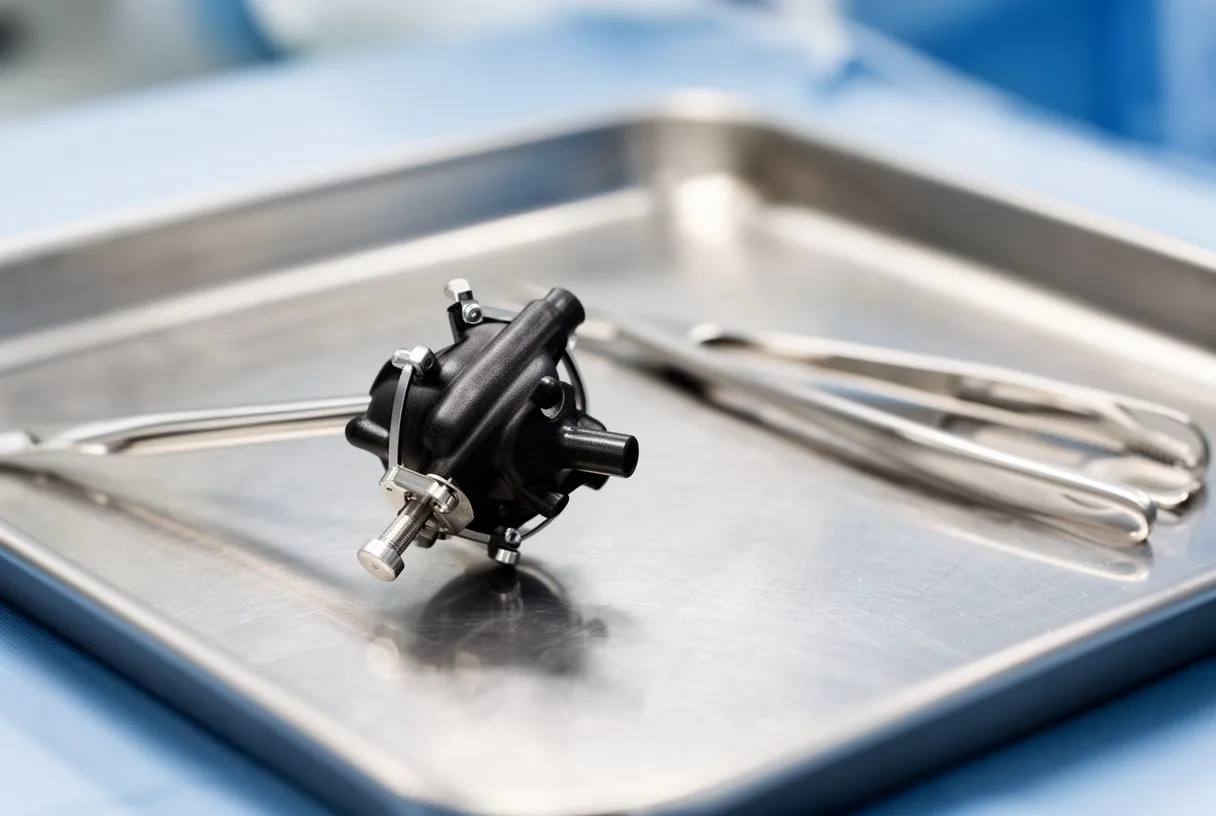
A landmark randomised trial of transcatheter tricuspid valve intervention in patients with severe regurgitation showed that the catheter-based approach improved symptoms and quality of life compared with medical therapy alone, which is why these options now appear in international guidelines for high-risk patients.
How Does a Tricuspid Annuloplasty Procedure Work?
The tricuspid annuloplasty procedure is the most common surgical repair for this valve. Because most tricuspid regurgitation comes from a stretched ring rather than damaged leaflets, the fix is to restore the ring to its normal size.
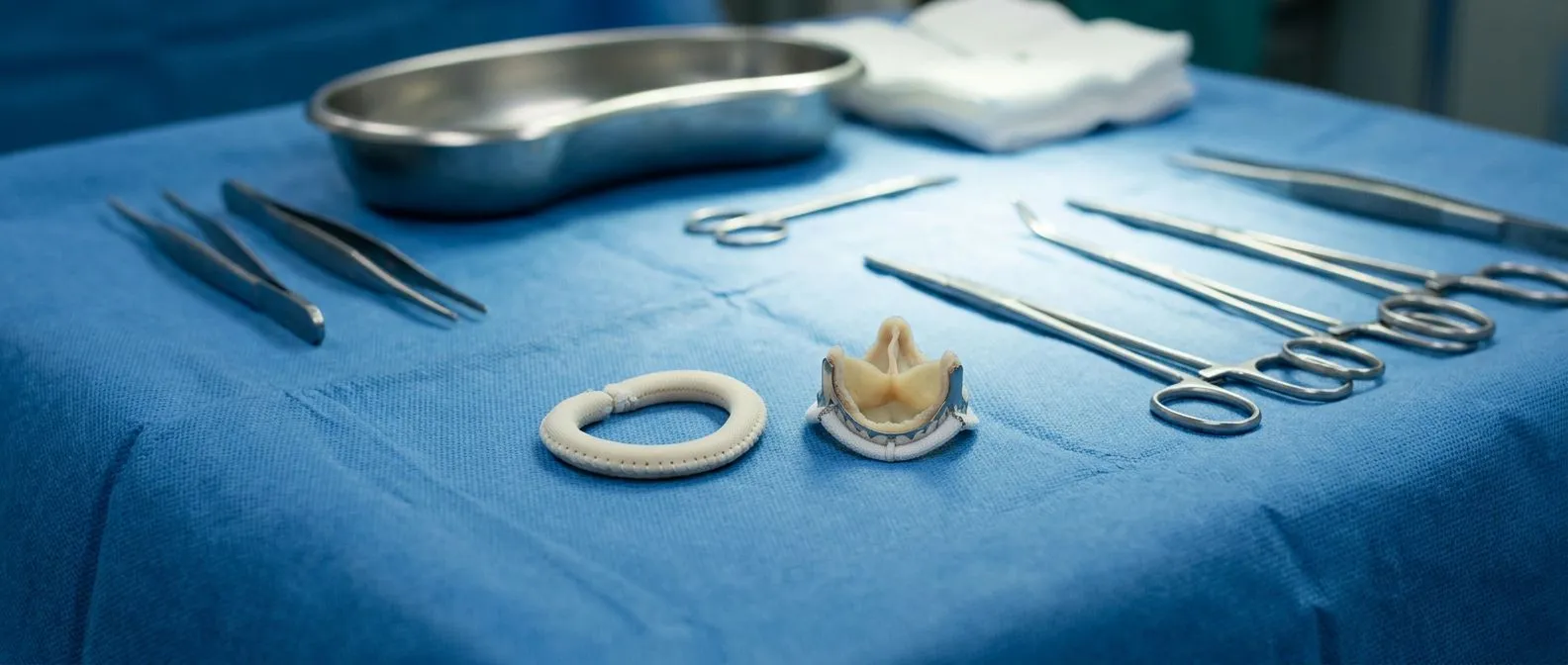
How it is done: the surgeon implants a small ring, usually made of fabric-covered metal or tissue-compatible material, around the valve annulus through an incision in the right atrium. The ring cinches the annulus down so the leaflets can meet and close properly again. This is a form of Stented Valve repair in the sense that an implanted prosthesis supports the patient's own tissue.
When repair is possible: annuloplasty works best when the leaflets themselves are healthy and the problem is purely dilation. If the leaflets are scarred, tethered, or damaged — as in rheumatic disease or carcinoid — replacement is usually needed instead.
Annuloplasty is often performed alongside other valve surgery, for example when a patient is already undergoing mitral valve surgery and the tricuspid valve is found to be leaking. The timing of tricuspid intervention in these combined operations is a decision made case by case, guided by measurements of the annulus and right ventricle.
What Are the Tricuspid Valve Replacement Options?
When the valve cannot be repaired, replacement is the alternative. Two families of replacement valves exist, and the choice depends on your age, your need for future procedures, and your willingness to take anticoagulant medication.
- Bioprosthetic (tissue) valves: a Porcine Valve — made from pig tissue — or a bovine tissue valve is sewn into place. These avoid lifelong blood thinners but degenerate over the years. Valve choice is discussed in more detail in our guides to mechanical options.
- Mechanical valves: durable metal valves that last decades but require permanent anticoagulation. In the tricuspid position, mechanical valves carry a higher risk of clotting than in other positions, so they are chosen less often.
Supra-annular positioning: in some tricuspid replacements, the valve is implanted slightly above the annulus — a Supra-annular Valve technique — particularly when the annulus is severely distorted. A Stentless Valve, which contains no rigid frame, is another option in specific anatomies.
Dr Molina trained in cardiac, minimally invasive, robotic and structural surgery at the University of Montreal, and in structural cardiology and TAVR at CHU Bordeaux, and that training shapes how we match valve type to patient anatomy rather than applying one solution to everyone. We present you with the options and the reasoning behind each, and the final decision is always yours.
What Minimally Invasive and Transcatheter Options Exist?
The biggest change in tricuspid care in the last decade has been the arrival of catheter-based treatments. These approaches avoid opening the chest and are especially valuable for patients whose frailty or previous surgeries make conventional surgery risky.
Edge-to-edge repair: borrowed from the technique used for the mitral valve, this approach clips the leaking leaflets together through a vein in the groin, reducing the leak. It is the most studied transcatheter tricuspid option and is available at selected centres.
Transcatheter valve replacement: in severe cases, a replacement valve can be delivered through a catheter, sometimes as a Valve-in-valve procedure inside a previously implanted surgical valve that has failed. This is an area of Transcatheter Tricuspid Intervention that is advancing quickly, and the long-term follow-up of these transcatheter treatment approaches continues to inform patient selection.
Other devices: annular remodelling devices and orthotopic transcatheter valves designed specifically for the tricuspid position are in clinical use and continuing development. Transcatheter Aortic Valve Implantation, by contrast, addresses the aortic valve and is a separate topic — the two should not be confused.
Dr Molina performed the first robotic mitral valve repair in the Ángeles Health System and the first robotic heart surgery in Guadalajara, and the team also trained at Jena, Bad Berka (Germany) and Buffalo (USA). That experience is why we can tell you honestly whether a minimally invasive route is genuinely right for your case, or whether surgery would be the safer choice.
What Does Recovery From Tricuspid Valve Surgery Look Like?
Tricuspid valve surgery recovery follows a fairly predictable arc, though the pace varies with the approach used and your overall health. Knowing what to expect reduces anxiety and helps you plan.
First days: after conventional surgery you will spend one to two days in intensive care, then move to a ward. Breathing tubes, drains and monitoring lines are removed progressively. Many patients feel a sense of relief at the first unaided breath after the tube comes out, and that moment marks the beginning of real recovery.
First weeks: most patients go home within a week to ten days after open surgery, sooner after minimally invasive procedures. Sternum precautions apply after conventional surgery: no lifting, driving restrictions, and gradual return to walking. Heart rate and anticoagulation are monitored closely, especially if a mechanical valve was implanted.
Months ahead: cardiac rehabilitation — supervised, progressive exercise — significantly helps recovery. Fatigue persists for some weeks and is normal. Most patients return to normal daily activities within two to three months, though full recovery can take longer. Swelling in the legs can take time to settle, and diuretics may be adjusted along the way.

Recovery from transcatheter procedures is much shorter — typically a night or two in hospital and return to activity within days to a couple of weeks — because there is no chest incision. Your team will give you a specific plan based on the procedure you had.
What Are the Risks and When Should You Seek a Second Opinion?
Every heart operation carries risks, and honest discussion of them is part of good care. For tricuspid valve surgery, the main risks include bleeding, infection, stroke, heart rhythm problems requiring a pacemaker, and — specific to this valve — the possibility that the leak persists or returns if the repair does not hold. Replacement valves carry their own longer-term considerations: tissue valves degenerate and mechanical valves require anticoagulation.
Factors that raise risk: advanced age, previous chest surgery, severe right ventricular dysfunction, liver congestion, and other valve or coronary disease all increase the risk profile. This is why surgical risk scores and careful imaging guide the decision between surgery and transcatheter treatment.
When to seek a second opinion: we encourage second opinions and treat seeking one as a normal part of deciding about heart surgery. A second opinion is especially worthwhile if you have been told surgery is too risky, if you are unsure between repair and replacement, or if you want to know whether transcatheter options are available for your anatomy.
Costs and logistics: for international patients considering tricuspid valve disease cardiologist consultation in Guadalajara or tricuspid valve surgery in a hospital in Guadalajara, costs vary with the procedure, hospital stay, and any additional treatments needed. Our practice is transparent about this: the free video consultation lets you understand the likely pathway and its components before any commitment. We give you a clear proposal with the alternatives, and no pressure to proceed.

Living with tricuspid valve disease does not have to mean living with unexplained swelling and fatigue. The condition is now better understood, better measured, and better treated than ever before, and options range from simple monitoring through annuloplasty repair to transcatheter devices for those who cannot undergo surgery. If you or a family member has been told you have tricuspid regurgitation or stenosis, the most valuable next step is a conversation with a qualified cardiac team that can review your own tests and explain the options in plain language. We invite you to book a consultation with our team — bring your questions, and we will help you find the path that is right for you.






