

Tricuspid Valve Leaflets and How Repair Works
Tricuspid valve leaflet repair explained: how surgeons fix damaged leaflets, techniques used, recovery timeline, and costs in Mexico.
Tricuspid valve leaflets are the three delicate flaps of tissue that sit inside the right side of the heart and open and close with every heartbeat. When those flaps stop meeting properly, blood flows backward through the heart, and that is when a conversation about how tricuspid valve leaflet repair works becomes important. This guide walks through the anatomy in plain language, the problems that develop, the surgical and transcatheter techniques used to fix them, and what recovery actually looks like, so you can arrive at any consultation already understanding the terms your team will use.
What Are the Tricuspid Valve Leaflets?
The Tricuspid Valve sits between the right atrium and the right ventricle, the two chambers on the heart's right side. Its job is to keep blood moving in one direction, from the collecting chamber into the pumping chamber. Like any one-way door, it has moving parts.
The three leaflets. The Tricuspid (three-leaflet) valve has three thin, flexible leaflets, often named anterior, posterior and septal. Each Valve Leaflet is anchored by cords called chordae tendineae to small muscles inside the ventricle. Together, they open like sails to fill the ventricle, then close to stop blood flowing back.
Why tricuspid valve leaflets matter more than people think. For years the tricuspid valve was called the "forgotten valve," but we now know that significant tricuspid leakage, left untreated, affects survival and quality of life. The structure is also subtler than the mitral valve on the left side: the leaflets are thinner, the annulus (the supporting ring around the valve) is more oval and less defined, and identifying exactly which leaflet is which, especially on an echocardiogram, takes real expertise. In our practice, every tricuspid case is reviewed by the whole multidisciplinary team against international practice guidelines before any recommendation is made.
What Does the Tricuspid Valve Do?
People often ask what the functions of the tricuspid and bicuspid valves are, since the heart has both. The bicuspid (mitral) valve works on the left side, sending oxygen-rich blood out to the whole body, so it faces much higher pressures. The tricuspid valve works at lower pressure on the right side, handling blood that is being sent to the lungs to pick up oxygen.
A one-way gate with a hard job. Even at low pressure, the tricuspid valve opens and closes roughly 100,000 times a day. It must stretch and reshape itself every beat, because the right ventricle expands and contracts considerably. When it works well, no one notices it. When it leaks, the first signs are usually subtle.
How it differs from the mitral valve. The five main components of the mitral valve, annulus, leaflets, chordae, papillary muscles and the ventricular wall, have close cousins in the tricuspid valve, which also has all of these structures. The differences are the number of leaflets and the annulus, which is more fragile on the right side. This is why tricuspid repair technique borrows heavily from Mitral Valve Repair experience but is adapted for these differences.
What Is Tricuspid Regurgitation?
Tricuspid valve regurgitation is the medical term for backward leak through the valve. Instead of all the blood going forward toward the lungs, some flows back into the right atrium. Over time, this raises pressure in the veins of the neck and abdomen.
How quickly does tricuspid regurgitation progress? There is no single answer, and this is a question patients ask us constantly. Mild leakage can stay stable for years with no treatment at all. When leakage is severe and caused by the annulus stretching (so-called secondary regurgitation), it tends to progress gradually, often alongside other heart problems. The useful rule is that severe regurgitation rarely fixes itself and does not improve with time, so it needs regular follow-up, not panic.
Insufficiency, reflux and stenosis. You may also hear "tricuspid valve insufficiency" or "tricuspid reflux" — these are other names for the same leaking problem. Tricuspid valve stenosis is different: it means the Valve Leaflet tissue has become stiff or fused, usually from rheumatic disease, so the valve cannot open properly. Preoperative evaluation in rheumatic disease matters enormously here, because stenosis changes the whole surgical plan; there is detailed published work on preoperative evaluation and surgical management of mixed rheumatic tricuspid valve disease (Termedia).
What it feels like. Patients commonly describe swelling in the ankles and legs, a full or uncomfortable feeling in the upper right abdomen because the liver is congested, fatigue, and reduced appetite. None of these symptoms alone means valve disease, but together they are worth investigating with an echocardiogram, an ultrasound scan of the heart.
How Tricuspid Valve Leaflet Repair Works
Understanding how tricuspid valve leaflet repair works starts with what the surgeon is trying to achieve: make the leaflets meet again, cleanly, over a well-supported annulus. Every technique is a variation on that theme.
Fixing the leaflets themselves. When a leaflet is torn, prolapsing (flipping backward beyond its normal position) or has extra tissue, the surgeon can trim it, suture the torn edge, or shorten the supporting cords. Leaflet Resection — removing a redundant strip of floppy leaflet tissue — is a classic technique borrowed from mitral surgery, adapted for the tricuspid valve.
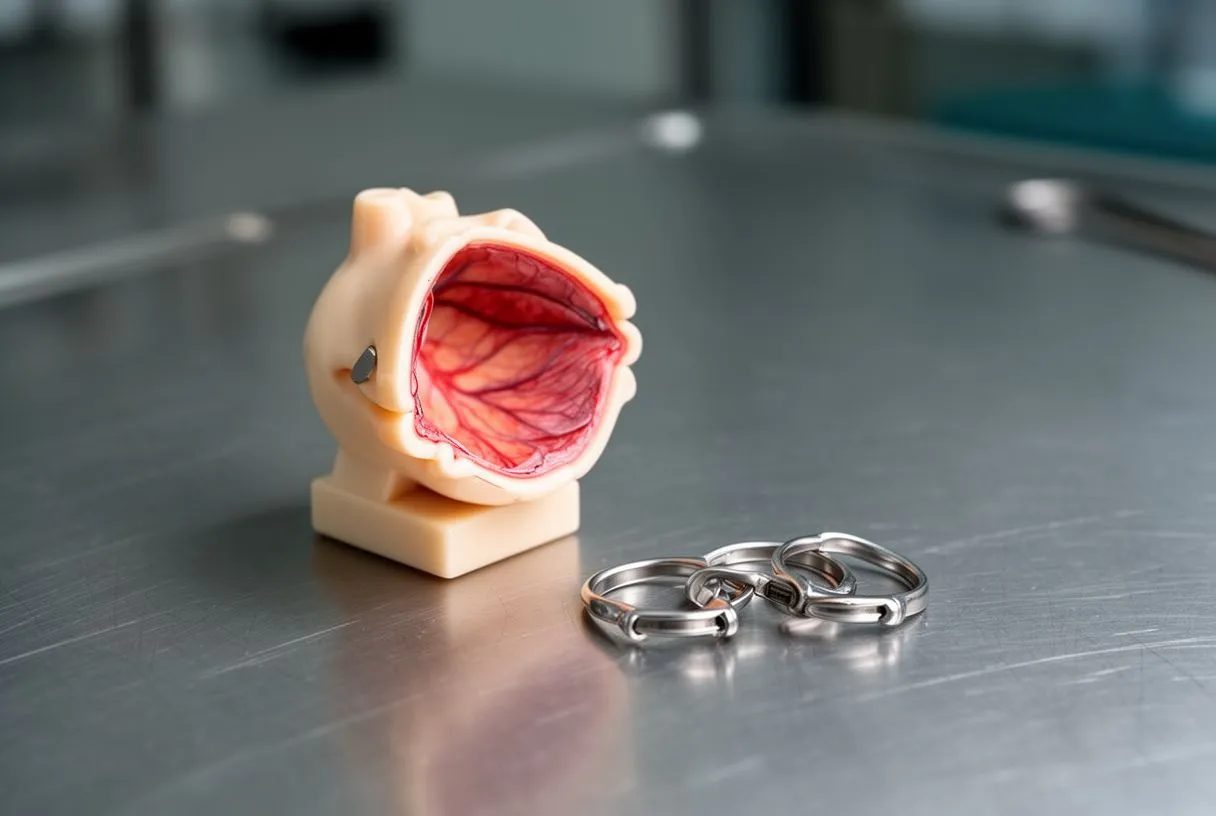
Supporting the annulus. Most tricuspid repairs combine a leaflet procedure with annuloplasty, the placement of a ring or band around the valve to restore its normal shape and stop it from dilating again. The annulus of the tricuspid valve naturally dilates, and simply fixing a leaflet without fixing the ring around it invites the leak to return.
Testing before closing. During surgery, the repair is tested by filling the heart with fluid and checking for leak, often with direct vision and ultrasound. This "we do not close until it is competent" discipline is one of the reasons repair success rate figures for experienced centres are encouraging. In our own operating rooms, we check the result both visually and on intraoperative echocardiography before anything else happens.
Annuloplasty and Leaflet Repair Together
The combination of tricuspid valve annuloplasty with leaflet repair is the standard of care for most patients needing surgery on this valve. The ring addresses the geometry; the leaflet work addresses the specific defect.
Types of rings and bands. A Stented Valve is a different concept — that refers to a valve prosthesis — whereas annuloplasty rings are flexible or semi-rigid supports sewn around the patient's own annulus. The choice of ring depends on the anatomy and the surgeon's preference, and both soft bands and shaped rigid rings are used in modern practice.
Why the combination matters. A ring alone usually suffices for secondary regurgitation caused purely by annular dilatation. But when there is a Congenital Repair defect, a prolapsing leaflet, or prior damage such as from infective endocarditis, leaflet work is added. Studies of long-term outcomes after combined procedures, including work measuring TAPSE after mitral valve surgery and its effect on long-term mortality (PubMed-indexed cardiac literature), underline that preserving right-heart function is the key to good results.
When repair alone is enough. If the leaflets are healthy and the only problem is a dilated annulus, a suture annuloplasty or ring without leaflet work is often sufficient. Your surgical team decides this from the echocardiogram and, definitively, from what they see at the valve.
What Is Edge-to-Edge Tricuspid Valve Leaflet Repair?
Edge-to-edge tricuspid valve leaflet repair is a technique where the surgeon stitches the middle portion of two leaflets together at one point, creating a double-orifice valve. Blood still flows well, but the stitched point acts as a pivot that keeps the leaflets from prolapsing.
From the mitral world to the tricuspid. The technique was pioneered for Mitral Valve Prolapse, where it remains one of the most durable repairs. Applying it to the tricuspid valve is a natural extension: it can be done surgically or, increasingly, with a clip delivered through a catheter from the vein, a transcatheter approach that avoids open surgery entirely in suitable patients.
Who it suits. Edge-to-edge repair is most useful for focal problems — a single prolapsing segment, a coaptation gap in a defined area, or as a bail-out when a repair needs reinforcement. For a widely dilated annulus with all three leaflets barely meeting, annuloplasty is usually the more complete answer, and the two are often combined.
Minimally Invasive and Robotic Tricuspid Valve Leaflet Repair
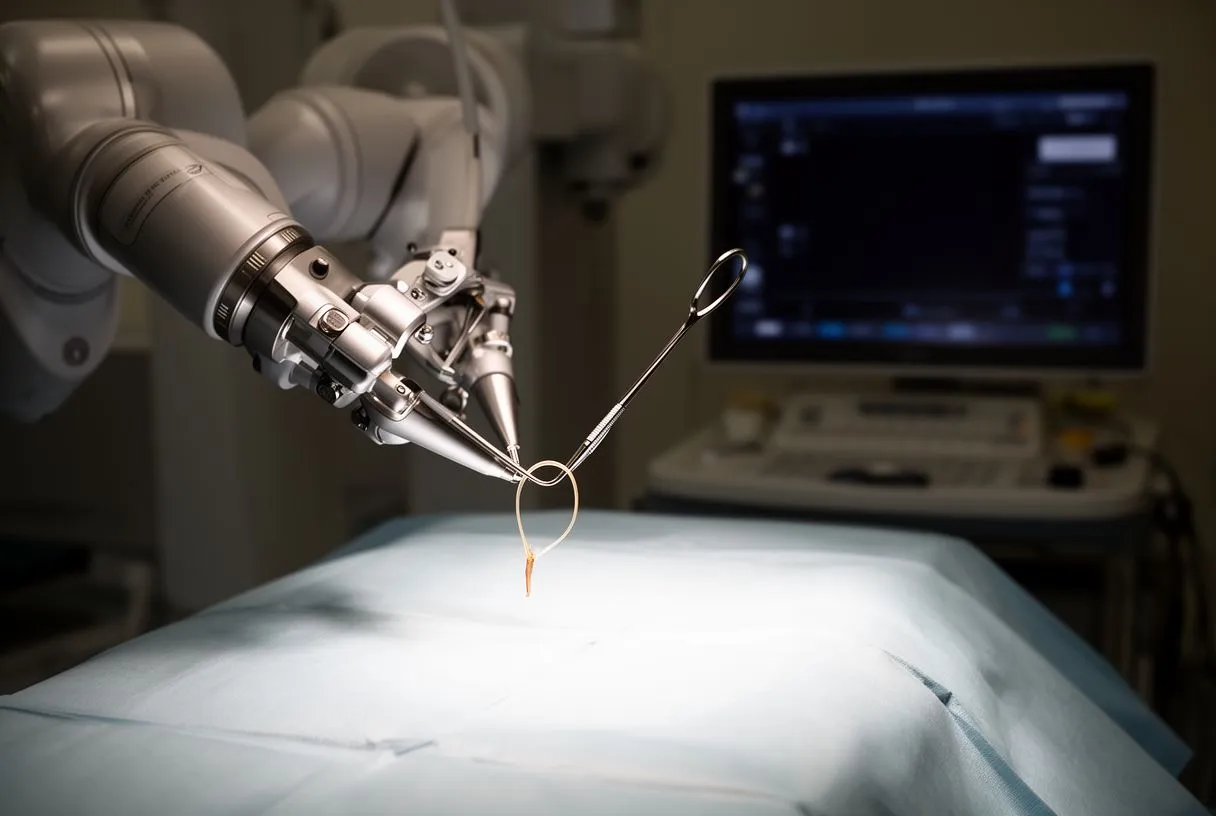
Not every tricuspid procedure needs the chest opened through a full sternotomy. Minimally invasive tricuspid valve leaflet repair is done through small incisions on the right side of the chest, and robotic tricuspid valve leaflet repair uses the surgical robot for even finer instrument control through port-sized openings.
How the approaches compare.
- Sternal approach: full access and visibility, used for complex cases, combined procedures, or emergencies; the most common route worldwide.
- Minimally invasive: a small right-chest incision, no chest bone division, less pain and faster wound healing in appropriate patients.
- Robotic repair: camera magnification and wristed instruments give exceptional precision for leaflet work in selected patients, with the shortest physical recovery.
- Transcatheter repair: catheter-based, often edge-to-edge clip or valve-in-valve-type solutions, no incision at all — for patients where surgery carries too much risk.
Who is a candidate for less invasive surgery. The honest answer: it depends on the anatomy, the urgency, and whether other procedures are needed at the same time. Multiple previous chest operations, severe lung disease or calcified vessels can change the plan. Our team performs conventional, minimally invasive, robotic and transcatheter procedures, and we recommend the less invasive route only where the evidence genuinely supports it for that patient. The final decision is always the patient's.
Tricuspid Valve Repair vs Replacement: Which Is Better?
The comparison of tricuspid valve repair vs replacement is one of the most consequential decisions in this field, and the general principle is clear: wherever a durable repair is achievable, repair is preferred.
Why repair usually wins. A repaired valve keeps the patient's own tissue, avoids the lifelong blood-thinning medication that mechanical prostheses require, and avoids the structural deterioration that a Porcine Valve or other tissue prosthesis eventually shows. Prosthetic valves in the tricuspid position also carry higher clotting risk because the pressures there are low.
When replacement is the right call. If the valve leaflets are destroyed by infection, fused by rheumatic disease with severe stenosis, or so abnormal from a congenital defect that repair would be unreliable, replacement with a mechanical or bioprosthetic valve is the sounder choice. A mechanical valve or a tissue valve may then be the better long-term solution, and the choice involves discussing anticoagulation honestly.
Modern options keep expanding. Beyond standard prostheses there are Sutureless Valve and Stentless Valve designs in other positions, and transcatheter options like a Valve-in-valve procedure — placing a new transcatheter valve inside a failing surgical prosthesis — which can spare a patient from repeat open surgery. Structural options continue to evolve, including dedicated transcatheter devices for the tricuspid position. Dr Molina trained in structural cardiology and TAVR at CHU Bordeaux, and we follow these structural developments closely so that patients who arrive with failing bioprostheses have every option laid out for them.
What Is Recovery After Tricuspid Valve Leaflet Repair Surgery Like?
Recovery after tricuspid valve leaflet repair surgery follows a predictable pattern, and knowing the milestones in advance reduces anxiety enormously.
The first days. Most patients spend one to two nights in intensive care, then move to a ward. Tubes come out over the first day or two. Breathing exercises and gentle walking start within 24 hours. Patients are often surprised by how much of the early recovery is simply about the lungs and the wound, not the heart.
The first weeks. Sternum healing after a full sternotomy takes about six to eight weeks, with restrictions on lifting during that window. Minimally invasive and robotic approaches have shorter restrictions because the chest bone is not divided. Leg swelling from the tricuspid problem itself can take weeks to settle as the circulation readjusts, and the heart rhythm may need watching, because atrial fibrillation is common after any valve operation.
The first months. Most people are back to desk work within six to eight weeks and fuller activity by three months. Cardiac rehabilitation — a supervised programme of graded exercise — is strongly encouraged. Follow-up usually includes echocardiography at regular intervals, watching for the patterns that most commonly need attention, such as rhythm changes and residual swelling, so that problems are caught early. Cardiac surgery patients with reduced right-heart function deserve long-term surveillance, which is exactly what the PubMed-indexed literature on right-heart function after valve surgery supports.
For patients considering heart valve leaflet surgery in Mexico, the questions are practical: where, how much, and what does the price include?
What drives the cost. Tricuspid valve leaflet repair cost in Mexico depends mainly on the technique chosen (open, minimally invasive, robotic or transcatheter), whether other procedures are done at the same time, the hospital chosen, the valve materials used, and how long the hospital stay lasts. A robotic procedure, for example, carries higher technology and consumable costs than a conventional one. We do not quote figures sight unseen; in our free first video consultation we get to know the patient, talk through the condition, and say which studies are still needed so no unnecessary ones are ordered — only then can a realistic proposal be prepared.
Choosing the right hospital and team. The tricuspid valve is one of the least commonly operated valves, so experience matters more here than in almost any other area of cardiac surgery. Ask any team, anywhere, directly: how many tricuspid repairs do you perform, and what are your results? We encourage second opinions and treat seeking one as a normal part of deciding about heart surgery — a good team welcomes the question.
Insurance and international patients. Mexican private insurance, international coverage and self-pay routes are all possible, and a clear written proposal — procedure, inclusions, exclusions — should be part of any plan. Our consulting rooms in Guadalajara, Querétaro and Hermosillo allow patients from across Mexico and from abroad to plan the journey with a face-to-face visit once they decide to go ahead.

Bringing it together. The tricuspid valve leaflets are small structures with an outsized role in how the heart feels from day to day. Tricuspid valve repair — whether leaflet reconstruction, annuloplasty, edge-to-edge repair, or a transcatheter option — has become a mature field with genuine answers for patients who once had none. If you have read this far and suspect tricuspid valve disease in yourself or someone close to you, the next step is not self-diagnosis; it is a proper echocardiogram and a conversation with a qualified cardiac team. Our team is here to talk through your studies in plain words and answer every question before any decision is made — that conversation is where understanding how tricuspid valve leaflet repair works, and whether it applies to you, truly begins.






