

Aortic Endograft: How Stent Grafts Repair the Aorta
Aortic endograft repair explained: how stent grafts reinforce the aorta from inside to treat aneurysm and dissection.
If you or a family member has been told the aorta — the body's main artery — needs repair, the word "endograft" has probably come up, often alongside a mix of relief and confusion. Aortic endograft repair is a way of reinforcing a weakened or torn section of the aorta from the inside, using a fabric tube held open by a metal frame, without opening the chest. It has changed the outlook for many patients with aortic aneurysm and aortic dissection, offering a lower-risk alternative to conventional open surgery when the anatomy and evidence support it. This guide walks through what the procedure actually involves, who qualifies, what recovery looks like, and what questions to ask before deciding — in plain language, from a team that performs both open and endovascular aortic surgery.
What Is Aortic Endograft Repair?
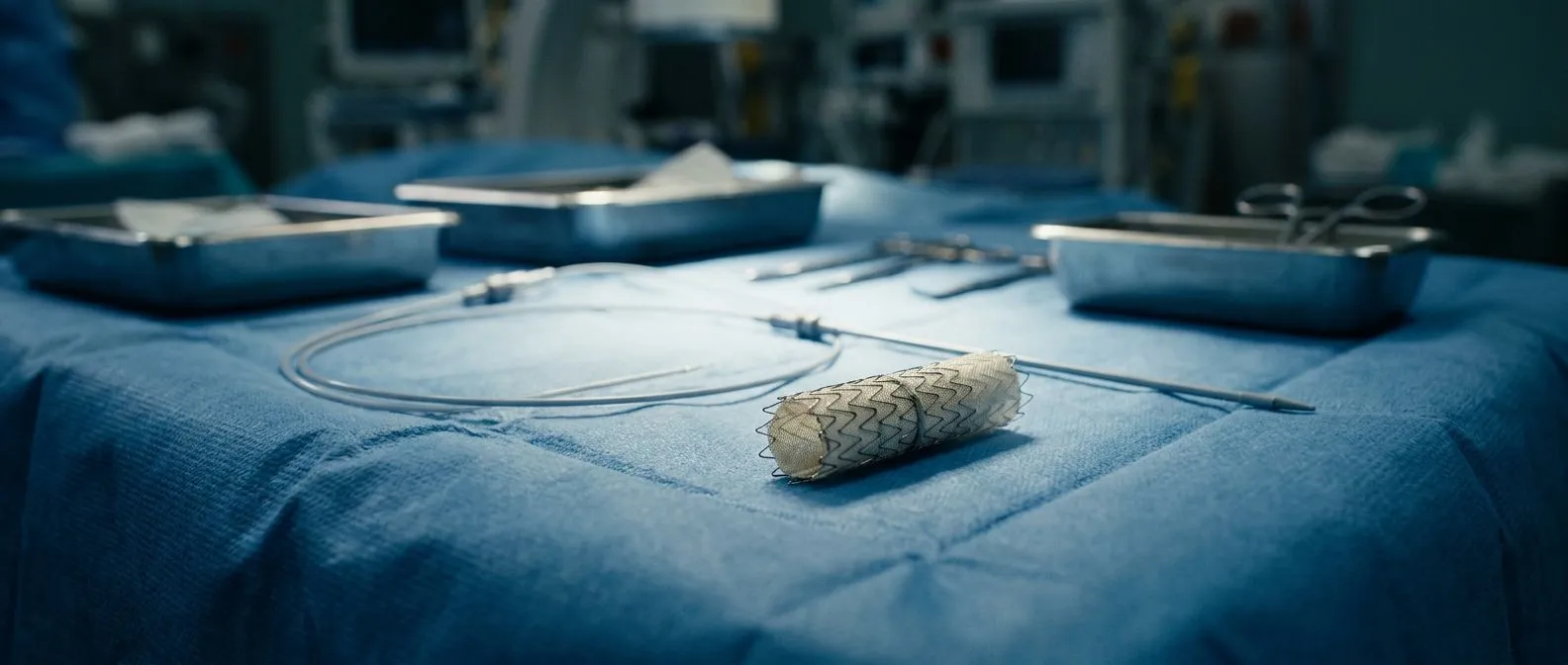
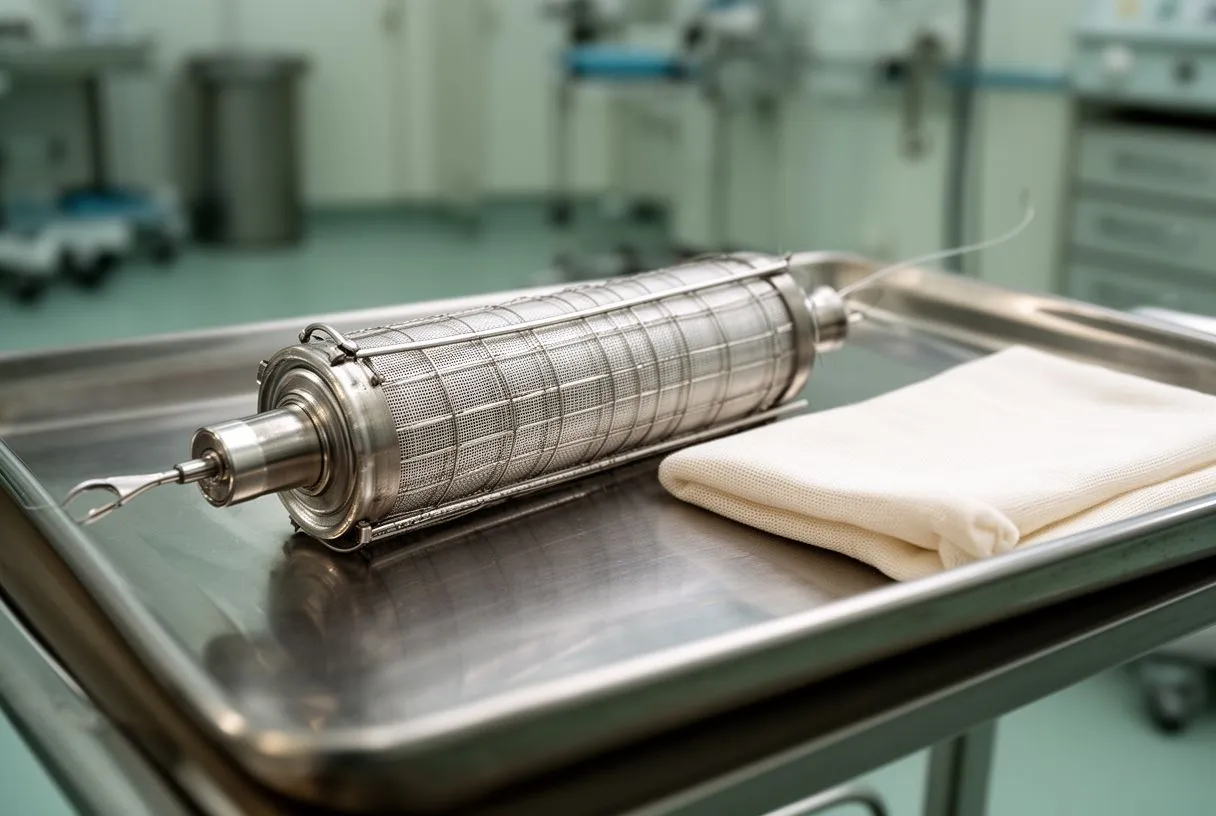
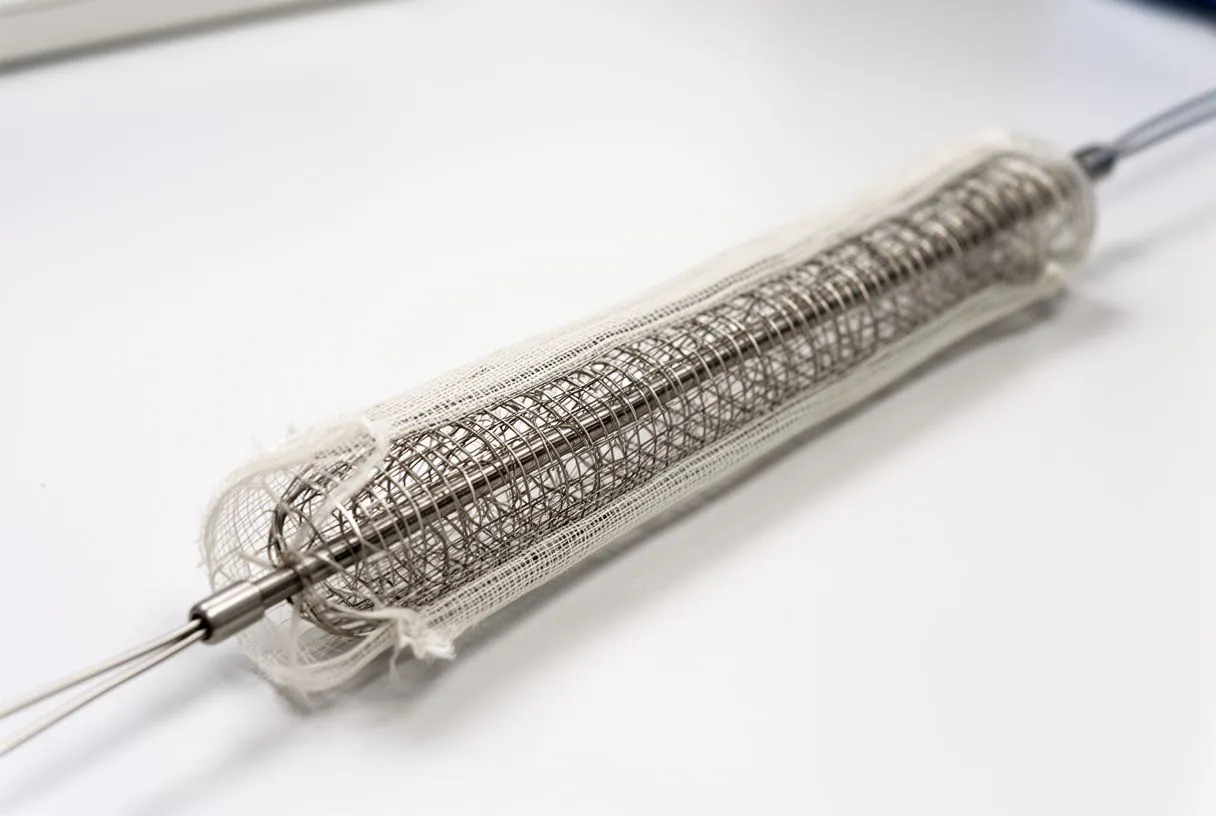
The device itself. An endograft is a tube made of woven synthetic fabric, usually polyester or PTFE, supported by a skeletal frame of springy metal called a stent. It is delivered folded inside a narrow catheter and, once in position, it opens up and lines the diseased segment of the aorta from within. Blood then flows through the graft instead of pressing against the weakened wall, which removes the force that would otherwise make an aneurysm grow or a tear extend.
What it treats. Aortic endograft repair is used mainly for two problems: a Thoracic Aortic Aneurysm — a balloon-like widening of the aorta in the chest — and aortic dissection, in which the inner lining of the aorta tears and blood splits the wall into layers. Both conditions can become life-threatening without warning, which is why repair decisions are usually made before symptoms appear, based on the size of the vessel and the findings on imaging.
Where it fits among the options. Endograft repair is one branch of what surgeons call endovascular aortic repair — "endovascular" simply meaning inside the blood vessel. The alternative is conventional open Aortic Aneurysm Repair, where the chest or abdomen is opened and the diseased segment is replaced with a synthetic tube. Neither approach is universally better; the right choice depends on the location of the disease, the shape of the vessels, and the patient's overall health.
What Does Endovascular Mean?
Working through the plumbing, not through the wall. Endovascular describes any procedure done inside a blood vessel through small access points, usually in the groin. The surgeon threads a catheter — a long, thin tube — up the arterial system under X-ray guidance, and the repair happens at the far end of that catheter. There is no incision in the chest, no heart-lung machine, and in most cases no general anesthesia beyond sedation or a light general anesthetic.
Why this matters for patients. Because the body is not opened, the physical toll is far smaller. Hospital stays are typically shorter, pain is easier to manage, and the risks of bleeding and infection are lower than with open surgery. That said, endovascular does not automatically mean minor — the aorta is still the largest artery in the body, and these procedures demand the same planning, imaging, and multidisciplinary judgment as any major cardiac operation.
How serious is endovascular surgery, then? It is real surgery with real risks, and it belongs in the hands of a team that performs it regularly. The seriousness lies in the precision of the planning and the follow-up, not in a large incision. In our practice, every case is reviewed by the full multidisciplinary team against international practice guidelines before a recommendation is made, and the patient receives a clear proposal with the alternatives — the final decision is always theirs.
Is an Endograft a Stent?
Related, but not the same. A coronary stent — the small metal mesh tube opened in a heart artery during angioplasty — and a Bare-metal Stent used elsewhere in the vascular system are essentially scaffolds: they hold a vessel open. An endograft is a stent covered with fabric. The metal frame provides the structure, but the fabric sleeve is what actually excludes the aneurysm or dissection from the circulation. A plain stent by itself would not stop an aneurysm from filling with blood.
Why the distinction matters. Patients sometimes hear "stent" and assume the procedure is as straightforward as a cardiac angioplasty with a Coronary Stent, with a day in hospital and back to work immediately. An aortic endograft is a larger, more complex device, placed with careful measurements of the aortic anatomy, and it carries its own follow-up schedule. It is closer in concept to replacing a damaged section of pipe with a new lined section — from the inside.
Other devices in the same family. The broader toolkit of structural heart interventions includes devices like the Composite Graft used in open aortic root surgery, and transcatheter options such as Transcatheter Aortic Valve Implantation for valve disease or Transcatheter Edge-to-edge Repair for leaking mitral valves. They share the philosophy of repairing the heart through the vessels, but each device answers a different problem. The endograft is the one designed for the aorta itself.
Who Is a Candidate for Endovascular Aortic Repair?
Size and symptoms drive the timing. For an aneurysm of the descending thoracic aorta, repair is generally considered once the diameter exceeds roughly 5.5 cm, or sooner if the aneurysm is growing quickly, causing symptoms, or if the patient has a connective tissue condition or strong family history. For the abdominal aorta the usual threshold is similar, around 5.5 cm in most men, slightly lower for women. These are guideline thresholds, not automatic triggers — the whole picture matters.
Anatomy decides feasibility. Endograft repair needs healthy aortic tissue above and below the diseased segment to anchor the device, and enough space around branch vessels such as the arteries to the kidneys and spinal cord. Complex anatomy may call for fenestrated or branched devices — endografts with custom openings or side arms to preserve flow to branch arteries — or may point toward open surgery instead.
- Typical candidates: patients with a descending thoracic or abdominal aortic aneurysm above the size threshold, or a suitable dissection, whose vessel anatomy allows a secure seal.
- Often better served by open repair: younger patients needing decades of durability, disease involving the aortic arch or Ascending Aorta, or connective tissue disorders where endograft data is weaker.
- The deciding factor: which approach gives the lowest risk for your situation — not which one sounds newer.
When we assess candidacy, we review the full imaging set, measure the landing zones, and discuss openly whether endovascular repair, open surgery, or continued surveillance with medication is the best-supported path for that person. We also encourage a second opinion and treat seeking one as a normal part of deciding about heart surgery.
How Does Endograft Placement Work?
Before the procedure. Planning starts with a CT angiogram — a contrast-enhanced scan — that maps the aorta in three dimensions. From this, the team selects the graft size and length. Accurate Aortic endograft sizing is one of the strongest predictors of a good result; an undersized or oversized graft can fail to seal or can migrate. The diameter of the native vessel, including any Aortic Annulus landmarks where relevant and the healthy "landing zones," is measured precisely on the scan.
During the procedure. In the operating room or catheterization lab, small incisions are made in the groins to reach the femoral arteries. The folded endograft is advanced over a guidewire to the diseased segment, positioned under live X-ray, and released — the frame expands and the graft springs open, sealing against the healthy aorta above and below the aneurysm. Contrast injections confirm that blood no longer flows into the aneurysm sac. Most procedures take between one and three hours.
Dissection and special cases. For a stent graft for aortic dissection, the goal differs slightly: the graft covers the entry tear so blood stops peeling the wall apart. Some dissection patients later need additional procedures if the false channel persists. Complex cases may use physician-modified endografts — devices tailored in the operating room with custom fenestrations to preserve branch vessels — which published series have described for managing difficult anatomy, including failed prior endovascular repairs (ScienceDirect).
Is TEVAR a Major Surgery?
What TEVAR stands for. TEVAR means thoracic endovascular aortic repair — aortic endograft repair of the chest aorta specifically. When the same technique is used on the abdominal aorta, it is called EVAR. Both are "major" in the sense that they treat life-threatening disease of the body's largest artery and are performed in a fully equipped surgical environment by a surgical team.
But the patient experience is different from open surgery. There is no chest incision, no division of the breastbone, no heart-lung machine, and typically one or two nights in hospital rather than seven to ten. Blood transfusion needs, pain levels, and time in intensive care are all lower. That is precisely why TEVAR became the preferred approach for suitable descending-thoracic disease when guidelines updated their recommendations.
Where open surgery still leads. Some situations — the Ascending aorta and arch, extensive disease, infection of a previous graft, or young patients with connective tissue disease — still favor open techniques such as Aortic Arch Replacement or an Aortic Root Replacement, which remain the gold standard for durability in those segments. This is why the label "minimally invasive" should never be applied automatically. In our practice we recommend the less invasive route only where the evidence supports it for that patient, and we explain in plain words what the studies actually show before any decision.
How Long Does Recovery Take After Aortic Endograft Repair?
The first days. Most patients walk within hours of the procedure and go home after one or two nights. Groin puncture sites need to stay clean and dry for a few days. Some bruising and tenderness at the access site is normal; severe pain, leg numbness, or bleeding are not, and should be reported immediately.
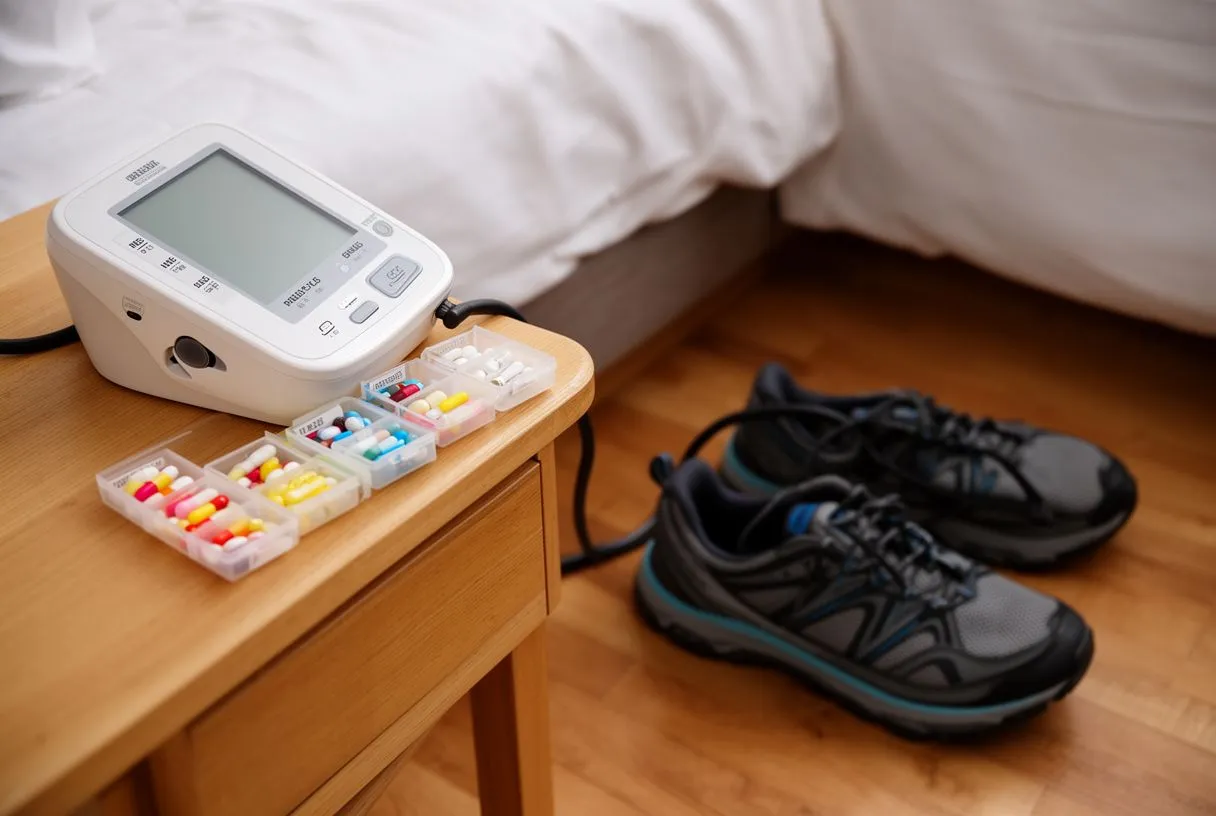
Weeks one to six. Most people are back to desk work within one to two weeks and to driving once they can brake comfortably without pain, usually around two weeks. Lifting anything heavier than roughly 10 kg is usually restricted for four to six weeks while the access sites heal fully. Blood pressure control becomes a lifelong project — the graft protects the repaired segment, but the rest of the aorta still benefits from well-managed pressure.
Activity, including walking. A common question is whether walking is good for aneurysms. For most patients the answer is yes — regular moderate walking is one of the best-supported activities for vascular health, before and after repair — while heavy straining and maximal weightlifting are generally discouraged in unrepaired aneurysms because they spike blood pressure. Your own team should confirm the plan for your specific case.
What Are the Risks and Complications of an Aortic Endograft?
Early risks. Like any vascular intervention, endograft placement carries risks of bleeding at the access site, damage to the artery used for delivery, kidney stress from contrast dye, and, in the chest, a rare risk of spinal cord ischemia — reduced blood flow to the spinal cord — which teams manage with blood pressure strategies and, in some centers, spinal drains. Stroke is rare in TEVAR of the descending aorta but is a known consideration when the arch is involved.
Endoleaks. The complication unique to endografts is the endoleak — blood leaking into the aneurysm sac around or through the graft, which keeps the sac under pressure. Several types exist, from gaps at the graft's edges to backfilling through branch vessels to failure of the graft seal itself. Some resolve on their own; others need further intervention. Published series have also described postimplantation syndrome — fever and inflammation after the procedure — and examined how graft material influences it (Turkish Journal of Vascular Surgery).
Longer-term issues. Grafts can migrate over years, the fabric can wear in ways visible on imaging, and the aneurysm sac can enlarge despite the graft. Rarely, infection of the graft occurs, which is serious and may require open surgery. This is why lifelong surveillance imaging is part of the deal — not an optional extra. It is also why some dissection patients treated endovascularly later need a second procedure; when that happens, options range from another endovascular intervention to open repair, and published reports describe managing failed endovascular repairs with modified arch endografts (ScienceDirect).
- Seek help immediately after repair if you have: severe chest, back, or abdominal pain, sudden weakness or numbness in the legs, visible bleeding or a pulsating groin swelling, or signs of infection such as fever with a painful access site.
- Never skip surveillance scans: most problems that develop are found on scheduled imaging before they cause symptoms — that is the entire point of follow-up.
How Long Does an Aortic Endograft Last?
What the data shows. Current-generation endografts have shown durable performance in long-term registries, with many devices functioning well a decade or more after implantation. Comparisons of graft materials and design have been published extensively — a broad literature review in the vascular surgery literature summarizes how device technology has evolved and how durability has improved across generations (Springer). No graft is guaranteed for life, however, and durability depends on the patient's anatomy, blood pressure control, and follow-up habits as much as on the device itself.
How long does an aortic root graft last? This question usually refers to the synthetic tube used in open root replacement surgery, not an endograft. Open aortic root grafts — often combined with a valve, as in valve-sparing root replacement or a valved conduit — have decades of documented durability and are often considered lifelong repairs, which is one reason open repair remains preferred for younger patients. An endograft, by contrast, is generally regarded as a durable but not permanent device that requires periodic imaging and occasional touch-up procedures.
What follow-up looks like. Typical surveillance is a CT scan at one month, at six months, and then annually, adjusted over time if everything stays stable. Each visit confirms the graft position, checks for endoleaks, and measures the aneurysm sac. We tell every patient that agreeing to the procedure means agreeing to the follow-up — and we make sure the schedule is clear before anyone consents.
How Do You Choose the Right Team for Aortic Endograft Repair?
Volume and breadth matter. Outcomes in aortic surgery correlate with the experience of the team and the volume of the program. Look for a team that performs both open and endovascular aortic work — a team that only offers one approach has a bias, however well-intentioned. Training background matters too: our team is led by Dr Alejandro Molina, who trained in cardiothoracic surgery at the Universidad de Guadalajara, in cardiac, minimally invasive, robotic and structural surgery at the University of Montreal, and in structural cardiology and TAVR at CHU Bordeaux, with the wider team also trained at Jena, Bad Berka and Buffalo.
Questions to ask at any consultation. A good team will welcome them.
- Am I a candidate for both open and endovascular repair? — and what does the evidence say about my specific anatomy?
- What device will you use, and why that one? Sizing and device choice should come from your own CT scan, not from a habit.
- What does your follow-up schedule look like, and who performs it?
- Who else reviews my case? A multidisciplinary review against international guidelines should be standard, not exceptional.
What the first step looks like with us. We are a multidisciplinary team of cardiac surgeons with consulting rooms in Guadalajara, Querétaro and Hermosillo, and the first contact is a free video consultation: we get to know the patient, talk through the condition, and identify which studies are genuinely still needed so no unnecessary ones are ordered. A face-to-face visit follows when the patient decides to go ahead, and every question is answered in plain words before any decision is made.
The bottom line. Aortic endograft repair has made treatment possible for patients who once faced open chest surgery as the only option — but it is one tool among several, and the right answer depends on your anatomy, your age, your overall health, and your willingness to commit to lifelong surveillance. If you have been diagnosed with an aortic aneurysm or dissection, or you are monitoring one and wondering whether the time to act has come, talk it through with a qualified aortic team rather than deciding alone. Booking a consultation costs nothing and clarifies more than any article can.






