Aortic Insufficiency and Exercise: What Is Safe
Aortic insufficiency exercise guidelines from Guadalajara heart surgeons.
If you have been told you have aortic insufficiency, you probably have one question before any other: is exercise still safe for me? Aortic insufficiency — also called aortic regurgitation — means the aortic valve, the one-way door between your heart's main pumping chamber and the aorta (the large artery that carries blood to the body), does not close tightly. Some blood leaks backward with every heartbeat, so the heart works harder than it should. The good news is that most people with a leaky aortic valve can stay active, and staying active is often part of staying healthy. But the right level of aortic insufficiency exercise depends on how severe the leak is, whether the aorta is enlarged, and what your own testing shows. This guide walks through what is known, what surgeons watch for, and how to make sensible decisions with your cardiac team.
What Is Aortic Insufficiency and How Does It Affect Exercise?
What the valve does and why the leak matters. With each heartbeat, the left ventricle — your heart's main pump — pushes blood through the aortic valve into the aorta. When the valve leaks, part of that blood flows back into the ventricle before the next beat. The ventricle adapts by getting bigger and stronger, and for years many people feel completely well. That silent compensation is exactly why aortic insufficiency is often found on an echocardiogram (an ultrasound of the heart) before it causes any symptoms at all.
How exercise changes the picture. Exercise raises heart rate, blood pressure, and the volume of blood the heart moves each minute. A mildly leaky valve usually tolerates this without trouble. A significantly leaking valve may not, because the enlarged ventricle is already working near its limit. Chronic aortic regurgitation exercise guidelines from professional societies therefore separate patients by severity: mild leaks rarely restrict activity, while severe leaks need individual assessment before competitive or high-intensity sport. In our consultations, we spend a large part of the first visit explaining exactly which measurements from your echocardiogram drive that decision, in plain words, so the activity plan makes sense rather than feeling like an arbitrary rule.
Why testing matters more than how you feel. Many people with valve disease exercise regularly and feel fine until they suddenly do not. That is not a reason to be afraid — it is a reason to have an echocardiogram, and sometimes an exercise ergometry test (a monitored stress test on a treadmill or bike), before setting your training limits. These studies show how your heart and aorta actually behave under load, which is far more reliable than symptoms alone.
What Are the Symptoms of Aortic Valve Disease During Activity?
Early signs worth noticing. The typical symptoms of aortic valve disease are subtle at first: feeling more breathless than usual on hills or stairs, a drop in exercise tolerance you cannot explain, or palpitations — a fluttering or pounding awareness of your heartbeat. Some people notice a pulsing sensation in the neck, or that their heartbeat feels unusually forceful when lying down. None of these confirm a valve problem, but together they justify an evaluation.
What severe leakage feels like. As the condition advances, breathlessness can appear at lower effort levels, and it may start to disturb sleep, especially when lying flat. Chest discomfort during activity, dizziness on standing quickly, or swelling in the ankles by evening are later signs. Fainting or near-fainting during exercise is always a red flag that needs prompt medical attention, not a wait-and-see approach.
Why symptoms can lag behind the damage. The heart compensates so well for a leaking aortic valve that a person can remain symptom-free while the ventricle slowly enlarges. This is why guidelines rely on measurements — valve leak severity, ventricle size and pumping function, and aortic diameter — rather than on how you feel, to decide when to operate and how much activity is reasonable.
What Is the Most Common Cause of Aortic Insufficiency?
In developed countries: valve wear and aortic widening. The most common cause of aortic insufficiency in adults is degenerative change — the valve leaflets and the aortic root (the first stretch of the aorta, which surrounds the valve) slowly stretch and lose their precise shape with age. High blood pressure accelerates this. When the root widens, the leaflets can no longer meet in the middle, and the valve leaks even though the leaflets themselves may be structurally normal.
Congenital and structural causes. A bicuspid aortic valve — a valve born with two leaflets instead of the normal three — is present in roughly one to two percent of the population and is a frequent cause of both leakage and narrowing over a lifetime. Other causes include infection of the valve (endocarditis), tearing of the aortic layers, and, less commonly, a prolapsing leaflet that flops backward instead of sealing.
Sudden versus slow leakage. Most aortic insufficiency develops over years, giving the heart time to adapt. Acute Aortic Syndrome — a family of emergencies that includes aortic dissection, a tear in the aorta's inner lining — can produce sudden, severe leakage that is immediately life-threatening. That is a different situation entirely from the slow leak most patients live with, and it is one of the reasons unexplained chest or back pain always deserves urgent assessment.
Is Exercise with Aortic Valve Regurgitation Safe by Severity?
Mild aortic regurgitation: essentially unrestricted. For mild leaks with a normal-sized aorta and good pumping function, exercise with aortic valve regurgitation carries very little restriction. Walking, cycling, swimming, jogging, and most gym work are reasonable. Regular moderate activity actually benefits these patients by controlling blood pressure and weight, both of which slow valve deterioration. An echocardiogram every one to three years, as your cardiologist advises, is the sensible safety net.
Moderate insufficiency: exercise, but with structure. With moderate leaks, moderate aortic insufficiency activity levels generally include most everyday exercise and moderate recreational sport. The emphasis shifts to steady, rhythmic activity — walking, cycling, swimming — rather than maximal static lifting or all-out sprinting. Our multidisciplinary team reviews every moderate-to-severe case together before signing off on an exercise plan, because the right answer depends on ventricle size, aortic diameter, and the patient's goals, not on the leak grade alone.
What the evidence says about staying active. There is no good evidence that moderate, supervised exercise harms a mildly or moderately leaking valve, and there is strong evidence that a sedentary lifestyle harms the heart in general. The mistake patients make in both directions is the same: either stopping all activity out of fear, or training hard and ignoring follow-up imaging. A middle path — regular activity, honest reporting of symptoms, and scheduled echocardiograms — serves almost everyone well.
Severe Aortic Insufficiency Sports Restrictions: What Changes?
Why severe leaks change the rules. When the leak is severe, the ventricle is significantly enlarged or pumping function is falling, and severe aortic insufficiency sports restrictions come into play. High-intensity competitive sport — heavy powerlifting, sprinting at competition level, intense contact sports — places sudden pressure and volume loads on a heart that is already stretched. Most specialists advise against those while planning definitive treatment.
- Usually fine: brisk walking, easy cycling, light swimming, golf, and everyday physical activity at a comfortable pace.
- Needs individual clearance: moderate running, gym training with moderate weights, racquet sports at recreational level.
- Generally avoided with severe leakage: competitive sprinting, maximal heavy lifting, intense contact sports, and any activity that repeatedly takes you to exhaustion.
Heavy lifting deserves special mention. Static effort — straining against a heavy weight — spikes blood pressure sharply and momentarily reduces blood flow back to the heart. For a ventricle that is already volume-overloaded, this is the least friendly form of exercise. Lighter weights with more repetitions, done with steady breathing, are a reasonable compromise for many patients, but this is a conversation to have with your cardiologist rather than a rule to guess at.
When surgery becomes the treatment, not a restriction. Once severe insufficiency is confirmed with symptoms, or with measurable ventricle enlargement or reduced pumping function even without symptoms, guidelines recommend valve treatment. Restricting sport forever is not the goal; fixing the valve is. At our consulting rooms in Guadalajara, Querétaro and Hermosillo, we review each case against international practice guidelines and present a clear proposal with the alternatives — and the final decision always rests with the patient.
Bicuspid Aortic Valve Exercise Guidelines and Root Dilation Precautions
The two-in-one risk of a bicuspid valve. Bicuspid aortic valve exercise guidelines differ from ordinary valve advice because the valve itself is only half the story. People with a bicuspid valve have a higher chance of an enlarged aorta — either an aortic root aneurysm or widening higher up the ascending aorta. Research on bicuspid valve phenotypes shows that valve disease and aortopathy behave differently between men and women, which is one more reason imaging and follow-up must be individual rather than generic (Open Heart).
Aortic root dilation exercise precautions. When the aorta is dilated, the concern is not the valve but the vessel wall: intense, transient blood-pressure spikes increase stress on an already weakened wall. A thoracic aortic aneurysm above a critical diameter — commonly 5.5 cm for many patients — is generally treated surgically because of rupture risk, and an aortic dissection or aortic rupture is a true cardiovascular emergency. Exercise precautions for a dilated aorta therefore focus on avoiding maximal static strain and maximal competitive effort, while keeping moderate aerobic activity, which is protective.
What follow-up looks like. Aortic diameter is tracked with echocardiography, and periodically with CT or MRI scanning, at intervals set by its size and by how fast it is growing. In bicuspid patients the aorta, not just the valve, needs checking — the diameter and its growth rate often matter more to the exercise plan than the leak itself does.
What Is Safe Exercise After Aortic Valve Repair or Replacement?
Recovery follows a staircase, not a switch. Safe exercise after aortic valve repair or replacement starts gently. In the first weeks you walk — short, frequent, gradually longer. Sternal precautions apply if the operation was open-chest: for roughly six to eight weeks you avoid pushing, pulling, or lifting anything heavy so the breastbone heals. Minimally invasive and robotic approaches have smaller incisions and often faster early recovery, but the inner healing timetable is similar.
Progressive return to activity. Most patients move from walking to light cycling or swimming around two to three months, and to unrestricted recreational exercise by three to six months, depending on their operation and progress. Competitive sport takes longer and needs a stress test before clearance. Our team performs conventional, minimally invasive, robotic and transcatheter procedures, and we recommend the less invasive route only where the evidence supports it for that specific patient — the return-to-exercise plan is built around the operation you actually had.
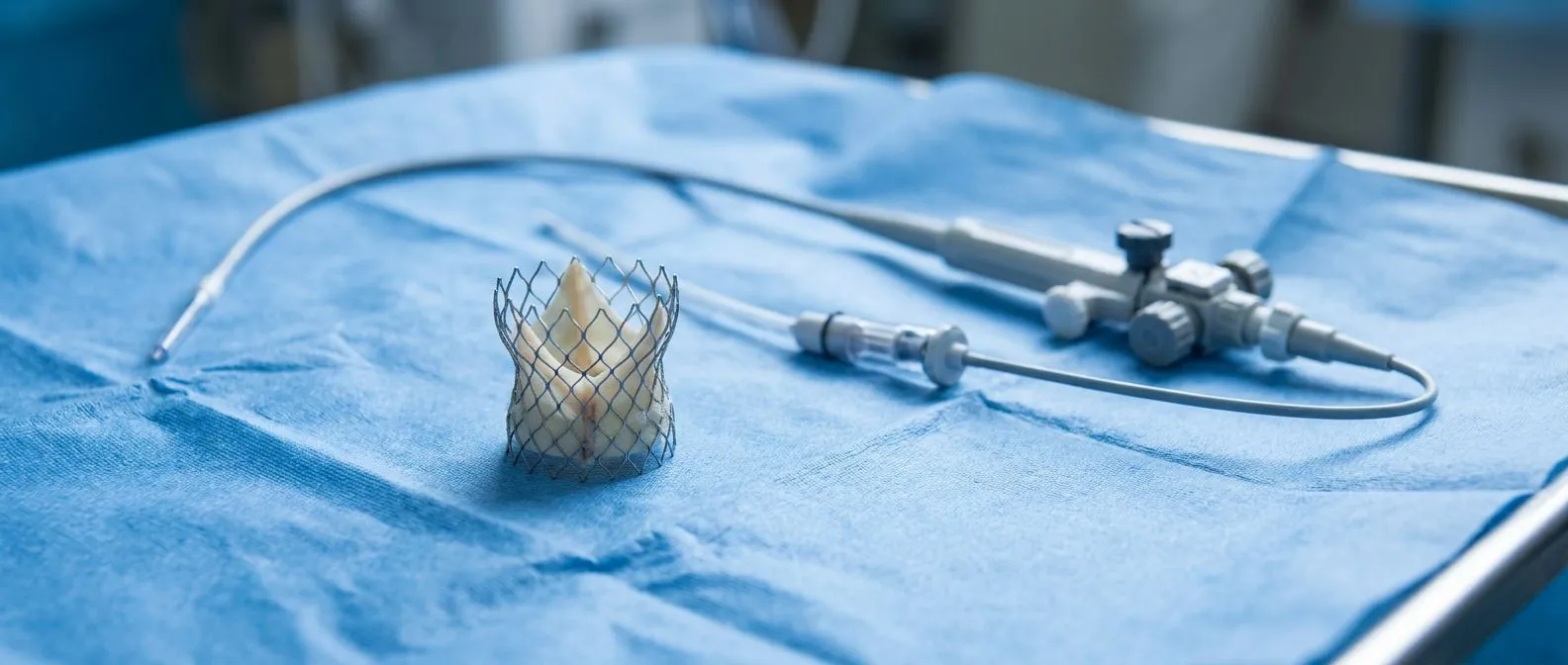
Transcatheter options and their own rhythm. Some patients are candidates for Transcatheter Aortic Valve Implantation, known as TAVR — a new valve delivered through a catheter, usually from an artery in the groin, without opening the chest. Recovery from TAVR is typically much faster than open surgery, and walking often starts within days. Even so, structured progression and follow-up imaging of the new valve remain essential before any return to demanding sport.
How Does Cardiac Rehabilitation for Aortic Insufficiency Work?
What cardiac rehabilitation actually is. Cardiac rehabilitation for aortic insufficiency is a supervised program of monitored exercise, education, and risk-factor management, usually running for several weeks after a diagnosis, procedure, or operation. You exercise on a treadmill or bike while your heart rate, rhythm, and symptoms are watched by trained staff. The intensity is prescribed from your own stress-test results, so it is demanding enough to build fitness but never pushed into unsafe territory.
Why it helps specifically with valve disease. Rehabilitation does three things at once. It rebuilds the fitness that leakage or surgery took away; it teaches you the effort levels and warning signs appropriate to your own heart; and it addresses blood pressure, weight, and deconditioning that quietly worsen valve disease over time. Patients who complete rehabilitation consistently report more confidence in what their bodies can do — which is often the biggest barrier after any cardiac diagnosis.
Is it available to you? In Mexico, rehabilitation programs exist in major cardiac centers, and availability varies by city and insurance. If a formal program is not accessible, a cardiologist-supervised home walking plan based on a recent stress test is a reasonable substitute for many patients. The key word is supervised: self-designed high-intensity plans are how people with valve disease get into trouble.
When to Stop Exercising with Aortic Insufficiency: Warning Signs
The signals that end a workout immediately. Knowing when to stop exercising with aortic insufficiency is a safety skill, not a sign of fragility. Stop the session and seek medical advice if you experience any of the following:
- Chest pain or pressure during or shortly after effort, especially if it spreads to the arm, jaw, or back.
- Breathlessness that is suddenly worse than your usual effort level, or that does not settle within a few minutes of stopping.
- Dizziness, lightheadedness, or fainting during activity — this can signal that the heart is not keeping up with demand.
- New or irregular palpitations that persist after you stop, rather than settling with rest.
- A clear, sustained drop in exercise tolerance — stairs that were fine last month now leave you gasping.
Gradual changes matter too. Not every warning arrives dramatically. A slow drift — needing longer to recover between efforts, avoiding hills you used to take in stride, sleeping propped up on more pillows than before — is your heart telling you something has changed. Report these patterns at your next visit rather than quietly adapting around them. In the consultation we take the time to explain what the studies actually show, in plain words, and we would much rather hear about a small change early than a large one late.
The emergency exceptions. Fainting during exertion, chest pain that does not resolve within minutes of rest, and sudden severe breathlessness are not "call the clinic next week" events. They warrant emergency assessment. In rare cases, a severely diseased aorta can tear without much warning; sudden, severe chest or back pain is always an emergency, whatever your diagnosis.
Can Aortic Regurgitation Be Reversed, and What About Life Expectancy?
Can the leak itself be reversed? A structurally damaged valve does not usually repair itself. Mild leakage from high blood pressure can lessen when blood pressure is well controlled, because a less stretched aorta lets the leaflets meet better. But moderate or severe leakage from structural causes — degenerative disease, bicuspid valve, prolapse, infection — is treated by repairing or replacing the valve, not by medication. Medication lowers blood pressure and eases the heart's load, which buys time and manages symptoms; it does not close the leak.
Life expectancy with a leaking valve. What is the life expectancy of someone with aortic regurgitation? For mild leakage with normal heart function, life expectancy is generally normal with routine follow-up. For severe leakage, the outlook depends on timing: untreated severe regurgitation with a weakening ventricle carries a progressively worse prognosis, while timely surgery restores a life expectancy close to that of the general population in many patients. The lesson is not fear — it is follow-up. Severe leakage that is watched and treated at the right time is a very different disease from severe leakage that is ignored.
What surgery involves, honestly. Valve repair (surgeons reconstruct your own valve) is preferred where the valve anatomy allows it, because a repaired native valve avoids some lifelong considerations of an artificial one. Replacement uses a tissue or mechanical prosthesis, each with trade-offs in durability and blood-thinning medication. For aortic root aneurysm, surgery may involve replacing the root and valve together or preserving the valve — known as valve-sparing root replacement — depending on the anatomy. Dr Molina trained in cardiac, minimally invasive, robotic and structural surgery at the University of Montreal, and in structural cardiology and TAVR at CHU Bordeaux, and we perform the full range of valve repair and replacement procedures — but the specific operation is always chosen for the patient's own anatomy, not for the technique's reputation.
Second opinions are normal, not rude. For any major valve decision, a second opinion is a sensible step, and we encourage it openly. We treat seeking a second opinion as a normal part of deciding about heart surgery, and we will gladly review results another team has ordered rather than repeating studies unnecessarily.
A word on sudden events in advanced disease. Patients with long-standing severe regurgitation, a dilated aorta, or prior aortic surgery should know the terms that matter. An acute type A aortic dissection involves the ascending aorta and needs emergency surgery; a type B aortic dissection, lower in the aorta, is managed differently; and reoperation after aortic dissection is a recognized part of long-term care for some patients, as clinical studies of reoperation for acute type A aortic dissection describe (Frontiers in Cardiovascular Medicine). None of this is meant to frighten — these events are uncommon — but knowing the vocabulary helps you ask the right questions.
Conclusion: Putting It All Together
Aortic insufficiency exercise is not a single yes-or-no answer; it is a personal prescription built from your leak's severity, your aorta's size, your ventricle's function, and your own goals. Mild leakage rarely limits an active life, moderate leakage calls for structured activity and honest symptom reporting, and severe leakage is a signal to plan treatment — not to abandon movement. Keep up with your echocardiograms, know your warning signs, and let a cardiac team help you find the level of activity that is lowest-risk for your situation. If you have questions about your own valve, a free video consultation is a simple first step: we get to know you, talk through your condition, and identify exactly which studies are still needed so no unnecessary ones are ordered. Discuss your situation with a qualified cardiac team rather than self-diagnosing — the right answer for your heart deserves the care of people who can see it.