Severe Aortic Stenosis Treatment: TAVR or Surgery
Learn about severe aortic stenosis treatment options.
If you or a family member has been told the aortic valve is severely narrowed, the diagnosis can feel frightening — but severe aortic stenosis treatment today offers more choices than ever before. The aortic valve is the last door blood passes through as it leaves the heart toward the body. When that door stiffens and narrows, the heart must strain to push blood through, and over time this strain causes real harm. The encouraging news: once symptoms appear, replacing the valve — through a catheter or through surgery — relieves the strain and allows most people to return to a full, active life. This guide walks you through what the condition is, what symptoms mean, and how to weigh the two main paths forward.
What Is Severe Aortic Stenosis and How Is It Treated?
Aortic stenosis means the aortic valve has narrowed so much that blood struggles to pass from the heart's main pumping chamber into the aorta, the body's largest artery. The valve leaflets — three thin flaps of tissue that swing open with each heartbeat — become stiff, often from calcium building up over decades. "Severe" is not a vague word here: cardiologists measure the valve opening, the pressure gradient across it, and the speed of blood flow. When the opening falls below roughly one square centimeter, or blood flow speeds past 4 meters per second, the stenosis is classified as severe.
Why does the valve narrow in the first place? In most adults it is age-related calcification — the same wear-and-tear process that hardens arteries. In others it traces back to a valve born with two leaflets instead of three, called a bicuspid aortic valve, which wears out earlier. Rarer still is a valve with a single opening, known as a unicuspid aortic valve, which can cause trouble even in younger adults and is described in published case reviews such as this one on the unicuspid aortic valve in adults.
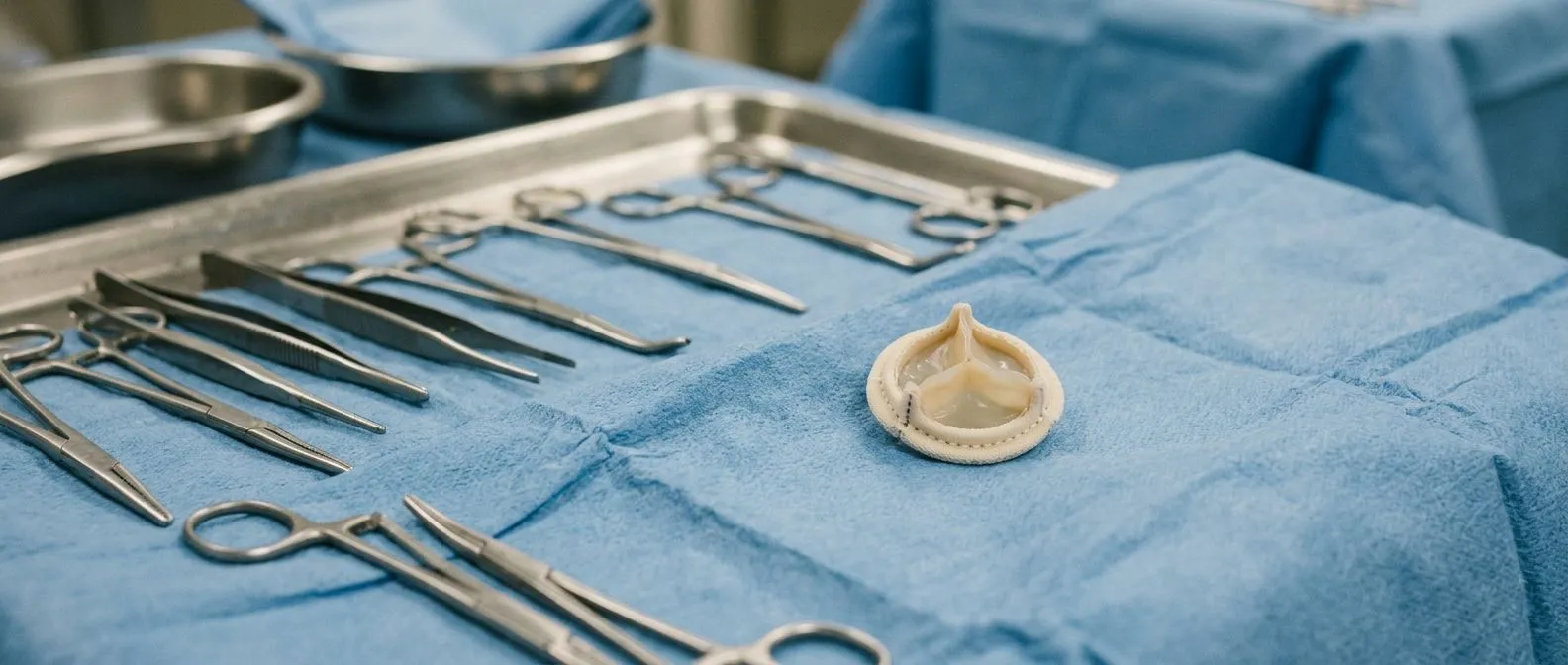
What actually treats it? Medicines can ease symptoms but cannot reopen a narrowed valve. The established treatment is replacing the valve — either with transcatheter aortic valve replacement (TAVR), where a new valve is delivered through a catheter, or with surgical aortic valve replacement (SAVR), performed through an incision in the chest. Both restore normal flow. The question is not whether to treat, but which route fits your body and your circumstances.
Severe Aortic Stenosis Symptoms and When to Seek Help
The heart compensates quietly for years, which is why many people feel fine until the narrowing is advanced. Severe aortic stenosis symptoms tend to follow a familiar pattern, and recognizing them early matters because treatment outcomes are best before the heart weakens.
- Breathlessness on exertion: climbing stairs or walking uphill leaves you more winded than it used to, because the heart cannot deliver enough blood to match demand.
- Chest pressure or angina: a tight, heavy feeling during activity, caused by the heart muscle working against the narrowed valve.
- Dizziness or fainting spells: near-fainting when standing quickly or exercising is a warning sign that should never be dismissed.
- Fatigue and declining exercise tolerance: a general slowing down that family members often notice before the patient does.
Which symptoms matter most? Breathlessness, chest pain, and fainting are the classic triad. Any one of them in a person with a known murmur or a bicuspid valve deserves prompt evaluation with an echocardiogram — an ultrasound of the heart that measures the valve without any needles or radiation.
What should you do if symptoms appear? Do not wait for the next routine appointment. In our practice, we see patients who minimized symptoms for months, attributing them to age; when we finally review the echocardiogram, the valve is often already severe. If you notice any of these changes, ask for a cardiology assessment and bring a family member with you — two sets of ears remember more than one.
How Long Can You Live With Severe Aortic Stenosis?
This is the question families ask first, and it deserves a direct answer. Severe aortic stenosis is a progressive condition: once symptoms begin, the outlook without valve replacement worsens steadily. Cardiology textbooks have long described a survival pattern measured in a few years after the onset of severe symptoms — which is precisely why doctors treat the diagnosis seriously rather than adopting a wait-and-see approach.
How does treatment change the picture? Aortic stenosis life expectancy with treatment is dramatically different from life expectancy without it. Valve replacement, whether by catheter or surgery, restores the heart's ability to pump freely and brings survival and quality of life close to that of people of similar age without the condition. Studies published in journals such as Springer's cardiology literature have shown that transcatheter valve replacement compares favorably with surgery even in lower-risk patients, which has widened access to treatment for millions.
Does the stage of diagnosis matter? Yes — greatly. Before symptoms appear, the heart is still compensating, and careful monitoring is reasonable in some cases. Once daily life is limited, delay works against you. The practical takeaway: the condition is serious, but it is also one of the most successfully treatable heart problems in modern medicine, provided the valve is replaced before the heart muscle is permanently weakened.

Severe Aortic Stenosis Treatment Options: TAVR or Surgery?
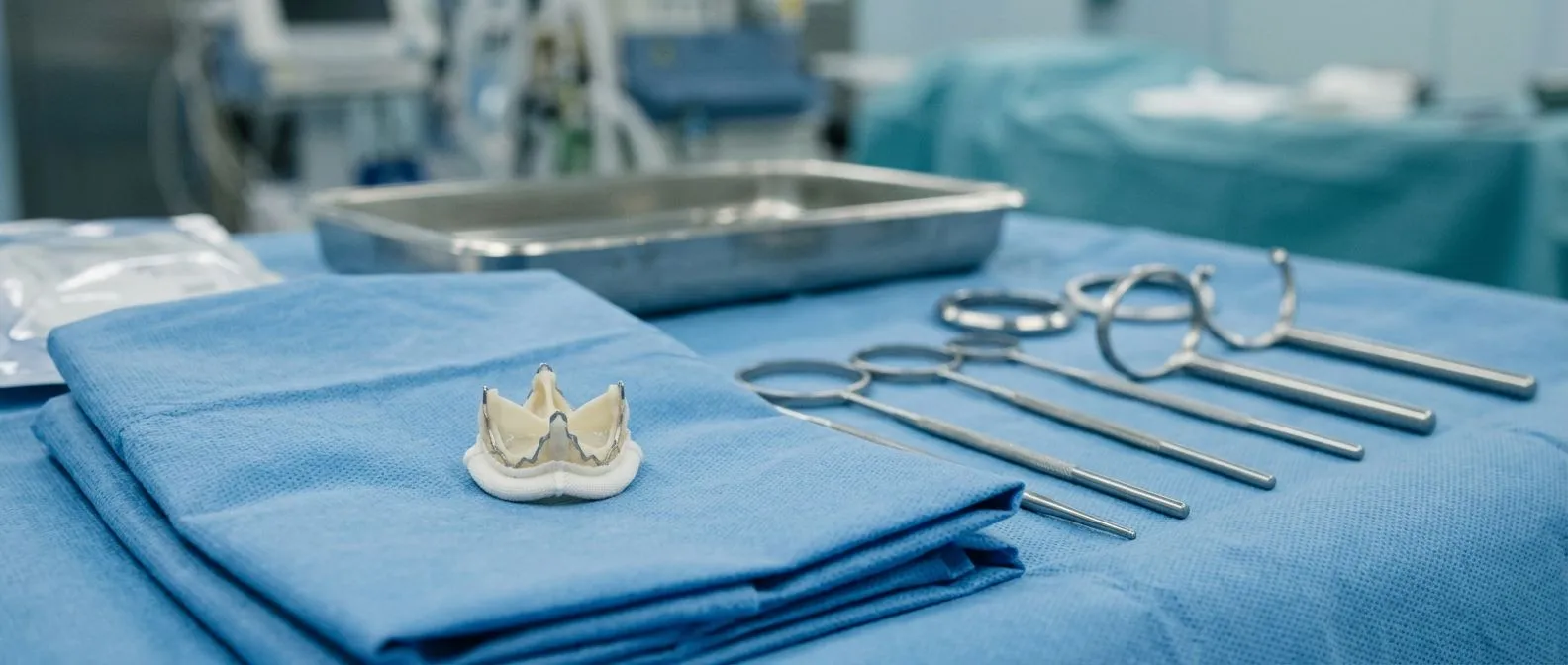
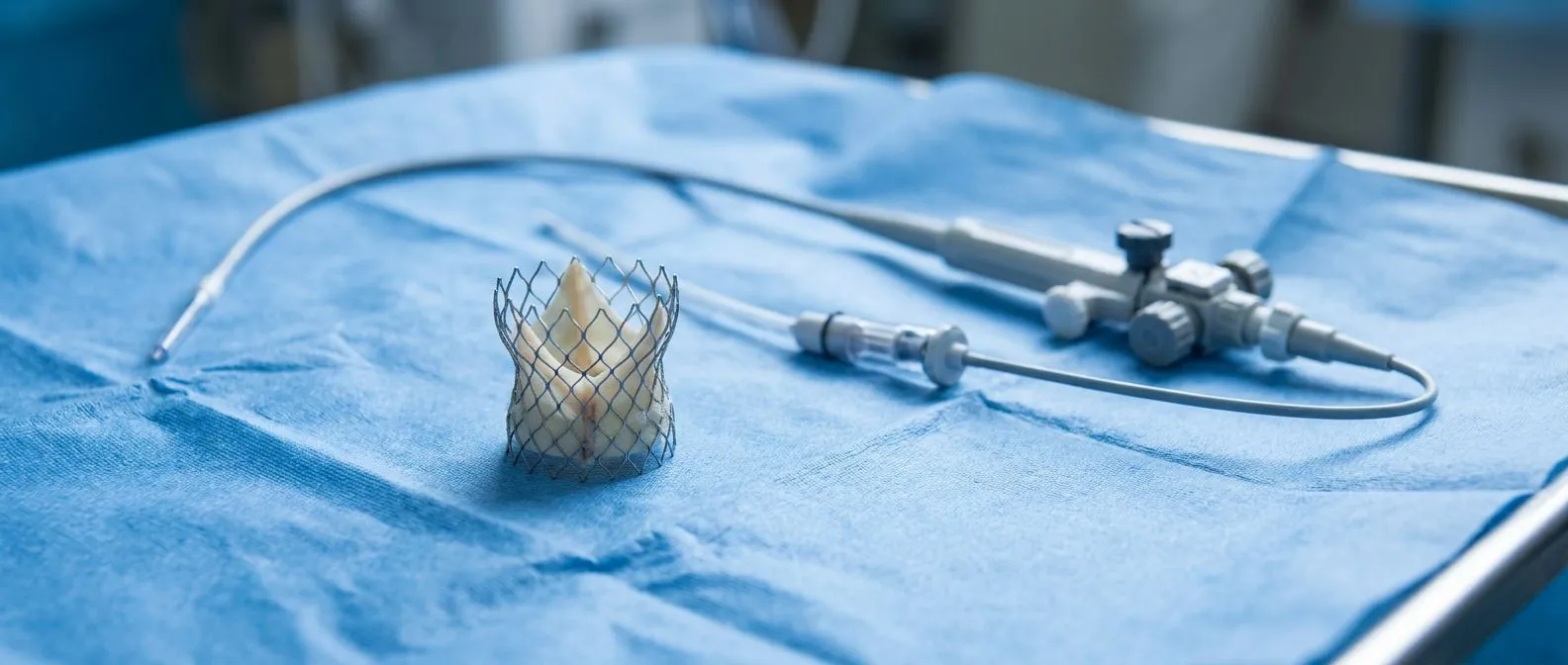
Severe aortic stenosis treatment options come down to two established paths, and understanding how they differ is the heart of your decision. TAVR — transcatheter aortic valve replacement — threads a collapsible new valve to the heart through a thin tube, usually inserted in an artery in the groin. Surgical aortic valve replacement opens the chest to remove the old valve and sew in a new one. Both replace the valve; they differ in how they get there.
Which is better for which patient? The honest answer is that neither is universally better — the right choice depends on age, valve anatomy, other medical conditions, and the state of the heart. For people considered at high risk for open surgery, TAVR is usually the default. For younger, otherwise healthy patients, surgery has a longer track record and certain advantages in durability and in addressing the surrounding aorta. TAVR vs surgery for aortic stenosis is best decided by a team that offers both, not by a single specialist who performs only one.
Every case is reviewed by our team against international guidelines before any recommendation is made, and you receive a clear proposal with the alternatives laid out, with the final decision always yours. That review matters because the trade-offs are genuine, and no single answer fits everyone.
TAVR Procedure Candidacy: Who Qualifies?
TAVR procedure candidacy is broader today than it was a decade ago, but it is still a structured assessment, not a preference. TAVR eligibility criteria rest on several pillars that a heart team weighs together.
- Valve anatomy: the size and shape of the aortic annulus — the ring where the valve sits — must suit the available transcatheter valves, confirmed by CT scan.
- Arterial access: the femoral arteries in the groin must be large and healthy enough to carry the delivery catheter; if not, alternative routes exist.
- Surgical risk: age, lung disease, kidney function, prior chest surgery, and frailty scores determine whether open surgery carries acceptable risk.
- Overall life expectancy: TAVR is intended to outlast the patient; candidacy assumes the treated condition itself is the main threat to health.
How is the assessment actually done? A CT scan of the chest and abdomen maps the arteries and measures the valve precisely. An echocardiogram confirms the severity. In the consultation we take the time to explain what these studies actually show, in plain words, and answer every question before any decision — including which studies are still needed, so that no unnecessary tests are ordered.
What if I am told I am not a candidate? Candidacy is not a verdict; it is a snapshot. Different access routes, different valve sizes, and hybrid approaches exist. If one center says no, a second opinion from a team that performs both procedures is always worthwhile.
What Are the Risks of TAVR?
Any heart procedure carries risk, and a good team will name the risks plainly rather than reassure you vaguely. TAVR is less invasive than open surgery, but it is not risk-free, and honest discussion of TAVR risks is part of good care.
What are the main concerns? The most discussed complication is injury to the heart's electrical conduction system, which sits just below the valve. Patients who already have a right bundle branch block — a common electrical pattern seen on the ECG — face a higher chance of needing a permanent pacemaker after TAVR, and this exact question is the subject of an ongoing clinical trial on prophylactic pacemakers in right bundle branch block patients undergoing TAVR. Other risks include stroke, vascular complications at the access site, and leakage around the new valve.
How are these risks managed? Careful imaging before the procedure, valve sizing, and experienced operators all lower risk substantially. Our team reviews every patient's ECG and imaging in advance specifically to identify conduction-system risk, and we discuss the pacemaker question openly before the procedure rather than after it. Knowing your personal risk profile before consenting is your right, and asking about it is a fair question for any center.
Is TAVR safe for older patients? For many elderly or frail patients, TAVR is precisely the option that makes treatment possible at all, because it avoids opening the chest and the heart-lung machine. The risks that remain are managed, not eliminated — and for that population the alternative is usually no treatment at all.
Aortic Valve Replacement Recovery Time: TAVR vs Surgery
Recovery is where the two paths differ most visibly, and for many patients it drives the decision as much as the procedure itself. Aortic valve replacement recovery time depends entirely on the approach.
What does TAVR recovery look like? Most patients who have TAVR through the groin walk the same day or the next. TAVR hospital stay duration is typically two to three days for an uncomplicated case, and many people return to normal daily activities within one to two weeks. There is no breastbone to heal, so lifting and driving restrictions are brief.
What does surgical recovery look like? Traditional open surgery requires splitting the breastbone, which needs six to eight weeks to knit solidly. Hospital stay runs five to seven days, with several weeks of gradual rehabilitation. Minimally invasive aortic valve surgery — performed through a smaller incision between the ribs without splitting the whole breastbone — shortens both the stay and the healing period, though it is still genuine surgery with genuine recovery.
Which recovery is "easier"? In raw terms, TAVR recovery vs surgery recovery favors the catheter: less pain, shorter stay, faster return to independence. But recovery is not the only measure — durability, completeness of the repair, and treatment of associated conditions matter too, which is the subject of the next section. We walk every patient through a realistic recovery timeline for their specific plan before the decision is made, because a procedure you cannot recover from comfortably is not the right procedure for you.
When Is Minimally Invasive Aortic Valve Surgery the Best Choice?
For all the attention TAVR receives, surgery remains the right answer for a large group of patients — often the healthiest ones. Younger patients typically benefit from a surgical valve because of its proven long-term durability. People with an enlarged aorta, a weakened heart muscle needing surgical attention, or other valves requiring repair do better with a single operation that addresses everything at once.
Why does age influence the choice? Surgical tissue valves generally last ten to fifteen years before needing replacement, while mechanical valves last a lifetime but require lifelong blood thinners. A sixty-year-old choosing a tissue valve may face a second procedure later in life; a catheter valve implanted at sixty carries the same consideration, only sooner. These are conversations about your expected lifespan and lifestyle, not formulas.
What about minimally invasive approaches? When surgery is indicated, it does not always mean a full sternotomy. Minimally invasive aortic valve surgery through a small right-chest incision can offer the durability of surgery with a gentler recovery. Our team performs conventional, minimally invasive, robotic and transcatheter procedures, and we recommend the less invasive route only where the evidence supports it for that specific patient — sometimes that means TAVR, and sometimes it means a small-incision surgical valve.
What conditions travel with aortic stenosis? An enlarged aortic root aneurysm, disease of other valves, or blocked coronary arteries often coexist with a narrowed valve. When they do, surgery can correct them in the same operation — something a catheter procedure cannot do.
For patients considering treatment in Mexico — whether local residents or international visitors — cost is a legitimate part of the decision, and it should be discussed transparently rather than discovered by surprise. Aortic valve replacement cost in Mexico varies with several factors: the type of valve chosen, the approach used, the hospital, and whether complications extend the stay.
What drives the price up or down? The valve device itself is a major component — transcatheter valves cost more than surgical ones. Hospital and intensive-care days add up, which is one reason catheter procedures can be less expensive overall despite the pricier device. Pre-operative imaging, anesthesia, and follow-up care are part of the total. Insurance coverage differs between Mexican insurers and international policies, so verifying coverage before scheduling is essential.
How should you compare quotes? Ask what is included: the valve, the hospital stay, the imaging, the follow-up visits. Our first contact is a free video consultation where we get to know you, talk through your condition, and identify exactly which studies are needed — so that you are not paying for tests you do not require before a single decision is made. That conversation costs nothing and gives you a realistic picture of what treatment would involve.

What Does Aortic Valve Replacement Cost in Mexico?
For patients considering treatment in Mexico — whether local residents or international visitors — cost is a legitimate part of the decision, and it should be discussed transparently rather than discovered by surprise. Aortic valve replacement cost in Mexico varies with several factors: the type of valve chosen, the approach used, the hospital, and whether complications extend the stay.
What drives the price up or down? The valve device itself is a major component — transcatheter valves cost more than surgical ones. Hospital and intensive-care days add up, which is one reason catheter procedures can be less expensive overall despite the pricier device. Pre-operative imaging, anesthesia, and follow-up care are part of the total. Insurance coverage differs between Mexican insurers and international policies, so verifying coverage before scheduling is essential.
How should you compare quotes? Ask what is included: the valve, the hospital stay, the imaging, the follow-up visits. Our first contact is a free video consultation where we get to know you, talk through your condition, and identify exactly which studies are needed — so that you are not paying for tests you do not require before a single decision is made. That conversation costs nothing and gives you a realistic picture of what treatment would involve.
When Is the Right Time to Treat Aortic Valve Stenosis?
Aortic valve stenosis intervention timing is one of the most consequential decisions in the whole journey, and it is more nuanced than "as soon as the echo says severe." Guidelines draw a clear line at symptoms: once severe stenosis causes breathlessness, chest pain, or fainting, valve replacement is recommended without delay. Before symptoms appear, the picture is more individual — some patients with very severe valves or declining heart function are offered treatment earlier, while others are monitored closely.
What happens between check-ups? Stenosis progresses gradually, usually a little each year, which is why regular echocardiograms track the trend rather than a single reading. A worsening trend gives you and your team time to plan calmly — to complete imaging, discuss options, and schedule treatment electively rather than urgently.
What should you avoid? Two extremes: treatment for a valve that is not yet severe enough to justify it, and months of waiting while symptoms limit your life. The middle path — honest monitoring, timely action — is where outcomes are best. Severe aortic stenosis treatment rewards preparation.
How do you get clarity on your own case? Bring your echocardiogram report, your symptom history, and your questions to a consultation with a qualified cardiac team. We encourage second opinions and treat seeking one as a normal part of deciding about heart surgery — a decision this important deserves to be made with full information and genuine confidence. If you are weighing severe aortic stenosis treatment and want a clear, unhurried explanation of your options, book a consultation with Dr Alejandro Molina's team in Guadalajara, Querétaro or Hermosillo, and start with a free video consultation. Do not self-diagnose — let a multidisciplinary team review your studies and lay out the path forward with you.