
Left Main Disease: Treatment Choices and Outlook
Left main disease treatment decisions explained: PCI vs CABG, recovery timelines, and long-term prognosis.
Left main disease treatment is one of the most consequential decisions in cardiology, because the left main coronary artery supplies blood to most of the heart muscle. When this artery becomes narrowed, the stakes are higher than with almost any other blockage in the Coronary Artery Disease family. This guide walks you through what the condition means, how it is diagnosed, which treatment options exist — stents, bypass surgery, and hybrid approaches — and what recovery and long-term outlook realistically look like. If you or a family member has just heard the words "left main" from a cardiologist, you are in the right place to understand the situation calmly.
What Is Left Main Coronary Artery Disease?
Where the left main artery sits. The Left Main Coronary Artery is a short vessel, usually two to four centimetres long, that emerges directly from the aorta and quickly divides into two major branches: the Left Anterior Descending Artery, which runs down the front of the heart, and the circumflex branch, which wraps around the side. Together, these branches feed the majority of the pumping chamber, the Left Ventricle. That is why a significant narrowing here is sometimes called a "widow-maker" lesion — a phrase we dislike, because it frightens rather than informs.
What "significant" narrowing means. Doctors define left main disease as a narrowing of roughly 50% or more of the vessel's diameter. Because the artery carries so much flow, even a moderate blockage can limit blood supply during exertion, and a severe one can threaten the entire left side of the heart. Ischaemic Heart Disease — the medical term for reduced blood flow to the heart muscle — covers this condition, but left main involvement places it in a higher-risk category.
Why it matters more than other blockages. A blockage in one small branch may affect a limited region of muscle. A blockage at the very origin of the left system can affect everything downstream at once. This is why the multidisciplinary team reviews every case against international practice guidelines before a recommendation is made — we treat left main disease as a decision that deserves the whole team, not a single opinion.
What Are the Symptoms of Left Main Stenosis?
Chest pressure during effort. The most common symptom is angina: a pressure, tightness, or heaviness in the chest that appears with walking, climbing stairs, or emotional stress, and eases with rest. Because the left main artery supplies such a large territory, the discomfort can be more intense and more easily triggered than typical angina. Some patients feel it in the jaw, back, shoulders, or arms rather than the chest itself.
Breathlessness and fatigue. Not everyone gets classic chest pain. Shortness of breath on ordinary activities, unusual tiredness, or a sudden decline in exercise tolerance can all signal that the heart is struggling to pump against reduced blood flow. Women and older adults, in particular, more often present with these subtler symptoms.
Warning signs that need urgent care. Left main stenosis can deteriorate without warning, and some patients have no symptoms at all until an event occurs. Seek emergency care immediately for any of these:
- Chest pain at rest or pain that persists longer than a few minutes
- Pain with sweating, nausea, or a feeling of impending doom
- Fainting, collapse, or new severe breathlessness
In the first consultation we take the time to explain what the studies actually show, in plain words, and to answer every question before any decision — we have learned that patients who understand their symptoms recognise danger earlier and arrive for care sooner.
How Is Left Main Disease Diagnosed?
The tests that raise suspicion first. Diagnosis usually begins with non-invasive studies: an electrocardiogram, an echocardiogram (an ultrasound of the heart), and a stress test or CT coronary angiogram, which uses X-ray imaging to visualise the arteries. A CT scan can show a suspicious narrowing in the left main artery, but it estimates severity rather than measuring it directly.
The definitive study. The gold standard is a Left Heart Catheterisation, an invasive test in which a thin tube is threaded from the wrist or groin into the coronary arteries and contrast dye is injected to reveal the exact location and severity of each narrowing. Because the left main artery is so critical, cardiologists often also measure pressure across the narrowing with a special wire to confirm whether it is truly flow-limiting before recommending treatment.
Additional assessment before any decision. Patients with Chronic Kidney Disease or other conditions may need modified protocols, and an assessment of heart muscle viability and valve function helps shape the plan. In our practice, every case is reviewed by the team against international guidelines before anyone proposes a treatment.

Understanding your own images. You are entitled to see your own angiogram and to have it explained. Ask for the images to be shown to you, and ask what percentage narrowing was measured and whether the pressure measurements confirmed it. A left main coronary disease specialist will gladly walk you through the pictures rather than simply describing the conclusion.
Left Main PCI vs CABG: Which Treatment Fits Your Case?
The two main paths. The central question in left main revascularization choices is stenting versus bypass. PCI (percutaneous coronary intervention) means treating the narrowing from inside the artery with a balloon and a drug-coated stent, done under local anaesthesia through the wrist. CABG (coronary artery bypass grafting) means open-heart surgery that constructs a new route around the blockage, typically using an artery from the chest wall — the Left Internal Mammary Artery — or a vein from the leg.
What the guidelines say. International guidelines grade both options by anatomy. Simpler left main disease, where the narrowing sits away from the branching point and the disease elsewhere is limited, can be treated very effectively with stents. Complex left main disease management — involving the branching point, multiple other blockages, or unfavourable anatomy — has traditionally favoured bypass surgery, because a graft to the left system is durable and protects the entire territory.
Factors that tip the balance. No single answer fits everyone, and the honest comparison looks like this:
- PCI (stents): no chest incision, faster initial recovery, but requires lifelong antiplatelet medication and follow-up to watch the stent
- CABG (bypass): more complete and durable revascularization, proven long-term protection, but a bigger operation with a longer recovery
- Your anatomy: where the blockage sits, how many arteries are involved, and the health of the rest of the heart
- Your overall health: age, kidney function, lung function, frailty, and any prior chest surgery
Our team performs both conventional and transcatheter procedures, and we recommend the less invasive route only where the evidence supports it for that specific patient — the final decision is always the patient's.
What Are the Best Treatment Options for Left Main Blockage?
Medical therapy alone is not enough. For significant left main disease, the best treatment for left main blockage is almost always revascularization — restoring blood flow — combined with medication. Medicines such as statins, antiplatelet drugs, and blood pressure control are essential companions, but they do not reopen a critical left main narrowing on their own.
Choosing between the options. Beyond standard PCI and bypass, several refinements exist. Stents placed in the left main are now drug-eluting and supported by intravascular imaging, which lets the operator confirm the result is perfect before finishing. Bypass can be performed on-pump or off-pump, and grafts can be arterial for durability. The "best" option is the one that matches your anatomy, your risk profile, and your goals.
Why the team matters. Studies of left main disease repeatedly show that outcomes depend heavily on the experience of the team and the volume of cases they treat. At our consulting rooms in Guadalajara, Querétaro and Hermosillo, every case is reviewed by the full multidisciplinary team against international practice guidelines before a recommendation is given, and the patient receives a clear proposal with the alternatives laid out.
What Are Left Main Angioplasty and Stent Results?
Modern results are encouraging. Left main stenosis angioplasty results have improved markedly over the past two decades with drug-eluting stents and intravascular imaging. Randomised trials comparing stents with bypass in selected left main patients have shown that, for simpler anatomy, stenting achieves comparable outcomes over several years of follow-up. For more complex anatomy, bypass retains an advantage in long-term durability.
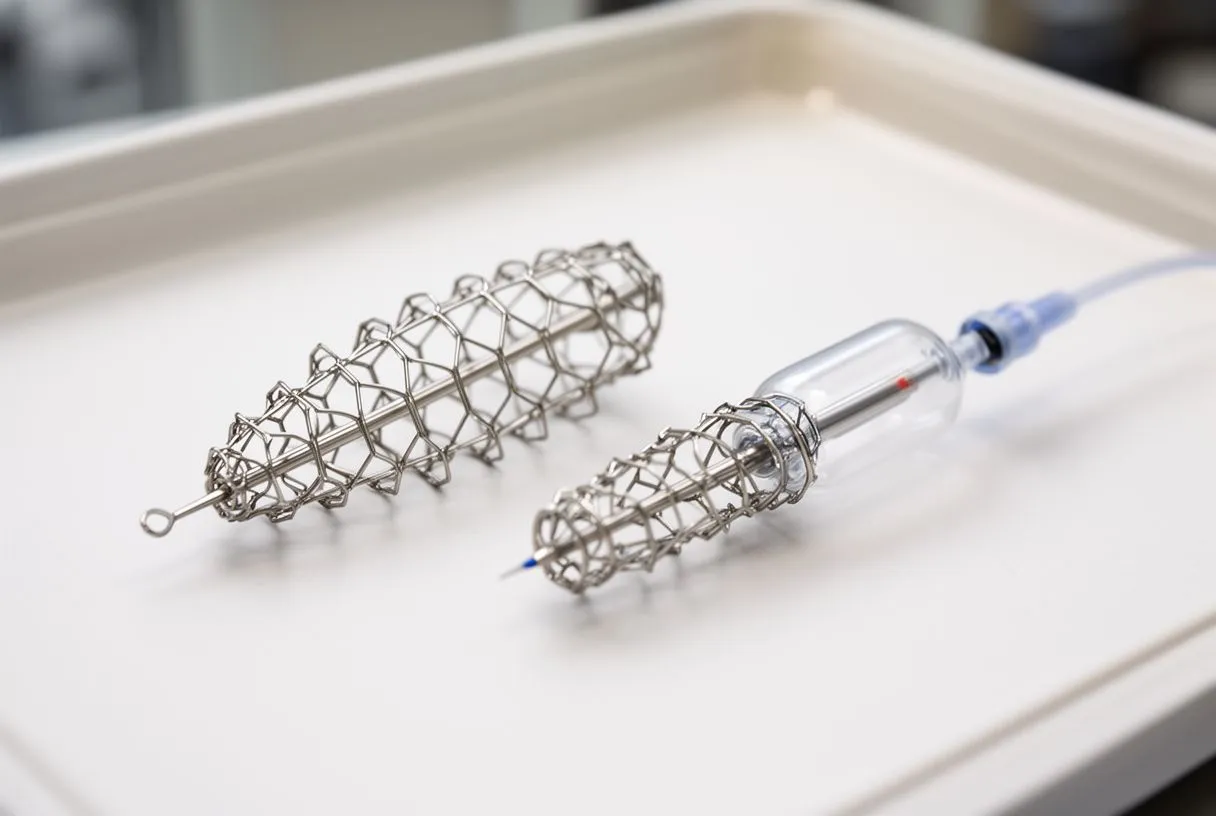
What follow-up involves. After left main coronary intervention, recovery is initially quick: most patients go home the next day or two and resume normal activities within a week. The longer-term commitment is real, though. Patients take dual antiplatelet medication (two blood-thinning medicines) for a defined period, then at least one antiplatelet drug long-term, and attend regular reviews.
Watching the stent over time. Because a stent in the left main artery carries higher stakes than a stent elsewhere, cardiologists often schedule surveillance imaging — sometimes a repeat angiogram — to confirm the stent remains open and free of restenosis (re-narrowing).
What Is Left Main Bypass Surgery Recovery Really Like?
The hospital phase. Left main bypass surgery recovery begins in the intensive care unit, where most patients stay one to two nights. You will wake with a breathing tube that is removed within hours, and chest drainage tubes that come out over the first day or two. Most patients sit in a chair and begin walking within a day of surgery — early movement is one of the strongest predictors of smooth recovery.
The first weeks at home. Expect six to twelve weeks of gradual recovery. The breastbone, which is divided for conventional surgery, needs roughly eight weeks to knit. Walking increases steadily; lifting, driving, and return to work follow the surgeon's milestones. Cardiac rehabilitation — supervised, progressive exercise with education — is strongly recommended and improves outcomes.
The long term. A bypass graft from the internal mammary artery is among the most durable treatments in all of medicine, often remaining open for decades. Recovery does demand patience, but the reward is a protected left coronary system for the long haul. Our team has guided many patients through this recovery, and we tell every one of them the same thing: the first six weeks are about discipline, not heroics.
Are Minimally Invasive and Hybrid Options Available for Complex Left Main Disease?
Minimally invasive approaches. Minimally invasive left main surgery avoids a full sternotomy. Instead, the surgeon works through small incisions between the ribs, using specialized instruments and, in suitable cases, robotic assistance. Published case reports describe successful hybrid treatment of tight aortic stenosis together with critical calcified left main disease in patients with poor heart function (Termedia), showing how these techniques can be combined for high-risk anatomy.
Hybrid treatment. A hybrid strategy deliberately combines the strengths of both worlds: for example, a minimally invasive bypass graft to the front of the heart paired with stents to the remaining vessels, or stenting of one territory combined with a surgical graft to the other. These approaches are considered for patients whose anatomy or overall condition makes either single strategy risky on its own.
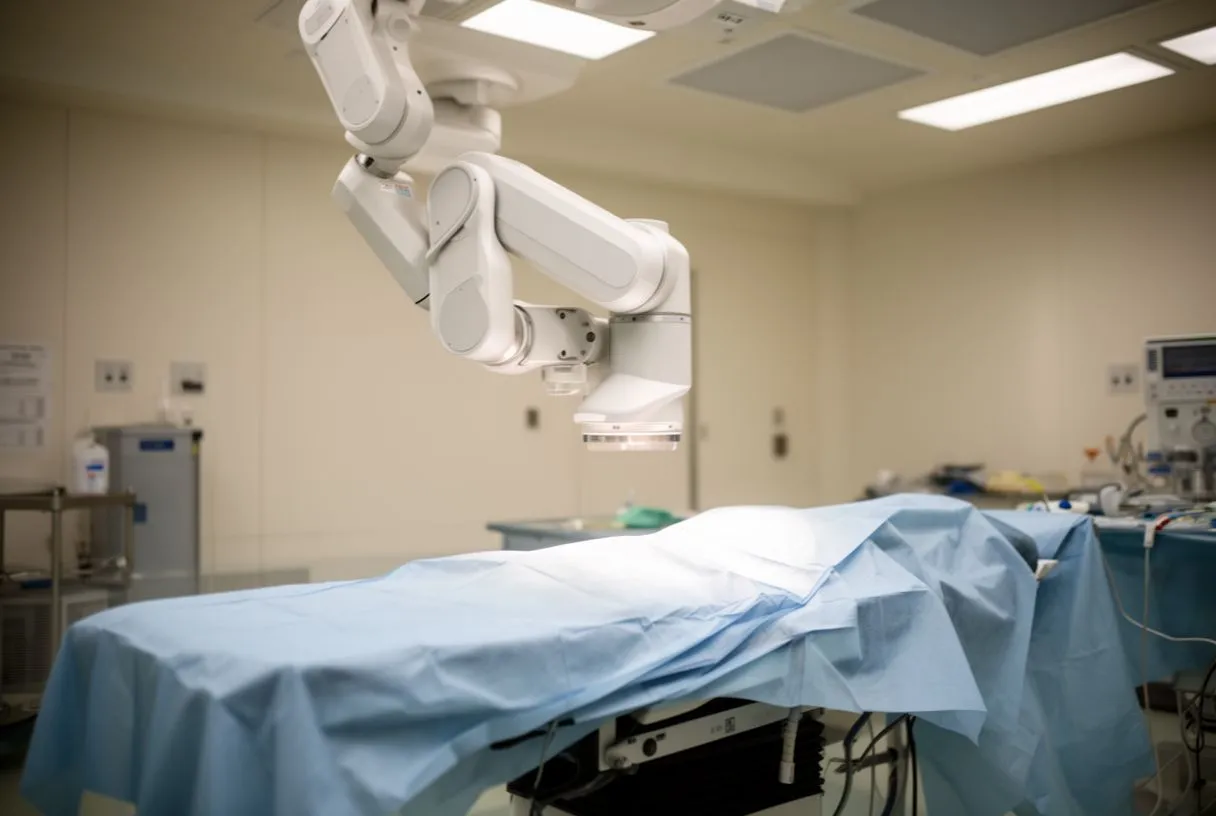
Robotic surgery experience. Robotic-assisted cardiac surgery allows the operation to be done through tiny ports with the surgeon controlling instruments from a console. Dr Molina performed the first robotic mitral valve repair in the Ángeles Health System and the first robotic heart surgery in Guadalajara, and he trained in minimally invasive and robotic techniques at the University of Montreal.
Is Left Main Disease Treatment Safe?
Understanding the risks honestly. Any treatment of a critical left main narrowing carries risk, and pretending otherwise would be dishonest. Both stenting and bypass carry small risks of bleeding, kidney injury, stroke, and heart attack, and the risk of leaving a critical left main lesion untreated is higher than the risk of treating it. Risk is not a reason to avoid treatment; it is a reason to match the treatment carefully to the patient.
How risk is measured. Cardiac teams use validated scoring tools such as EuroSCORE II to estimate operative risk before surgery, alongside anatomic complexity scores for stenting. These numbers do not predict any individual outcome, but they help the team — and you — see where the balance of benefit lies.
How left main emergencies behave. When a critical left main lesion causes an acute coronary syndrome (a heart attack in progress), the situation is urgent and outcomes depend on speed of treatment. Research from a cardiac centre in Iraq documented the frequency and severity of left main disease among acute coronary syndrome admissions (Annals of Medicine and Surgery), underscoring why suspected heart attack symptoms must never be ignored. We assess each patient's individual risk openly and share those numbers during the consultation, because informed patients make better decisions.
What Is the Prognosis After Left Main Disease Treatment?
What the outlook looks like. The prognosis for left main coronary artery disease has transformed with modern treatment. Untreated, a critical left main narrowing carries a serious risk over the years. Treated with the appropriate strategy, many patients return to full normal life. Left main disease prognosis after treatment depends on heart muscle function before treatment, kidney health, diabetes control, and how well the chosen strategy matched the anatomy.
Related conditions that shape outlook. Several other conditions commonly travel alongside left main disease and influence long-term results. Patients often ask how these connect:
- Peripheral artery disease: PAD does affect the heart — it is a marker of widespread atherosclerosis, and its long-term risks include heart attack and stroke, so it signals the need for aggressive overall risk control
- Three-vessel blockages: when you have three blocked coronary arteries together with left main involvement, bypass surgery is generally favoured, since it can protect all territories in one durable operation
- Valve disease: coexisting Valvular Heart Disease or aortic valve problems may call for a combined or hybrid surgical plan
Life after treatment. Left main disease survival rate statistics vary by patient profile, which is why asking for your own numbers — not population averages — matters. Ongoing reviews of the evidence are catalogued in research databases such as Europe PMC, and the field continues to advance. When patients ask us about long-term outcomes, we give them their individual picture based on their own studies rather than generic figures.
Getting a Second Opinion for Left Main Disease Treatment
Why a second opinion is normal. Because left main disease treatment choices are genuinely balanced in many patients, seeking a left main disease second opinion is one of the most sensible things you can do. It is not a betrayal of your cardiologist; it is how careful people approach major decisions. Guidelines themselves recommend that complex cases be discussed in multidisciplinary meetings — which is, in effect, a second (and third, and fourth) opinion built into good care.
What to bring and what to ask. Come with your imaging, reports, medication list, and your questions written down. Useful questions include: is my left main narrowing confirmed as flow-limiting; is PCI or bypass the better fit for my anatomy and why; what does recovery look like for the option you recommend; what are the follow-up requirements?
How we start. The first contact with our team is a free video consultation, where we get to know the patient, talk through the condition, and say which studies are still needed so no unnecessary ones are ordered; a face-to-face visit follows when the patient decides to go ahead, with consulting rooms in Guadalajara, Querétaro and Hermosillo. Patients considering treatment cost in Mexico should also ask any team directly about what is included, since transparency on cost matters as much as transparency on risk.
Left main disease treatment has never offered more options than it does today — refined stents, durable bypass grafts, and hybrid approaches that combine the strengths of both. The right answer is not universal; it is the one that fits your anatomy, your health, and your life. Learn what you can, ask every question, consider a second opinion, and then sit down with a qualified cardiac team to discuss your own case rather than relying on self-diagnosis. Your heart deserves nothing less.