

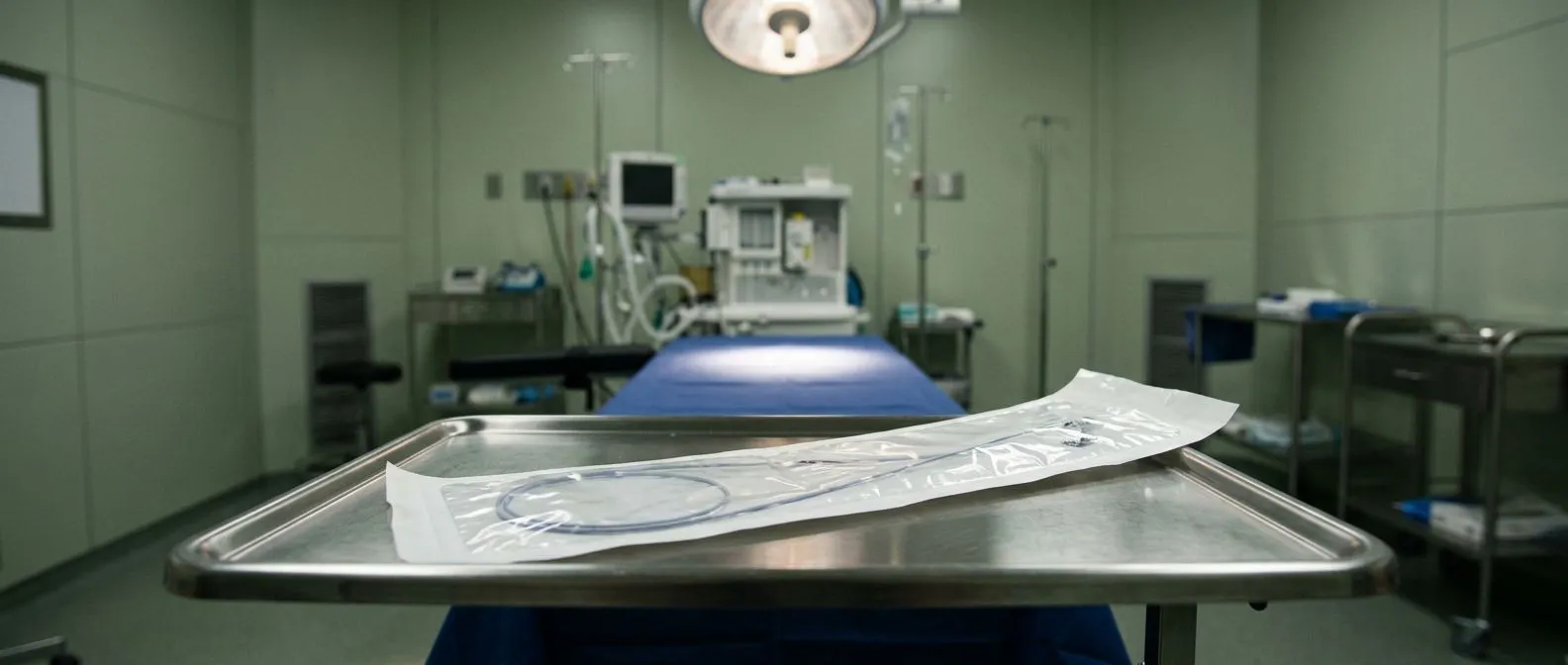
Percutaneous Valve Replacement: Success and Recovery
Percutaneous valve replacement recovery: week-by-week timeline, success rates, and practical aftercare tips from Guadalajara heart specialists.
Recovery after percutaneous valve replacement is one of the main reasons patients and families ask about this procedure in the first place. When a heart valve stops working properly, the traditional answer was open-heart surgery: the breastbone divided, the heart stopped, a machine taking over circulation. Today, many valves can be replaced through a small puncture in the groin, with the new valve delivered on a catheter. That difference changes everything about what the days and weeks afterwards look like. This guide walks you through how the procedure is done, what the recovery period actually involves, which complications to watch for, and how to tell the difference between a normal recovery and one that needs attention.
What Is Percutaneous Valve Replacement?
Percutaneous valve replacement means replacing a diseased heart valve by threading a new one through a blood vessel, using a needle-sized access point rather than opening the chest. "Percutaneous" simply means "through the skin." The most established example is TAVR — transcatheter aortic valve replacement — used for narrowing of the aortic valve, the valve between the heart's main pumping chamber and the artery that supplies the whole body.
Why the approach matters. The aortic valve sits deep inside the chest, and replacing it surgically once required stopping the heart and connecting the patient to a heart-lung machine. In a transcatheter procedure, the new valve arrives compressed inside a narrow delivery catheter, usually entered at the femoral artery in the groin. Once positioned, a balloon or a self-expanding frame opens the new valve into place inside the old one. The heart keeps beating throughout.
Who it suits best. TAVR was first developed for patients too frail for open surgery, and it has since expanded to many intermediate-risk and lower-risk patients as evidence has matured. Whether it is the right choice depends on valve anatomy, the state of the arteries, overall health, and the reason the valve failed. In our practice, every case is reviewed by the multidisciplinary team against international practice guidelines before a recommendation is given, and the patient receives a clear proposal with the alternatives — the final decision is always theirs.
It is worth separating the words from the start: a percutaneous procedure replaces the valve. A percutaneous valve repair — for example, clips or devices that fix a leaking mitral valve — leaves the patient's own tissue in place. Your team will explain which option fits your valve, because the recovery and the risks differ between the two.
How Percutaneous Valve Replacement Works, Step by Step
Understanding the mechanics of the procedure helps enormously on the recovery side, because every step in the operating room corresponds to something you will feel or be monitored for afterwards.
Before the procedure. You will have had an echocardiogram (an ultrasound of the heart), a CT scan of the chest and arteries, and often a coronary angiogram. These studies tell the team the exact size of the valve annulus — the ring of tissue where the valve sits — so the correct valve size can be chosen. In our consultations we take the time to explain what the studies actually show, in plain words, and to answer every question before any decision.
During the procedure. Most TAVR procedures take between one and two hours of actual procedure time. You will typically receive sedation rather than full general anaesthesia, although some centres use general anaesthesia depending on the approach. The access site — usually the groin, sometimes the wrist, or in less common cases a small incision between the ribs — is prepared, a temporary pacemaker wire may be placed, and a balloon may be used to pre-open the old valve. The new valve is then deployed, its position and function checked immediately on ultrasound, and the catheters removed.
The access point. Because the procedure enters an artery, the team must prevent bleeding at the puncture site. Closing devices or manual pressure seal the artery, and the leg where the catheter entered will need to stay straight for a few hours. This small detail is one of the most important parts of early recovery: most early complications come from the access site, not the valve.
How Long Is Recovery From Percutaneous Valve Replacement?
This is the question patients ask most, and the honest answer is that it happens in layers: hospital days, then weeks of progressive activity, then months of steady improvement. Compared with open surgery, the timeline is dramatically shorter — but it is not instant, and knowing the stages prevents unnecessary worry.
- Days 1–2 in hospital: most patients who have the procedure through the groin go home within one to three days, some within twenty-four hours if the first checks are clean.
- Weeks 1–4: the puncture site heals, energy returns gradually, and light walking becomes the main "therapy."
- Weeks 4–12: most patients return to normal daily activities, work, and moderate exercise under their doctor's guidance.
The first few days. You will wake up with a bandage over the access site, possibly a bruise the size of a fist — bruises are common and harmless. Nurses will check your pulse in the leg, watch the site for swelling, and monitor your heart rhythm. A temporary conduction disturbance can occur when the new valve presses near the electrical conduction system of the heart, so a monitor watches for this in the first day or two.
The first few weeks. Fatigue is real and normal. You have undergone a major cardiac intervention, even if the outside of your body barely shows it. The general pattern patients describe is: first week sore at the groin and easily tired; second and third weeks energy climbing; by a month, feeling noticeably better than before the procedure — often better than they had felt in years, because the valve obstruction is gone.
Recovery after percutaneous valve replacement is generally far easier on the body than surgical Aortic Valve Replacement, but the word "easy" deserves care. Complications can still occur, and the sections below describe exactly what to watch for, and when to call.

TAVR Recovery Timeline: What to Expect Week by Week
Patients do better when they know what "normal" looks like at each stage. Here is a realistic, week-by-week picture of a typical uncomplicated groin-access recovery — your own team may adjust it based on your specific case.
Weeks 0–1: the healing window. The access site needs firm healing before anything pulls on it. Avoid lifting anything heavier than a few kilograms, avoid bending hard at the hip on that side, and walk gently but regularly. Short walks several times a day do more for your recovery than a single long one. Showering is fine; baths and swimming are usually paused until the site is fully closed.
Weeks 2–4: rebuilding. Driving usually resumes around one to two weeks once your doctor confirms it is safe, and you no longer take strong pain medication. Cardiac rehabilitation — a supervised program of gradually increasing exercise — is strongly encouraged, and many teams start it within the first month. Patients who join a structured rehabilitation program tend to recover confidence faster and are less likely to overdo activity in the early weeks.
Weeks 4–8: return to life. Most patients return to desk work within two to four weeks, and to physically demanding work after discussion with their team. Exercise tolerance climbs steadily. This is also when follow-up echo comes into play: your first follow-up echocardiogram is typically around one month, confirming the new valve is seated well and functioning properly.
Months 2–6: consolidation. The valve continues to behave as it should, the incision is a memory, and attention shifts to the long-term: blood-thinning medication as prescribed, dental hygiene to protect the valve from infection, and lifelong follow-up. Recovery after percutaneous valve replacement does not end at "back to normal" — it ends with a permanent new relationship with your heart follow-up.
The Big Five Complications After Transcatheter Aortic Valve Replacement
No honest guide can skip this part. Transcatheter procedures have lower complication rates than open surgery for most patients, but complications exist, and knowing the "big five" prepares you to recognise them early rather than dismiss them.
Bleeding and vascular complications. The single most common early problem is bleeding or injury where the catheter entered the artery. Watch for sudden swelling at the groin, a pulsating lump, spreading bruising, or a cold, pale, or numb leg — those symptoms need immediate attention. This is exactly why teams check the pulses in your feet repeatedly during the first hours. Interestingly, closing the access site in patients with complex vascular anatomy is its own technical challenge; case reports such as work on achieving haemostasis after TAVR in patients with prior bypass grafts describe novel closure techniques for difficult anatomy (case report, 2021).
Conduction disturbances and pacemaker need. The aortic valve sits directly beside the heart's electrical wiring. The new valve can press on it, causing slow rhythms. Some patients need a permanent pacemaker after TAVR. The risk depends heavily on the type of valve used, so this is a specific question to ask your team before the procedure — not a vague possibility, but a number they can give you for the specific valve they plan to implant.
Stroke. Small particles can dislodge while the catheter crosses the old valve. Modern protection devices and careful technique have reduced this risk substantially, but it remains one of the serious complications teams work hard to prevent. Call immediately for any weakness on one side, facial drooping, speech difficulty, or sudden vision loss.
Valve-related issues. These include the new valve leaking (paravalvular leak), valve migration, or in rare cases Valve Thrombosis — a blood clot forming on the new valve. Anti-clotting medication is prescribed precisely to reduce these risks, which is why taking it exactly as directed is one of the most protective things you can do during recovery.
Kidney injury and others. The contrast dye used during the procedure can stress the kidneys, especially in patients who already have reduced kidney function. You will receive fluids and your kidney numbers will be checked. In our team's review process, patients with borderline kidney function, complex vascular anatomy, or previous bypass grafts are discussed specifically to choose the access route that carries the lowest risk for their situation.
Percutaneous vs Open Heart Valve Replacement Recovery
When families compare the two approaches, the conversation usually centres on the hospital stay and the breastbone. Here is how the recovery paths actually differ.
Hospital stay and physical restriction. Open surgical aortic valve replacement typically means several days in hospital and a sternotomy — the breastbone divided and wired back together, with months of restrictions on lifting to let the bone heal. Transcatheter replacement through the groin avoids the breastbone entirely. There is no bone to heal, no median sternotomy scar, and no three-month lifting limit.
Who still benefits from surgery. This is critical to say plainly: transcatheter replacement is not universally better. Surgical Aortic Valve Replacement remains the reference in many situations — for example, patients needing other surgical work at the same time, such as coronary bypass, a root procedure like Valve-sparing Root Replacement or Aortic Root Replacement, or younger patients with valve anatomy better served by a surgical valve. Choosing between the routes is a genuine decision with trade-offs on both sides.
What the comparison means for recovery time. For matched patients, the transcatheter route returns patients to daily activity in weeks rather than months, and reduces early procedural risks like bleeding and atrial fibrillation. But durability is also a fair question: surgical valves have decades of established data, while transcatheter valves continue to accumulate long-term evidence. These are exactly the trade-offs a good team should lay out for you in plain language, with the reasoning attached.
Signs of Heart Failure After a Heart Valve Replacement
Families often ask how to tell whether their loved one is recovering well or showing early signs that the heart is struggling. The heart may have been under strain for years before the valve was replaced, and it does not always adjust instantly.
Symptoms that deserve a call. Worsening breathlessness rather than improving, new swelling of the ankles or legs, sudden weight gain over a few days (fluid retention), needing extra pillows to sleep flat, or a new irregular or racing heartbeat. These are the signs of heart failure after a heart valve replacement that should prompt a call to your cardiology team — not panic, but a call. Many are managed simply with medication adjustment.
What is normal versus not. Mild fatigue and slight breathlessness climbing stairs in the first weeks are normal and expected. The pattern matters more than any single day: recovery should trend better week over week. A plateau, or a slide backwards, is the signal to be checked.
Red flags needing urgent attention. Chest pain that does not settle, fainting, one-sided weakness, and cold or numb limbs are emergency symptoms. Write the numbers down before you go home, and make sure you leave knowing exactly which symptoms mean "call today" and which mean "go to emergency," because in the anxious first weeks, knowing the boundary is half the peace of mind.
Percutaneous Mitral Valve Replacement Recovery: Why It Differs
Most of this article has described the aortic valve, because transcatheter replacement is most established there. The mitral valve — the valve between the left atrium and left ventricle — is a different and harder problem, and recovery differs accordingly.
Why the mitral valve is the hardest to replace. The mitral valve sits in an awkward position, attached to the heart wall by delicate structures, and experiences higher pressures than most other valves. A catheter valve can be difficult to anchor securely there. This is why, for many years, the mitral valve has been the hardest valve to replace in the heart, and why percutaneous mitral valve replacement remains reserved for carefully selected patients — often those who cannot undergo surgery. For patients who are leaking rather than narrowed, the mitral valve can often be repaired rather than replaced, and repair of the native valve is generally preferred when feasible.
Access routes for the mitral valve. Transcatheter mitral valve replacement often uses a transseptal route — the catheter crosses from the right side of the heart to the left through the wall between the atria — or, in some cases, a small incision near the ribs to reach the heart directly. The transseptal route leaves no visible scar but requires the hole in the heart's wall to close over the following weeks. A Mitral Valve Replacement performed transcatheter therefore involves a slightly longer monitoring period than groin-only aortic procedures.
What recovery looks like. Hospital stay is similar — usually a few days — but there is more emphasis on follow-up imaging, because the mitral valve demands close attention to how the new valve seats and whether any leak remains. In our practice, patients with mitral disease receive a dedicated explanation of repair versus replacement and transcatheter versus surgical routes, because the mitral valve genuinely has the widest range of options and the decision deserves the most careful discussion.
Percutaneous Valve Replacement Aftercare: Practical Tips for a Faster Recovery
You cannot speed up biology, but you can remove the things that slow it down. These are the aftercare habits that consistently matter during the recovery period.
- Take your medications exactly as prescribed: anti-clotting and blood-pressure medications protect the new valve and the access artery; never adjust doses on your own.
- Walk daily: gentle, frequent walking is the single best exercise in the first month — it builds circulation, clears anaesthesia fog, and protects the lungs.
- Care for your teeth and gums: mouth bacteria can seed an infection on a prosthetic valve; keep dental visits current and mention your valve replacement to your dentist.
- Attend every follow-up: the one-month echo and later reviews are how your team confirms the valve is working and catches small issues before they grow.
Watch the access site. For the first two weeks, check the puncture point daily: it should be flat, dry, and becoming less tender. A growing lump, new swelling, or a leg that looks dusky is not a "wait and see" situation.
Feed the recovery. A heart-healthy diet — vegetables, whole grains, lean protein, limited salt — supports both wound healing and blood pressure control. Patients taking the blood thinner warfarin need consistent vitamin K intake; those on newer anticoagulants simply take them as directed. Ask your team rather than guessing.
Protect your mind as well. Anxiety in the weeks after any heart procedure is common and legitimate. Cardiac rehabilitation programs, walking partners, and simply knowing your follow-up dates all help. Recovery after percutaneous valve replacement is physical and psychological at once, and treating both halves shortens the whole.
For trusted general reading on heart valve disease and treatment options, the Harvard Health library publishes accessible, regularly updated material that many of our patients find useful alongside their own doctor's advice.
Choosing a Team for Catheter Valve Replacement Recovery
The quality of your recovery begins with the quality of the decision about which treatment and which team. Here is what to look for, and how the process should feel.
A genuinely multidisciplinary decision. The best recommendations for valve disease come from a heart team — cardiac surgeons and structural cardiologists reviewing your imaging together — not from a single specialist whose toolkit happens to favour one technique. In our team, led by Dr Alejandro Molina, every case is reviewed by the multidisciplinary team of cardiac surgeons against international practice guidelines before a recommendation is given, and we recommend the less invasive route only where the evidence supports it for that specific patient.
Training and experience you can verify. Dr Molina trained in cardiothoracic surgery at the Universidad de Guadalajara, in cardiac, minimally invasive, robotic and structural surgery at the University of Montreal, and in structural cardiology and TAVR at CHU Bordeaux, with team training at Jena, Bad Berka and Buffalo. Experience matters directly in transcatheter procedures: valve selection, access route, and complication management all improve with case volume.
Second opinions are normal. We actively encourage second opinions and treat seeking one as a normal part of deciding about heart surgery — a confident team should welcome another set of eyes on your imaging and plan.
Starting the conversation. Our first contact is a free video consultation: we get to know the patient, talk through the condition, and identify which studies are still needed so no unnecessary tests are ordered. A face-to-face visit at our consulting rooms in Guadalajara, Querétaro or Hermosillo follows when you decide to move ahead. If you or a family member are weighing valve options, book a consultation and bring every question — that conversation is where a good recovery begins, not in an emergency room months later.
The takeaway. Transcatheter valve replacement has transformed what recovery from valve disease looks like: days in hospital rather than weeks, walking within hours, and a return to normal life measured in weeks rather than months — with real risks that a well-prepared patient can recognise early. Discuss your own situation with a qualified cardiac team rather than self-diagnosing, and let the decision about the procedure be a shared one, made calmly and in full.






