

Stented Valve Versus Stentless Valve in Aortic Surgery
Stented valve vs stentless options compared by Guadalajara heart surgeons.
If your cardiac team has told you that you need Aortic Valve Replacement, you will quickly meet a decision that most patients have never heard of before surgery: the choice between a stented valve vs stentless valve options. Both replace a narrowed or leaking aortic valve — the gate that lets blood leave the heart toward the body — but they are built differently, implanted differently, and behave differently over the years. This guide explains both implants in plain language, how surgeons decide between them, what recovery looks like, and what questions to bring to your own consultation.
What Is a Stented Valve in Aortic Surgery?
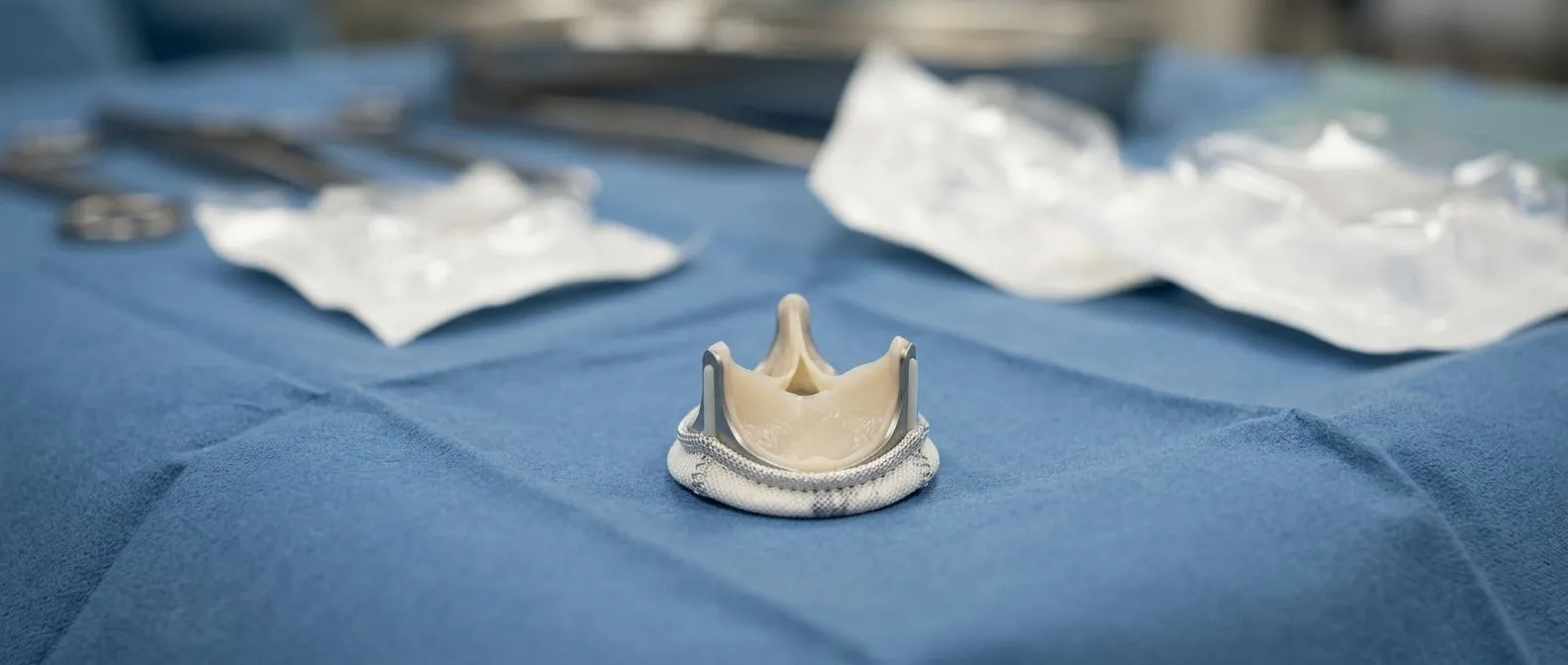
A stented valve is a replacement heart valve mounted inside a flexible or rigid frame — the "stent" — that holds the valve in its correct shape and position. Most stented valves are bioprosthetic: they use animal tissue (usually cow pericardium or pig valve tissue) sewn into that frame. The frame keeps the three leaflets aligned so the valve opens and closes cleanly with every heartbeat.
Why the frame matters: the stent makes implantation faster and more predictable. The surgeon sews the framed valve into the Aortic Annulus — the ring of tissue where your own valve sat — using a standard technique that has been refined over decades. Stented bioprosthetic valves are among the most widely implanted designs in the world and have a long track record.
The trade-off of the frame: the stent occupies space inside the outflow tract of the left ventricle, the chamber that pushes blood out. In patients with a small aortic root or a small annulus, that frame can slightly narrow the passage for blood. The frame also holds the valve slightly away from the natural anatomy, which matters when we discuss hemodynamics later in this article.
When our team plans a case, we check the annulus size, the root dimensions and the patient's age against international guidelines before proposing a specific implant. We take the time in consultation to explain what the measurements actually show, in plain words, before any decision is made.
What Is a Stentless Valve and How Does It Work?
A Stentless Valve is a replacement valve with no frame at all. It is a valve-shaped segment of tissue — often a pig (porcine) valve with a small cuff of tissue around it, in designs such as the Freestyle stentless valve — that the surgeon stitches directly into the aortic root. Because there is no stent, the implant behaves more like the patient's own anatomy.
Two ways to implant it: the simplest is a subcoronary technique, where the stentless valve is seated inside the patient's own aorta just below the coronary arteries. The more complete technique is an aortic root replacement valve type procedure, where the surgeon replaces the entire aortic root — valve, root wall and coronary reattachment — with the stentless graft. The second approach suits patients whose root is enlarged or diseased.
Why surgeons like it anatomically: without a frame, the full annulus diameter is available for blood flow, and the valve flexes with the root during each heartbeat. That flexibility is the central argument in the stented valve vs stentless valve options discussion for patients with small roots.
The surgery itself is more technically demanding: implanting a stentless valve takes longer on the Aortic Cross-clamp — the clamp that temporarily stops blood flow through the aorta during the operation. That extra ischemic time is a real consideration, and it is one reason the choice is always individual rather than automatic.
Stented Valve vs Stentless Valve Options: Which Is Better?
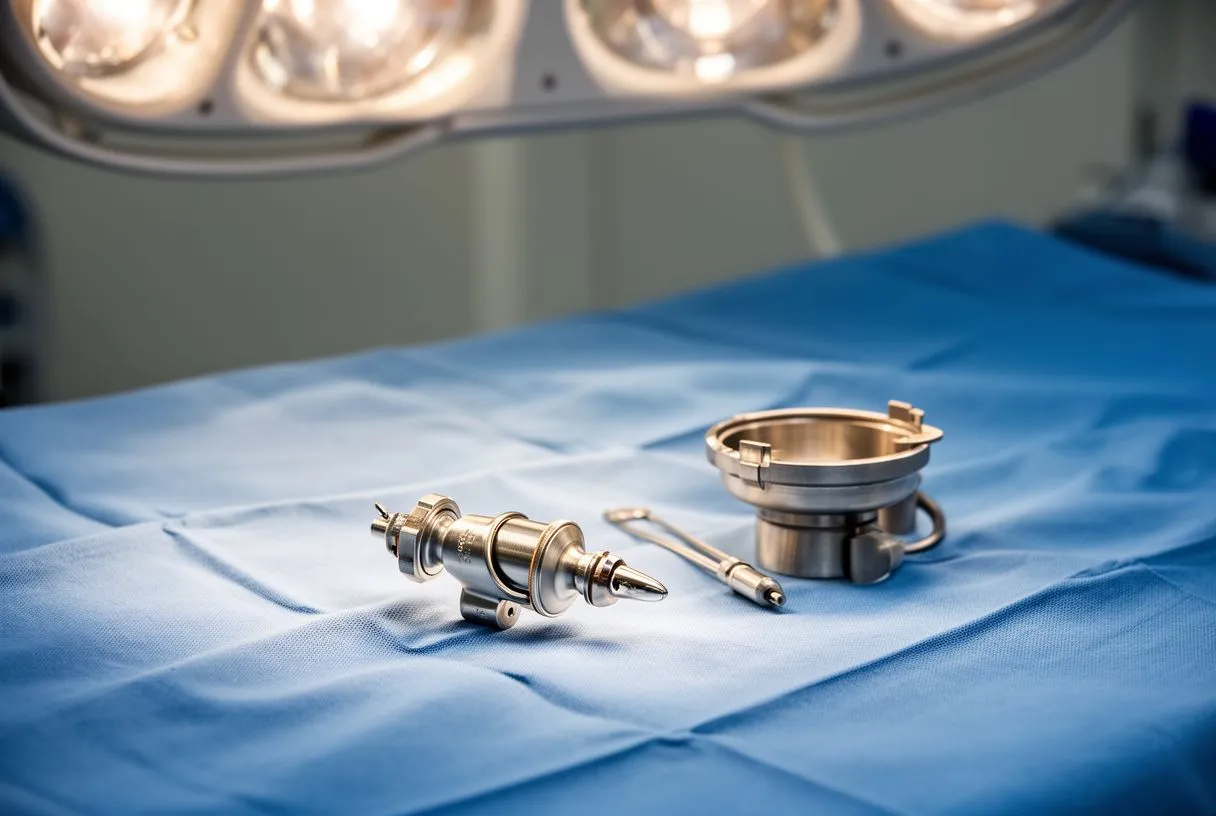
The honest answer is that neither is universally better; the right choice depends on your anatomy, your age and your surgical priorities. Below is a comparison of the practical differences.
- Implant time: a stented valve goes in faster and with a shorter cross-clamp time; a stentless valve requires a longer, more complex operation.
- Fit: a stentless valve uses the full annulus and suits small roots; a stented valve's frame can limit effective valve size in the same patient.
- Track record: stented valves have decades of data across millions of patients; stentless designs have good but smaller evidence bases.
- Future options: both can later receive a Valve-in-valve transcatheter procedure if the surgical valve wears out — a catheter-based valve placed inside the old one.
In our multidisciplinary review, every candidate is discussed as a team before a recommendation is given, and the patient receives a clear proposal with the alternatives laid out. The final decision always belongs to the patient.
Patients sometimes ask whether a stented valve vs stentless valve options comparison has a single winner for everyone. It does not: a large-annulus 68-year-old and a small-annulus 45-year-old may reasonably receive opposite answers to the same question.
Stented vs Stentless Aortic Valve: Hemodynamics Explained
Hemodynamics means how blood actually flows through the implanted valve — the pressures and gradients measured on an echocardiogram, the ultrasound scan of the heart. A stentless valve echocardiogram typically shows lower pressure gradients and a larger effective opening than a stented valve of the same labeled size, because no frame narrows the orifice.
Why gradients matter to you: the aortic valve's job is to open wide so the heart does not strain to push blood out. After replacement, the heart muscle often recovers and the pumping function improves. Lower gradients are generally associated with better left ventricular mass regression — the thickened heart muscle returning toward normal over the years after surgery.
What the echocardiogram shows over time: your follow-up scans track valve function, leaks and calcification. Cleveland Clinic notes that all tissue valves gradually calcify and that this degeneration is the main reason reoperation is eventually needed in some patients (Cleveland Clinic). The pattern of degeneration, not the initial gradient alone, drives long-term outcomes.
At follow-up, the post-operative echocardiogram is compared against the gradients expected for the specific implant used.
What Are the Advantages of a Stentless Valve?
Better blood flow per size: the most cited of the stentless valve advantages is hemodynamic. Without a frame, the surgeon can often implant a valve one size larger than would fit with a stent, giving the patient a bigger effective opening and lower gradients. For a patient with a small aortic root, this can be the difference between an acceptable result and an excellent one.
More physiological behavior: the stentless valve moves with the aortic root during the cardiac cycle, which many surgeons believe is gentler on the valve tissue over time. Some studies of stentless xenograft replacement have reported favorable hemodynamics sustained at long-term follow-up compared with stented bioprostheses.
The counterweights to consider: longer operative time, a more technically demanding implant, and a somewhat smaller body of long-term evidence than framed valves carry. A candid surgeon will present both sides. When we recommend a less invasive or frameless route, it is only where the evidence supports it for that specific patient — never as a default.
Mechanical vs Tissue Valve in a Stented Implant
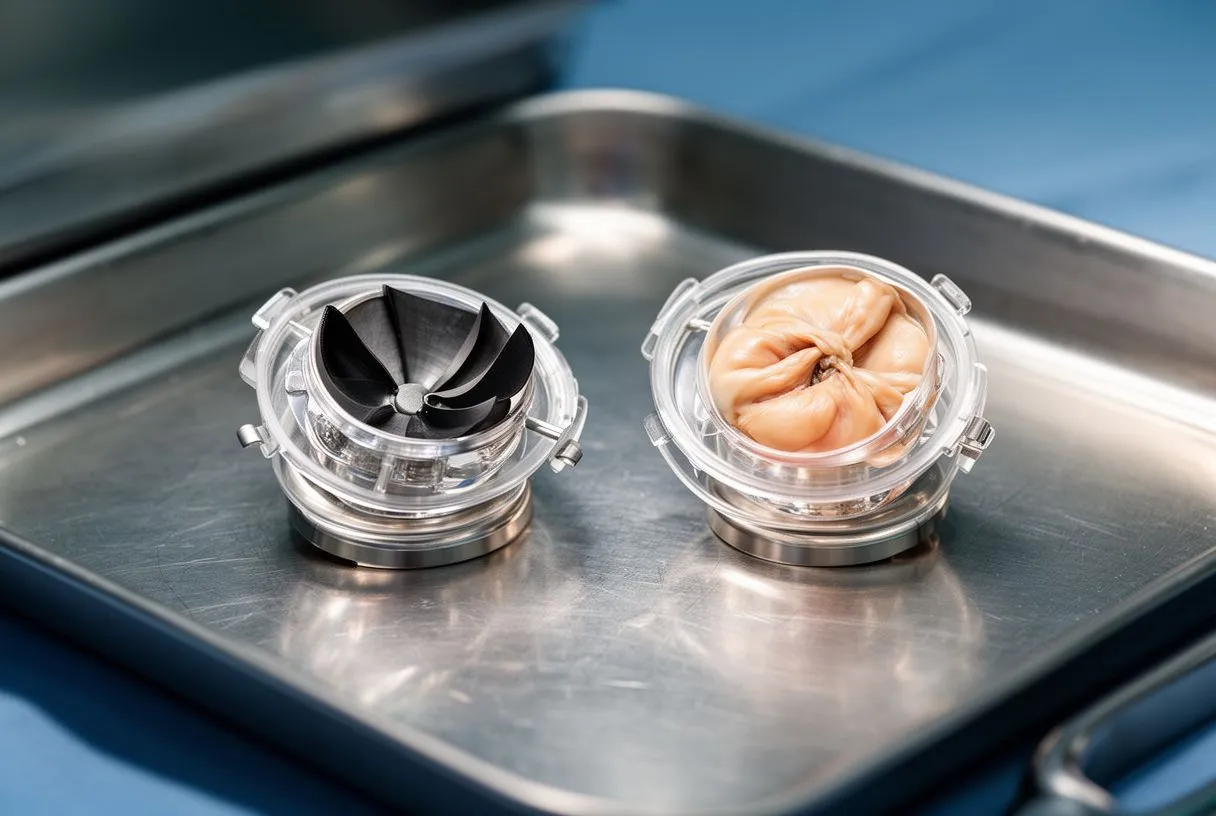
A stented implant can carry two very different valve materials. A mechanical valve is made of pyrolytic carbon and metal and can last a lifetime, but it requires lifelong blood-thinning medication (warfarin) to prevent clots. A tissue (bioprosthetic) valve avoids blood thinners but wears out over the years.
How surgeons usually frame the choice: mechanical valves are often favored for younger patients who can tolerate anticoagulation reliably; tissue valves are favored for older patients or anyone for whom warfarin poses risks. Guidelines also increasingly allow a tissue valve in younger patients who prefer to avoid anticoagulation, with the plan of a transcatheter Valve-in-valve procedure later if the tissue degenerates.
What this means inside the stentless discussion: stentless valves are essentially always tissue. So the deeper question behind stented valve vs stentless valve options is often not "metal versus tissue" but "tissue with a frame versus tissue without one." The Transcatheter Aortic Valve Implantation pathway — and its surgical counterpart, Surgical Aortic Valve Replacement — both use tissue valves, so the whole modern landscape increasingly leans toward tissue for many patients.
In consultation we explain the anticoagulation commitment in concrete daily-life terms — what taking warfarin involves, what monitoring it requires — so the patient can weigh it honestly against the possibility of a future reoperation.
Stentless Porcine Valve Durability: What to Expect
Durability is the question every tissue-valve patient asks first. A stentless porcine valve is animal tissue with no frame; its lifespan is governed by how fast the tissue calcifies, which is faster in younger, more metabolically active patients and slower in older ones.
General expectations: modern tissue valves commonly function well for many years, with the risk of needing a reoperation rising steadily after the first decade and earlier in younger patients. Published clinical reviews of stentless bioprostheses report freedom from reoperation figures in the same broad range as stented tissue valves, with some series suggesting the frameless design's favorable hemodynamics may support leaflet longevity.
Factors that shorten tissue valve life: younger age, kidney disease, and metabolic conditions that accelerate calcification. Your team should discuss your individual risk factors rather than quote a single average number.
We tell every patient honestly that we cannot promise a number of years for any valve; what we can do is choose the implant whose wear pattern and follow-up plan best match their age and health.
Homograft vs Stentless Valve for Infection Cases
When the aortic valve must be replaced because of active infection (endocarditis), a third option enters the conversation: the homograft — a human donor valve and root, cryopreserved and implanted frameless like a stentless xenograft. Homografts carry their own tissue and resist infection better in the root, which matters when the infection has destroyed tissue around the valve.
The trade-offs of a homograft: supply is limited and availability depends on tissue banks; the implant is technically demanding like a stentless root replacement; and homograft tissue also calcifies over time, often faster than manufactured xenograft tissue in some series.
How teams choose in infection: for a young, active patient with root infection, some surgeons favor a homograft; others favor a stentless porcine root or a mechanical valved conduit depending on the patient's age, the extent of destruction, and future needs. These are the exact discussions a multidisciplinary endocarditis team weighs case by case. In severe cases involving the ascending aorta, the anatomy can approach the territory of a Type A Aortic Dissection — a surgical emergency — which is a different scenario from elective valve choice, though it may require root replacement with similar implant decisions.
Our team reviews each infection case against international practice guidelines and presents the patient with the realistic options, including what each means for possible future surgery.
Aortic Valve Surgery Recovery Time After Each Implant
Most patients ask about aortic valve surgery recovery time before they ask anything else. Hospital stay after a standard Surgical Aortic Valve Replacement is commonly around five to seven days when all goes well, with the first weeks at home focused on walking, breathing exercises and gradually resuming daily activity. Full recovery — back to normal energy and most activities — typically takes six to twelve weeks through the breastbone, and less when a minimally invasive approach is used.
What differs by implant: the implant type affects the operation, not usually the recovery plan. Because a stentless valve takes longer to implant, the operation itself is longer, which can slightly extend the immediate recovery period. A stented valve's shorter cross-clamp time can be gentler in frailer patients. Minimally invasive approaches through a small right-chest incision are possible with both, chosen case by case.
Warning signs during recovery: worsening breathlessness, chest pain, fever, or new leg swelling should be reported to your team immediately. Heart valves are related structures but not the same as coronary stents — a point of frequent confusion we address below.
Before discharge, ask your team which recovery milestones to expect, so you know roughly what you should be able to do each week. We encourage a second opinion as a normal part of deciding about heart surgery, and patients are welcome to bring our plan to another surgeon for review.

Best Valve for Young Patients and Long-Term Outcomes
For a patient under 50, the best valve for young patients debate usually comes down to three routes: a mechanical valve for lifetime durability, a tissue valve with a plan for a later transcatheter valve-in-valve, or — in selected anatomy — a valve sparing root reimplantation, where the surgeon keeps the patient's own valve leaflets and rebuilds the aortic root around them. The last option, when the leaflets are healthy, can offer the best long-term outcomes of all because the tissue is the patient's own.
Questions that shape the decision for younger patients:
- Are your own leaflets repairable? If yes, a valve sparing root reimplantation may preserve native tissue and avoid prosthesis wear entirely.
- Can you commit to warfarin? A mechanical valve trades reoperation risk for a lifelong medication routine and its lifestyle implications.
- Is the root enlarged? Conditions such as a bicuspid aortic valve often come with aortic wall disease — research shows distinct patterns of elastin degradation in the ascending aortas of these patients — so the root itself may need replacement regardless of the valve chosen (Atlantis Press).
Answering the "people also ask" questions directly: a heart valve and a coronary stent are not the same — a stent is a small scaffold opened inside a blocked artery, while a valve is a moving structure that opens and closes with every beat; a heart valve can indeed be "stented" in the sense of being mounted in a frame, but the frame is not a stent in the artery sense. An aortic valve stent, in the surgical sense of a framed bioprosthesis, lasts as long as the tissue inside it — many years, less in young patients. The hardest heart valve to replace is generally the mitral valve: it sits deep in the heart, its apparatus supports heart function, and Mitral Valve Prolapse and other mitral conditions often favor repair rather than replacement, which demands greater surgical skill. A valve replacement is major surgery, but for severe aortic stenosis — where untreated severe narrowing carries a poor outlook — it is one of the most effective operations in medicine, and most patients are active again within weeks.
What you should not do with aortic stenosis: severe symptomatic aortic stenosis is not a condition to "wait out." Untreated severe symptomatic stenosis leads to heart failure, fainting and sudden death; competitive strenuous sport should be avoided until your cardiologist clears you, and symptoms such as breathlessness, chest pain or fainting warrant prompt evaluation. Aortic Insufficiency — the valve leaking backward — has its own timeline and also requires regular monitoring rather than watchful neglect.
Dr Molina trained in cardiac, minimally invasive, robotic and structural surgery at the University of Montreal, and in structural cardiology and TAVR at CHU Bordeaux, and our team reviews every case together against international guidelines before recommending anything. The first contact is a free video consultation: we get to know you, talk through your condition, and identify exactly which studies are still needed so no unnecessary ones are ordered. If you are weighing stented valve vs stentless valve options for yourself or a family member, the most useful next step is not more internet research — it is a conversation with a qualified cardiac team that can look at your own echo and anatomy and give you a clear, honest recommendation.






