

Transapical Access for TAVR: When It Is Used
Transapical access TAVR helps patients who cannot use the groin route.
If your aortic valve has become too narrow, your heart team may have mentioned transapical access TAVR — a way of replacing the valve through a small opening between the ribs, at the bottom tip of the heart. Transcatheter aortic valve replacement, or TAVR, is a minimally invasive way to implant a new valve without opening the chest. But not every patient can be treated through the groin artery that is the usual route. This guide explains what transapical access is, when it is used, what recovery looks like, and how to decide whether it is the right option for you.
What Is a Transapical Approach?
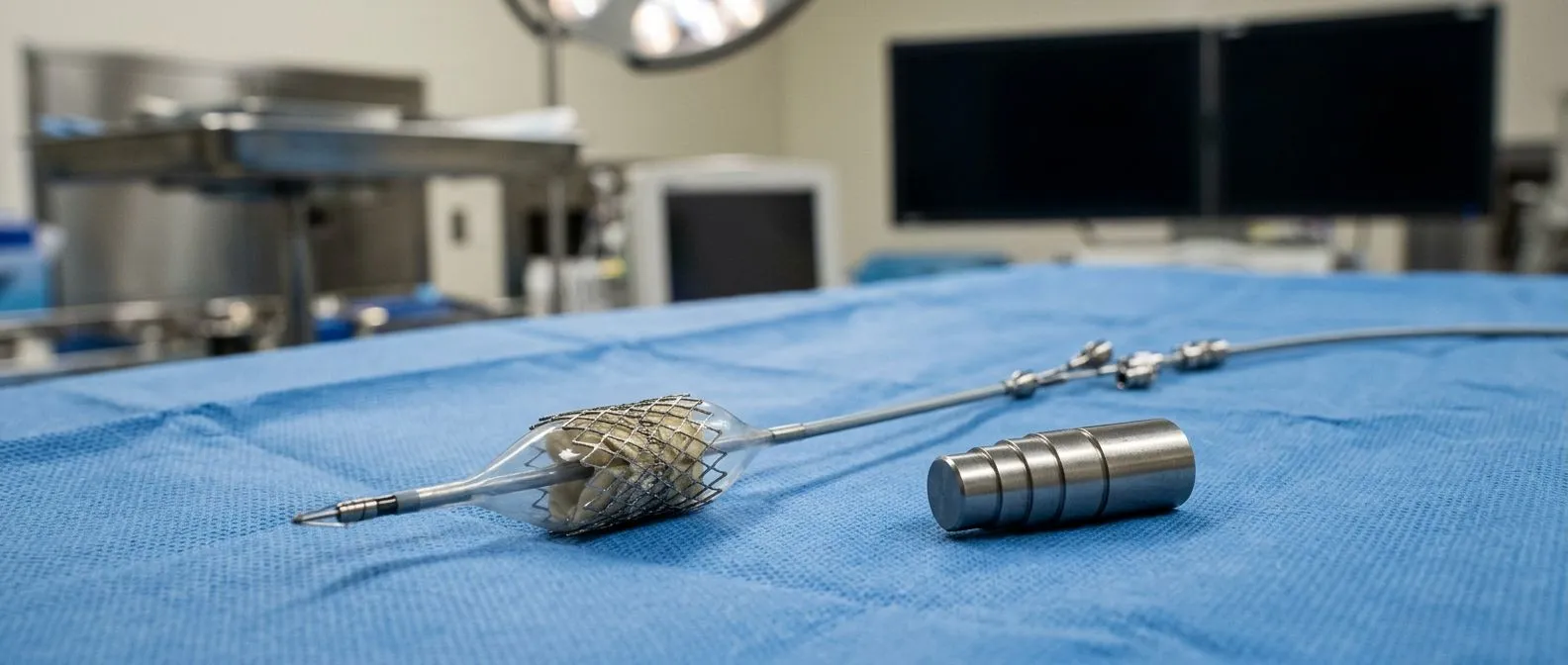
The transapical approach is a route for transcatheter aortic valve replacement access that goes through the left ventricle — the heart's main pumping chamber. The surgeon makes a small incision between the fifth and sixth ribs on the left side of the chest, reaches the apex of the heart, and places a short tube directly into the ventricle. The new valve is then delivered through that tube and positioned inside the old, diseased aortic valve.
Why the apex matters: the apex of the left ventricle points toward the chest wall, and it lies directly in line with the aortic valve. That alignment gives the delivery system a short, almost straight path to the valve. It also means the surgeon can control the catheter precisely, which is valuable when the valve is difficult to reach or when the new valve must be placed with great accuracy.
Transapical access is one of several alternative access routes for TAVR. Others include Transaortic Access, through the top of the aorta near the collarbone, and Transsubclavian Access, through the artery below the collarbone. All of them exist for one reason: to give patients the benefit of a transcatheter valve even when the standard route is not suitable. Our multidisciplinary team reviews every case against international practice guidelines before recommending which access route fits that patient.
When Is Transapical Access Used in TAVR?
Transapical access is used when the femoral arteries — the large arteries in the groin — are too narrow, too calcified, or too diseased to carry the valve delivery system safely. This is often called TAVR without groin access. The transfemoral route remains the first choice in most patients because it is the least invasive, but it is not always anatomically possible.
Common reasons for choosing the apex: severe peripheral artery disease, heavily calcified arteries that cannot be dilated, very small arteries, prior stents or surgery in the aorta, or a tortuous, angulated aorta that makes the delivery system hard to steer. In each case, the alternative is either open heart surgery or no treatment at all — and transapical access avoids both extremes.
What the evidence says: published reviews, including a study of self-expanding and balloon-expandable valves in patients with a small aortic annulus (Journal of Cardiovascular and Thoracic Research), show that transapical implantation is an established technique with predictable results when patient selection is careful. A meta-analysis in Scientific Reports documents how outcomes and complications have improved steadily as TAVR techniques have matured.
Transapical vs Femoral TAVR: How Do the Two Routes Compare?
The femoral route enters through the groin and threads the valve up the aorta. The transapical route enters through the chest and reaches the valve directly. Both implant the same kind of valve; the difference is the journey it takes.
Key differences to weigh:
- Incision: femoral is a needle puncture in the groin; transapical is a 5–6 cm incision between the ribs and a small suture in the heart muscle.
- Path to the valve: femoral follows the arteries; transapical is direct, which helps when arteries are diseased.
- Predictability: the transapical route gives the implanter direct control of the valve position, which some surgeons value for challenging anatomy.
- Recovery burden: femoral is generally easier on the body; transapical adds a small chest wound but avoids groin complications entirely.
Neither route is "better" in the abstract. The question is always which route carries the lowest risk for your specific anatomy. In our consultations we take the time to explain what the imaging studies actually show, in plain words, and to answer every question before any decision is made.
Who Are Transapical TAVR Candidates?
Transapical TAVR eligibility depends on two questions: can the femoral route be used safely, and can the patient tolerate a small chest incision? Patients with poor-quality femoral arteries, very small arteries, or extensive calcification are the classic candidates for transapical TAVR. Prior chest surgery is not automatically a barrier, because the apex region can often be reached without disturbing old scar tissue.
What the team checks first: a CT scan of the aorta, iliac and femoral arteries is the deciding test. It measures the diameter of the vessels, the amount of calcium, and the angles of the arch. If the smallest vessel is below the diameter the delivery system requires, the femoral route is ruled out and the heart team discusses the remaining options.
Patients who need a minimally invasive aortic valve replacement but cannot have conventional surgery — because of frailty, lung disease, or other conditions — may also be transapical candidates. Every candidate we evaluate is reviewed by our multidisciplinary team, and the patient receives a clear proposal with the alternatives before anything is decided.
What Happens During Transapical Access TAVR?
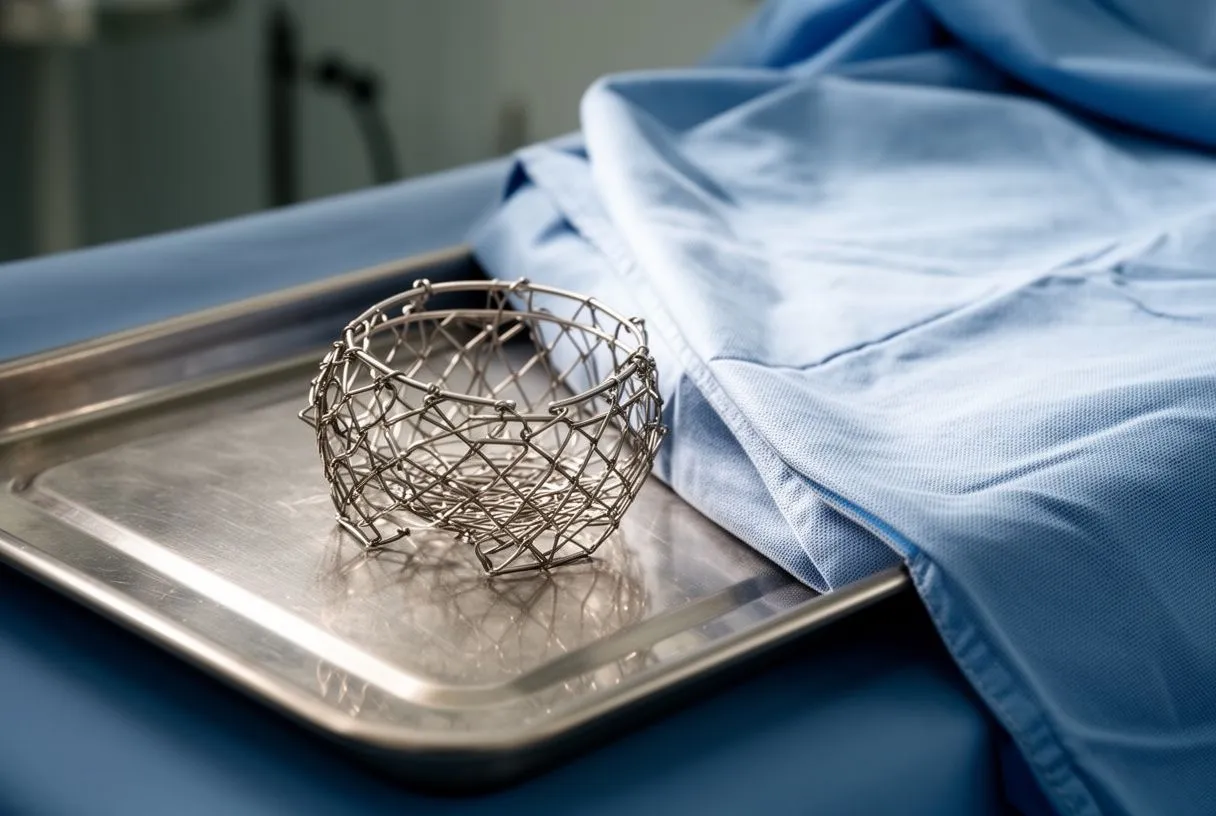
The procedure is performed under general anesthesia in a hybrid operating room. After the chest incision, the surgeon places purse-string sutures at the apex and introduces a short sheath. A temporary pacing wire is used to speed the heart briefly so the new valve can be positioned while the heart is momentarily still. The valve is expanded, the sheath is removed, and the apex is closed with the sutures already in place.
Anesthesia and duration: the procedure typically takes one to two hours, similar in length to a femoral TAVR. Because the chest is opened only enough to reach the apex, no sternotomy is performed and the ribs are not spread widely. General anesthesia is standard for the transapical route, unlike some femoral cases that can be done with sedation alone.
Immediate afterward: most patients go to an intensive care unit or step-down unit for observation overnight. The team monitors heart rhythm, the closure of the apical wound, and kidney function. If all is stable, transfer to a regular ward follows the next day, and discharge planning begins.
How Painful Is a TAVR Procedure?
During the procedure itself there is no pain — you are fully asleep under general anesthesia. The question patients really ask is about afterward, and the honest answer is that there is discomfort, not severe pain, in most cases.
What discomfort to expect: femoral TAVR causes mostly groin soreness at the puncture site. Transapical TAVR adds a small chest incision, so patients typically feel aching between the ribs for the first several days, similar to the feeling after any small chest procedure. This is managed with regular oral pain medication and fades steadily over one to two weeks.
Managing pain well: the key is taking the prescribed medication on schedule rather than waiting for the pain to build. Most patients report that by the second week they need little more than occasional relief. Persistent or worsening pain at the incision site should always be reported to the surgical team. After transapical access TAVR, pain and healing are usually checked before each new stage of recovery.
What Is Transapical TAVR Recovery Time?
Transapical TAVR recovery time is slightly longer than the femoral route, but far shorter than open heart surgery. A typical transapical TAVR hospital stay is one to three days, compared with five to seven days or more for conventional valve replacement. Most patients walk within a day of the procedure.
Week by week:
- Days 1–3: out of bed, walking in the room, pain controlled, heart rhythm monitored.
- Weeks 1–2: home recovery, light activity, no lifting more than a few kilograms, the chest incision heals.
- Weeks 3–6: gradual return to normal daily life, cardiac rehabilitation if prescribed, driving once cleared.
- Beyond 6 weeks: most restrictions lifted; the new valve is working fully.
Heart function after recovery: patients who could not walk a block before the procedure often describe a marked improvement in energy and breathing within weeks. Symptoms of aortic stenosis — breathlessness, chest tightness, fainting — usually improve substantially once the valve is replaced, though the pace depends on the patient's overall condition and any other heart problems.

What Are the Big Five Complications After TAVR?
The big five complications after transcatheter aortic valve replacement, widely tracked in the literature and in the meta-analysis of TAVR outcomes cited above, are: stroke, vascular complications, bleeding, conduction disturbances requiring a pacemaker, and kidney injury. Understanding each one helps patients ask the right questions.
How access route changes the risk profile: femoral TAVR carries a risk of vascular complications at the groin puncture — tearing, dissection, or bleeding from the artery. Transapical access TAVR largely removes that risk, because the femoral arteries are never touched. In exchange, the transapical route adds a small risk of apical wound complications and bleeding from the heart muscle closure. Overall, these TAVR access site complications are manageable and are a major reason the heart team weighs the routes so carefully.
Risks common to all routes: stroke, pacemaker implantation, and kidney injury are tied to the valve procedure itself, not the access route. Their incidence has fallen steadily as techniques and valves have improved. Our team reviews each patient's risk profile for these complications specifically, and we recommend the less invasive route only where the evidence supports it for that patient.
What Disqualifies You From a TAVR Procedure?
Some conditions can disqualify a patient from TAVR, or at least require careful evaluation. An active infection of the heart or bloodstream must be treated first. Severe disease of the aortic valve that extends beyond the reach of the valve, or a valve anatomy that a transcatheter valve cannot anchor to, may rule out the procedure. Untreatable severe coronary disease or other life-limiting conditions may change the recommendation entirely.
Apex-specific considerations: for the transapical route specifically, the team also checks the left ventricle itself. A very thick apex, an aneurysm of the apex, or severe scarring of the heart muscle may make the apical entry unsafe. In that case the aortic or subclavian route may be better, or conventional surgery may be reconsidered.
Living valves matter too: patients often ask which is the hardest heart valve to replace. The mitral valve is generally considered the most difficult because of its complex structure and its position inside the heart. For the aortic valve, difficulty is not about the valve itself but about the anatomy around it — and that is exactly what the heart team studies before recommending a route.
Is TAVR Major Surgery, and What Is Life Expectancy After TAVR?
Is TAVR considered major surgery? Formally, yes — it is a major cardiac procedure with real risks, performed under general anesthesia in most cases, and it involves the heart. But it is not open heart surgery: there is no sternotomy, no heart-lung machine, and the recovery is measured in weeks rather than months. The honest framing is that it is a major procedure with a much lighter recovery than conventional surgery.
Life expectancy after the procedure: patients ask what the life expectancy after a transcatheter aortic valve replacement is. The answer depends on age, other conditions, and heart function before the procedure — and the evidence base, including the meta-analysis of TAVR outcomes, shows improving survival over successive generations of the procedure. What the research consistently shows is that untreated severe aortic stenosis has a far worse prognosis than a treated valve. The National Heart, Lung, and Blood Institute (NHLBI) provides patient-facing guidance on aortic stenosis and TAVR for anyone wanting to read further.
The decision is yours: the heart team's job is to lay out the heart valve replacement surgery options clearly and honestly, including risks and alternatives. We encourage every patient to seek a second opinion and treat it as a normal part of deciding about heart surgery — the final decision is always theirs.
Transapical access TAVR exists so that patients with diseased or narrow arteries can still receive a transcatheter valve without open heart surgery. The route chosen matters less than the quality of the evaluation behind it: a careful CT scan, a genuine heart team discussion, and a clear explanation of what each access route means for your recovery and your risks. If you have been told your femoral arteries are not suitable, or you simply want to understand whether transapical access TAVR is the right choice for you, the next step is a conversation with a qualified cardiac team. The first contact with our team is a free video consultation: we get to know you, talk through your condition, and say which studies are still needed so no unnecessary ones are ordered. Book a consultation rather than trying to self-diagnose — a heart valve decision deserves a team, not a search engine.






