

Catheterisation vs heart surgery: what you need to know
Catheterisation vs heart surgery — understand the real differences, risks and recovery so you can discuss the right option with your care team.
The question is not which procedure is better, but which one suits you — and why that decision belongs to a team rather than to one specialist. This guide compares catheterisation vs heart surgery in plain terms. The 2014 ESC/EACTS guidelines on myocardial revascularisation set out when each option is preferred.
Coronary bypass surgery against stenting. The question is not which procedure is superior, but which one suits you.
Have you or a relative recently been diagnosed with a problem in the coronary arteries and are unsure which is the best treatment option? Do you find the information about catheterisation and surgery confusing and insufficient? I understand — it is certainly not easy.
By the end of this you will know the differences between a catheterisation and heart surgery, and will be able to make better-informed decisions and discuss them clearly with your family. The question you need to answer is not whether one procedure is superior to the other, but which procedure suits me, or my relative, best.
The scale of the problem
Cardiovascular disease, particularly atherosclerosis of the coronary arteries, is one of the leading causes of death worldwide. It is a disease in which plaque builds up in the walls of the arteries, which can obstruct blood flow and increase the risk of heart disease, stroke and other serious complications.
In Mexico, cardiovascular disease is one of the main causes of death. According to the National Institute of Statistics and Geography (INEGI), more than 137,000 deaths related to heart disease were recorded in 2019, representing approximately 21% of all deaths registered in the country that year. It is also estimated that more than 30% of the Mexican population has high blood pressure, one of the main risk factors for cardiovascular disease.
Coronary atherosclerosis can have a significant impact on public health and on people's economic circumstances. People with cardiovascular disease can experience serious symptoms — chest pain, breathlessness and fatigue — that limit their capacity to carry out everyday activities.
The costs associated with treating and managing the disease can also be very high, which can affect quality of life for patients and their families. Cardiovascular disease can affect a patient's capacity to work and earn, which has an impact on the local and national economy.
It is important to address cardiovascular disease proactively. That includes encouraging healthy ways of living, such as a balanced diet and regular physical activity, along with early identification and treatment of risk factors such as high blood pressure and diabetes.

Treatment: catheterisation vs heart surgery
Treatment often requires invasive procedures aimed at relieving the obstruction, or creating "alternative routes" in the arteries of the heart to restore continuous flow of blood and oxygen to the whole heart muscle.
Patients and their families can find it difficult to understand the differences between the treatment options available. Here we discuss the two common procedures used in treating coronary disease: myocardial revascularisation surgery and percutaneous coronary intervention.
What is myocardial revascularisation surgery?
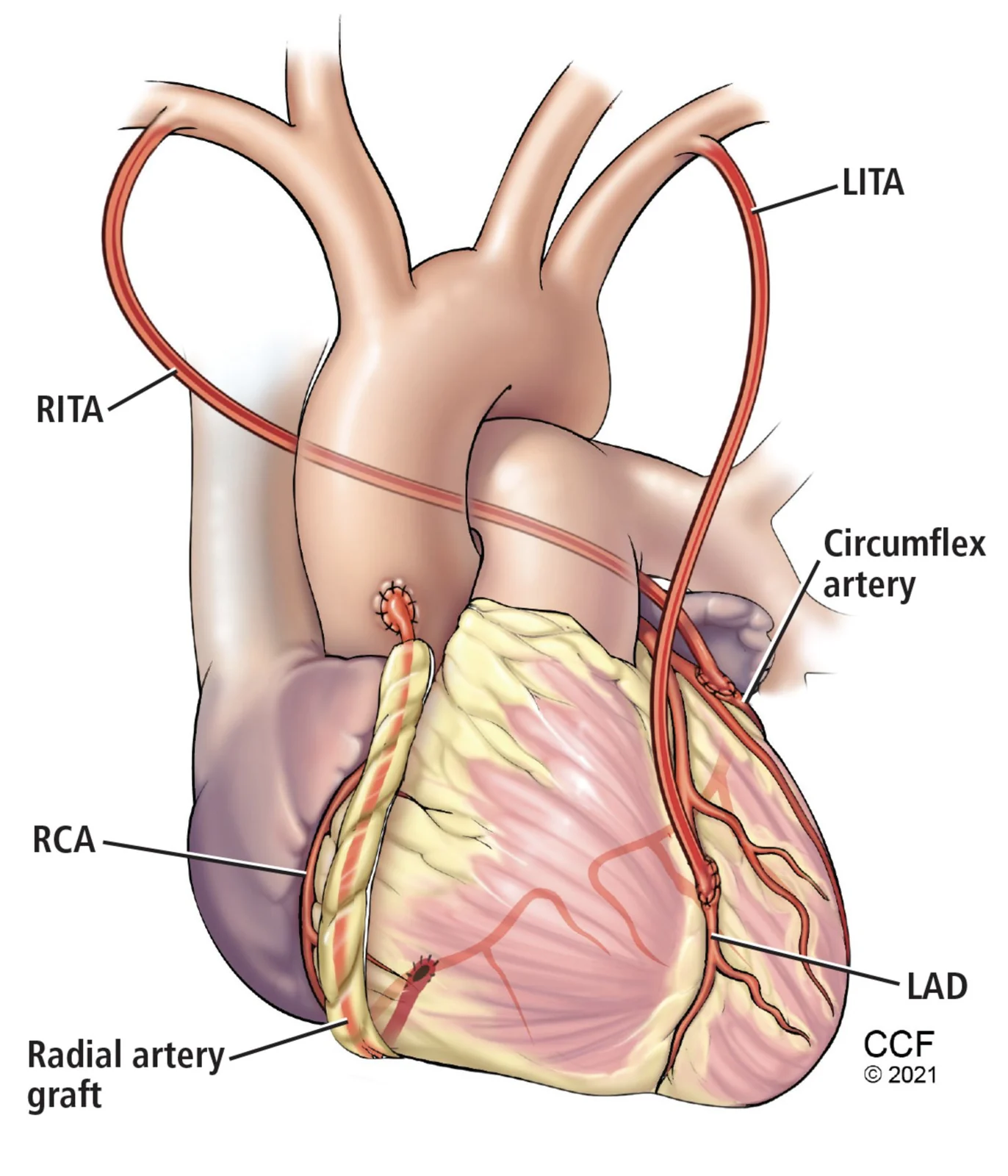
Myocardial revascularisation surgery (CABG) is open-heart surgery performed to treat coronary disease.
In this procedure the surgeon makes an incision in the chest and uses a vein — usually the saphenous vein from the legs — or one or more healthy arteries from elsewhere in the body (the mammary artery, the radial artery) to build bridges, coronary bypasses, and effectively redirect blood flow to the heart. In a sense we jump over the site of the obstruction, reducing the risk of a heart attack.
What is percutaneous coronary intervention?
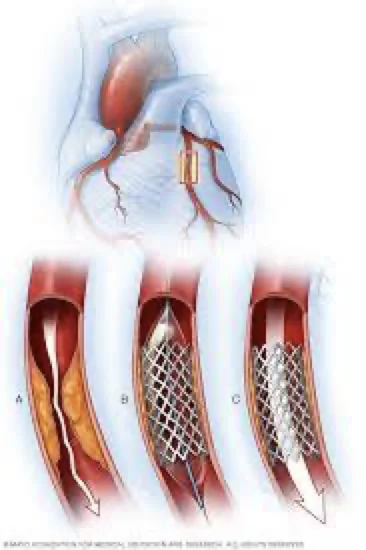
Percutaneous coronary intervention (PCI) is an invasive procedure carried out by an interventional cardiologist in a catheterisation laboratory to treat coronary disease. It is usually performed under sedation and local anaesthetic, either through the groin or the wrist.
During the procedure a thin, flexible tube — a catheter — is inserted into an artery in the arm or the leg and guided to the heart and to the coronary arteries travelling across its surface. The first step is to inject contrast into the coronary arteries to identify the site of the lesion: a kind of map of the coronaries. A balloon is then used to open the obstructed artery and a stent — a small mesh tube — is placed to keep the artery open. In this procedure the site of the obstruction is opened directly with the stent.
Benefits of bypass surgery
CABG is commonly used in patients with advanced coronary disease and multiple blockages of the heart's arteries. Its advantage is that it can address several blockages in a single operation.
CABG has also been shown to be effective in reducing the risk of cardiovascular events such as heart attack and death in patients with advanced coronary disease. An important study published in The New England Journal of Medicine in 2016 compared CABG with PCI in patients with multivessel coronary disease, and found that CABG significantly reduced the risk of cardiovascular events compared with PCI.
The long-term benefits of this surgery have been described and studied for years. It is one of the subjects in medicine that has been under constant scrutiny. The hard scientific data show us that these procedures are very safe and effective, with the best long-term results — with the added advantage of protecting the heart against future heart attacks.
Benefits of percutaneous coronary intervention
PCI is commonly used in patients with less advanced coronary disease and fewer blockages. Its advantage is that it is a less invasive procedure than CABG and generally involves a faster recovery.
An important study published in The Lancet in 2018 compared the effectiveness of PCI with CABG in patients with single-vessel coronary disease. It found that, in terms of death, heart attack and stroke, PCI and CABG had similar results after five years of follow-up.
When bypass surgery is indicated
CABG is commonly recommended in patients with advanced coronary disease and multiple blockages. It may also be recommended in patients with diabetes, left main coronary artery disease or left ventricular dysfunction.
It is also indicated in patients going for heart surgery for another reason — valve disease, for example — in whom preoperative studies detected one or more obstructions in the coronary arteries. In those cases surgery is preferred, so that every problem is treated in a single procedure.
Patients with advanced coronary disease who are not candidates for CABG because of other medical conditions can be treated with PCI.
When percutaneous intervention is indicated
PCI is commonly recommended in patients with less advanced coronary disease and fewer blockages. It may also be recommended in patients who are not candidates for CABG because of their age or pre-existing medical conditions. In some cases PCI can be used as a temporary treatment while waiting for bypass surgery.
Drawbacks of bypass surgery
Although CABG is a highly effective procedure, it is important to mention that it is major open-heart surgery, which means there is a greater risk of infection, bleeding and kidney problems. Recovery from CABG is also usually more prolonged than recovery from PCI.
Drawbacks of percutaneous intervention
Although PCI is less invasive than CABG, it can also be associated with serious complications. It can increase the risk of arterial damage, perforation of the coronaries, and other risks associated with the use of contrast such as kidney failure, among rarer ones.
One relevant point: stents can become obstructed over time, which may require additional procedures to repair them — and sometimes even open-heart surgery.
What you should take from this
Both myocardial revascularisation surgery and percutaneous coronary intervention are effective options for treating coronary disease. The choice will depend on the severity of the disease, the number of blockages in the heart's arteries, and other pre-existing medical conditions.
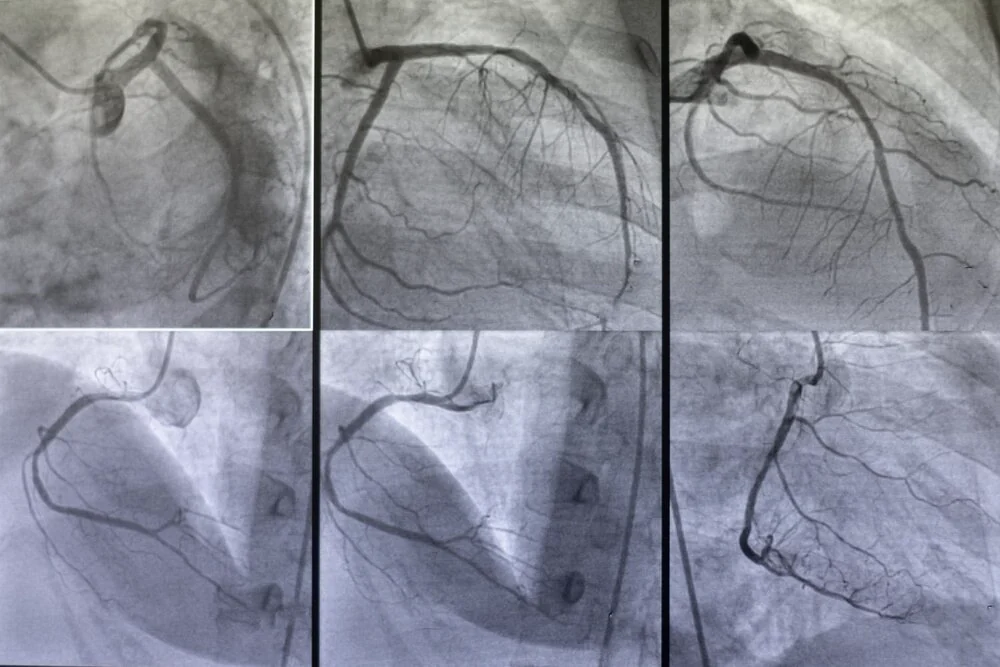
Here an extremely important factor comes in. Every patient in whom an obstruction of the coronary arteries is suspected will have a cardiac catheterisation — the procedure of "painting" the coronary arteries with contrast to make the complete map and assess the degree of severity and the location of any obstructions.
But that does not mean you are going to have one or several stents placed. Stenting is not always indicated.
The moment of decision
The moment we know the anatomy and the degree of severity of the lesions in your coronary arteries is the moment to take decisions about the best treatment plan for you. That decision should involve the interventional cardiologist, your own trusted cardiologist, your cardiac surgeon and, of course, you and your family.
There are times and places where this is not common practice — where decisions are taken unilaterally from a single point of view.
Let me tell you about Don Ramón, a patient of mine aged 73 who had previously had a catheterisation and was told, in a severe tone full of urgency: "Do you want them to open your chest in two like a pig, in open-heart surgery with a lot of risk — or would you rather I open the artery right here with some stents and you are home tomorrow?"
Obviously anyone asked the question in that way and in that tone is being steered towards one treatment option. Unfortunately this is not the best way to approach the problem.
It is true that many coronary obstructions can and should be resolved through percutaneous intervention with a stent — but not always, and not for everyone. Many patients like Mr Ramón, who have more complex or multiple lesions, or who are diabetic, can benefit in the long term from open surgery with excellent results and quality of life.
That is why it must be a decision taken by a team of specialist doctors together with you and your family. Modern medicine is a team business, with decisions based on the best and most recent clinical evidence. You should find a group that works this way and that involves you in the decision-making process at every moment. Mutual trust and respect are earned through a solid doctor–patient relationship.
Both are viable options with excellent results and each has its indications under international and local guidelines. You should take into account the context, your anatomy, your risk factors such as diabetes and obesity, your age, and a good deal more when making a decision.
An event of this magnitude has the potential to change your life and your family's, so it is important to make informed decisions. We compare these two options in more depth in our guide to coronary bypass versus stent.
Coronary artery treatment options: more than two choices
The catheterisation vs heart surgery question can make it sound as if there are only two paths. In reality, coronary artery treatment options usually include three:
- Medical treatment. Healthy habits and medicines to control cholesterol, blood pressure, diabetes and angina. For many stable patients this is the foundation, and sometimes the whole plan.
- Percutaneous intervention with stents. Often the right choice for one or two straightforward lesions.
- Bypass surgery. Often preferred for complex disease of several arteries, left main disease, or patients with diabetes.
Whatever is chosen, medical treatment continues for life. A stent or a bypass treats the narrowings. It does not cure the disease of the arteries.
Coronary bypass vs stenting is therefore not a contest between specialists. It is a choice about which treatment fits your arteries, your other illnesses and your preferences. Weighing catheterisation vs heart surgery with the whole team is how that choice is made well.
Bringing your catheterisation study to a consultation
Many patients reach us after a cardiac catheterisation in Mexico or abroad, already told what they need. You can bring the images and the report to a consultation for heart surgery in Guadalajara, Querétaro or Hermosillo, or share them by video. We review them with you and explain the catheterisation vs heart surgery options for your case in plain words.
A careful second look is reasonable before any major decision. If the study shows that a stent is the best choice, we will tell you so. If catheterisation vs heart surgery is a close call, we will explain why and what tips the balance.
References
- Farkouh, M. E., Domanski, M., Sleeper, L. A., Siami, F. S., Dangas, G., Mack, M., & Mathew, V. (2012). Strategies for multivessel revascularization in patients with diabetes. New England Journal of Medicine, 367(25), 2375–2384.
- Mohr, F. W., Morice, M. C., Kappetein, A. P., Feldman, T. E., Ståhle, E., Colombo, A., & Serruys, P. W. (2013). Coronary artery bypass graft surgery versus percutaneous coronary intervention in patients with three-vessel disease and left main coronary disease: 5-year follow-up of the randomised, clinical SYNTAX trial. The Lancet, 381(9867), 629–638.
- Fihn, S. D., Gardin, J. M., Abrams, J., Berra, K., Blankenship, J. C., Dallas, A. P., & Smith Jr, S. C. (2012). 2012 ACCF/AHA/ACP guideline for the diagnosis and management of patients with stable ischemic heart disease.

About the author
Dr Alejandro Molina is a cardiovascular surgeon practising in Guadalajara, Querétaro and Hermosillo. He trained in cardiothoracic surgery at the Universidad de Guadalajara, completed advanced training in cardiac surgery, minimally invasive surgery, robotic surgery and structural interventions at the University of Montreal, and a fellowship in structural cardiology and TAVR at CHU Bordeaux, France. He performed the first robotic mitral valve repair in the Ángeles Health System and the first robotic heart surgery in Guadalajara.
Medical degree: Universidad Autónoma de Guadalajara, Cédula Profesional 5757260 · Cardiothoracic surgery: Universidad de Guadalajara, Cédula de Especialidad 10768871 · Current certification, Consejo Nacional de Cirugía del Tórax, no. 447
Talk to a specialist
Request a free video consultation to clear up your questions and make a better-informed decision.





