

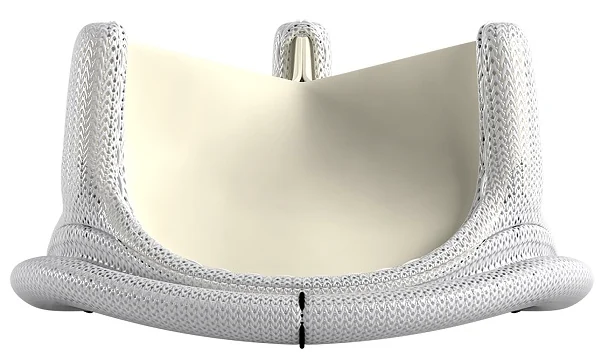
TAVR failure: what happens when a transcatheter valve fails
TAVR failure can happen from valve degeneration, leaks, or infection.
The causes of failure, how it is diagnosed, the options for treating it, and why the technology has been overused in younger patients. This is what TAVR failure means and what can be done about it. Trials such as RESTORE are studying how best to treat a failed transcatheter valve.
What happens when a TAVR fails: the causes, how failure is diagnosed, the options for treating it, and why the technology has been overused in younger patients.
When someone you love has had an aortic valve replaced with TAVR, it is natural to feel relieved. Questions and concerns can also arise, though, especially if the procedure does not give the expected results or if complications appear over time.
What is a TAVR, and why has it changed the treatment of aortic stenosis?
TAVR — transcatheter aortic valve replacement — is a minimally invasive procedure allowing a diseased aortic valve to be replaced without open-heart surgery. This technique has changed the lives of many people, especially patients who, because of their age or health conditions, were not candidates for traditional surgery.
Being carried out through a catheter introduced via the femoral artery in the groin, or the subclavian artery near the shoulder, recovery is faster and with lower risk than a conventional operation. Although it is a safe procedure, however, it is not free of possible complications.
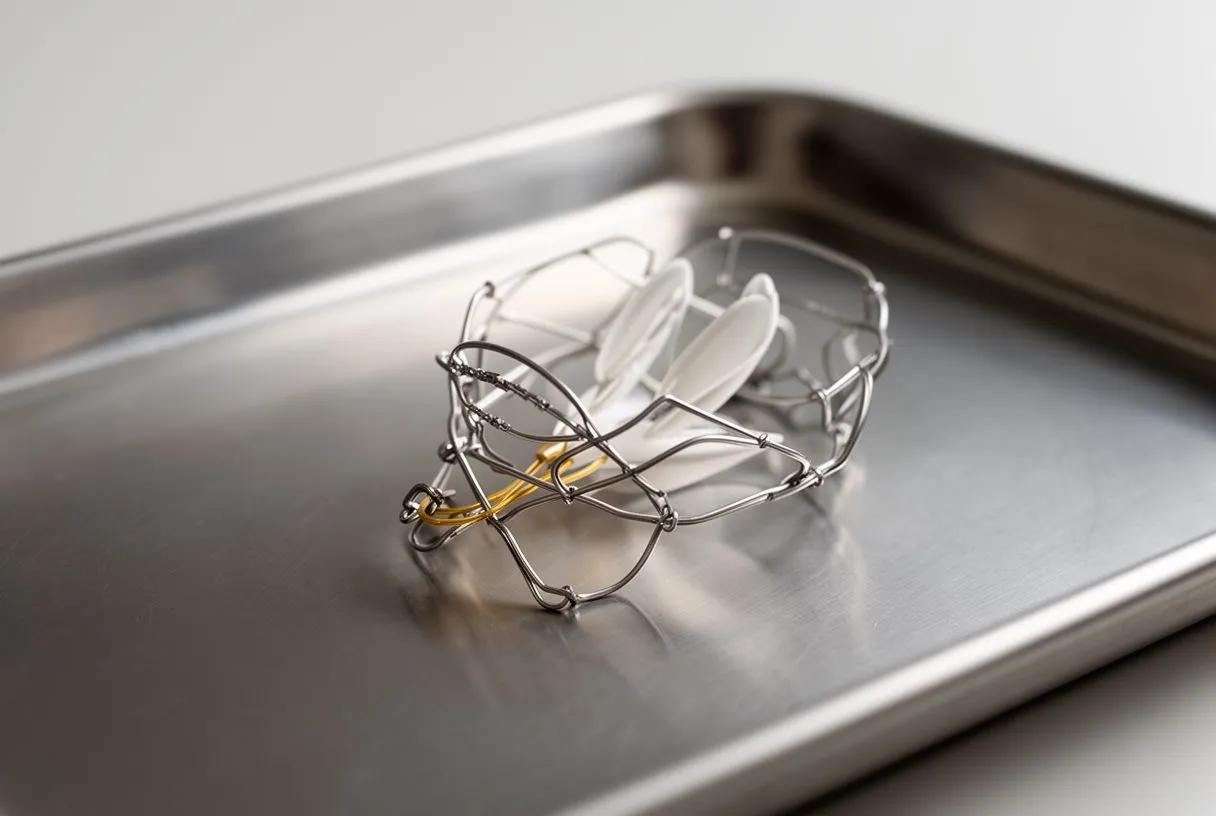
What happens when a TAVR fails?
A TAVR can fail for various reasons, either shortly after the procedure or with the passing of time. Some of the most common causes:
- Degeneration of the valve. Like any prosthesis, the implanted valve has a working life and can wear out over the years.
- Paravalvular leak. When the new valve does not seal perfectly and allows blood to filter around it.
- Obstruction of the valve. Can occur through the accumulation of calcium or thrombus.
- Endocarditis. An infection of the valve that can compromise how it works.
- Migration or displacement of the valve. Occurs when the valve is not well fixed and changes position.
How is TAVR failure diagnosed?
If a patient begins to have symptoms such as fatigue, breathlessness, chest pain or swelling in the legs, it is important to see a doctor for assessment. Studies that can help diagnose problems with a TAVR include:
- Transthoracic or transoesophageal echocardiogram. These allow the function of the valve to be visualised and possible leaks or stenosis detected.
- CT scan. Provides a detailed image of the heart and the implanted valve.
- Cardiac catheterisation. In some cases this may be necessary to assess the valve's function more thoroughly.
What options exist when a TAVR fails?
If failure is detected, there are different treatment options depending on the cause and severity:
- Medical treatment. In some cases the problem can be managed with medication to control symptoms and avoid complications.
- Implanting a new valve (TAVR-in-TAVR). If the implanted valve has deteriorated, it is often possible to place a new prosthesis inside the original without open surgery.
- Repairing paravalvular leaks. Some leaks can be corrected with minimally invasive procedures using closure devices.
- Open-heart surgery. In complex cases, surgical valve replacement may be necessary.
- Antibiotics or specific treatment for infection. If there is endocarditis, intravenous antibiotics are given or, in serious cases, a new valve replacement may be required.
- Minimally invasive surgery. For certain patients it is possible to carry out a valve replacement through minimally invasive techniques, such as mini-sternotomy or mini-thoracotomy assisted with a 3D camera. These allow a faster recovery and lower risk of complications than traditional surgery.
What do the international guidelines say about the indication for TAVR?
The European (ESC/EACTS) and American (ACC/AHA) clinical guidelines establish clear criteria for selecting candidates.
In general terms, both recommend transcatheter implantation for patients at high surgical risk or who are inoperable because of other conditions. In intermediate-risk patients the decision should be taken individually, considering factors such as valve anatomy, life expectancy and the patient's preference.
For low-risk patients, surgery remains the preferred option, although recent studies have shown promising results with TAVR in this group. These guidelines are reviewed periodically to incorporate the latest advances.
What do the studies say about TAVR in bicuspid valves and aortic regurgitation?
The use of TAVR in patients with a bicuspid aortic valve, or with pure aortic regurgitation, remains an area under study.
Recent research has shown that although it is feasible in bicuspid valves, there is a greater risk of complications because of their irregular anatomy.
In the case of pure aortic regurgitation, results have been more variable, with a higher rate of complications than in aortic stenosis. For that reason its use in these populations must be assessed case by case.
Why has TAVR been overused in younger patients?
While TAVR has been a revolution in the treatment of aortic stenosis, its use in younger patients has generated controversy.
In some cases the technology has been used in people who were still good candidates for open surgery, which can bring long-term problems. Transcatheter valves have limited durability compared with surgical prostheses, which means younger patients could require multiple procedures over the course of their lives.
Performing a TAVR in patients with unfavourable anatomy or a longer life expectancy can also complicate future interventions, making options such as conventional surgery more difficult later.
For that reason specialists recommend assessing each case carefully and following the international guidelines to choose the best option for each patient.
How is valve failure defined under the VARC criteria?
The Valve Academic Research Consortium (VARC) has established specific criteria for defining valve failure after a TAVR. Under VARC, valve dysfunction can be classified into four main categories:
- Structural valve degeneration. Includes progressive calcification, fractures or tears affecting how the valve works.
- Non-structural failure. Refers to problems such as paravalvular leaks or misplacement of the valve.
- Endocarditis. Infections compromising the valve, which can generate severe dysfunction.
- Valve thrombosis. The formation of clots limiting proper movement of the valve, which can cause obstruction.
TAVR valve degeneration: why a transcatheter valve wears out
The leaflets of a transcatheter valve are made of animal tissue, usually from a cow or a pig, mounted on a metal frame. This is the same family of tissue used in surgical biological valves. Over time, tissue leaflets can thicken, stiffen, calcify or tear. Doctors call this structural valve deterioration. In everyday terms it is TAVR valve degeneration.
Degeneration is usually gradual. A valve that has worked well for years can slowly narrow, so that the heart again has to push blood through a tight opening. Less often, a leaflet tears and the valve starts to leak. This is one of the main reasons TAVR failure appears years after the procedure rather than in the first months.
- Gradual narrowing. Calcium and scar tissue build up on the leaflets and restrict how far they open.
- Leaflet tears. A torn leaflet lets blood flow backwards into the heart.
- A mixed picture. Some valves become both narrowed and leaky at the same time.
Your team will also look for a thin layer of clot on the leaflets. That is a different problem from wear, and it often responds to anticoagulant treatment chosen by your doctors.
How long a transcatheter valve lasts is still being studied. The first TAVR patients were mostly older people at high surgical risk, so long-term data in younger patients are limited. That is why, in our practice, we explain durability and the risk of late TAVR failure carefully to every patient, especially those with a long life expectancy.
TAVR paravalvular leak: when the seal is not complete
A surgical valve is sewn into place. A transcatheter valve is not. It is held by the pressure of its frame against the patient's own calcified valve. If the calcium is bulky or irregular, small gaps can remain around the frame. Blood leaking through those gaps is a TAVR paravalvular leak. It is one of the earlier forms of TAVR failure.
Leaks are graded as mild, moderate or severe. A mild leak is common and, in most patients, needs nothing more than regular follow-up. Moderate or severe leaks matter more. They make the heart work harder and have been linked with worse long-term results, so they need careful assessment.
- Balloon dilatation. During the procedure, a balloon can sometimes be inflated inside the valve to expand the frame and improve the seal.
- A plug device. A small closure device can be placed through a catheter to fill the gap.
- A second valve or surgery. If the valve sits in the wrong position or the leak is large, another valve or open surgery may be considered.
Newer valve designs include an outer skirt that helps the frame seal, and significant leaks have become less frequent. Careful CT planning before the procedure, to choose the right size and type of valve, remains the best prevention of this kind of TAVR failure.
TAVR reintervention: a second valve or surgery?
When a transcatheter valve fails, the next step is a TAVR reintervention. There are two main routes. One is a second transcatheter valve placed inside the first, known as redo TAVR or TAVR-in-TAVR. The other is open surgery to remove the failed valve and implant a new one.
Redo TAVR avoids opening the chest, but it is not always possible. The leaflets of the old valve are pushed aside by the new one and can block the openings of the coronary arteries. Reaching those arteries later with a catheter can also become harder. A detailed CT scan helps the team judge these risks before deciding.
Surgery after a TAVR is a bigger operation than a first surgical valve replacement. Over time the metal frame becomes embedded in the wall of the aorta. Removing it can require a more extensive repair of the aorta itself. Even so, for some patients surgery is the best and most durable answer to TAVR failure.
This is why the first decision matters so much. In our practice we plan every valve with the patient's whole lifetime in mind, so that a future TAVR reintervention remains possible and as safe as it can be. Every case is reviewed by a Heart Team that includes a cardiac surgeon and an interventional cardiologist. Dr Molina sees patients in Guadalajara, Querétaro and Hermosillo.
Follow-up after TAVR: catching TAVR failure early
Most problems with a transcatheter valve develop slowly, so regular checks make a real difference. Your cardiologist will usually arrange an echocardiogram soon after the procedure and then at regular intervals, often once a year. This allows TAVR failure to be spotted before it causes serious symptoms.
Not every abnormal finding means transcatheter aortic valve replacement failure. Small changes in the measurements are common, and many are simply watched over time. Your team will tell you what your own results mean.
- Report new symptoms early. Breathlessness, tiredness, chest pain, dizziness or ankle swelling deserve a prompt review.
- Look after your teeth. Good dental care and regular check-ups lower the risk of endocarditis. Always tell your dentist that you have a heart valve.
- Take your medicines as prescribed. Never stop or change blood-thinning medicines without speaking to your team.
- Keep other conditions under control. Blood pressure, diabetes and kidney function all affect the heart and the valve.
If an echocardiogram shows that the valve is starting to narrow or leak, there is usually time to plan the next step calmly. Early detection of TAVR failure gives you and your team more options, not fewer.
Staying calm and making informed decisions
We understand that facing a procedure like TAVR can raise concerns for patients and their families. It is natural to worry about the possible risks and complications. It is important to stress, though, that while there are risks as with any medical intervention, TAVR has proved a safe and effective option for many patients, especially those at high surgical risk.
Serious complications are infrequent and, for the most part, treatable. Recovery is also usually faster than with open-heart surgery, allowing patients to resume their everyday activities sooner.
It is fundamental to keep open communication with the medical team, express any concern and follow their recommendations to ensure the best possible result. Remember that you are not alone in this process.

About the author
Dr Alejandro Molina is a cardiovascular surgeon practising in Guadalajara, Querétaro and Hermosillo. He trained in cardiothoracic surgery at the Universidad de Guadalajara, completed advanced training in cardiac surgery, minimally invasive surgery, robotic surgery and structural interventions at the University of Montreal, and a fellowship in structural cardiology and TAVR at CHU Bordeaux, France. He performed the first robotic mitral valve repair in the Ángeles Health System and the first robotic heart surgery in Guadalajara.
Medical degree: Universidad Autónoma de Guadalajara, Cédula Profesional 5757260 · Cardiothoracic surgery: Universidad de Guadalajara, Cédula de Especialidad 10768871 · Current certification, Consejo Nacional de Cirugía del Tórax, no. 447
Talk to a specialist
Request a free video consultation to clear up your questions and make a better-informed decision.





