Mechanical Circulatory Support for a Failing Heart
Explore mechanical circulatory support options for heart failure in Guadalajara.
When a heart can no longer pump enough blood to keep the body going, medicines alone sometimes are not enough. This is where mechanical circulatory support enters the picture. It refers to a family of pumps and assist devices that take over part of the heart's work, restoring blood flow while the heart recovers, while a decision is made about transplant, or for the long term. This guide explains, in plain language, the mechanical circulatory support options available today, who they are for, what the procedure involves, and what life looks like afterwards. It is written for patients and families facing these decisions, often for the first time and under great pressure.
What Is Mechanical Circulatory Support and When Is It Needed?
The purpose of mechanical circulatory support is simple to state and profound in effect: a machine does part of the pumping work that a failing heart can no longer do. The heart is a muscle pump, and when it weakens badly, blood no longer reaches the kidneys, the brain, the liver and the rest of the body in adequate amounts. Devices that provide mechanical circulatory support take blood from the heart or great vessels and push it back into the circulation, easing the workload on the heart while keeping organs alive.
Doctors consider mechanical circulatory support in several situations. Sometimes the heart is expected to recover — after a viral infection inflaming the heart muscle, or after a large heart attack — and the device is a bridge while the muscle heals. Sometimes it is a bridge to transplantation, keeping a patient alive and in reasonable condition until a donor heart becomes available. And sometimes, for patients who are not transplant candidates, it becomes destination therapy: permanent mechanical heart support that the patient lives with for years.
Heart failure in its advanced stage is the common thread. The Centers for Disease Control and Prevention describes heart failure as a serious condition affecting millions of people, in which the heart cannot pump enough blood to meet the body's needs, and it notes that the condition is a leading cause of hospitalization among older adults. If you or a family member has been told the heart is "failing despite maximal therapy," that is the moment when these circulatory support devices come into the conversation — ideally before an emergency, not during one. In our team's experience, the patients who fare best are the ones who hear about these options early, while there is still time to think rather than react.
How Do Mechanical Circulatory Support Devices Work?
Blood in, blood out — the basic principle. Every device in this field follows the same logic. A tube, called an inflow cannula, draws blood from the heart or from a large vessel. A pump accelerates that blood. An outflow cannula returns it to the circulation. The pump itself is almost always a small rotor spinning at thousands of revolutions per minute, so fast and so smoothly that it produces continuous flow rather than a pulse. Patients with these devices may have a pulse that is hard to feel at the wrist, and that is expected.
Which chamber the device supports defines the device type. The left ventricle — the chamber that pumps blood to the whole body — is the usual target, and a device assisting it is called a ventricular support device or, more precisely, a left ventricular assist device. When the right ventricle, which pumps blood to the lungs, also fails, a right-sided device can be added. In the rare case where both sides need support, a total artificial heart may replace the failing heart entirely.
Short-term versus long-term is the other big divide. Some devices are designed for hours or days in an intensive care unit. Others are implanted surgically and meant to run for years. Understanding this divide matters for families, because the conversation in the hospital can shift quickly: a device placed as a temporary measure may later become a bridge to transplant or a permanent implant. Our team always reviews the purpose of the device with the patient and family in plain words — recovery, bridge, or long-term — before anything is recommended, because the plan changes what happens next.
What Are the Main Types of Mechanical Circulatory Support Devices?
Percutaneous mechanical circulatory support devices are inserted through the arteries without open surgery. They can be placed rapidly, often in the cardiac catheterization laboratory, and are used for temporary support measured in hours or a few days. These devices — small axial-flow pumps that sit inside the heart and aorta, and larger systems that support both sides of the circulation — are the workhorses in emergencies.
Surgically implanted devices are the long-term mechanical circulatory support devices. A left ventricular assist device, usually called an LVAD, is implanted through open-heart surgery and connected to a battery pack worn outside the body through a small cable in the skin. These devices are built for years of continuous use.
Here is a quick way to keep the families straight:
- ECMO (extracorporeal membrane oxygenation): support outside the body, for hours to days, and can support both heart and lungs.
- Impella-type axial-flow pumps: a catheter-mounted pump threaded through the artery, for days of left-heart support.
- Extracorporeal pumps: machines outside the body connected to the circulation, for days to weeks.
- LVADs: implanted pumps for months to years, used as a bridge to transplant or as destination therapy.
- Total artificial hearts: the complete replacement of both ventricles, for a small group of patients.
What Is ECMO Heart Support?
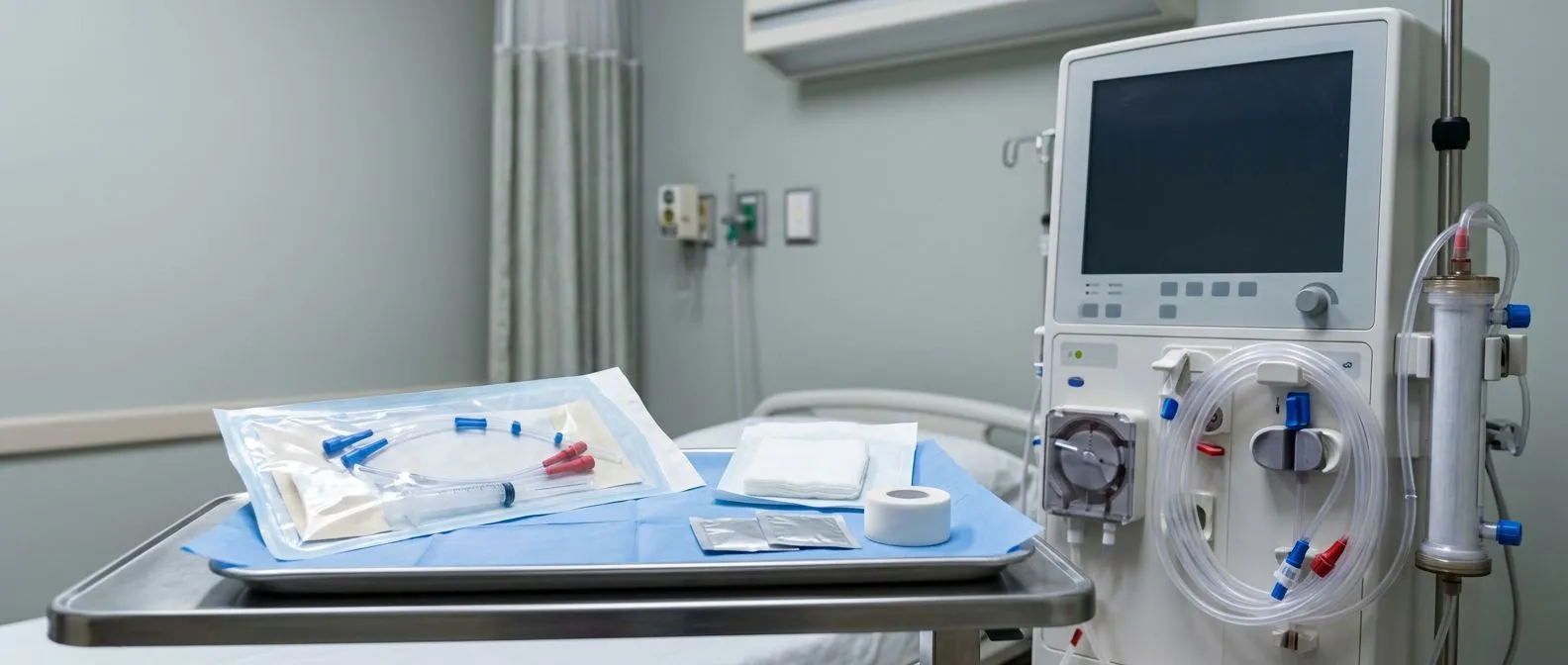
ECMO heart support is the most intensive and the most temporary form of mechanical circulatory support. In ECMO, blood is drained through large cannulae from a major vessel, passed through an external machine that oxygenates it and pumps it, and returned to the body. Because the machine also does the lungs' work, ECMO is used when the heart alone fails, when the lungs alone fail, or when both fail together. Families in the intensive care unit often see the machine before they understand it: a console with rotating pumps, tubes of oxygenated blood, and a patient connected to all of it.
ECMO is typically measured in days, not weeks. It is used during resuscitation, in severe cardiogenic shock, in complications after heart surgery, and in severe inflammation of the heart muscle. The insertion is done at the bedside or in the catheterization laboratory, often under local anesthesia with sedation, because the patients who need ECMO are usually too unstable for anything else.
What families should ask about is the exit plan. ECMO is a bridge — to recovery, to a decision, or to a longer-term device. The 2019 expert consensus on long-term mechanical circulatory support published by the European Association for Cardio-Thoracic Surgery lays out how these devices should be used as bridges between different stages of care, and emphasizes that every team should define, from the outset, what the device is buying time for. That is the question we encourage families to put directly to the treating team: "What is this device buying time for, and how will we know?"
What Is an LVAD and Who Qualifies for One?
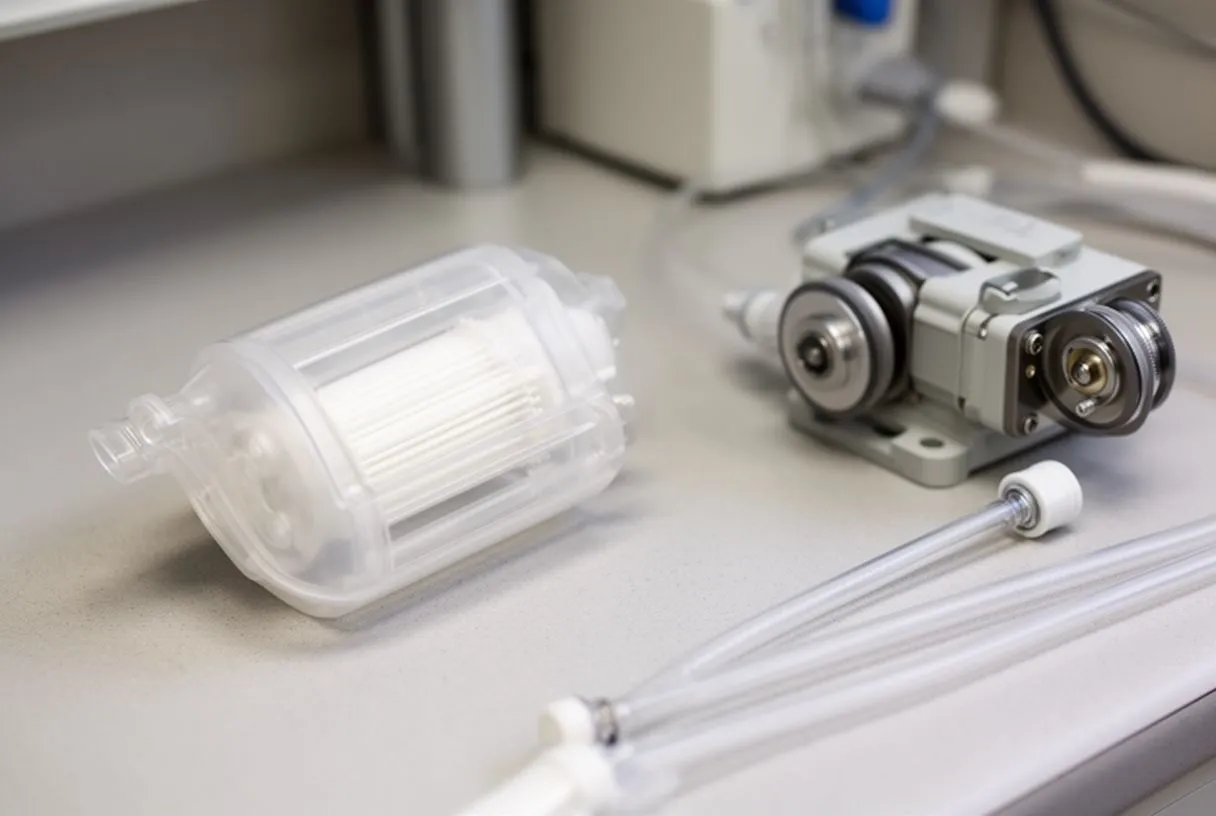
An LVAD heart support device is a pump implanted inside or beside the left ventricle. It takes blood from the left ventricle and pushes it into the aorta, the main artery of the body. The pump sits inside the chest, and a thin cable runs through the skin to a controller and batteries worn on the belt or shoulder. For patients with advanced heart failure treatment options narrowing to transplant or nothing, an LVAD has transformed what is possible.
Selection is the heart of the matter. The best candidates are patients with severe left ventricular failure despite optimized medicines, who have accepted the demands of the device and have the support of family or caregivers. Not everyone qualifies: patients with severe kidney, lung, or liver failure, active infection, or uncoagulable bleeding risks may not be candidates. This is why modern practice reviews every case through a multidisciplinary team — surgeons, cardiologists, intensivists, transplant coordinators, and often psychologists — before a recommendation is made.
At our practice, every case of this kind is reviewed by the multidisciplinary team against international practice guidelines before a recommendation is given, and the patient receives a clear proposal with the alternatives — and the final decision is always theirs. We also encourage second opinions and treat seeking one as a normal part of deciding about heart surgery. When you are considering a device meant to be part of your life for years, hearing two independent views of the same case is not doubting your surgeon; it is good stewardship of a major decision.
What Is an Artificial Heart Pump?
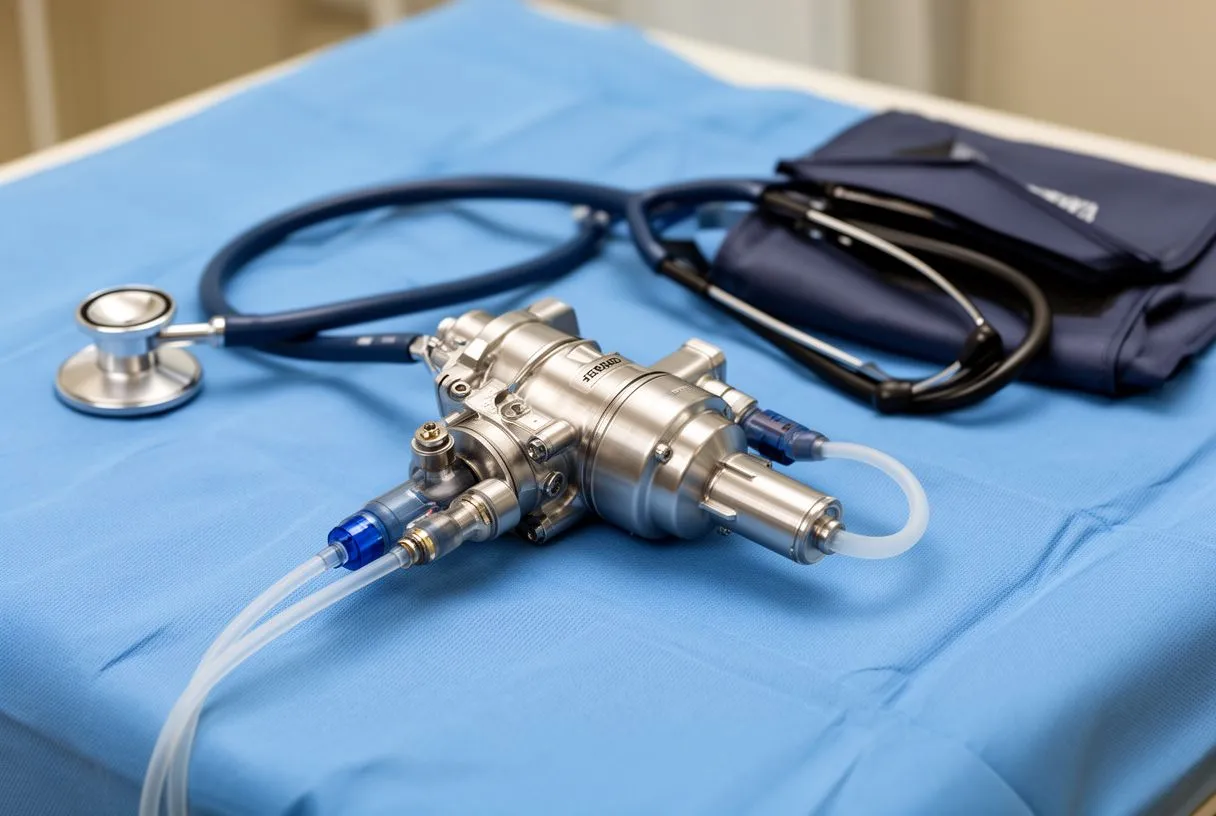
When the term artificial heart pump is used, people sometimes mean an LVAD, and sometimes they mean a true total artificial heart — a device that replaces both ventricles. The distinction matters. A left ventricular assist device helps the heart that is still there. A total artificial heart is implanted in place of the failing heart, connected to the great vessels, and serves as a bridge to transplantation for patients whose condition cannot be managed with a single-sided device.
Total artificial hearts are used in a small, carefully selected group of patients — usually those with severe failure of both ventricles, sometimes with complications of heart attacks or with conditions that make an LVAD alone unsuitable. The surgery is major and the technology is complex, but for a patient who had no other option, it has meant the chance to reach transplant and, in some cases, to live at home while waiting.
The practical point for families: "artificial heart pump" is a phrase that covers several different things, and they differ in surgery, duration, and purpose. The questions to ask are which device is being considered, what it is intended to do — recovery, bridge to transplant, or permanent therapy — and what alternatives exist. In our consultations, we take the time to explain what the studies actually show, in plain words, and to answer every question before any decision. Patients who understand these distinctions are far better equipped to participate in the choice.
How Is Mechanical Circulatory Support Used in Cardiogenic Shock?
Cardiogenic shock is the most urgent scenario in this whole field. It means the heart suddenly fails so severely that blood pressure collapses and organs start to fail — most often after a major heart attack. In these hours, doctors and surgical teams use temporary mechanical circulatory support to stabilize the circulation while the underlying problem is treated, whether that is opening a blocked artery, repairing a damaged valve, or simply giving the stunned heart muscle time to recover.
The sequence in an emergency often looks like this: rapid support through a percutaneous device or ECMO, followed within hours or days by a decision — wean the device if the heart recovers, or escalate to a longer-term device if it does not. This is where the concept of "escalation" matters: the first device placed in an emergency is often not the device the patient ends up with. The EACTS consensus on long-term mechanical circulatory support addresses this directly, describing how temporary support should be used as a structured bridge to a durable decision rather than left open-ended.
For families waiting in the ICU corridor during this period, the most useful thing to understand is that decisions are made in stages, each with a defined checkpoint. In our team, when a patient arrives in this situation, the case is reviewed by the whole multidisciplinary team, not by a single surgeon working alone, and the plan — including its limits and checkpoints — is discussed with the family in plain language. We have learned that families cope far better when they know what the next decision point is and when it will come.
What Are the Risks of Mechanical Circulatory Support Therapy?
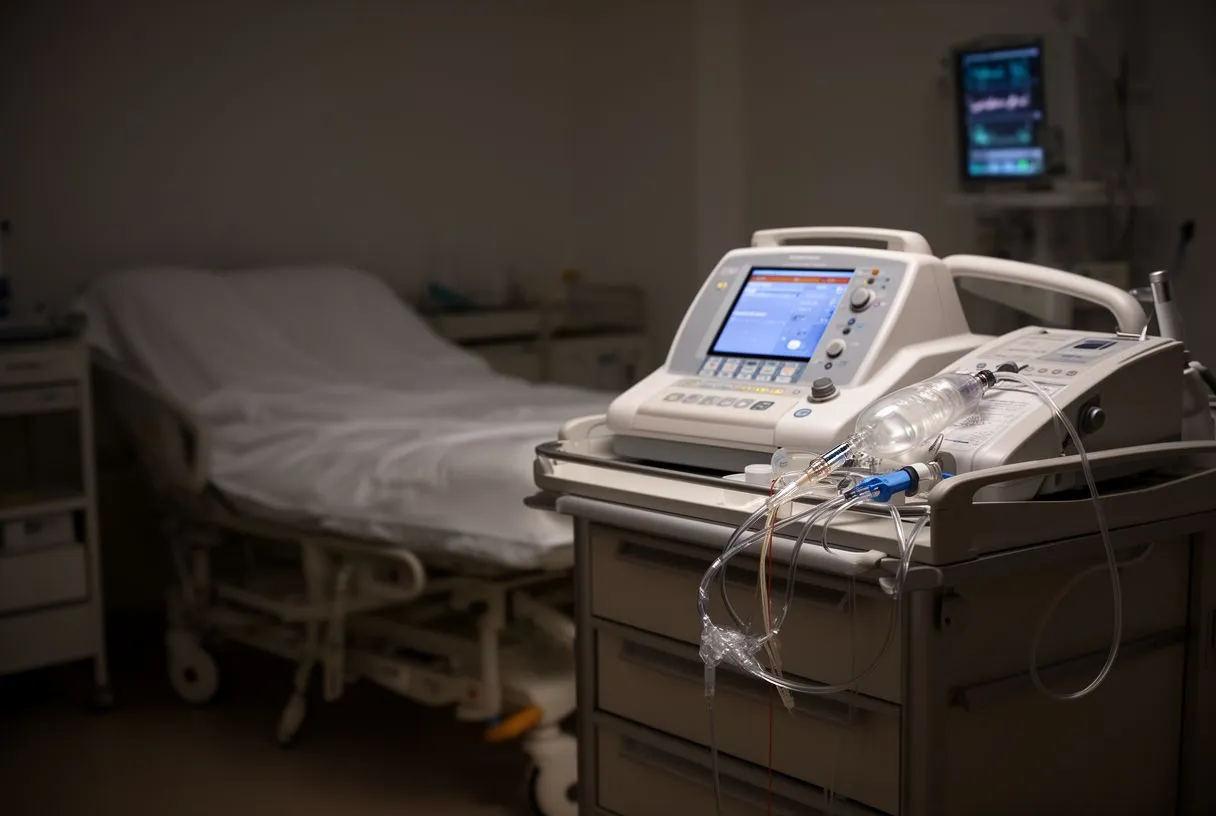
The honest answer is that these devices carry real risks — and managing them is a routine part of the therapy, not a sign that something has gone wrong. The main risks are bleeding (because the devices require blood thinning), clotting and stroke, infection around the cable that passes through the skin, and device malfunction requiring replacement or exchange. For long-term devices, some patients also develop a narrowing of the aortic valve or a weakening of the right ventricle over time.
Blood thinning is the trade-off. Because the pumps cause blood to move through foreign surfaces, patients on an LVAD take anticoagulant medication permanently — usually warfarin, monitored by regular blood tests. This reduces the risk of clots but raises the risk of bleeding. The balance is individual, and monitoring is a lifelong discipline.
Infection deserves its own word. The driveline — the cable that passes through the skin — is a permanent potential entry point for bacteria, and driveline infection is one of the most common long-term complications. Good technique in caring for the site, taught carefully before hospital discharge, reduces this risk substantially. Our team reviews every proposed device case against international practice guidelines before any recommendation, which includes weighing these risks against the realistic alternatives for that specific patient. For temporary devices, the risks are concentrated differently: bleeding and limb complications where the catheter enters the artery are the main concerns, and the duration of use is a deliberate part of controlling them.
How Long Can Someone Live With an LVAD?
How long can someone live with an LVAD? is the question every family asks, and the honest answer is: it depends on the patient's age, other health conditions, and the purpose of the device. Modern LVADs are designed to run for years — many patients have lived with them for a decade or more — and the devices have improved markedly over the past two decades, from bulky pulsatile pumps to compact continuous-flow pumps. Survival is best in patients who are good candidates at the time of implant, and it is lower in patients placed on the device as a rescue from severe shock.
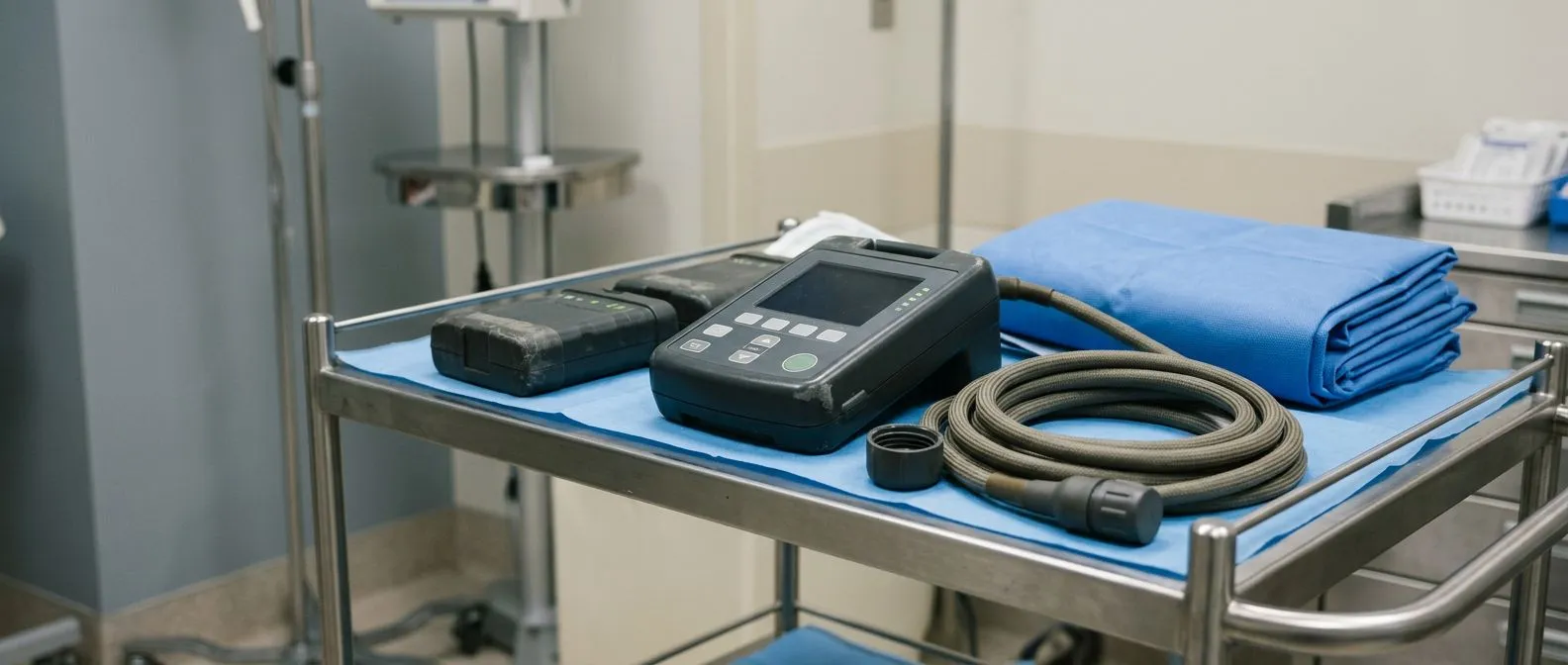
Life with the device involves daily routines. Patients take anticoagulant medication, check the driveline site, keep the batteries charged, and carry the controller and backup power at all times. The controller is the small computer that runs the pump — if it fails, the backup takes over. Swimming is not possible, and contact sports are off the list, but most patients walk, work, travel, and drive. Many describe the device, after a period of adjustment, as simply part of their life.
Two scenarios shape the long-term picture. If the device is a bridge to transplant, the goal is to reach transplantation in good condition. If it is destination therapy, the goal is years of life at home with a good quality of life. Before the device is recommended, the expected trajectory should be explained honestly — including what the device will not do. If a patient's heart function is poor but their circumstances make them a candidate for a less invasive option, we recommend the less invasive route only where the evidence supports it for that patient.
How Do You Choose Care for a Heart Pump Device?
How much does a heart pump device cost? is a fair question, and the honest answer is that it varies enormously. The device itself, the surgical implantation, the hospital stay, the disposable equipment, and the years of follow-up care all contribute, and no single figure applies across hospitals, countries, or insurance systems. For patients traveling from abroad, we recommend obtaining a written, itemized proposal covering the device, surgery, hospitalization, and follow-up — and asking specifically what is and is not included. We do not sell devices or products at our practice; our role is evaluation, recommendation, and surgery, with a clear proposal and alternatives given before anything proceeds.
Choosing the team matters as much as choosing the device. Outcomes with these technologies are strongly tied to the experience of the center and the coordination of the team. Experience is measured in the surgical team's training and case volume, in the presence of a genuine multidisciplinary structure, and in the clarity with which the plan is explained. Dr Molina trained in cardiothoracic surgery at the Universidad de Guadalajara, in cardiac, minimally invasive, robotic and structural surgery at the University of Montreal, and in structural cardiology and TAVR at CHU Bordeaux; the team also trained at Jena, Bad Berka and Buffalo. I performed the first robotic mitral valve repair in the Ángeles Health System and the first robotic heart surgery in Guadalajara, and our team continues to work across conventional, minimally invasive, robotic and transcatheter procedures.
Getting started is deliberately simple: the first contact is a free video consultation, in which we get to know the patient, talk through the condition, and say which studies are still needed so no unnecessary ones are ordered. A face-to-face visit at the consulting rooms follows when the patient decides to go ahead, with consulting rooms in Guadalajara, Querétaro and Hermosillo. Every heart failure case deserves a considered answer, not a rushed one — and the final decision always belongs to the patient.
Mechanical circulatory support has changed what is possible for a failing heart. From temporary devices that stabilize a patient in the worst hours of shock, to implanted pumps that sustain people for years at home, these devices now sit at the center of advanced heart failure treatment. The key decisions are about purpose — recovery, bridge to transplant, or long-term therapy — and they should be made with a multidisciplinary team, a clear understanding of the risks, and time to ask every question. If you or a family member has been told that the heart is failing despite medicines, the most valuable next step is a conversation with a qualified cardiac team about your own specific situation — and a second opinion, if you want one, is a normal part of that process. We invite you to start with a free video consultation and bring your questions with you.