Pulmonary Function Tests Before Heart Surgery
Pulmonary function tests before surgery measure lung capacity and oxygen exchange.
If your heart team has scheduled surgery, you will almost certainly be asked to complete pulmonary function tests before surgery. These breathing tests measure how well your lungs take in air, move oxygen into the blood, and push air back out. They tell the surgical team whether your lungs can carry you through anesthesia, time on a heart-lung machine, and the first days of recovery. This guide explains what pulmonary function tests before surgery involve, what the numbers mean, and how the results shape decisions about your operation.
What Are Pulmonary Function Tests?
Pulmonary function tests are a group of non-invasive measurements that describe how your lungs perform. The best-known is spirometry, a test where you breathe into a mouthpiece connected to a machine called a spirometer. It records how much air you can exhale and how quickly. Other tests measure lung volumes, the way gases like oxygen and carbon dioxide cross into your bloodstream, and how your airways respond to medication.
These tests are the standard way to detect and classify conditions such as COPD (chronic obstructive pulmonary disease, a long-term narrowing of the airways usually linked to smoking) and asthma. In the preoperative setting, they are often ordered alongside Pulmonary Function Tests ordered routinely before cardiac operations, together with blood work, an electrocardiogram, and imaging of the heart itself. The National Institutes of Health maintains detailed reference material on pulmonary function testing through its StatPearls library, which clinicians use when interpreting these studies (NIH).
Think of the tests as a fitness report for your lungs. Your heart and lungs work as a single delivery system: the lungs load oxygen into the blood, and the heart pumps that blood to every organ. When one side of that partnership is weakened, the team needs to know before the operation, not after.
Why Do I Need a Lung Test Before Heart Surgery?
Why lung function and heart surgery risk are linked. Heart surgery puts real demands on the respiratory system. General anesthesia relaxes the muscles you use to breathe. The chest is opened in many operations, which makes deep breathing painful for a few days. Some patients spend time on a ventilator after surgery. If your lung reserve is already reduced, each of these steps becomes harder, and the risk of complications such as pneumonia or prolonged ventilation rises.
What the results change. Pulmonary assessment before bypass surgery or valve surgery helps the team decide several practical things: whether you need extra breathing therapy before the operation, whether a less invasive approach would spare your chest wall, and how long you might need support in the intensive care unit. In our team's experience, a patient whose tests show reversible airway narrowing can often start inhaled treatment a few weeks ahead and arrive at the operating room in much better condition.
Avoiding unnecessary testing. Not every patient needs every study. The first contact with our practice is a free video consultation: we get to know you, talk through your condition, and identify exactly which studies are still needed so that no unnecessary tests are ordered. If a recent, reliable breathing test already exists, we will not repeat it.
What Is the Most Important Pulmonary Function Test?
If you had to choose a single study, spirometry would be it. It is quick, inexpensive, and it answers the question that matters most before an operation: how much air can you move, and how fast? Two numbers carry most of the weight.
The first is FEV1, the volume of air you can force out in one second. The second is FVC, the total volume you can force out after a full breath in. The ratio between them, FEV1/FVC, is what separates a normal pattern from an obstructive one like COPD. When the ratio is reduced, it means air leaves your lungs more slowly than it should.
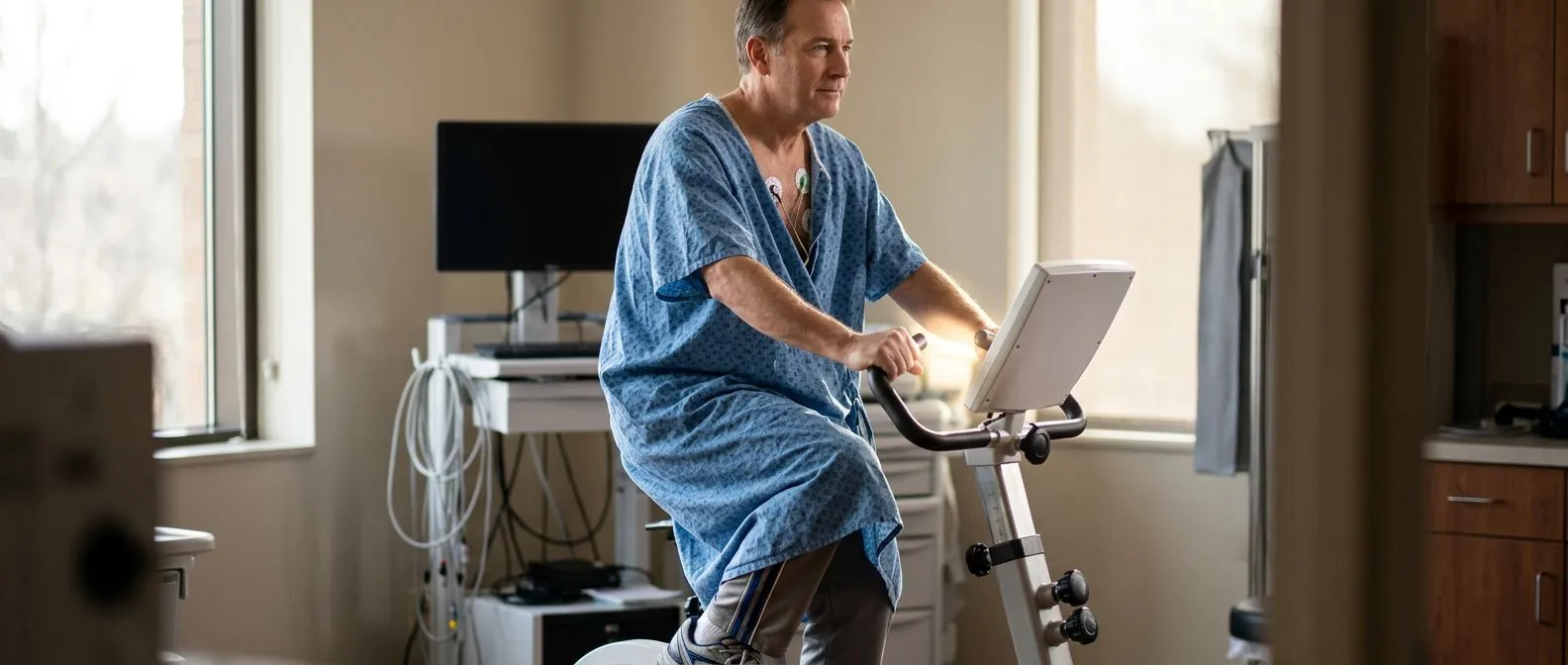
For cardiac patients, spirometry is often paired with a cardiopulmonary exercise test, sometimes done on a bicycle or as a Treadmill Test, which measures how the heart and lungs respond together to effort. Research using these combined tests has shown how much exercise capacity, and even the pattern of breathing during effort, reveals about a patient's outlook after illness and surgery (Ongoing Exercise Intolerance Following COVID-19: A Magnetic Resonance–Augmented Cardiopulmonary Exercise Test Study).
Types of Pulmonary Function Tests Before Surgery
Spirometry. The core test, described above. It usually takes fifteen to thirty minutes and requires only that you breathe through a mouthpiece. It is the breathing test before heart surgery that most patients are asked to complete first.
Lung volume measurement. Body plethysmography uses a glass booth that senses pressure changes while you breathe, giving an exact measurement of the total air your lungs can hold. It can also be estimated by helium dilution, where you breathe a harmless gas mixture and the machine calculates volume from how the gas is diluted.
Diffusion capacity (DLCO). This test checks how efficiently oxygen crosses from the tiny air sacs, called alveoli, into the blood. You inhale a small, safe amount of carbon monoxide tracer and hold your breath for about ten seconds. A low DLCO can point to conditions such as pulmonary hypertension — abnormally high blood pressure in the Pulmonary Artery, the vessel that carries blood from the heart to the lungs.
Exercise testing. A six-minute walk or a formal cardiopulmonary exercise test measures how your body performs under real demand. When the team suspects that symptoms come from the lungs rather than the heart, or from both, this test helps untangle the two.
- Spirometry: measures air volume and speed; the first test ordered for most patients.
- Lung volumes: measures total lung capacity; useful when spirometry is hard to interpret.
- DLCO: measures oxygen transfer; detects problems at the blood-air interface.
- Exercise tests: measure heart and lungs working together under effort.
How Do Pulmonary Function Tests Work?
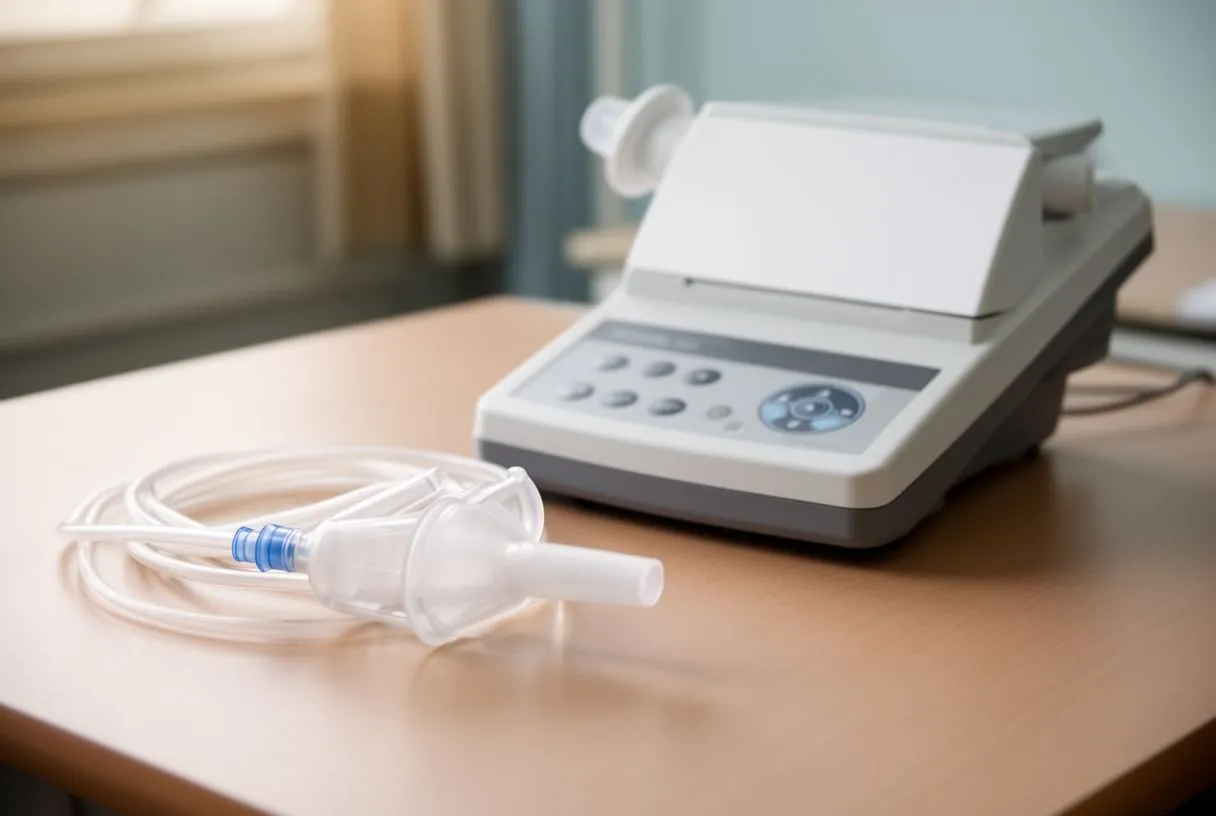
The mechanics of the machines. A spirometer contains a flow sensor. Every time you breathe through the mouthpiece, the sensor measures how fast air moves past it and a computer integrates those measurements into volumes. Modern machines are electronic and calibrated several times a day, usually with a large syringe that pushes a known volume of air.
The breathing maneuvers. For spirometry, you take the deepest breath you can, seal your lips around the mouthpiece, and blow out as hard and as fast as you can for at least six seconds. The technician will demonstrate first and coach you through it. Quality guidelines require several acceptable attempts, usually at least three, with the two best results matching closely. If your first tries are sloppy, you will simply repeat them — there is no penalty for that.
What the numbers describe. Each value is compared with predicted values, which are calculated from your age, height, sex, and ethnicity. The results are expressed as a percentage of predicted. This is why two patients with identical machines can receive very different reports: the machine measures raw air, and the report interprets it against your personal reference.
What Can't You Do Before a Pulmonary Function Test?
Food, drink, and caffeine. A large meal can restrict your ability to take a full breath, so most laboratories ask you to avoid heavy eating for a couple of hours beforehand. Water is fine — you can drink water before a pulmonary function test in normal amounts. Caffeine is more restricted: coffee, tea, and energy drinks can open the airways slightly and distort results, so most centers ask you to skip them for four to six hours.
Medications. This is the big one. Bronchodilators — inhalers that open the airways — will change your results, so the lab will tell you which ones to hold and for how long, typically four to twelve hours depending on the medication. Never stop a prescribed inhaler without explicit instructions from the team that ordered the test. Some patients come in for a baseline test off inhalers, then repeat the test after using them; this is how bronchodilator responsiveness is measured.
Smoking and exertion. Avoid smoking for at least one hour, ideally longer, before testing, since it acutely narrows the airways. Strenuous exercise in the hour before the appointment can also change results. Wear loose, comfortable clothing and arrive a few minutes early so you are not breathing hard from a rushed walk.
What Is a Normal Reading for a Pulmonary Function Test?
There is no single universal number, because normal depends on your age, height, sex, and background. The laboratory compares your results with predicted values and reports them as percentages of what is expected for someone like you. Normal values for a lung capacity test by age shift gradually: lungs grow through childhood, peak in your twenties, and decline slowly — roughly as a modest, steady change — with each passing decade.
As a working rule, most clinicians consider a value above 80 percent of predicted to be in the normal range. An FEV1 between 60 and 79 percent suggests mild obstruction, 40 to 59 percent moderate, and below 40 percent severe. The FEV1/FVC ratio, normally above about 0.70, is the key number for diagnosing COPD. These thresholds are widely used in clinical practice and are summarized in the NIH's reference material on pulmonary function testing (NIH).
A normal reading for a pulmonary function test is therefore a relative statement, not a fixed one. What matters for your surgical decision is not one number in isolation, but the whole pattern: the ratio, the volumes, the diffusion capacity, and how your values compare with your own past results if you have them.
What Do PFT Results Mean for Heart Surgery Clearance?
How results shape the plan. When spirometry results come back for surgery clearance, the team reads them alongside your cardiac studies. A mildly reduced FEV1 with good diffusion capacity rarely changes anything. Moderate or severe obstruction, on the other hand, prompts concrete steps: preoperative bronchodilator therapy, breathing exercises, chest physiotherapy, or in some cases a change in surgical approach — for example, a minimally invasive route that avoids opening the breastbone, which is easier on the chest wall and breathing muscles.
The lung-heart connection in specific conditions. Certain cardiac diagnoses directly affect the lungs. Pulmonary hypertension — elevated pressure in the vessels between heart and lungs — changes both the surgical risk and the treatment options. Pulmonary Embolism, a clot that travels to the arteries of the lungs, can also complicate the picture and may be evaluated with imaging alongside Pulmonary Function Tests as part of the preoperative pulmonary evaluation. Valvular disease itself matters: chronic mitral valve disease, for example, backs pressure up into the lungs and can lower diffusion capacity long before the operation.
Every case we review is discussed by the multidisciplinary team against international practice guidelines before a recommendation is given. You receive a clear proposal with the alternatives, and the final decision is always yours. We encourage second opinions and treat seeking one as a normal part of deciding about heart surgery.
Are Pulmonary Function Tests Safe?
Yes, for the overwhelming majority of patients. The tests are non-invasive: nothing enters your body beyond a mouthpiece. You may feel lightheaded or briefly short of breath after the forceful blowing maneuvers, so the technician will let you rest between attempts. Sitting during the test prevents falls if dizziness occurs.
There are a few situations where caution applies. Patients who have recently had a heart attack, unstable chest pain, a recent eye or ear surgery, an abdominal aneurysm, or very high blood pressure may be asked to delay testing or perform modified, gentler maneuvers. Recent surgery, an active chest infection, or a coughing-related injury also warrant rescheduling. If you have any of these, tell the laboratory in advance — a short delay is far better than an unsafe test.
For patients with existing Pulmonary Hypertension or severely limited lung function, the team will often choose the least demanding test that still answers the question. A six-minute walk or resting spirometry may be sufficient, without the maximal effort maneuvers.
How to Prepare and What to Expect
Knowing the routine in advance makes the appointment easy. The test itself takes about thirty to forty-five minutes for a full study, less for spirometry alone. You will sit in a chair, wear a nose clip, and breathe through a mouthpiece. Expect to repeat the blowing maneuver several times — that repetition is normal and is how the machine verifies the results are reliable.
Practical checklist before your test:
- Timing: confirm which medications, especially inhalers, to pause and for how long.
- Food and drink: no heavy meal for two hours; no caffeine for four to six hours; water is fine.
- Smoking: skip it for at least an hour before your appointment.
- Clothing: loose and comfortable, so your chest can expand fully.
After the results arrive. In the consultation we take the time to explain what the studies actually show, in plain words, and to answer every question before any decision is made. You should leave understanding not just your numbers, but what they mean for the operation ahead: whether you need preoperative breathing therapy, which surgical approach best protects your lungs, and what your first days of recovery will look like.
Where to have it done. If you are traveling for care, ask whether breathing tests can be completed near home before you fly in, so your in-person visit is spent on decisions rather than waiting for results. Our practice is led by Dr Alejandro Molina, with consulting rooms in Guadalajara, Querétaro and Hermosillo. Dr Molina trained in cardiothoracic surgery at the Universidad de Guadalajara and in cardiac, minimally invasive, robotic and structural surgery at the University of Montreal, with further training in structural cardiology and TAVR at CHU Bordeaux; the team also trained at Jena, Bad Berka and Buffalo.
To close: pulmonary function tests before heart surgery are not another hoop to jump through. They are the information that lets your surgical team tailor the operation to your lungs as well as your heart, choose the lowest-risk approach for your situation, and prepare your recovery in advance. If you have been told you need surgery and have questions about your breathing studies, the best next step is a conversation with a qualified cardiac team rather than self-diagnosis. We invite you to book a consultation — the first video meeting is free — and to bring every result you already have.