

Heart surgery and pregnancy planning in women of reproductive age
Heart surgery and pregnancy planning requires careful valve choice for a safe future pregnancy.
Why the choice of valve matters more here than anywhere else — and how one patient weighed motherhood against durability. It is written for women weighing heart surgery and pregnancy planning together. The 2021 ESC/EACTS guidelines on valvular heart disease set out how valve choice is weighed for women who plan a pregnancy.
Heart surgery in women of reproductive age. Why the choice of valve matters more here than anywhere else, and how one patient decided.
Being told you have a heart problem that may require surgery is something that can potentially change your life and your family's. Receiving that same news when you are a young woman still contemplating pregnancy can be overwhelming and a source of enormous anxiety.
Here you will learn about the different conditions that can require a heart valve replacement, along with the most common questions and the considerations you will need to weigh if you are in a similar situation. By the end you will have a good idea of the points you should discuss with your cardiac surgeon.
Heart surgery and pregnancy planning: what makes it different?
Several operations for congenital heart problems — those present from birth — can be carried out safely with no extraordinary change to your daily life. Operations treating heart valve problems, however, require particular attention.
Heart valve replacement is a procedure that can save the life of someone with serious cardiac problems. But if you are a woman of reproductive age, it can raise additional concerns about your capacity to have children in future.
While it is possible for some women to have a successful pregnancy after a heart valve replacement, it is important to bear in mind that pregnancy places a great demand on the heart and the circulatory system. For that reason it is important to talk to your cardiac surgeon about all of this before deciding to have a child after a valve replacement.
The most important consideration is the type of valve used during the replacement, since that decision can have a significant impact on a woman's capacity to have a safe pregnancy.
The valves that commonly develop problems and might require replacement in young women of reproductive age are the aortic and the mitral. These are usually congenital problems — conditions the person was born with.
One condition we commonly treat in this context is the bicuspid aortic valve which, as its name indicates, has two leaflets instead of the three it should normally have. This can sometimes cause stenosis or narrowing of the valve with calcification in younger people. If the problem is very severe it may require an intervention.
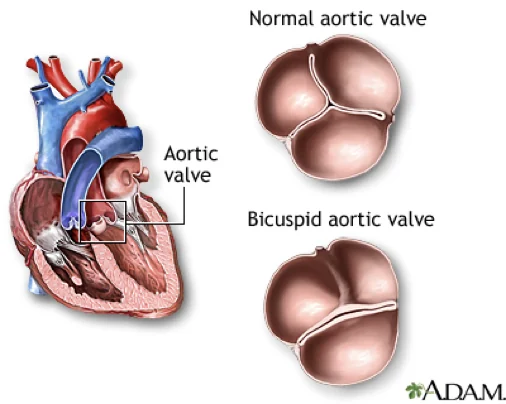
Cardiac problems that might require intervention in young people include:
- Bicuspid aortic valve with stenosis
- Aortic valve regurgitation
- Infections (endocarditis) of any of the valves
- Aortic aneurysms causing failure of the aortic valve
- Aortic dissection
Options for valve replacement
There are several types of prosthetic heart valve available, each with its own characteristics. We cover them in full in our guide to heart valve replacement options.
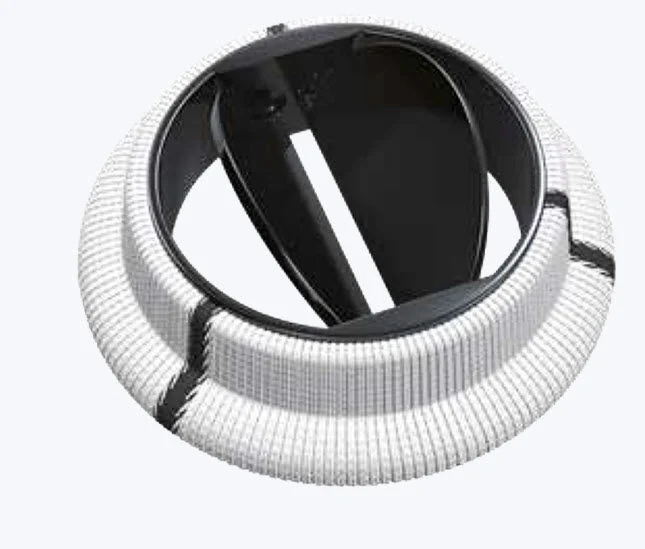
Mechanical prostheses
These are made from solid materials such as metal or polyethylene, and work through springs or discs that open and close the valve. They are durable and reliable, but require long-term anticoagulation to prevent clots forming. The anticoagulant tablets have to be taken daily or almost daily for life, with routine blood tests to check the level of anticoagulation.
Anticoagulation is generally contraindicated in pregnancy — it tends to be incompatible with a viable pregnancy because of the imminent risk of haemorrhage, miscarriage and complications for the mother.
Biological prostheses
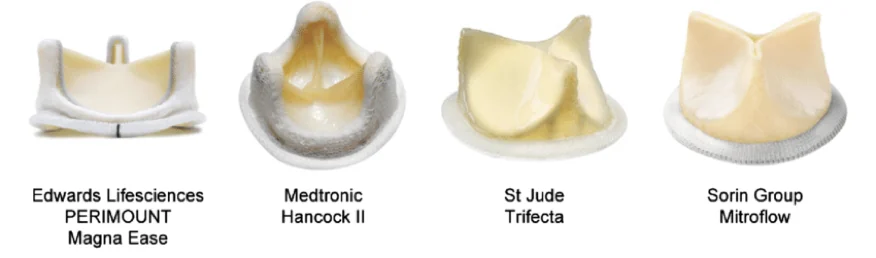
These are made from biological materials such as animal or human tissue, and integrate with the surrounding tissue of the heart. They are less likely to cause clotting problems than mechanical prostheses, but may require replacement in the longer term because of their biological nature — they usually last fewer years than mechanical ones.
The average life of this kind of prosthesis is around 12 years, and some can last many years longer. There is, however, one very important thing to consider: we have observed that these prostheses tend to degenerate faster and fail within about 7 to 10 years of implantation in people under 50. The younger the person who receives it, the shorter the biological prosthesis will last. The causes of this are still debated and considered multifactorial.
There are different biological prosthesis options, and new generations of biological valve appear frequently promising greater durability and less structural failure.
Transcatheter prostheses (TAVR / MitraClip)
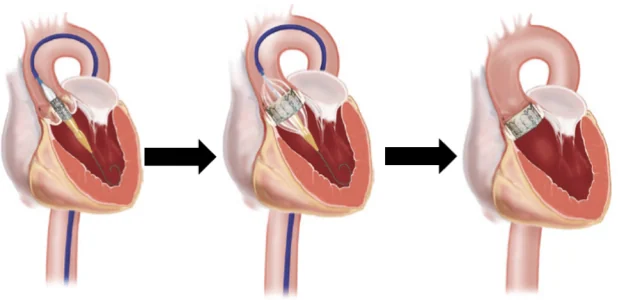
These prostheses are relatively new and are placed in the affected valve through a catheter via the groin rather than open surgery — a procedure similar to a cardiac catheterisation. They are less invasive and can be an option for patients at high surgical risk.
These valves were initially designed for people over 75 who were not candidates for heart surgery because they were considered high risk. As experience and technology have grown, the indications have changed and they have been used in increasingly younger patients.
Having said that, it is important to consider that this kind of prosthesis in reproductive age may not be the best option for you, despite being less invasive, since it is only a temporary solution that will require a further intervention in the medium term. That reintervention will probably be open-heart surgery to remove this valve and place a new prosthesis.
It depends on several factors, but it can happen that the operation to remove a TAVR is much more complex than removing a conventional biological valve. That is an important point to discuss with your surgeon.
The choice of prosthesis will depend on individual factors: age, general state of health, the type of valve disease and the patient's own preference. For a young woman, heart surgery and pregnancy planning are best weighed side by side.
Mechanical vs biological valve: pregnancy considerations
This is the question we discuss most with young women. There is no single right answer. Each option trades one risk for another.
- Mechanical valve: it can last a lifetime. The price is lifelong anticoagulation. In pregnancy this brings real risks for the mother and the baby.
- Biological valve: most patients do not need lifelong anticoagulation. Pregnancy is usually simpler. The price is that the valve wears out sooner, and a second operation is likely.
A woman with a mechanical valve who becomes pregnant needs care in a specialised centre. Her anticoagulation must be adjusted by an expert team. She should never change or stop it on her own. That is why we talk about heart valve replacement and pregnancy before the operation, not after.
Pregnancy after heart surgery: planning ahead
Pregnancy after heart surgery is possible for many women. It goes best when it is planned. We suggest a few steps before you try to conceive.
- Book a pre-pregnancy review with your cardiologist or cardiac surgeon.
- Have an up-to-date echocardiogram to check how your valve and heart are working.
- Review all your medicines. Some heart medicines are not suitable in pregnancy. Never stop one yourself; your doctor will advise on any change.
- Ask how long to wait after surgery. Your team will set this for you.
- Use reliable contraception until you have a plan. Ask which method suits your heart.
- Keep your teeth and gums healthy. This lowers the risk of valve infection.
During pregnancy you will usually be followed by a joint team. It brings together a cardiologist, an obstetrician and an anaesthetist. They plan the check-ups, the timing and the type of delivery. Good heart surgery and pregnancy planning means nobody has to improvise.
Some changes are normal in any pregnancy. Mild breathlessness and swollen ankles are common. Still, you should know the warning signs. Seek medical help promptly if you notice breathlessness at rest, a racing or irregular heartbeat, chest pain, fainting, or sudden swelling of the legs. With a mechanical valve, any unusual bleeding also needs urgent attention. It is always better to be checked and reassured than to wait at home.
Questions to ask about cardiac surgery in reproductive age
Bring these questions to your consultation. Write down the answers. Bring your partner or a relative if you can.
- Can my valve be repaired instead of replaced?
- Which valve do you recommend if I want to have children?
- How long is a biological valve likely to last at my age?
- What would a second operation involve?
- Is a minimally invasive approach possible for me?
- Who will look after me if I become pregnant?
There are no silly questions. A good team will take the time to answer each one.
A real case that may help you
I would like to tell you about Elena, a woman with an aortic valve problem at 32 which, because of its severity, needed replacement of the diseased valve.
After discussing all the possibilities and the pros and cons of each option, she decided she wanted a biological valve.
She knew this valve would only last 7 to 10 years before deteriorating, and that in the relatively near future she would very probably require another intervention, this time to replace the biological prosthesis. Despite that — despite being only 32, and despite the future reintervention — she chose this option because her priority was to be a mother. She did not want anticoagulation treatment.
She knew that with a mechanical prosthesis she should not become pregnant, so she chose the option that made most sense for her personal life and her particular circumstances, and above all the one that would let her fulfil her dream of being a mum.
We operated on Elena using a minimally invasive technique. She had a very quick recovery, and not long afterwards we learned she had become a mother and had a pregnancy without complications, despite previous heart surgery.
As we have said, mechanical valves require anticoagulation, which can be a problem during pregnancy. Valves of animal or human tissue can be a safer option for women who want to have children.
While heart valve replacement can be an important step in improving a woman's health, it is important to consider all the options carefully before deciding. With the support of an experienced medical team and a proper care plan, many women can have a successful pregnancy after a heart valve replacement.
Remember you are not alone
If you are a woman of reproductive age who has been diagnosed with a heart valve problem, or has had a valve replacement, and you are considering having a child, it is important to talk to your doctor and to the people you love, to weigh your options and make an informed decision. With the right support, you can have a successful pregnancy and welcome a new member of the family. A relationship of mutual trust with your doctor should be your priority. Raise heart surgery and pregnancy planning in the same conversation, so both decisions are made together.
The techniques for carrying out these procedures, and the details of the whole process of heart surgery, are not the focus of this article — but it is important to know that several of these conditions can be treated with minimally invasive procedures.
As a woman of reproductive age it is natural to feel fear and worry at the idea of cardiac surgery. It is important to remember, though, that technology and medicine have advanced a great deal in recent years, and there are many options available to improve your health and quality of life.
You are not alone on this journey, and there is a team of doctors and specialists who will work with you to find the best solution for you. That team can guide your heart surgery and pregnancy planning from the first consultation onwards.

About the author
Dr Alejandro Molina is a cardiovascular surgeon practising in Guadalajara, Querétaro and Hermosillo. He trained in cardiothoracic surgery at the Universidad de Guadalajara, completed advanced training in cardiac surgery, minimally invasive surgery, robotic surgery and structural interventions at the University of Montreal, and a fellowship in structural cardiology and TAVR at CHU Bordeaux, France. He performed the first robotic mitral valve repair in the Ángeles Health System and the first robotic heart surgery in Guadalajara.
Medical degree: Universidad Autónoma de Guadalajara, Cédula Profesional 5757260 · Cardiothoracic surgery: Universidad de Guadalajara, Cédula de Especialidad 10768871 · Current certification, Consejo Nacional de Cirugía del Tórax, no. 447
Talk to a specialist
Request a free video consultation to clear up your questions and make a better-informed decision.





