

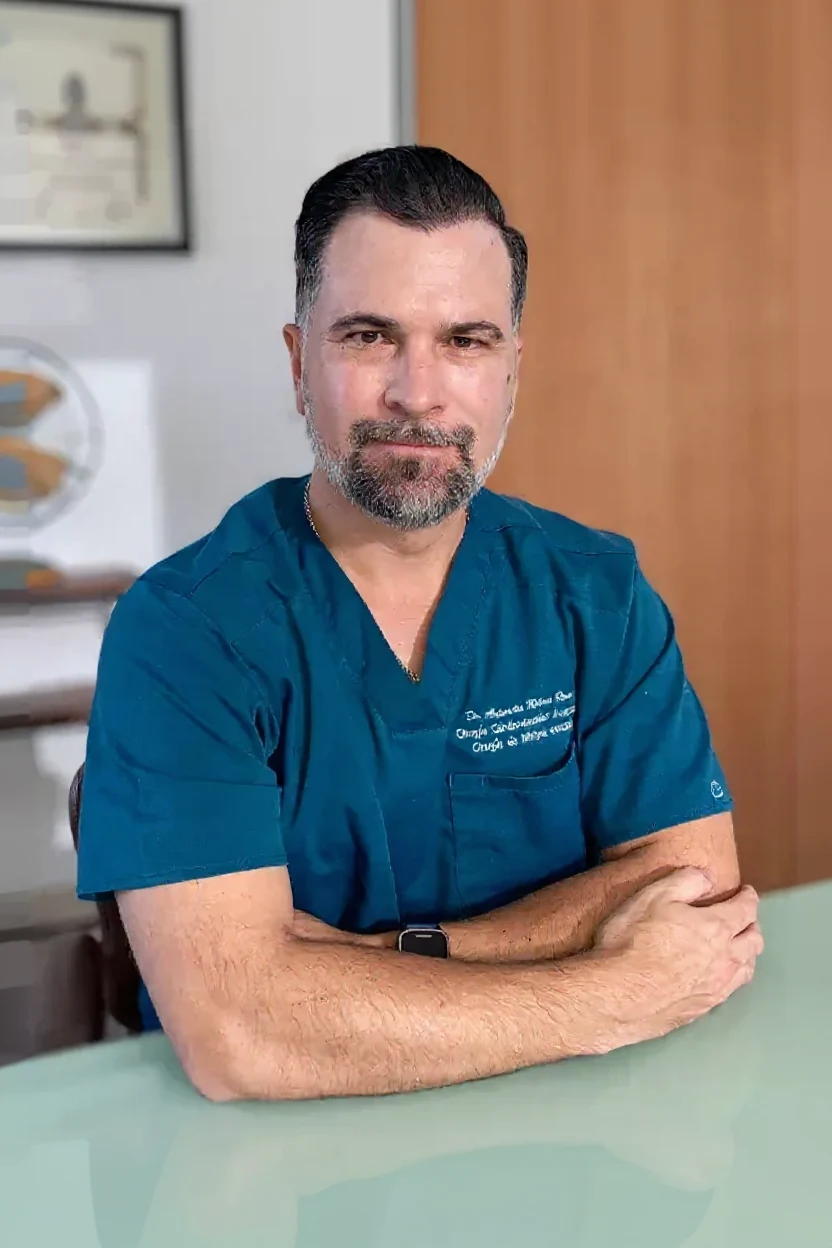
About Dr Molina
Dr Alejandro Molina is a cardiovascular surgeon practising in Guadalajara, with a decade of work across highly specialised public and private centres in Mexico, Canada and France. His focus is on structural cardiology and minimally invasive technique — the approaches that have reshaped cardiac surgery in recent years.
- First Mexican accepted as a Fellow in structural cardiology at the University Center of Bordeaux, France (Hôpital Haut Lévêque).
- First Mexican accepted as a Fellow in advanced cardiac surgery and minimally invasive procedures at the Montreal Heart Institute, University of Montreal, Canada.
- Specialty in cardiovascular surgery from the University of Guadalajara.
Over his career he has taken part in more than 1,000 cardiac surgical procedures, and was recognised by the University of Montreal for his service during the COVID-19 pandemic at the Montreal Heart Institute.
Why he writes these guides
Writing is something Dr Molina does in his own time, because he believes a frightened patient who understands their options makes a better decision than one who doesn't. The articles on this site are his way of sitting down with you before you ever reach the clinic.
Each guide is written to explain one thing clearly — a procedure, a test, a word you heard and didn't recognise — in plain language, without hype and without talking down to anyone. He would rather you arrive informed, with your questions already half-answered, so the conversation can be about you and not about definitions.
It is the same principle the whole practice is built on: help first, and let everything else follow from that.
Articles by Dr Molina
48 guides and explainers, written to help patients and families understand their options.
- Heart Team: when your heart is assessed by a team, not one opinion
- TAVR or aortic valve surgery: how to choose
- What is the Bentall procedure?
- Robotic cardiac surgery: a reality today, a fascinating future
- Which heart operations can be done with a robot?
- Can you die of a broken heart?
- How safe is heart surgery?
- Pectus excavatum: understanding and treating "funnel chest"
- Robotic heart surgery
- TAVR: transcatheter aortic valve replacement
- Oral anticoagulants: a complete guide for patients and families
- Everything you need to know about your heart surgery
- What options exist for replacing a heart valve?
- Coronary bypass (CABG) versus stent
- Coronary bypass surgery (CABG)
- Transcatheter heart valve replacement: a medical revolution
- What is a heart attack?
- Cardiac rehabilitation: what it is and who it is for
- 11 quick questions about TAVR
- Minimally invasive cardiac surgery
- What happens when a TAVR fails?
- Anticoagulation after heart surgery: a guide for patients
- What is open-heart surgery?
- How is heart surgery performed? Step by step
- ECMO: a lifeline when time runs out
- Knowing your heart: the aortic valve
- Knowing your heart: the mitral valve
- MitraClip for mitral regurgitation
- Endocarditis: when the heart fights to survive
- Minimally invasive heart surgery: 11 common questions
- Heart surgery in women of reproductive age
- Long COVID and the heart: what you need to know
- TAVR: the transcatheter revolution in aortic valve treatment
- Five reasons to ask for a second opinion before high-risk surgery
- Heart surgery after 80: is it possible, and are the risks greater?
- Cardiac arrest or heart attack: are they the same?
- Life after heart surgery: a new beginning
- Tumours of the heart: understanding myxoma and other types
- Cardiac catheterisation: advantages and disadvantages
- Partial anomalous pulmonary venous drainage
- Aortic dissection: a true cardiovascular emergency
- Aortic surgery and aneurysms
- Aortic aneurysms: understanding, treating and deciding with confidence
- Heart surgery in Mexico: quality care at an affordable price
- Heart xenotransplantation: the future, or have we lost our minds?
- Cardiac catheterisation or heart surgery: what you need to know
- Common cardiac surgical procedures
- What types of heart specialist are there, and what should you know?
